Inside the Advancing AI 2026 Developer Sessions: A Community of Builders Shaping the Future of AI
Jul 30, 2026
There was a line out the door before the doors even opened on Day One. That should have been the first clue that this year's Advancing AI - Developer Sessions was going to be something different.
More than 2,000 developers showed up, making the developer sessions one of the most attended experiences at Advancing AI 2026. The energy was impossible to miss. Walk the floor for even ten minutes and you could feel why. People weren't there to watch AI happen. They were there to build it themselves.
Insights from AI Industry Visionaries
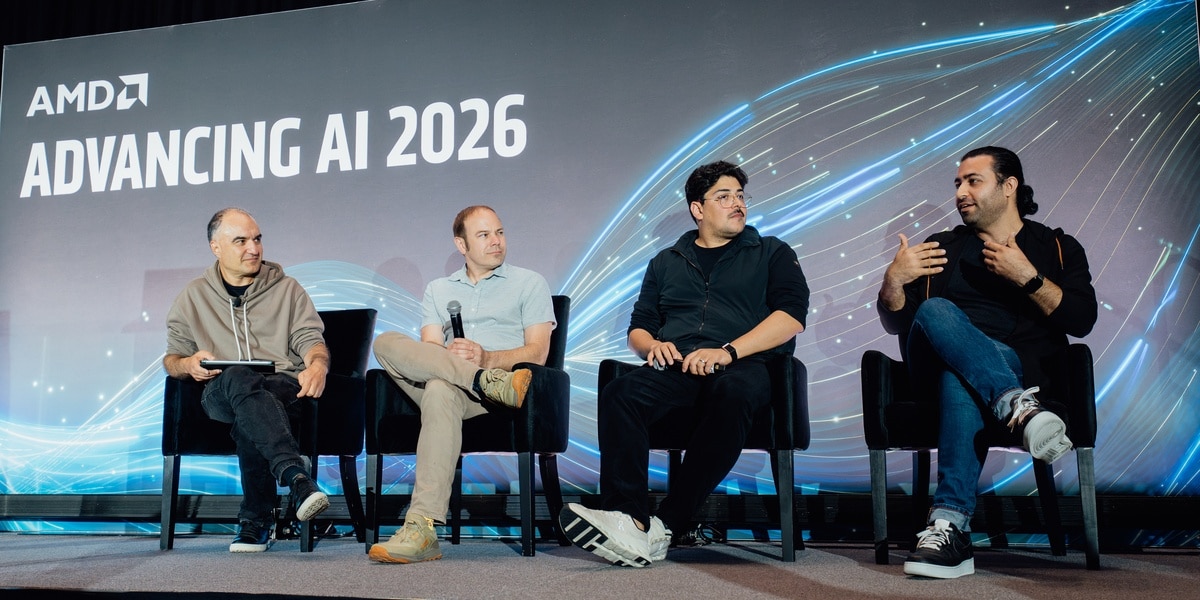
The sessions opened with a luminary talk that set the tone for the two days ahead, bringing some of the most recognizable names in AI infrastructure, open source, robotics, and research into one room. The two fireside chats kept the same energy going, digging into scaling AI systems, where open source is headed next, and how to squeeze more performance out of inference. The pattern repeated itself at nearly every one of these sessions. Rooms filled up, then people kept coming, and lines started forming outside rooms that were already full.
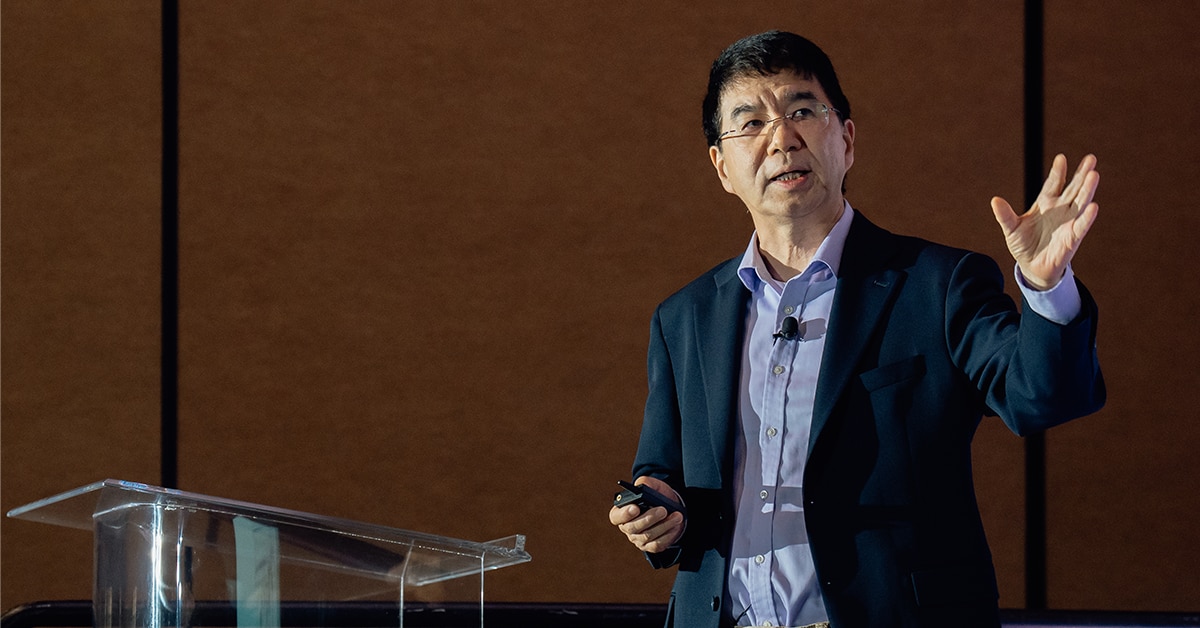
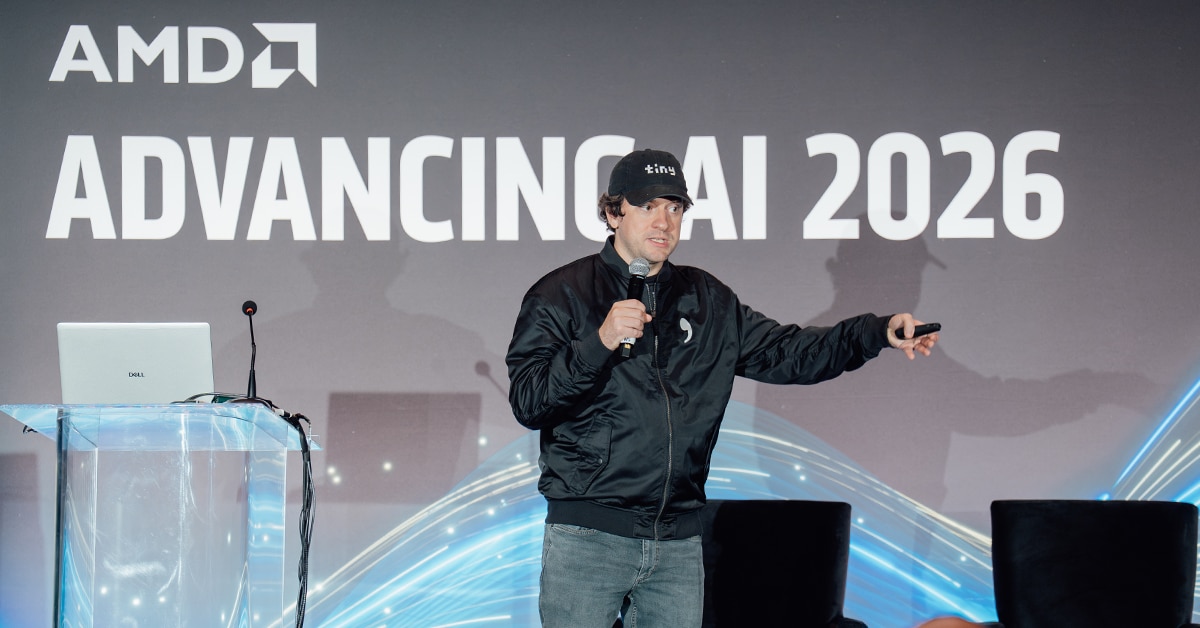
Sixteen technical talks rounded out the sessions, each one focused on a different piece of the AI stack, from frameworks and optimization techniques to the workloads that are starting to define what's next.
Building Real-World AI Applications Through Hands-On Workshops
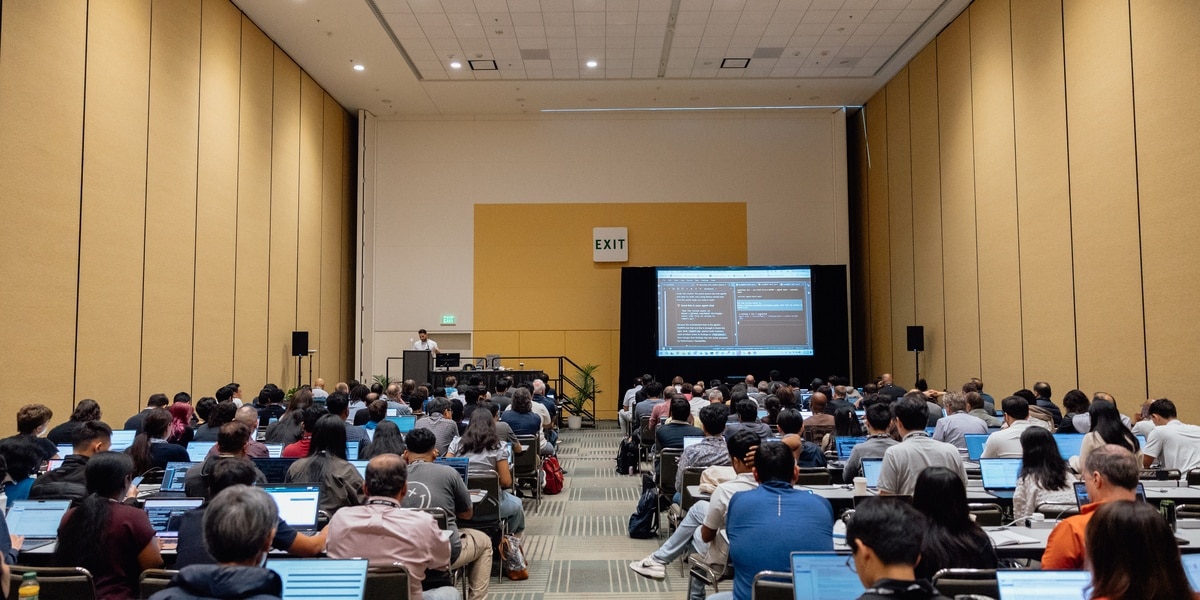
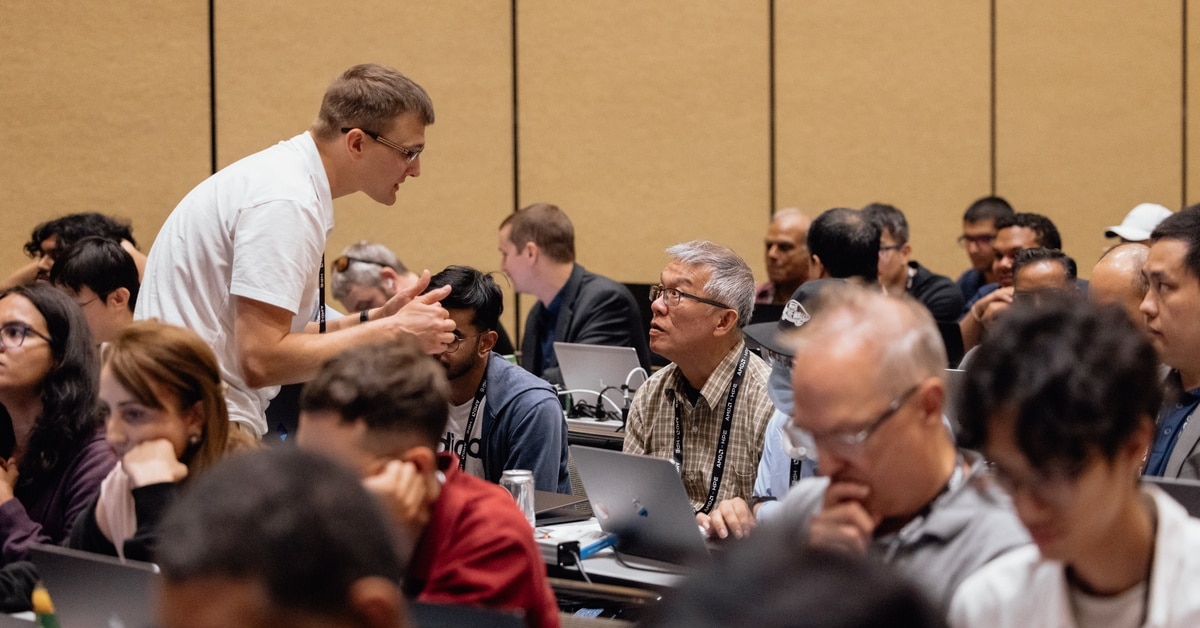
The Developer sessions moved beyond conversations and put AI development directly into developers’ hands through immersive workshops focused on real-world applications. Across 44 hours of hands-on workshops, developers built, tested, and optimized AI applications using the latest tools and frameworks.
In Build Your OpenClaw Agent with Multi-Modal Models, developers built their own agents from scratch, pairing open-source multimodal models with inference frameworks like vLLM and SGLang. In Building Hybrid Multi-Agent Systems from Client to Cloud, the question was more architectural: how do you split the work intelligently between a Ryzen AI PC sitting on someone's desk and an AMD Instinct GPU cluster running in the cloud? By the end of the session, attendees had a real answer, not just a theory.
Connecting with the Open Source Community
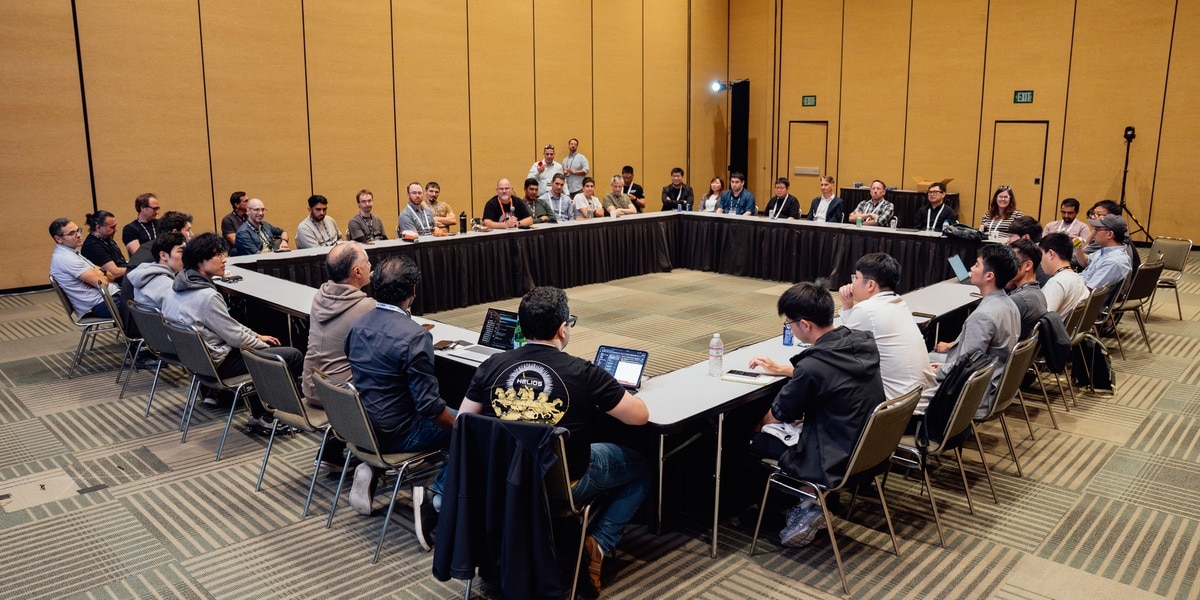
Open source ran through nearly everything at the developer sessions, and two open-source core developer meetups made that tangible. Contributors and maintainers sat down directly with the people building on top of their work, trading notes on frameworks, tooling, and where the ecosystem should go from here.
Accelerating AI Development with ROCm.ai and ROCm Certification
A key milestone at Advancing AI was the launch of ROCm.ai, the AI-native developer experience designed to help developers analyze, optimize, and accelerate AI workloads on AMD platforms. Built on the ROCm ecosystem, ROCm.ai brings together intelligent tools, resources, and workflows to simplify the AI development journey, from experimentation and performance optimization to deployment. By helping developers better understand workloads and improve performance, ROCm.ai enables faster innovation across AMD hardware platforms. Explore ROCm.ai and discover new ways to optimize your AI workflows.
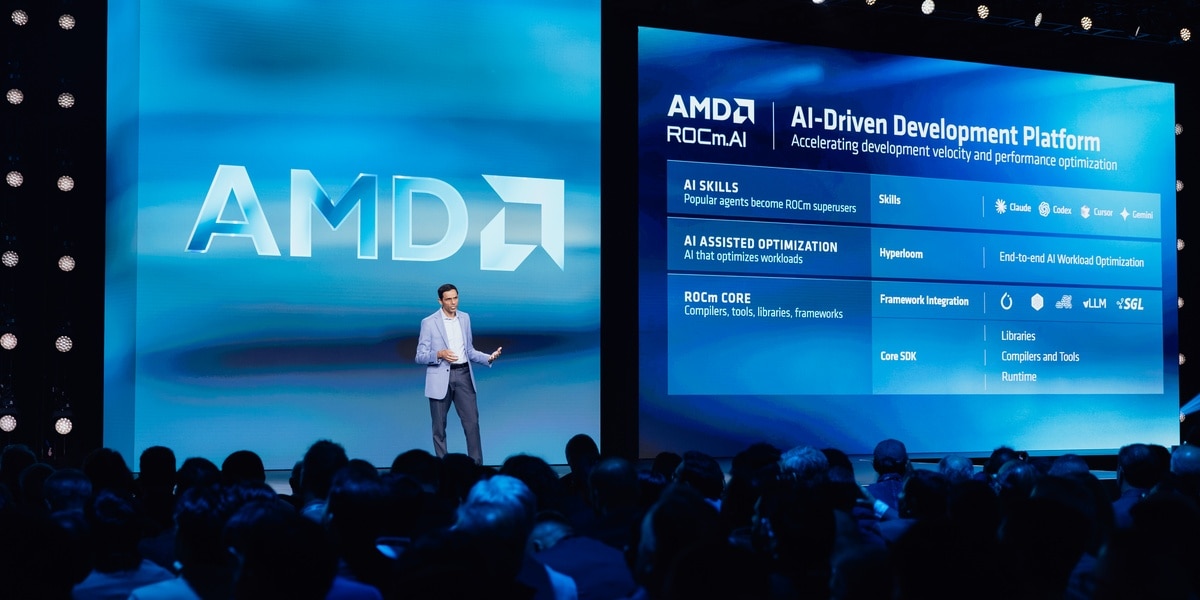
Advancing AI also introduced the ROCm Certified Associate program, giving developers a structured path to build expertise in AMD’s open AI software ecosystem. Through hands-on training, developers gain practical experience across ROCm fundamentals, AMD GPU architecture, AI and HPC deployment, PyTorch workflows, HIP programming, ROCm libraries, CUDA porting, profiling, and performance optimization. The response from the community was strong, with ROCm Certification reaching capacity and generating long waitlists, highlighting growing demand for skills that help developers build, optimize, and deploy AI workloads on AMD platforms. Missed the instructor-led session at Advancing AI? Start your ROCm learning journey today and earn your ROCm Certified Associate credential.
Advancing Physical AI and Robotics on AMD
Physical AI gave developers hands-on experience building intelligent systems that can perceive, reason, and act in the physical world. Across four workshops, attendees explored the complete Physical AI development pipeline, from deploying Vision-Language-Action (VLA) workloads at the edge and optimizing vision kernels with AMD ROCm™ software, to running always-on AI vision applications with AMD Ryzen™ AI Software and building end-to-end robotics applications with ROS 2. Together, the sessions provided a practical path from AI acceleration fundamentals to complete robotics workflows on AMD platforms.
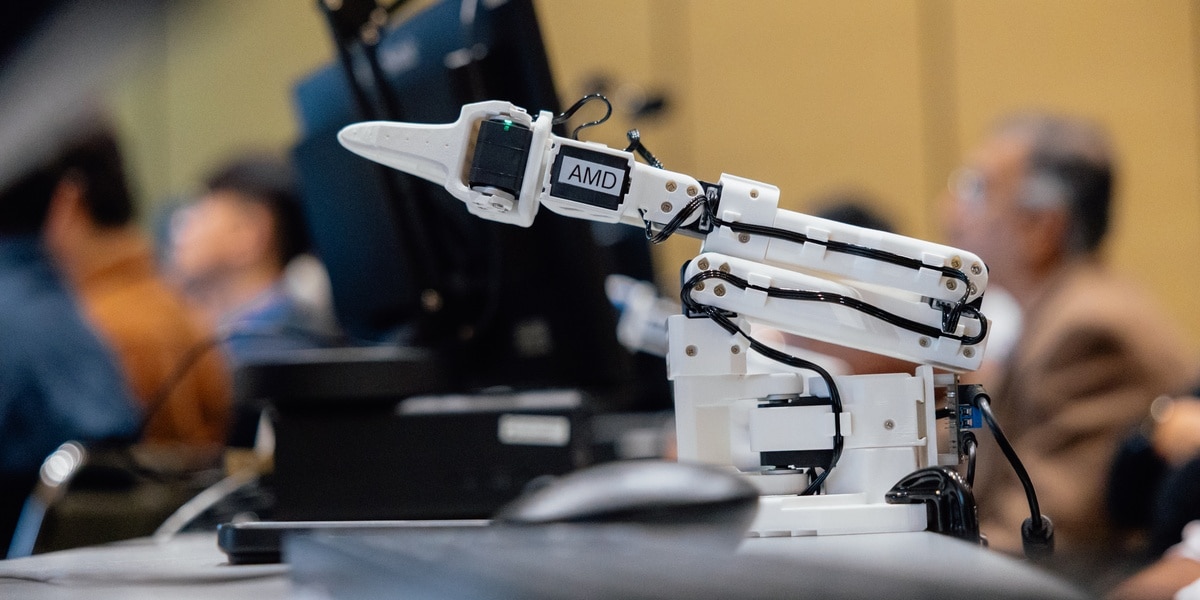
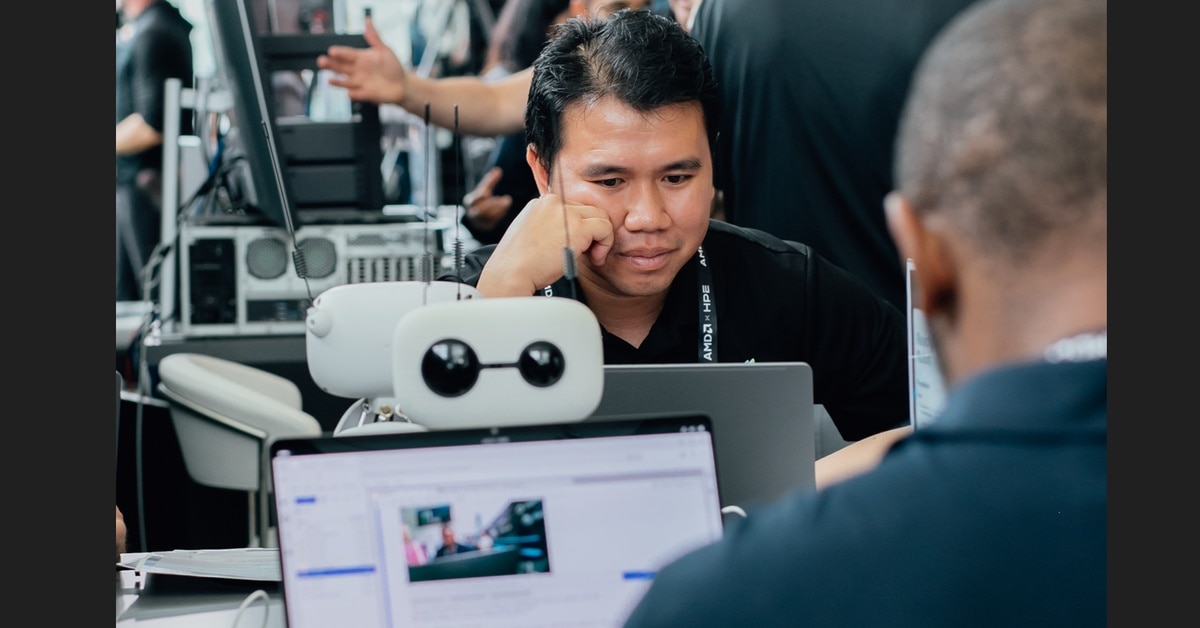
The learning continued in the Developer Zone, where attendees experienced interactive demonstrations including Agentic CUDA-to-HIP, showcasing AI-assisted application portability across GPU platforms, and the Mini Reachy robotics demo, highlighting how AI, computer vision, and robotics work together to create responsive physical systems. Developers can continue exploring these technologies by joining the new Physical AI & Robotics channel in the AMD Developer Community Discord to connect with AMD experts, collaborate with the community, and accelerate robotics and edge AI development.
Drop In, Pick a Lab, Start Building
The Developer Zone gave attendees a place to experiment on their own terms. Dedicated hands-on stations covered AI Agents, Model Fine-tuning, Enterprise AI, Physical AI, Model Fine-Tuning, giving developers access to pre-loaded models and AMD-powered workstations where they could explore, build, and experiment at their own pace.
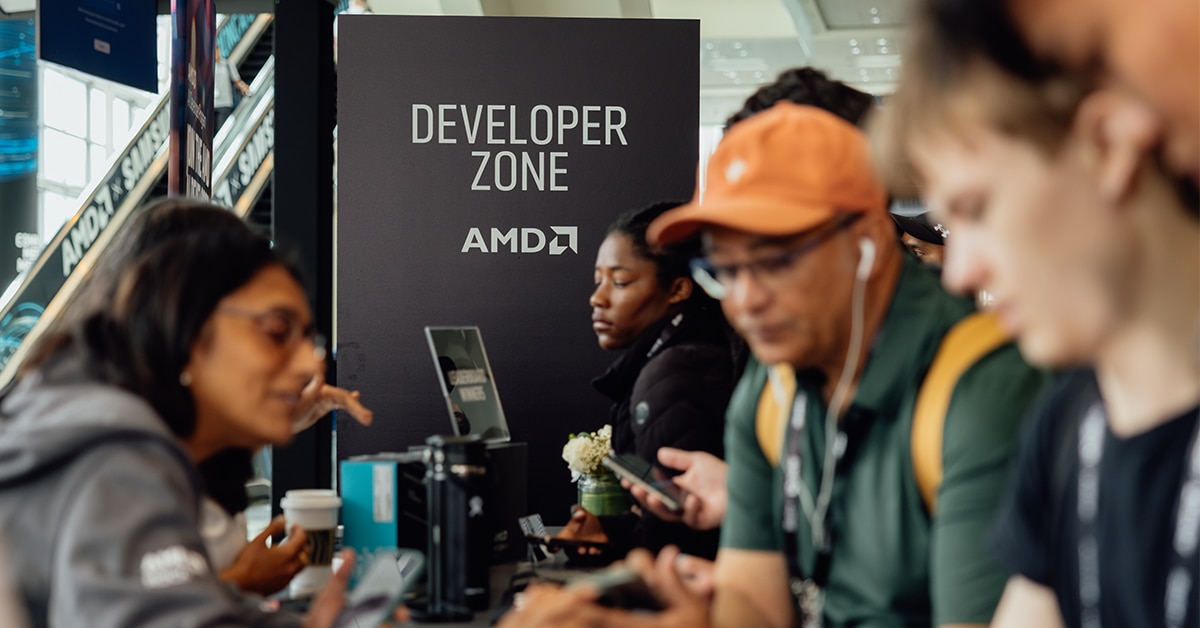
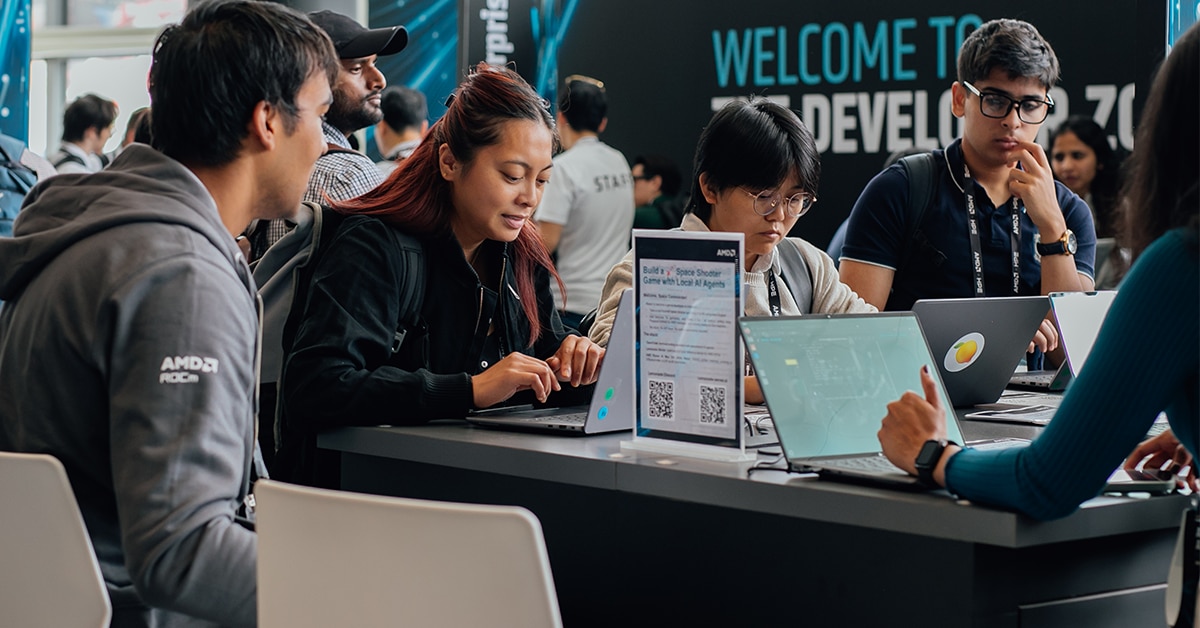
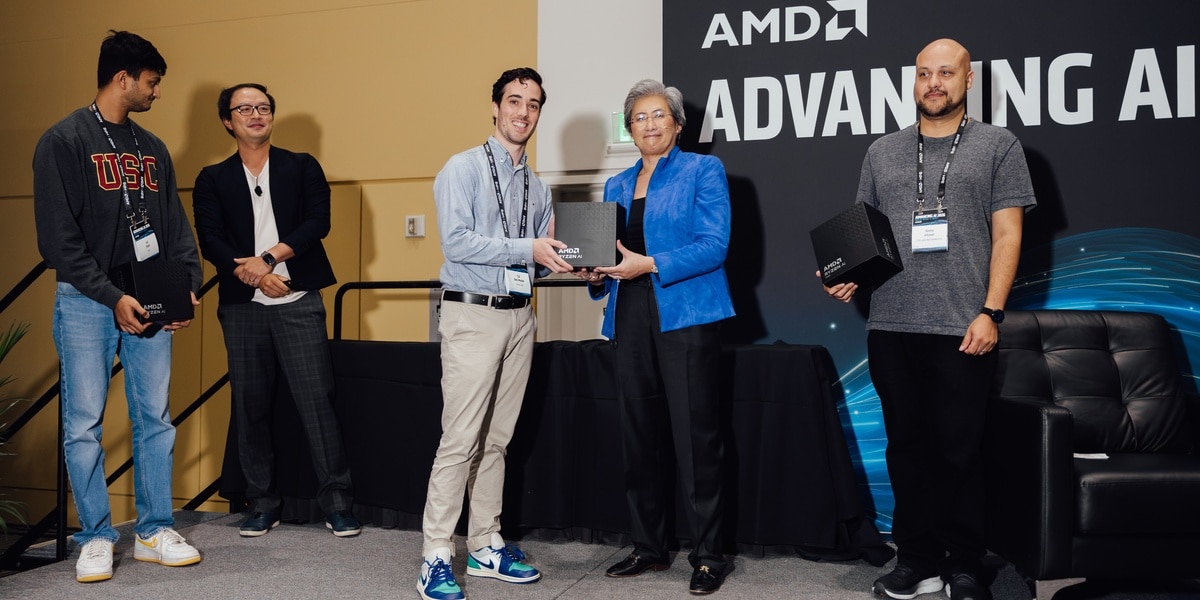
For anyone who wanted a bit of competition mixed in, attendees were able to compete in AMD Developer Quest. Over 1,300 developers earned points across technical sessions, workshops, and Developer Zone activities, climbing the leaderboard for a shot at AMD hardware and prizes. Three of the top prizes were handed out personally by Dr. Lisa Su.
Continue Building with AMD
Advancing AI 2026 said a lot about where the AI developer community is headed and how much AMD is willing to invest in building alongside it. Developers left with new skills, new connections, and in some cases a few new pieces of hardware. But for most of them, this was the start of something, not the end.
Whether you attended in person or are catching up afterward, there are plenty of ways to continue learning. Technical talks from the Developer Sessions will be available on the AMD Developer YouTube channel, making it easy to revisit your favorite sessions or catch the ones you missed.
Continue building with AMD by joining the AMD Developer Program, where you can access free cloud credits, AI training, workshops, community events, and other developer resources.
Ready to put your skills into action? Join the AMD AI DevMaster Hackathon, a global online competition featuring Agentic AI, Multimodal AI, and Physical AI tracks, with opportunities to build on AMD platforms and compete for prizes.

Related Blogs
-
Absci Accelerates AI Antibody Design on AMD Instinct™ GPUs
AMD and Absci achieved a 3x speedup in AI antibody design by running the AbsciBind co-folding model on Instinct™ GPUs with optimized Triton kernels.
October 18, 2026
-
FP16 GEMM Optimization on AMD RDNA™ 3 and RDNA™ 4 Architectures — ROCm Blogs
Learn how to build an FP16 GEMM kernel with WMMA on AMD RDNA 3 and RDNA 4, one optimization at a time, and approach hipBLASLt performance.
October 15, 2026
-
Day 0 Support for Muse Spark Open on AMD
AMD is excited to announce Day-0 support for Meta’s latest Muse Spark Open model family on AMD Instinct™ MI350X and MI355X GPUs
October 15, 2026
-
Introducing FastFlow SDK
Explore AMD FastFlow-SDK for local AI development on AMD Ryzen™ AI NPUs, from running models to customizing inference and optimizing operators with FastFlow, IRON, and HRX.
October 15, 2026
-
MiniCPM Day 0 Support Across AMD Hardware
Explore Day 0 support for MiniCPM-V 4.7 on AMD Radeon™ GPUs, Ryzen™ AI Max processors, and Ryzen™ AI NPUs for on-device AI inference.
October 14, 2026
-
Long Context, One Node: Serving GLM-5.3-FP8 on MI300X with DP8+EP8 — ROCm Blogs
Learn how to serve GLM-5.3-FP8 on one AMD Instinct™ MI300X node with DP8+EP8 and vLLM v0.28 for long-context workloads, and compare it with TP=8.
October 13, 2026
-
Meet the Next AMD Ryzen™ AI Halo
Meet the next AMD Ryzen™ AI Halo developer platform, powered by the AMD Ryzen™ AI Max+ PRO 495 processor. Run larger local LLMs, up to 300B parameters, thanks to the 192GB of unified memory that comes on the new platform.
October 12, 2026
-
AMD AI NIC™ Technology Driving AI-Ready Ethernet
Learn how AMD AI NIC™ technology helps organizations build AI-ready Ethernet networks with open standards, programmability, and transport innovation.
October 11, 2026