AMD EPYC 9005 Server CPUs
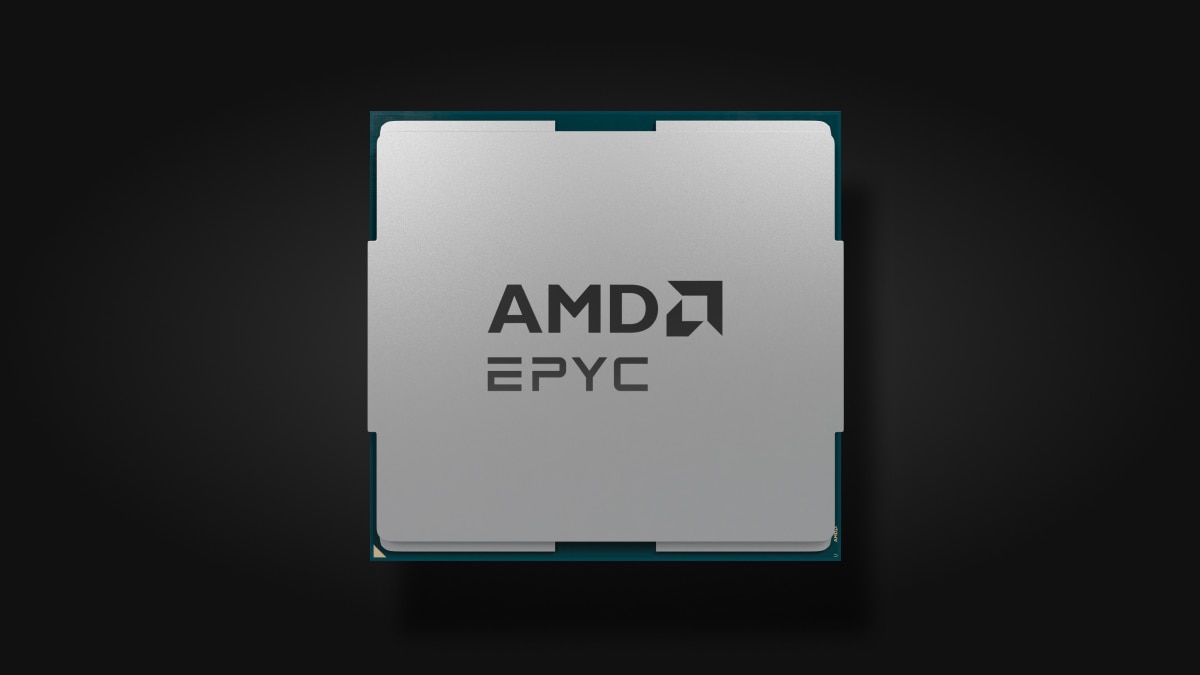
Deliver high core counts and excellent performance per watt and per dollar for cloud services and on-site data centers with AMD EPYC 9005 Server CPUs - the best CPU for enterprise AI.1
Experience exceptional performance for demanding enterprise, AI, and cloud workloads with AMD EPYC™ Server CPUs.
Whether you are looking to upgrade your data center, optimize the cloud, or accelerate with AI workloads, AMD EPYC Server CPUs can help you unlock high performance, energy efficiency, and lower TCO.
AMD EPYC Server CPUs power a broad range of AI workloads, from providing leadership inference to serving as an excellent host CPU for GPUs.
Virtual machines (VMs) powered by AMD EPYC Server CPUs can deliver high performance in the cloud for demanding workloads.
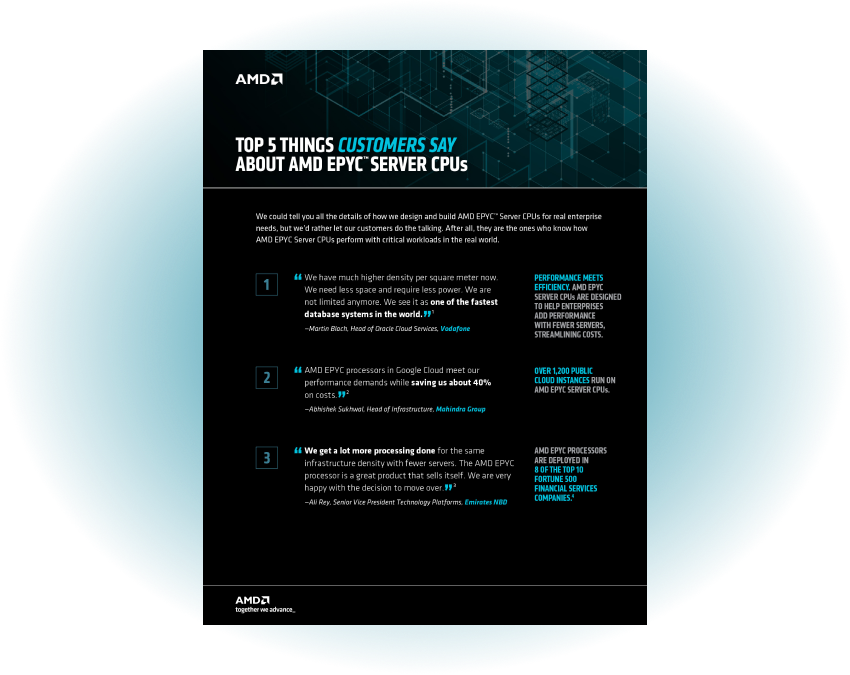
Businesses of all sizes are shifting to AMD EPYC Server CPUs to get high densities, energy efficiency, and total cost of ownership they need to meet real enterprise needs. See what customers are saying about moving to AMD.
AMD EPYC 9000 series server CPUs and Intel Xeon CPUs share the same x86 instruction set, which makes migrating between the two manufacturers relatively simple. It also means the two CPU families are part of the same, vast x86 ecosystem of OEMs, software, and cloud computing resources.
When comparing similar 5th Gen AMD EPYC Server CPUs to Intel Xeon 6 CPUs, AMD EPYC Server CPUs often offer better general computing, end-to-end AI performance, and power efficiency. In general purpose computing, AMD EPYC Server CPUs beat Xeon by up to 35%2. For energy consumption, AMD EPYC Server CPUs are up to 66% more power efficient than Xeon.3 In end-to-end AI performance, AMD EPYC Server CPUs beat Xeon by up to 70%4.
Since its introduction in 2018, AMD EPYC Series server CPUS have delivered consistent Leadership Performance and Efficiency, Fueling AMD EPYC™ Growth to Over 40% Share.5
Learn more information about switching from Intel to AMD.
5th Generation AMD EPYC 9005 series server CPUs have higher max core counts, and faster clock speeds than 4th Generation AMD EPYC 9004 series server CPUs, while maintaining leadership CPU energy efficiency vs 6th Generation Xeon CPUs, making them ideal for the most demanding workloads.6
4th Generation AMD EPYC 9004 series server CPUs are very capable processors that provide excellent value for general enterprise workloads, cloud services, databases, and cost-sensitive applications that demand high core counts.
Consider testing your workloads on a range of AMD EPYC 9005 and 9004 series server CPU cloud instances to determine the ideal balance of performance, core counts, and processor generation. The AMD Data Center Partner Ecosystem page lists current AMD EPYC cloud providers.
Start with your current cloud service providers and OEM hardware partners. Nearly all of them have solutions powered by AMD EPYC 9000 series server CPUs. For a complete list of partners, visit the AMD Data Center Partner Ecosystem.
AI inference workloads, including generative AI and large language models, run well on AMD EPYC 9000 series server CPUs. Whether your AI workloads will perform adequately depends on latency requirements, model size, and query volume. Learn more about data center AI with AMD EPYC server CPUs.
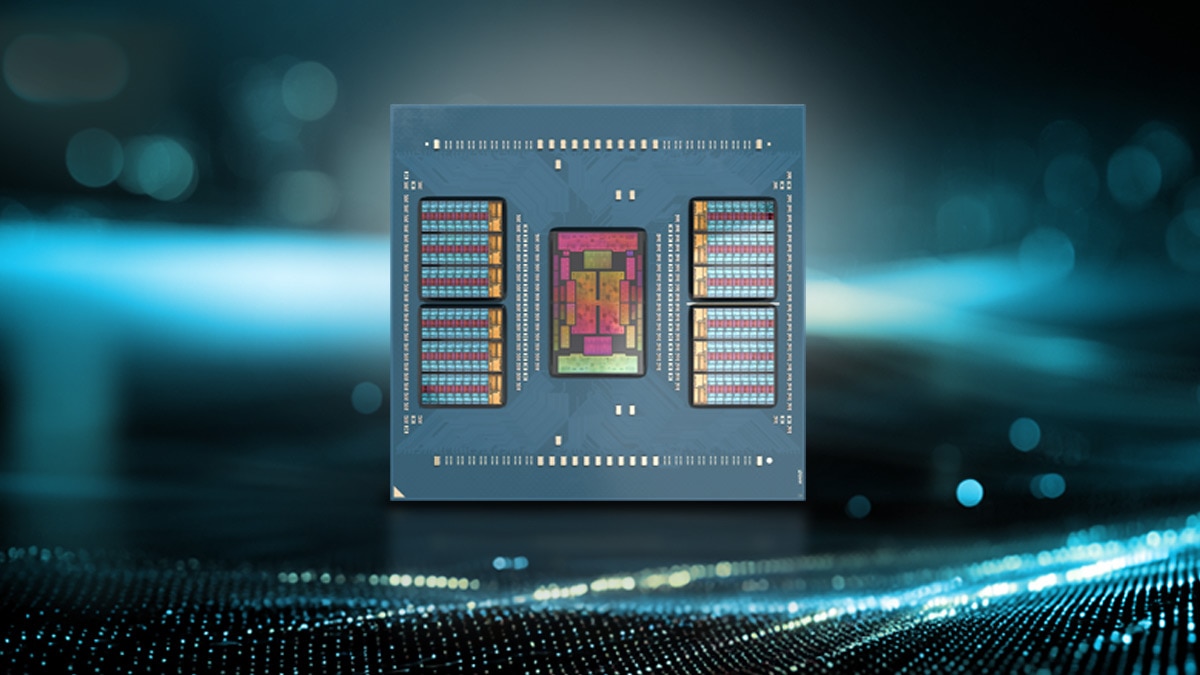
AMD “Zen” is our hybrid, multi-chip architecture. It replaces monolithic CPU design with multiple technologies that help AMD deliver consistently innovative, high-performance products.
In the AMD EPYC 9000 Series Server CPUs, each specific model is built with “Zen” or “Zen C” cores. Models built using “Zen” cores are optimized for per-core performance featuring large L3 caches and high frequencies. Models using “Zen C” cores are optimized for high core-density and efficiency.
Choose “Zen”‑based EPYC 9000 models when you need the high individual core performance. Choose “Zen C”‑based models when you need high core counts and efficiency for heavily parallel workloads.
Unlike Intel Xeon “performance” and “efficiency” cores — which have different features, capabilities, and instruction sets — all AMD EPYC ”Zen” and “Zen C” cores share the same register-transfer logic and an identical x86 instruction set. Workloads don’t need to be tuned or rewritten to run across generations or versions of the “Zen” architecture. Learn more about AMD “Zen” core architecture.
Sign up for AMD news and announcements including upcoming events and webinars.
Ask for an AMD EPYC Server CPU sales expert to contact you.