

AMD 3D V-Cache™ Technology Drives Density and Energy Efficiency Leadership
>200X
Interconnect Density
Compared to On-Package 2D Chiplet
>15X
Interconnect Density
Compared to Micro Bump 3D
Based on AMD Internal Data
>3X
Interconnect Energy Efficiency
Compared to Micro Bump 3D
2nd Gen AMD 3D V-Cache Technology

Dig Deeper into AMD 3D V-Cache Technology
AMD Ryzen processors with AMD 3D V-Cache Technology
AMD continues to be the leader in advanced packaging technology with AMD 3D V-Cache technology. AMD has enabled a 3D vertical cache to create the world’s fastest gaming desktop processor when it was launched3 – the AMD Ryzen™ 7 5800X3D – and today, the world’s fastest gaming processor with the AMD Ryzen 7 9850X3D.1
With 2nd Gen AMD 3D V-Cache technology, we turned the entire design on its head. With the extra memory now sitting below the processor cores, those cores now have direct access to the cooler. And when a chip runs cooler, it can run faster. That’s exactly what happens.
The AMD Ryzen 7 9850X3D Processor delivers a boost clock speed 400 MHz higher than its predecessor. Paired with advanced "Zen 5" processor architecture, it becomes a true gaming powerhouse. With the AMD Ryzen™ 9 9950X3D2 Dual Edition Processor, the world’s first dual AMD 3D V‑Cache Technology desktop processor, AMD opens a new future of computing for developers and creators.
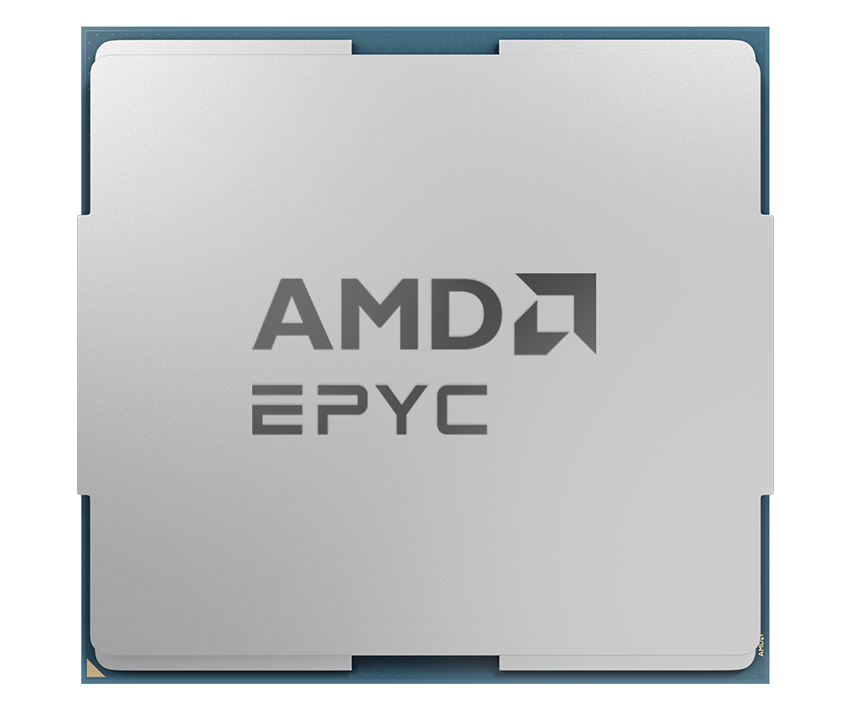
AMD EPYC™ 9004 Series Processors with AMD 3D V-Cache Technology
With the addition of AMD 3D V-Cache technology, EPYC processors reach new heights to become the world’s highest performing x86 server processors for technical computing2 — designed to accelerate product development cycles and boost productivity. These are the first server processors to leverage true 3D die stacking, using a copper-to-copper “bumpless” design that enables 200X the interconnect density compared to current 2D technologies and over 15X the interconnect density compared to other 3D technologies using solder bumps.4
- Deliver breakthrough per-core performance with 3X the L3 cache/1152 MBs per socket
- Help lower TCO while accelerating product development
- Support sustainability through exceptional energy efficiency
- Provide the confidence of modern security
- Socket compatible with existing AMD EPYC 9004 platforms
Footnotes
- Testing done by AMD performance labs October 2025, on a test system configured with Ryzen 7 9800X3D and 9850X3D CPUs, 32 GB DDR5-6000 Memory, Windows 11 Pro, X870E Motherboard, and Nvidia GeForce RTX 5090 (GeForce 581.29) comparing gaming performance in the following games: Assassin’s Creed Shadows (DX12, High), Battlefield 6 (DX12, High), Baldur’s Gate 3 (Vulkan, High), Black Myth: Wukong (DX12, High), Borderlands 3 (DX12, High, Borderlands 4 (DX12, High), Call of Duty: Black Ops 6 (DX12, Ultra), Call of Duty: Black Ops 7 (DX12, Ultra), Counter-Strike 2 (DX12, High), Cyberpunk 2077 (DX12, High), DOOM: The Dark Ages (Vulkan, High), F1 25 (DX12, High), Forza Horizon 5 (DX12, High), Far Cry (DX12, High), FinalFantasy14 Dawntrail (2024) (DX11, Maximum FSR), Ghost of Tsushima (DX12, High), Grand Theft Auto V Enhanced (DX11, High), Hitman 3 (DX12, High Dubai), Hogwarts Legacy (DX12, High), Horizon Zero Dawn (DX12, Favor Quality), Indiana Jones and the Great Circle (DX12, Ultra), The Last of Us Part 2 (DX12, High), League of Legends (DX11, High), Monster Hunter Wilds (DX12, High), Red Dead Redemption 2 (DX12, High Default), Mafia: The Old Country (DX12, High), Marvel’s Spider-Man Remastered (DX12, High), Marvel’s Spider-Man 2 (DX12, High), Metro Exodus Enhanced Edition (DX12, Ultra), Marvel Rivals (DX12, High), Shadow of the Tomb Raider (DX12, High), Sid Meier’s Civilization VII (DX12, High), Star Wars Outlaws (DX12, High), Starfield (DX12, High), Warhammer 40,000: Space Marine 2 (DX12, High), Tom Clancy’s Rainbow Six Siege (DX12, High), Watch Dogs: Legion (DX12, High). Performance data captured with latest game build as of Sept 25th, 2025. GNR-54.
- SP5-165 The EPYC 9684X CPU is the world’s highest performance x86 server CPU for technical computing, comparison based on SPEC.org publications as of 6/13/2023 measuring the score, rating or jobs/day for each of SPECrate®2017_fp_base (SP5-009E), Altair AcuSolve (https://www.amd.com/en/processors/server-tech-docs/amd-epyc-9004x-pb-altair-acusolve.pdf), Ansys Fluent (https://www.amd.com/en/processors/server-tech-docs/amd-epyc-9004x-pb-ansys-fluent.pdf), OpenFOAM (https://www.amd.com/en/processors/server-tech-docs/amd-epyc-9004x-pb-openfoam.pdf), Ansys LS-Dyna (https://www.amd.com/en/processors/server-tech-docs/amd-epyc-9004x-pb-ansys-ls-dyna.pdf), and Altair Radioss (https://www.amd.com/en/processors/server-tech-docs/amd-epyc-9004x-pb-altair-radioss.pdf) application test case simulations average speedup on 2P servers running 96-core EPYC 9684X vs top 2P performance general-purpose 56-core Intel Xeon Platinum 8480+ or top-of-stack 60-core Xeon 8490H based server for technical computing performance leadership. “Technical Computing” or “Technical Computing Workloads” as defined by AMD can include: electronic design automation, computational fluid dynamics, finite element analysis, seismic tomography, weather forecasting, quantum mechanics, climate research, molecular modeling, or similar workloads. Results may vary based on factors including silicon version, hardware and software configuration and driver versions. SPEC®, SPECrate® and SPEC CPU® are registered trademarks of the Standard Performance Evaluation Corporation. See www.spec.org for more information.
- Based on testing by AMD as of 12/14/2021. Performance evaluated with Watch Dogs Legion, Far Cry 6, Gears 5, Final Fantasy XIV, Shadow of the Tomb Raider and CS:GO. All games test at 1920x1080p resolution with the HIGH in-game quality preset (or equivalent). System configuration: Ryzen 7 5800X3D and AMD Reference Motherboard with 2x8GB DDR4-3600. Core i9-12900K and ROG Maximus Z690 Hero motherboard with BIOS 0702 and 2x16GB DDR5-5200. Both systems configured with GeForce RTX 3080 on driver 472.12, Samsung 980 Pro 1TB, NZXT Kraken X62, Windows 11 28000.282. R5K-107
- Based on calculated areal density and based on bump pitch between AMD hybrid bond AMD 3D V-Cache stacked technology compared to AMD 2D chiplet technology and Intel 3D stacked micro-bump technology. EPYC-026
- Testing done by AMD performance labs October 2025, on a test system configured with Ryzen 7 9800X3D and 9850X3D CPUs, 32 GB DDR5-6000 Memory, Windows 11 Pro, X870E Motherboard, and Nvidia GeForce RTX 5090 (GeForce 581.29) comparing gaming performance in the following games: Assassin’s Creed Shadows (DX12, High), Battlefield 6 (DX12, High), Baldur’s Gate 3 (Vulkan, High), Black Myth: Wukong (DX12, High), Borderlands 3 (DX12, High, Borderlands 4 (DX12, High), Call of Duty: Black Ops 6 (DX12, Ultra), Call of Duty: Black Ops 7 (DX12, Ultra), Counter-Strike 2 (DX12, High), Cyberpunk 2077 (DX12, High), DOOM: The Dark Ages (Vulkan, High), F1 25 (DX12, High), Forza Horizon 5 (DX12, High), Far Cry (DX12, High), FinalFantasy14 Dawntrail (2024) (DX11, Maximum FSR), Ghost of Tsushima (DX12, High), Grand Theft Auto V Enhanced (DX11, High), Hitman 3 (DX12, High Dubai), Hogwarts Legacy (DX12, High), Horizon Zero Dawn (DX12, Favor Quality), Indiana Jones and the Great Circle (DX12, Ultra), The Last of Us Part 2 (DX12, High), League of Legends (DX11, High), Monster Hunter Wilds (DX12, High), Red Dead Redemption 2 (DX12, High Default), Mafia: The Old Country (DX12, High), Marvel’s Spider-Man Remastered (DX12, High), Marvel’s Spider-Man 2 (DX12, High), Metro Exodus Enhanced Edition (DX12, Ultra), Marvel Rivals (DX12, High), Shadow of the Tomb Raider (DX12, High), Sid Meier’s Civilization VII (DX12, High), Star Wars Outlaws (DX12, High), Starfield (DX12, High), Warhammer 40,000: Space Marine 2 (DX12, High), Tom Clancy’s Rainbow Six Siege (DX12, High), Watch Dogs: Legion (DX12, High). Performance data captured with latest game build as of Sept 25th, 2025. GNR-54.
- SP5-165 The EPYC 9684X CPU is the world’s highest performance x86 server CPU for technical computing, comparison based on SPEC.org publications as of 6/13/2023 measuring the score, rating or jobs/day for each of SPECrate®2017_fp_base (SP5-009E), Altair AcuSolve (https://www.amd.com/en/processors/server-tech-docs/amd-epyc-9004x-pb-altair-acusolve.pdf), Ansys Fluent (https://www.amd.com/en/processors/server-tech-docs/amd-epyc-9004x-pb-ansys-fluent.pdf), OpenFOAM (https://www.amd.com/en/processors/server-tech-docs/amd-epyc-9004x-pb-openfoam.pdf), Ansys LS-Dyna (https://www.amd.com/en/processors/server-tech-docs/amd-epyc-9004x-pb-ansys-ls-dyna.pdf), and Altair Radioss (https://www.amd.com/en/processors/server-tech-docs/amd-epyc-9004x-pb-altair-radioss.pdf) application test case simulations average speedup on 2P servers running 96-core EPYC 9684X vs top 2P performance general-purpose 56-core Intel Xeon Platinum 8480+ or top-of-stack 60-core Xeon 8490H based server for technical computing performance leadership. “Technical Computing” or “Technical Computing Workloads” as defined by AMD can include: electronic design automation, computational fluid dynamics, finite element analysis, seismic tomography, weather forecasting, quantum mechanics, climate research, molecular modeling, or similar workloads. Results may vary based on factors including silicon version, hardware and software configuration and driver versions. SPEC®, SPECrate® and SPEC CPU® are registered trademarks of the Standard Performance Evaluation Corporation. See www.spec.org for more information.
- Based on testing by AMD as of 12/14/2021. Performance evaluated with Watch Dogs Legion, Far Cry 6, Gears 5, Final Fantasy XIV, Shadow of the Tomb Raider and CS:GO. All games test at 1920x1080p resolution with the HIGH in-game quality preset (or equivalent). System configuration: Ryzen 7 5800X3D and AMD Reference Motherboard with 2x8GB DDR4-3600. Core i9-12900K and ROG Maximus Z690 Hero motherboard with BIOS 0702 and 2x16GB DDR5-5200. Both systems configured with GeForce RTX 3080 on driver 472.12, Samsung 980 Pro 1TB, NZXT Kraken X62, Windows 11 28000.282. R5K-107
- Based on calculated areal density and based on bump pitch between AMD hybrid bond AMD 3D V-Cache stacked technology compared to AMD 2D chiplet technology and Intel 3D stacked micro-bump technology. EPYC-026