AMD Collaborates with Microsoft and Siemens to Support Shift-Left Development for Software-Defined Vehicles
Jan 02, 2026

Collaboration enables cloud-based simulation, nested virtualization, and mixed-criticality workload support for automotive developers
The rise of software-defined vehicles (SDVs) is accelerating automotive innovation. To keep pace, automotive developers are adopting a shift-left approach that enables software validation and testing earlier in the design cycle.
AMD today announced new capabilities designed to support shift-left development for automotive software using cloud-based simulation and digital twin technologies on the Microsoft Azure cloud platform. By enabling a shift-left approach, OEMs and Tier-1 suppliers can improve efficiency, reduce development risks, and accelerate time-to-market for SDVs.
As part of this initiative, AMD introduced its Virtualized Automotive Stack (VAS), now available on AMD Radeon™ PRO V710 GPUs and AMD EPYC™ CPUs as part of the NVads V710 v5-series virtual machines on Azure available across multiple regions worldwide. This integration provides the performance and flexibility needed for automotive software development in cloud environments.
The VAS stack includes VirtIO for I/O devices and the Xen Hypervisor running on top of Microsoft Hyper-V, enabling nested virtualization on Azure GPU instances for the first time. This capability allows developers to simulate and validate mixed-criticality SDV workloads—such as safety-critical systems, infotainment, and instrument clusters—on centralized SoCs in a secure, cloud-based environment. The combination of VAS and Xen helps provide isolation and robustness, supporting reliable execution of diverse workloads on the same silicon.
Building on the AMD relationship with Siemens, the Siemens PAVE360™ digital twin simulation environment is now integrated with the AMD VAS stack on Azure. This integration enables developers to leverage AMD compute and graphics technologies for system-level simulation and digital twin capabilities, supporting early validation and helping reduce time-to-market for automotive platforms.
Automotive innovation increasingly depends on the use of cloud infrastructure to enable digital twin simulations for early software development and system validation. The AMD automotive stack with the Xen hypervisor on Microsoft Azure provides essential middleware components, enabling OEMs and Tier-1 suppliers to begin software development earlier and leverage the scalability of cloud platforms in support of SDVs.
Contributors

Related Blogs
-
Rapid Validation on AMD Versal Silicon without Leaving MATLAB or Python
AMD Vitis™ Hardware in the Loop (Vitis HIL) bridges simulation and hardware bring-up by enabling system-level verification on evaluation hardware directly from existing MATLAB® or Python™ test environments.
October 07, 2026
-
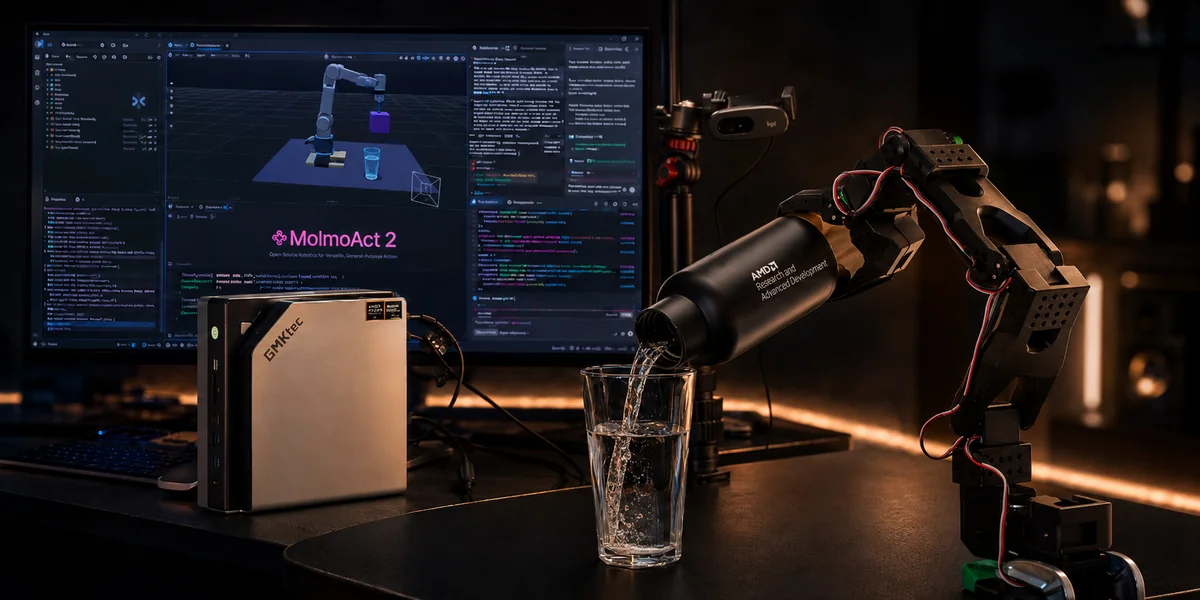
Running MolmoAct2 Robot Policy on an AMD Ryzen AI Max+ 395 Mini PC — ROCm Blogs
In this tutorial, users are introduced to a state of the art vision-language-action model and the steps to implement the model directly optimized for the AMD Ryzen AI Max+ 395 Computer.
September 29, 2026
-
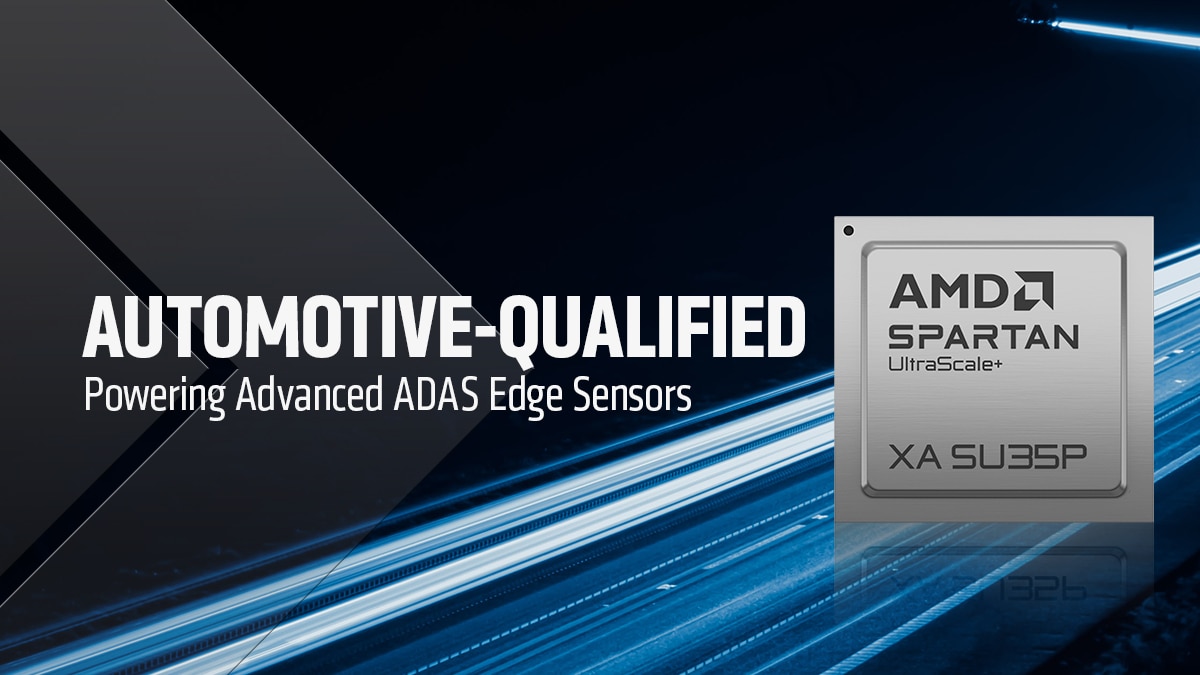
AMD Expands Automotive-Grade FPGAs with Spartan UltraScale+ XA FPGAs for ADAS Applications
The Spartan™ UltraScale+™ XA device joins the AMD portfolio of automotive-grade, safe, and highly scalable FPGAs and adaptive SoCs.
September 29, 2026
-
Beyond TOPS: AMD Ryzen™ AI Embedded X100 at the Edge
Scale agentic AI at the edge with AMD Ryzen™ AI Embedded X100 Series: more concurrent agents, unified memory, x86 compatibility, and long life.
September 24, 2026
-
From Sensor to Insight: Production-Ready Single-Chip Edge AI. Proven.
AMD Versal™ AI Edge Series Gen 2 and Vitis™ AI accelerate production-ready edge and physical AI. Learn how they speed up your deployment.
September 22, 2026
-
Enabling Physical AI Agents with Lemonade — ROCm Blogs
Learn to deploy local agents for interactive robot arm manipulation using the Lemonade framework.
August 24, 2026
-
IPMX Demystified: What We’ve Learned and How to Deploy
The Internet Protocol Media Experience (IPMX) has entered a new phase. Official IPMX testing and certification program is now live, and at ISE 2026 the industry unveiled its first wave of certified products. Manufacturers can now evaluate IPMX as a deployable standard rather than a promising framework. This article walks through what IPMX is, how the certification program works, what the first certified products tell us, what early deployments are showing, and how Adeas-Nextera FPGA IP cores running on AMD adaptive silicon can help manufacturers reach certifiable products faster.
August 03, 2026
-
From CUDA® to AMD ROCm™ Software Without Starting Over
Ryzen AI Halo launches at Micro Center, powering agentic PCs for developers building larger, next-generation local AI applications.
July 23, 2026