AMD, Dell Technologies and the University of Cambridge Launch UK Sovereign AI Innovation Lab
Jun 10, 2026

From accelerating scientific discovery and advancing healthcare research to transforming public services, AI is becoming a critical driver of innovation and economic growth across the U.K. To help advance the next generation of AI infrastructure and AI-powered scientific breakthroughs, AMD, Dell Technologies and the University of Cambridge have announced plans to establish the new Sovereign AI Innovation Lab (SAIL) in the United Kingdom.
The initiative represents a major step forward in the U.K.'s ambition to build world-class AI capabilities while advancing open and interoperable AI technologies.
As nations increasingly view AI as a strategic capability, leadership will depend on access to advanced models and on the ability to combine AI, computing and scientific expertise to accelerate discovery, strengthen competitiveness and fuel economic growth.
Building on a Strong Foundation for AI Research
The announcement of SAIL follows the recent expansion of the University of Cambridge's AI Research Resource (AIRR) that includes deployment of the Zenith AI supercomputer. Powered by 5th Gen AMD EPYC™ processors and AMD Instinct™ MI355X GPU accelerators integrated into Dell infrastructure, Zenith can provide researchers and innovators with the advanced computing capabilities needed to support increasingly complex AI, simulation and scientific workloads.
Together, SAIL and Zenith will expand access to advanced AI and high-performance computing infrastructure for researchers, healthcare organizations, public-sector institutions and industry partners across the U.K.
As scientific and engineering challenges grow in complexity, access to advanced AI and high-performance computing resources becomes increasingly important. Systems such as Zenith provide researchers with the computational foundation needed to explore new approaches to discovery and innovation.
A Collaborative Hub for AI Innovation
Hosted through the University of Cambridge Research Computing Service, SAIL can serve as a collaborative environment where organizations can evaluate, develop and deploy advanced AI technologies.
The lab is expected to support a broad range of applications across scientific research, healthcare, climate science, engineering, public services and national-scale AI initiatives. By bringing together technology leaders, researchers and public-sector stakeholders, SAIL aims to accelerate the adoption of AI while helping ensure deployments are secure, trusted and scalable.
Advancing Open and Interoperable AI Infrastructure
A key focus of SAIL is the planned development of open and interoperable AI infrastructure built on AMD computing platforms, AMD ROCm™ software and cloud native technologies.
The lab will explore deployment models spanning AI training and inference, scientific foundation models, simulation-assisted AI workflows, trusted research environments and secure public-sector AI services. Through this work, SAIL aims to help organizations build AI capabilities with greater flexibility, interoperability and long-term choice.
Accelerating AI for Science
SAIL is intended to work alongside Cambridge's growing national AI infrastructure footprint, including the Zenith AI supercomputer and the Sunrise fusion AI system developed in partnership with the United Kingdom Atomic Energy Authority (UKAEA).
Together, these systems will support a diverse range of AI-for-science applications, including healthcare research, climate modelling, materials science, engineering simulation, fusion energy research and scientific AI model development.
Many of the world's most important scientific challenges require more than AI alone. They depend on the convergence of artificial intelligence, simulation, data and high-performance computing to accelerate discovery and deepen scientific understanding. This emerging approach – often referred to as AI for Science – is creating new opportunities across healthcare, climate science, materials research, engineering and energy.
Supporting the Future of Fusion Energy
One of the most ambitious scientific efforts supported by this expanding AI ecosystem is fusion energy research.
Sunrise is a second Dell-AMD AI supercomputer being built now; funded by the Department for Energy Security & Net Zero (DESNZ), owned by UKAEA and operated by the University of Cambridge. Sunrise is part of a long standing UKAEA-University of Cambridge partnership and dedicated to the fusion mission.
Built on the same Cambridge-designed AMD and Dell architecture as Zenith, Sunrise is designed to help researchers tackle one of the world's most complex scientific and engineering challenges: delivering fusion power capable of producing net-positive energy. The system also forms part of a broader effort to establish advanced AI capabilities at Culham Campus, home to the U.K.'s first AI Growth Zone.
Enabling the Next Generation of AI Infrastructure
As demand for AI continues to grow across research, industry and government, initiatives such as the Sovereign AI Innovation Lab demonstrate how open technology ecosystems and strategic partnerships can help unlock innovation at scale.
By bringing together advanced infrastructure, open software and scientific expertise, AMD, Dell and the University of Cambridge are helping to lay the foundation for the U.K.'s next era of AI-driven discovery and innovation.
Through Zenith, Sunrise and SAIL, artificial intelligence, high-performance computing and scientific research converge to accelerate discovery, strengthen competitiveness and help solve some of society's most important challenges.


Related Blogs
-
Pre-Training Hybrid LLMs from Scratch in Primus on AMD Instinct™ GPUs — ROCm Blogs
Pre-train hybrid LLMs mixing MLA attention with Gated DeltaNet, Kimi Delta Attention and Mamba2 mixers on AMD Instinct MI355X GPUs, with open recipes.
October 07, 2026
-
DI Series: Serving Kimi-K3 MXFP4 Wide-EP Disaggregated on AMD Instinct MI300X and MI325X — ROCm Blogs
Learn how to serve a 1.4 TiB Kimi-K3 MXFP4 mixture-of-experts model disaggregated across AMD Instinct MI300X and MI325X GPUs.
October 07, 2026
-
AMD Instinct MI455X vs MI355X: A Technical Look at the Advancing AI 2026 Inference Numbers — ROCm Blogs
Explore the MI455X vs MI355X inference numbers from Advancing AI 2026, and learn how each benchmark was measured and what it really means.
October 07, 2026
-
How Agentic AI Is Expanding the Role of the DPU
As agentic AI drives more stateful workloads, DPUs are becoming critical for networking, storage, KV-cache management, and infrastructure efficiency.
October 05, 2026
-
MoRI UMBP Empowers AMD Instinct GPUs
See how UMBP, MoRI and SGLang optimize KV cache reuse to boost AMD Instinct™ MI355X GPU agentic AI performance and cost efficiency
October 01, 2026
-
Automating Performance Bottleneck Identification with the TraceLens Agent — ROCm Blogs
TraceLens Agent is an agentic workflow that examines GPU traces to deliver a prioritized optimization report, detailing root causes and fixes.
September 29, 2026
-
MORI CCO
MORI CCO enables compute-communication overlap on AMD Instinct™ GPUs. Build faster distributed inference and training kernels with device-side communication.
September 29, 2026
-
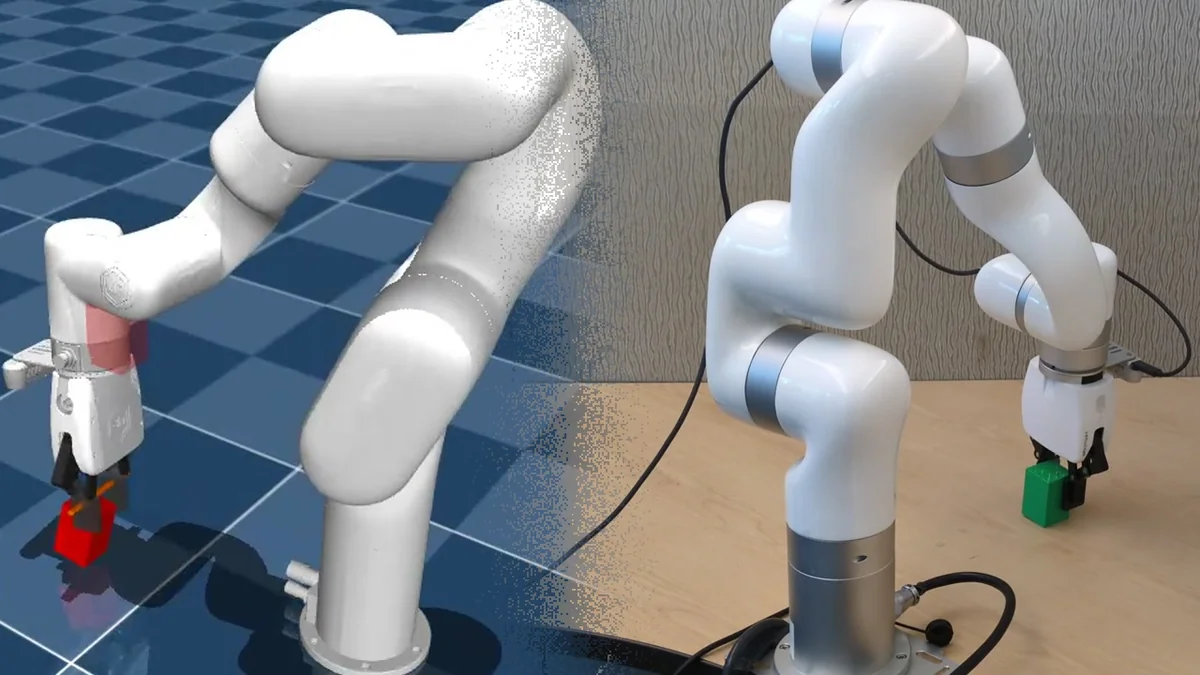
Unlocking Sim2Real for a Robotic Arm with RL Accelerated by AMD Instinct GPUs — ROCm Blogs
Train an XArm-6 pick-and-lift policy with PPO in MuJoCo Warp on AMD Instinct GPUs, then transfer it to the real robot.
September 28, 2026