Modern Security from Silicon to OS: Why SMBs Should Move Beyond Windows Server 2016
Aug 17, 2026

With Windows Server 2016 extended support ending on January 12th, 2027, Microsoft recommends that organizations upgrade, migrate, or purchase Extended Security Updates for eligible deployments.1
Customers still running Windows Server 2012 or Windows Server 2012 R2 face an even nearer deadline, with Extended Security Updates ending in October 13th, 2026.2
For SMBs, this is more than an operating system upgrade. It is an opportunity to modernize security, improve operational resilience, and establish a strong foundation for future growth. Moving to Windows Server 2025 on modern server platforms - such as systems powered by AMD EPYC™ 4005 Series Server CPUs - can help organizations establish a more modern IT foundation.1
Helping You Secure What Matters Most
Why This Transition Matters
When an operating system reaches end of support, it may continue to run, but it becomes harder to protect and maintain. After standard support ends, newly discovered vulnerabilities may no longer be patched through standard support channels, and unsupported or aging systems can increase operational complexity over time.
Extended Security Updates may help eligible organizations bridge short-term migration needs, but Microsoft describes ESU as “a last-resort option intended as a temporary bridge” while organizations migrate to newer, supported platforms.3
At the same time, SMBs and independent branch offices face the threats of ransomware, phishing, and credential-based attacks while being expected to maintain uptime, protect data, and support compliance requirements with limited IT resources. As infrastructure ages, meeting these expectations can become more challenging.4
A Modern Approach to Security and Performance
Windows Server 2025 introduces built-in security innovations designed to help defend against modern threats. Features such as secured-core server protections, stronger identity security, and expanded encrypted communications help organizations improve their security posture while supporting Microsoft's Zero Trust security approach.5,6
However, software alone is only part of the solution. Many Windows Server 2025 security features depend on underlying hardware capabilities. Older servers may not fully support these technologies, which can limit the benefits of an operating system upgrade.
This is why many organizations choose to modernize both hardware and software together. Doing so can simplify management, may improve performance depending on workload and configuration, and help ensure that new security features are fully utilized.
Why AMD EPYC™ 4005 Series Server CPUs can be a Strong Foundation
Modern security from Silicon to OS. Right‑sized performance. A foundation for growth.
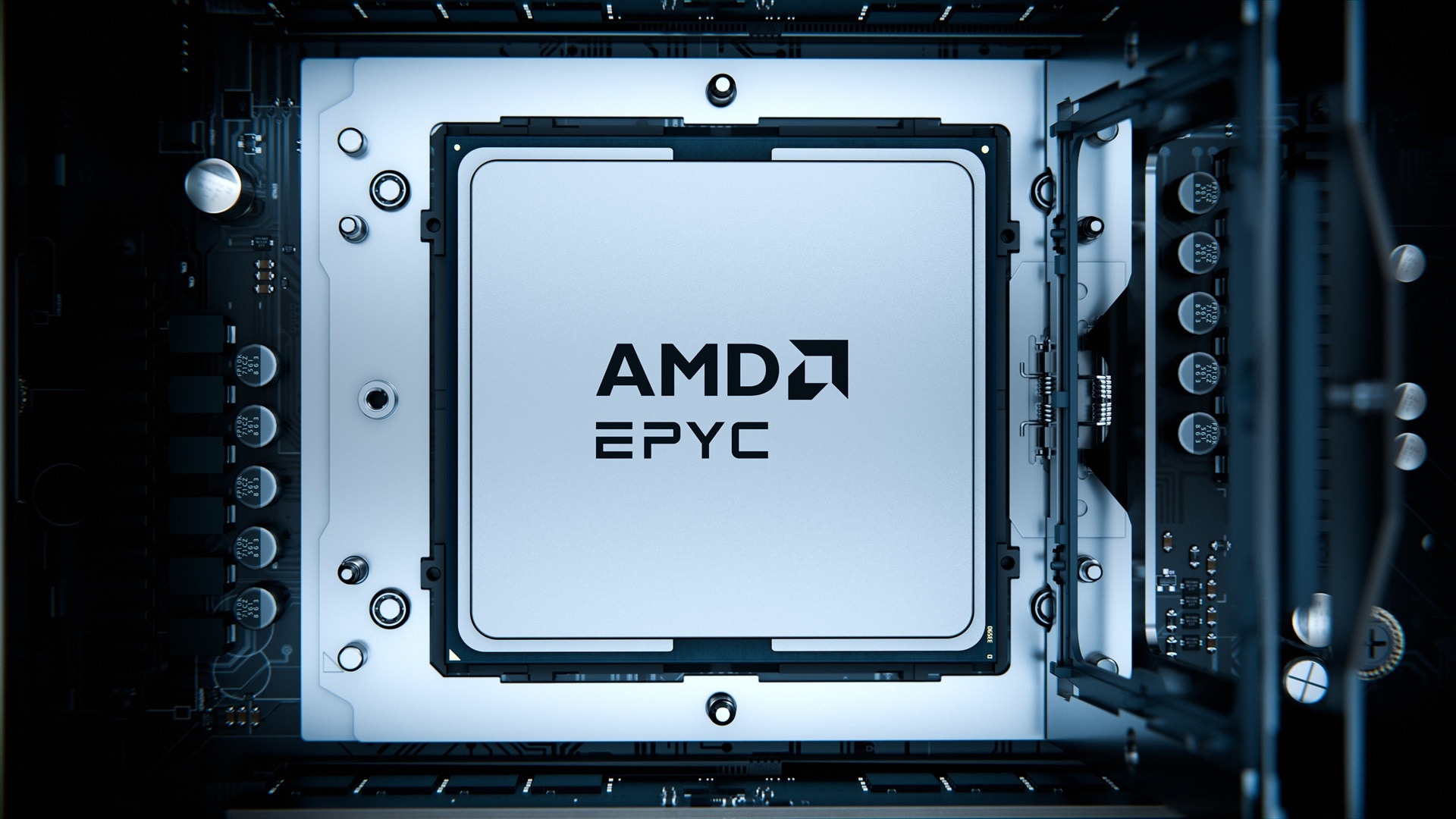
AMD EPYC™ 4005 Server CPUs extend the EPYC processor family into entry-level server systems for small business customers and hosted IT services providers.
Designed for SMB, remote office, branch office, and select edge deployments, AMD EPYC 4005 Server CPU-based systems can offer a practical balance of performance, efficiency, manageability, and platform value. The AMD EPYC™ 4545P Server CPU, for example, is a 16-core processor with a 65W default TDP, which makes it relevant for compact server designs and power-conscious deployments.7
Security capabilities such as AMD Infinity Guard and Secure Memory Encryption can help support a layered security strategy.8
When deployed in server-class platforms such as the Lenovo ThinkSystem ST45 V3, organizations also benefit from enterprise server platforms designed for business environments.9
Taking a Practical Path Forward
The transition away from Windows Server 2016 is approaching, but it does not need to be disruptive. With proper planning, it can become an opportunity to improve security posture and performance while reducing long-term operational risk. For organizations still using Windows Server 2012, Windows Server 2012 R2, or older platforms, Microsoft states that once products reach end of support, security updates and bulletins end, which can create security or compliance issues and put business applications at risk.10 That makes now the right time to assess upgrade, migration, or ESU options as part of a broader modernization plan.
For many SMBs, the best first step is not a hardware quote - it is a readiness conversation. A Microsoft partner or trusted IT provider can help assess application compatibility, licensing, security requirements, backup strategy, and server sizing before building a phased migration plan.
Take the Next Step
- Talk to a Microsoft Solution Partner about your upgrade strategy11
- Explore the capabilities of Windows Server 2025
- Evaluate servers powered by AMD EPYC™ 4005 Server CPUs, including Lenovo ThinkSystem systems
Disclaimers
The information presented herein is for informational purposes only and is subject to change without notice. AMD, Microsoft, and Lenovo products and features may vary by system configuration. Security features are designed to help reduce risk, but no system is completely secure.
AMD Infinity Guard features vary by EPYC™ Processor generations and/or series. Infinity Guard security features must be enabled by server OEMs and/or Cloud Service Providers to operate. Check with your OEM or provider to confirm support of these features. Learn more about Infinity Guard at https://www.amd.com/en/technologies/infinity-guard. GD-183A.
References
- Windows Server 2016 - Microsoft Lifecycle | Microsoft Learn
- Windows Server 2012 - Microsoft Lifecycle | Microsoft Learn
- Product Lifecycle FAQ - Extended Security Updates | Microsoft Learn
- SMBCybersecurity-Report-Final.pdf
- What's new in Windows Server 2025 | Microsoft Learn
- Zero Trust as a security foundation | Microsoft Learn
- AMD EPYC™ 4005 Processors
- Infinity Guard
- AMD EPYC™ 4005 Processors
- ThinkSystem ST45 V3 | Lenovo US
- Find a Microsoft partner

Related Blogs
-
-
Rightsizing Cloud Workloads on AMD Part 1 Foundations
Learn the foundations of rightsizing cloud workloads on AMD: define goals, choose the right time, classify workloads, and select relevant benchmarks.
October 01, 2026
-
AIM: Unified User Experience from Profile Discovery to Deployment — ROCm Blogs
Learn how AIMs offer a unified user experience as you explore and deploy them across AMD Instinct, Radeon PRO, and EPYC.
September 29, 2026
-
Beyond TOPS: AMD Ryzen™ AI Embedded X100 at the Edge
Scale agentic AI at the edge with AMD Ryzen™ AI Embedded X100 Series: more concurrent agents, unified memory, x86 compatibility, and long life.
September 24, 2026
-
Advancing Gaming with AMD at G2E 2026
Discover how AMD Ryzen Embedded processors are powering next-generation casino gaming experiences at G2E 2026. Explore innovative platforms from ADLINK, Advantech, Axiomtek and Quixant, featuring high-performance computing, advanced graphics, AI capabilities, multi-display support and reliable, scalable designs built for demanding, always-on gaming environments worldwide and faster product development and deployment.
September 24, 2026
-
EPYC CPUs Deliver for Every Layer of the Agentic AI Stack
Agentic systems combine multiple CPU roles into a workflow. The latest AMD EPYC CPU generation lets customers optimize for each task.
September 18, 2026
-
Building Infrastructure for an AI World in Motion
The biggest risk is not choosing the wrong technology today. It is building infrastructure that cannot adapt tomorrow.
September 17, 2026
-
Advancing AI 2026: From Gigawatt Data Centers to Agentic PCs
Explore how AMD connects data center, cloud, and local AI to enable secure, cost-aware agentic workflows across enterprise PCs.
September 16, 2026






Footnotes
- PEN-017: Testing conducted by AMD Performance Labs as of 15th April 2025 on the AMD Pensando Salina DPU, on a test system comprising of 2x Dual socket Xeon Dell power edge XE9680 function; Cisco 64x400G Switch; IXIA 2x400G tester as a traffic generator from Keysight; 2xAMD Pensando™ Salina DPU; 5th gen Xeon 8568 - 48 core CPU with PCIe Gen-5; Operating System Version : Ubuntu® 22.04.5 LTS; Kernel Version: 5.15.0-139-generic; BIOS version: 1.3.6 [
Mitigation: Off (default)
System profile setting: Performance (default)
SMT: enabled (default)]
AMD Pensando performs an average of 117 MPPS (millions packets per second) in AMD testing while Nvidia Bluefield-3 published performance is 80 MPPS. https://hc33.hotchips.org/assets/program/conference/day1/HC2021.NVIDIA.IdanBurstein.v08.norecording.pdf Slide 6 for ~1.45x the performance with AMD Pensando Salina DPU.
Results may vary based on factors including but not limited to system configuration and software settings.
- 22 CPU Core Savings with Accelerated Connections running on AMD DPU at Microsoft. Core Savings for Customer SLB Appliances running on Sirius Appliance at Microsoft as part of Accelerated Connections Service vs Running SLB on Standard Server
- Based on AMD Engineering silicon modeling and AMD synthetic benchmark simulation, using the MOE_4p5T hi_sparsity_ea9 benchmark test to project time- to- solution speed up in days using the FP8 training datatype on a simulated LLM system modeled with 8000 AMD Instinct MI455X GPUs and (3) versus (2) AMD Pensando Vulcano NICs.
Results reflect analysis of pure training compute (decode layers only) Configuration evaluated with a global batch size of 4096 and a sequence length of 4K, using SwiGLU activation. Results exclude evaluation and checkpointing overhead. FlashAttention v3 with matmul–softmax overlap is assumed. AllReduce and All2All communication costs are fully accounted for and not hidden via tiled compute–communication overlap. Gradient synchronization and FSDP weight prefetch are evaluated across varying levels of overlap to assess scale-out sensitivity. Results assume ideal and not fully optimized real-world behavior and may vary when actual product(s) are released in market.
- PEN-022: AMD comparison and pricing as of May 18, 2026, for network fabric costs to support 32,000 GPUs. Comparison of a Vulcano-based NIC (VULCANO-CUSTOM-2.4T) deployed as part of a Helios rackscale system with a network based on 1.6T Tomahawk 6 switching with 200G SerDes versus using a competitor 800G NIC with 800G Tomahawk 6 switching with 100G SerDes. Both fabrics were fat-tree topologies built on Tomahawk 5 800G switching platforms, with NIC costs considered comparable. The Vulcano-based design is estimated to deliver up to 33% savings in network switching costs by enabling a more cost-effective architecture with fewer switching platforms, more bandwidth per port on the network, and reduced transceiver cables/optics.
TH6-100G Serdes Fat-Tree (Competition):
Switching (TH6C BCM78914 - 128x800G):
• Leaf Units 1,000
• Spine Units 500
• Total Switches 1,500
• TH6 100G Unit Price $79,587
• Total Switching Cost $60M
Cables/Optics:
• NIC Transceivers (800G-DR8) 64,000 @ $500
• Leaf/Spine Transceivers (800G-DR8) 192,000 @ $500
• MPO Cables 256,000 @ $89
• Total Optics/Cables $64M
Total Fabric Cost TH6-100G (Switches + Cables/Optics): $124M
TH6-200G Serdes Fat-Tree (Vulcano-Custom2.4T / AMD Solution):
Switching (TH6P BCM78910 - 64x1.6T):
• Leaf Units 1,000
• Spine Units 500
• Total Switches 1,500
• TH6 200G Unit Price $66,336
• Total Switching Cost $50M
Cables/Optics:
NIC Transceivers (1.6T-DR8) 32,000 @ $900 (50% fewer vs. competition)
Leaf/Spine Transceivers (1.6T-DR8) 64,000 @ $900
MPO Cables 128,000 @ $89 (50% fewer vs. competition)
Total Optics/Cables $43M
Total Fabric Cost TH6-200G (Switches + Cables/Optics): $93M
Capex Savings (Fabric only):
Savings $: $30.7M
Savings %: 33.1%
Pricing sources: SemiAnalysis Hyperscaler Networking Model data used with permission; full analysis available via SemiAnalysis subscription. Edgecore switch pricing as of May 17, 2026. Results may vary based on system configuration.
Footnotes
- PEN-017: Testing conducted by AMD Performance Labs as of 15th April 2025 on the AMD Pensando Salina DPU, on a test system comprising of 2x Dual socket Xeon Dell power edge XE9680 function; Cisco 64x400G Switch; IXIA 2x400G tester as a traffic generator from Keysight; 2xAMD Pensando™ Salina DPU; 5th gen Xeon 8568 - 48 core CPU with PCIe Gen-5; Operating System Version : Ubuntu® 22.04.5 LTS; Kernel Version: 5.15.0-139-generic; BIOS version: 1.3.6 [
Mitigation: Off (default)
System profile setting: Performance (default)
SMT: enabled (default)]
AMD Pensando performs an average of 117 MPPS (millions packets per second) in AMD testing while Nvidia Bluefield-3 published performance is 80 MPPS. https://hc33.hotchips.org/assets/program/conference/day1/HC2021.NVIDIA.IdanBurstein.v08.norecording.pdf Slide 6 for ~1.45x the performance with AMD Pensando Salina DPU.
Results may vary based on factors including but not limited to system configuration and software settings. - 22 CPU Core Savings with Accelerated Connections running on AMD DPU at Microsoft. Core Savings for Customer SLB Appliances running on Sirius Appliance at Microsoft as part of Accelerated Connections Service vs Running SLB on Standard Server
- Based on AMD Engineering silicon modeling and AMD synthetic benchmark simulation, using the MOE_4p5T hi_sparsity_ea9 benchmark test to project time- to- solution speed up in days using the FP8 training datatype on a simulated LLM system modeled with 8000 AMD Instinct MI455X GPUs and (3) versus (2) AMD Pensando Vulcano NICs.
Results reflect analysis of pure training compute (decode layers only) Configuration evaluated with a global batch size of 4096 and a sequence length of 4K, using SwiGLU activation. Results exclude evaluation and checkpointing overhead. FlashAttention v3 with matmul–softmax overlap is assumed. AllReduce and All2All communication costs are fully accounted for and not hidden via tiled compute–communication overlap. Gradient synchronization and FSDP weight prefetch are evaluated across varying levels of overlap to assess scale-out sensitivity. Results assume ideal and not fully optimized real-world behavior and may vary when actual product(s) are released in market. - PEN-022: AMD comparison and pricing as of May 18, 2026, for network fabric costs to support 32,000 GPUs. Comparison of a Vulcano-based NIC (VULCANO-CUSTOM-2.4T) deployed as part of a Helios rackscale system with a network based on 1.6T Tomahawk 6 switching with 200G SerDes versus using a competitor 800G NIC with 800G Tomahawk 6 switching with 100G SerDes. Both fabrics were fat-tree topologies built on Tomahawk 5 800G switching platforms, with NIC costs considered comparable. The Vulcano-based design is estimated to deliver up to 33% savings in network switching costs by enabling a more cost-effective architecture with fewer switching platforms, more bandwidth per port on the network, and reduced transceiver cables/optics.
TH6-100G Serdes Fat-Tree (Competition):
Switching (TH6C BCM78914 - 128x800G):
• Leaf Units 1,000
• Spine Units 500
• Total Switches 1,500
• TH6 100G Unit Price $79,587
• Total Switching Cost $60M
Cables/Optics:
• NIC Transceivers (800G-DR8) 64,000 @ $500
• Leaf/Spine Transceivers (800G-DR8) 192,000 @ $500
• MPO Cables 256,000 @ $89
• Total Optics/Cables $64M
Total Fabric Cost TH6-100G (Switches + Cables/Optics): $124M
TH6-200G Serdes Fat-Tree (Vulcano-Custom2.4T / AMD Solution):
Switching (TH6P BCM78910 - 64x1.6T):
• Leaf Units 1,000
• Spine Units 500
• Total Switches 1,500
• TH6 200G Unit Price $66,336
• Total Switching Cost $50M
Cables/Optics:
NIC Transceivers (1.6T-DR8) 32,000 @ $900 (50% fewer vs. competition)
Leaf/Spine Transceivers (1.6T-DR8) 64,000 @ $900
MPO Cables 128,000 @ $89 (50% fewer vs. competition)
Total Optics/Cables $43M
Total Fabric Cost TH6-200G (Switches + Cables/Optics): $93M
Capex Savings (Fabric only):
Savings $: $30.7M
Savings %: 33.1%
Pricing sources: SemiAnalysis Hyperscaler Networking Model data used with permission; full analysis available via SemiAnalysis subscription. Edgecore switch pricing as of May 17, 2026. Results may vary based on system configuration.