Rethinking Retail Edge Infrastructure: Why Efficiency and Scalability Matter
May 27, 2026
Introduction
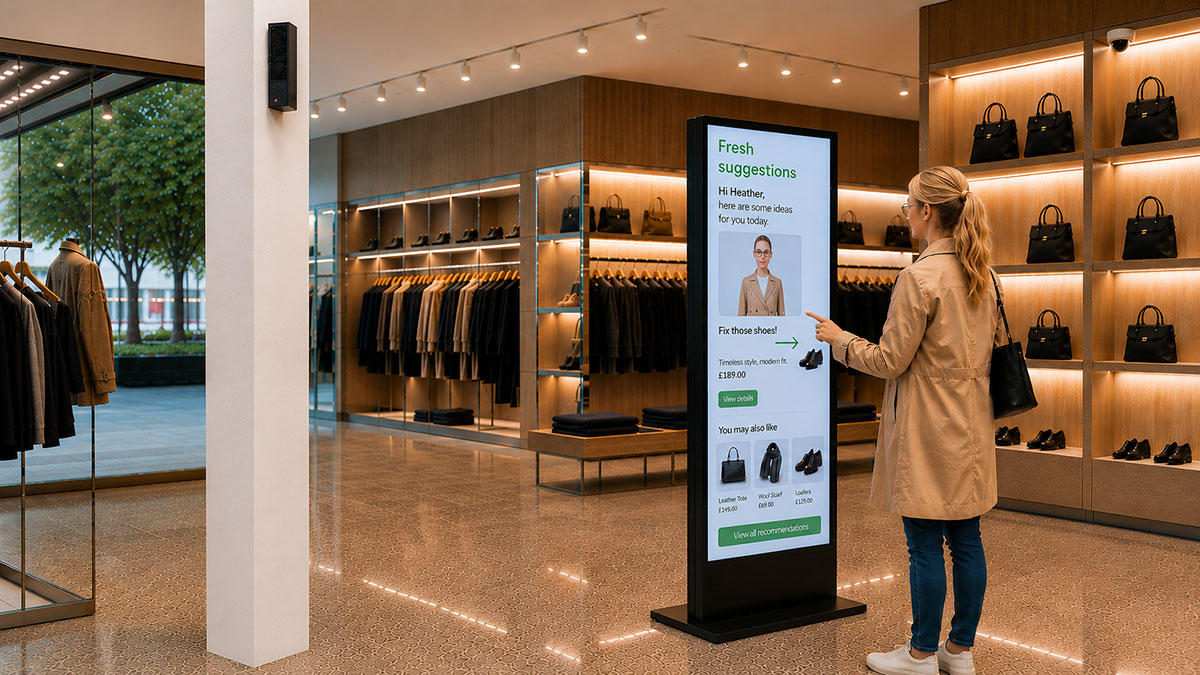
Retail environments are becoming more complex and technology-driven. What were once simple store systems now support a wide range of applications (including inventory management, security, digital engagement, and analytics) often running locally within each store.
As a result, retailers are increasingly relying on edge infrastructure to process data closer to where it is generated. This approach helps reduce latency and supports real-time decision-making across distributed locations.
At the same time, in-store deployments must operate within practical constraints such as limited space, power availability, and minimal on-site IT support. These realities are shaping how retail edge infrastructure is designed and deployed
Evolving Requirements for Retail Edge
Modern retail edge infrastructure must balance performance, efficiency, and operational simplicity.
Systems are expected to support multiple concurrent workloads while providing enough memory and I/O bandwidth for virtualization and data processing. At the same time, they must fit into compact spaces and operate efficiently within limited power and cooling environments.
Equally important is manageability. Because these systems are deployed across many distributed locations, remote monitoring and control are essential, along with built-in security features to help protect data and workloads.
Purpose-Built Systems for Edge Deployments
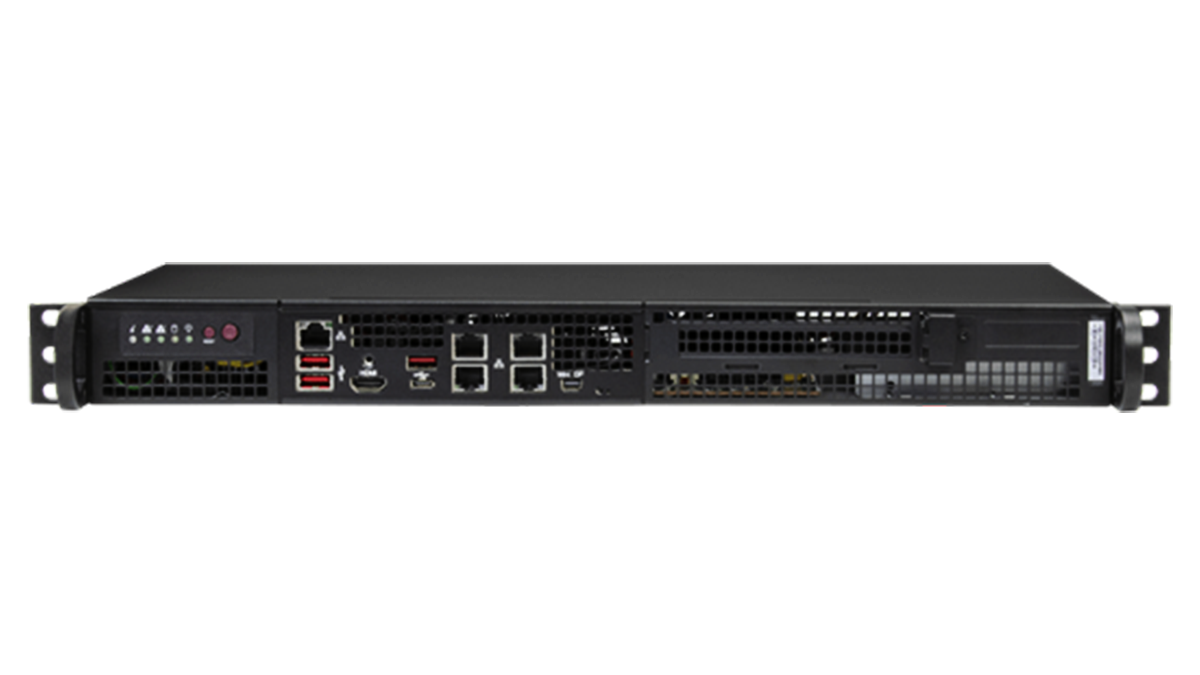
Compact edge systems such as the Supermicro AS-1116R-FN4 and AS-E300-14GR reflect how infrastructure is adapting to these requirements.
1U EDGE SERVER
Edge AI and Branch Offices
COMPACT EDGE SYSTEM
Embedded and Edge Deployment
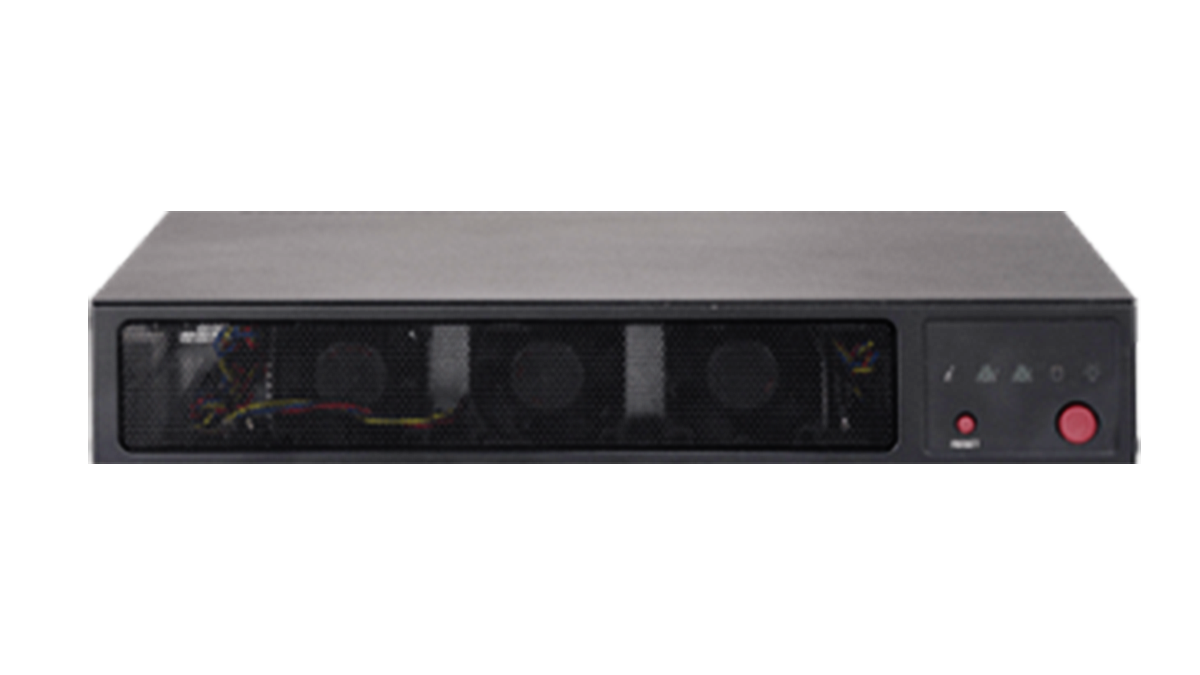
Powered by 16 core AMD EPYC 4005 Series CPUs, these platforms are designed with short-depth form factors that fit into space-constrained environments. They support modern capabilities such as DDR5 memory (up to 192GB), PCIe® Gen5 expansion, and integrated remote management through a Baseboard Management Controller (BMC). [supermicro.com], [storagereview.com]
BMC functionality enables administrators to monitor and manage systems remotely, even when the operating system is not available—an important capability for distributed retail environments. [supermicro.com]
Many of these systems also include Trusted Platform Module (TPM) support, helping support a hardware‑based root of trust as part of a broader overall security strategy. [anewtech.net]
The Role of the CPU
Within compact edge systems, CPU selection plays a significant role in determining overall performance and efficiency.
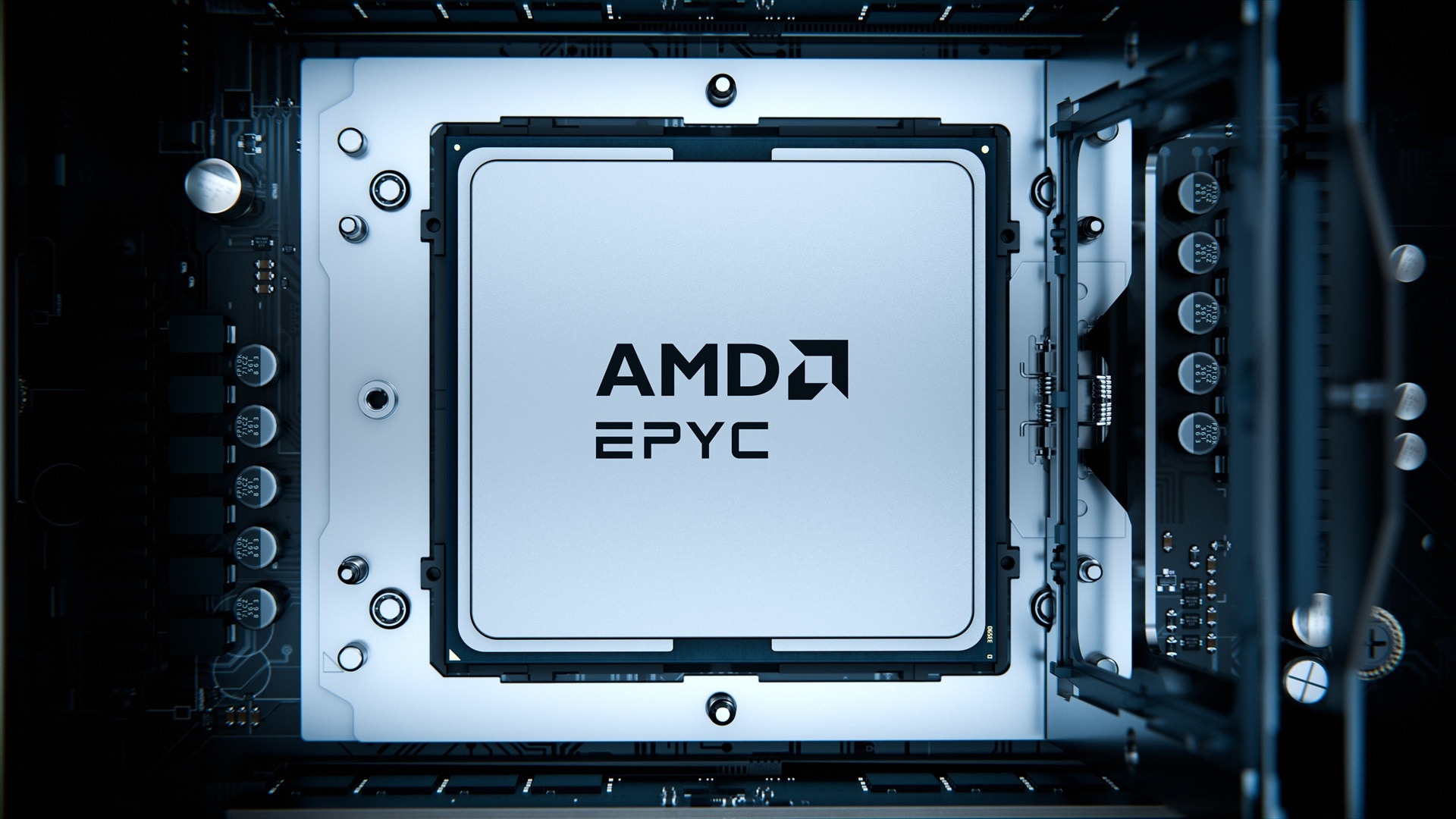
Processors such as AMD EPYC™ 4005 CPUs are designed for single-socket systems in edge and small-scale deployments. They provide up to 16 cores and support modern platform technologies such as DDR5 memory and PCIe® Gen5 connectivity. [amd.com]
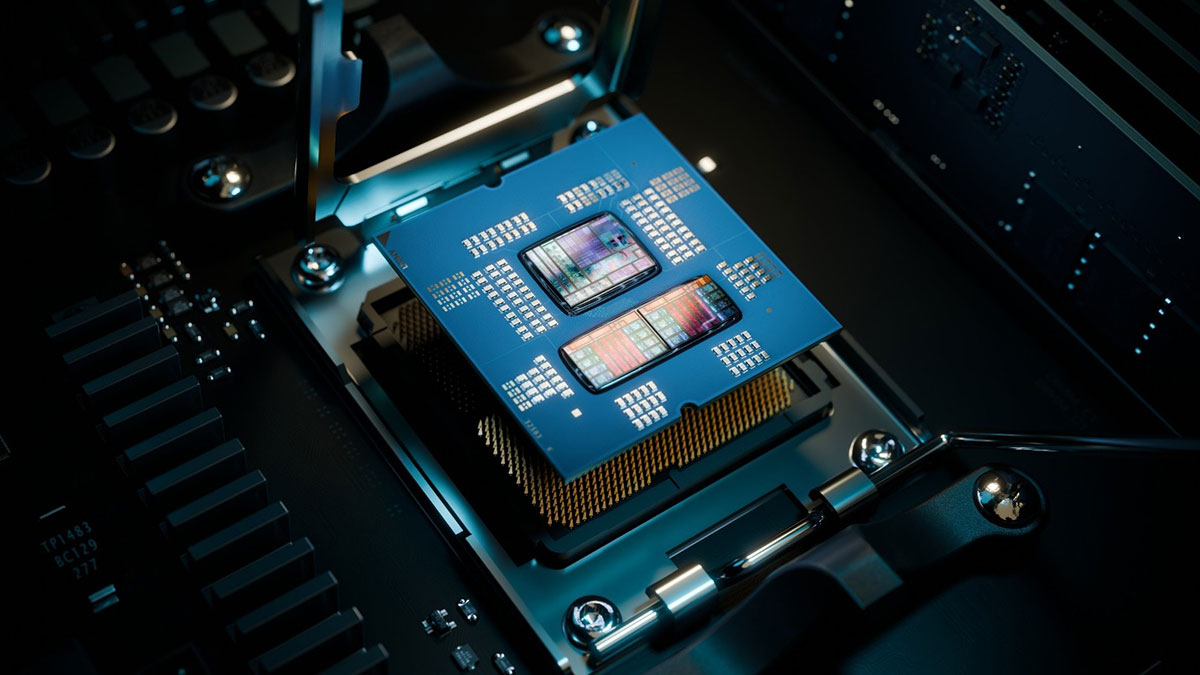
Select AMD EPYC™ 4005 SKUs are rated at approximately 65W TDP which helps align performance with the thermal and energy constraints common in retail environments.
Given the current pricing environment for DDR5 memory, customers may look for opportunities to optimize their overall cost of ownership. CPU L3 Cache size may help reduce memory traffic in certain workloads, such as edge deployments, and may contribute to improved DIMM utilization depending on the application profile. Likewise, higher memory speeds will support increased bandwidth and may enhance utilization in scenarios that are primarily memory‑bound. Actual benefits will vary based on workload characteristics and system configuration.
Consolidating Workloads at the Edge
Retail locations often run multiple applications locally, including point-of-sale systems, inventory management, security monitoring, and analytics.
Modern edge platforms make it possible to consolidate these workloads onto fewer systems. Depending on workload mix and deployment mode, this can help to simplify deployment, reduce hardware footprint, and improve overall resource utilization.
Industry guidance indicates that edge-based consolidation may help reduce infrastructure complexity while supporting new applications and services at the store level.
Efficiency in Real-World Environments
Power and thermal limitations often represent critical factors in retail deployment planning.
Systems designed for lower power operation can be deployed in environments without dedicated cooling or data center infrastructure. This allows retailers to install compute resources in back offices, network closets, or other non-traditional IT spaces.
Energy‑efficient designs may support more predictable operational characteristics when scaling infrastructure across many locations.
Supporting Future Use Cases
Retail edge infrastructure must also remain flexible enough to support evolving requirements. Increasingly, stores are adopting workloads such as high-speed NVMe storage, advanced networking, and AI-driven analytics.
Technologies like PCIe Gen5 provide higher bandwidth per lane, enabling support for these capabilities while maintaining compact system designs
This flexibility allows retailers to extend the useful life of their infrastructure as new use cases emerge.
Manageability and Security at Scale
Managing infrastructure across many distributed locations requires strong remote capabilities and consistent security practices.
BMC-based remote management allows IT teams to monitor system health, perform maintenance, and troubleshoot issues without physical access to each site. [supermicro.com]
At the same time, server-based security features such as TPM help establish trusted system states, which is increasingly important as edge environments handle sensitive data and business-critical workloads.
The Bottom Line
Retail edge infrastructure is becoming a foundational component of modern store operations. Compact, purpose-built systems can deliver the performance and flexibility needed to support both current applications and emerging use cases, all within the constraints of real-world retail environments.
By focusing on balanced system design, including platform capabilities, processor efficiency, and manageability, retailers can build infrastructure that scales effectively across locations and adapts to future requirements.
Footnotes
Links to third party sites are provided for convenience and unless explicitly stated. AMD is not responsible for the contents of such linked sites and no endorsement is implied. GD-97
Sources & References
Supermicro AS-1116R-FN4 Datasheet
https://www.supermicro.com/en/products/system/datasheet/as-1116r-fn4
Supermicro AS -E300-14GR Datasheet
https://www.supermicro.com/en/products/system/datasheet/as-e300-14gr
Supermicro Edge Systems Announcement
https://www.storagereview.com/news/supermicro-unveils-three-new-edge-ai-systems-built-on-amd-epyc-4005
AMD EPYC™ 4005 Processors
https://www.amd.com/en/products/processors/server/epyc/4005-series.html
AMD EPYC 4005 Datasheet
https://www.amd.com/content/dam/amd/en/documents/epyc-business-docs/datasheets/epyc-4005-datasheet.pdf
Supermicro BMC Overview
https://www.supermicro.com/en/glossary/baseboard-management-controller
Scale Computing on the Edge in Retail
Footnotes
Links to third party sites are provided for convenience and unless explicitly stated. AMD is not responsible for the contents of such linked sites and no endorsement is implied. GD-97
Sources & References
Supermicro AS-1116R-FN4 Datasheet
https://www.supermicro.com/en/products/system/datasheet/as-1116r-fn4
Supermicro AS -E300-14GR Datasheet
https://www.supermicro.com/en/products/system/datasheet/as-e300-14gr
Supermicro Edge Systems Announcement
https://www.storagereview.com/news/supermicro-unveils-three-new-edge-ai-systems-built-on-amd-epyc-4005
AMD EPYC™ 4005 Processors
https://www.amd.com/en/products/processors/server/epyc/4005-series.html
AMD EPYC 4005 Datasheet
https://www.amd.com/content/dam/amd/en/documents/epyc-business-docs/datasheets/epyc-4005-datasheet.pdf
Supermicro BMC Overview
https://www.supermicro.com/en/glossary/baseboard-management-controller
Scale Computing on the Edge in Retail

Related Blogs
-
-
Rightsizing Cloud Workloads on AMD Part 1 Foundations
Learn the foundations of rightsizing cloud workloads on AMD: define goals, choose the right time, classify workloads, and select relevant benchmarks.
October 01, 2026
-
AIM: Unified User Experience from Profile Discovery to Deployment — ROCm Blogs
Learn how AIMs offer a unified user experience as you explore and deploy them across AMD Instinct, Radeon PRO, and EPYC.
September 29, 2026
-
Beyond TOPS: AMD Ryzen™ AI Embedded X100 at the Edge
Scale agentic AI at the edge with AMD Ryzen™ AI Embedded X100 Series: more concurrent agents, unified memory, x86 compatibility, and long life.
September 24, 2026
-
Advancing Gaming with AMD at G2E 2026
Discover how AMD Ryzen Embedded processors are powering next-generation casino gaming experiences at G2E 2026. Explore innovative platforms from ADLINK, Advantech, Axiomtek and Quixant, featuring high-performance computing, advanced graphics, AI capabilities, multi-display support and reliable, scalable designs built for demanding, always-on gaming environments worldwide and faster product development and deployment.
September 24, 2026
-
EPYC CPUs Deliver for Every Layer of the Agentic AI Stack
Agentic systems combine multiple CPU roles into a workflow. The latest AMD EPYC CPU generation lets customers optimize for each task.
September 18, 2026
-
Building Infrastructure for an AI World in Motion
The biggest risk is not choosing the wrong technology today. It is building infrastructure that cannot adapt tomorrow.
September 17, 2026
-
Advancing AI 2026: From Gigawatt Data Centers to Agentic PCs
Explore how AMD connects data center, cloud, and local AI to enable secure, cost-aware agentic workflows across enterprise PCs.
September 16, 2026