Deutsche Telekom Cuts Telco Cloud Energy Use with AMD CPUs
Deutsche Telekom achieved up to 65% energy savings by combining AMD EPYC™ Server CPUs with full-stack optimizations to improve telco cloud efficiency
Telecom providers face a dual challenge. They need infrastructure to cope with peak demand, but this can consume a lot of unnecessary energy when usage drops overnight. Deutsche Telekom wanted to change that, so it enlisted the help of AMD EPYC™ Server CPUs, Mavenir, plus a bevy of optimizations to deliver incredible off-peak consumption savings.
“As a technology leader in telco clouds, we are also striving for the most energy-efficient core through a holistic approach to energy management, which we refer to as ’Full Stack Energy Efficiency’, says Manuel Keipert, Programme Lead Innovation, Service & Platforms (Core Net), Deutsche Telekom. “Unlike traditional optimizations that focus on individual components in isolation, this approach addresses energy consumption across the entire technology stack.”
Saving energy with a telco cloud is problematic, however. “The dimensioning of our network should follow customer needs,” says Keipert. “If customers are all busy, the network will be busy. If customers are sleeping, data center servers should scale down. But since the cloudification of mobile telecommunication, engineers typically have opposed any type of energy scaling. During the night we only have around 25% of the network traffic, but we have almost the same energy consumption as the busy hours. That was the challenge we wanted to address.”
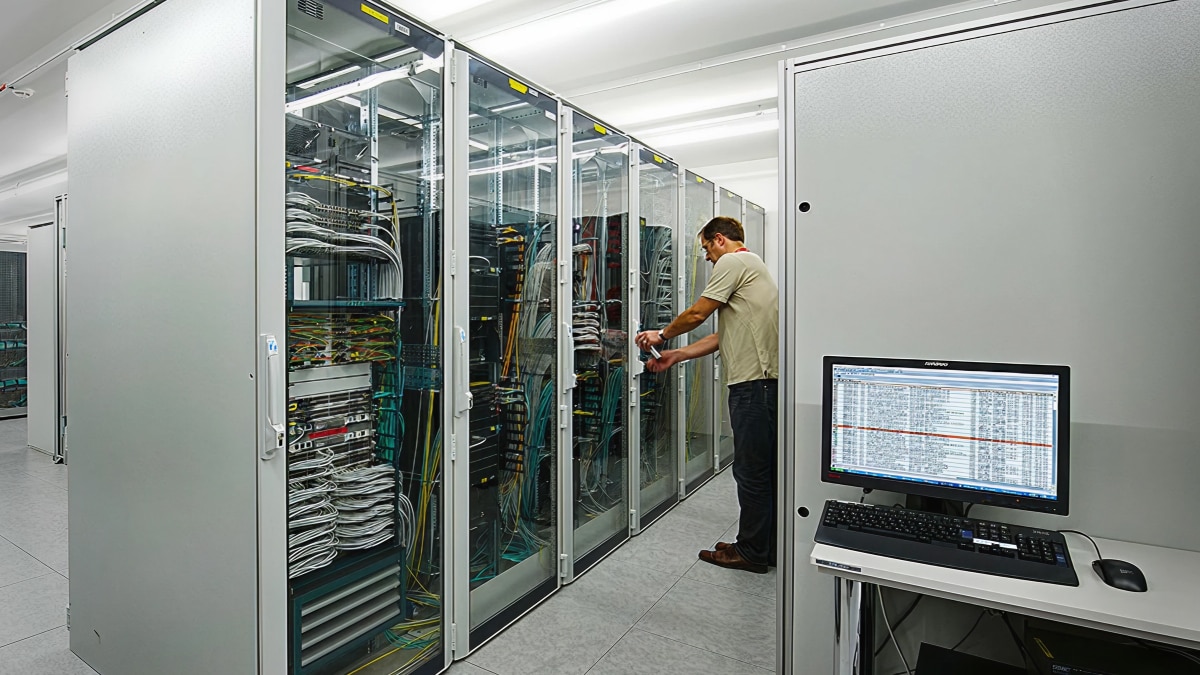
However, telecommunications infrastructure doesn’t require a high-performance research-grade supercomputer or AI powerhouse. “We need general-purpose x86 servers,” says Keipert. “We have thousands in the Deutsche Telekom core network for all types of services like TV, media, messaging, voice calls, and data.”
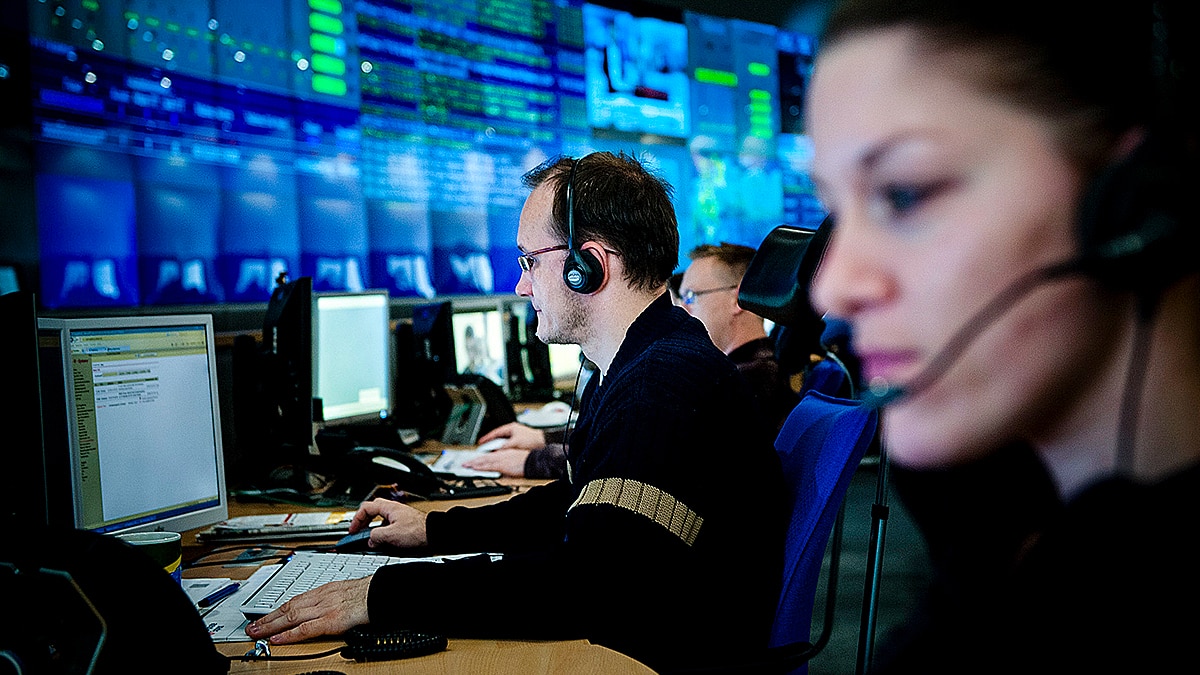
5G core powered by AMD EPYC Server CPUs
“We can't predict energy prices,” adds Keipert. “We also want to reduce our CO2 emission.” Deutsche Telekom intended to achieve energy reduction while sticking with standard x86 architecture. “We know from our statistics that not only with Deutsche Telekom, but across all the other telco operators too, most servers are sitting at max 50% CPU load, but we are paying 100% of the energy bill all the time. None of our software stack is energy optimized. It is optimized for customer experience.”
Deutsche Telekom deploys Kubernetes on top of Linux. “We aim to run the entire core network on this platform,” says Keipert. “That includes all types of messaging, phone calls, even emergency phone calls, data services, 5G, and whatever comes next. It is hundreds of different applications.” However, the focus for the power reduction project was the 5G stack because “that is where significant traffic growth is expected.” This forms part of Deutsche Telekom’s implementation of a Horizontal TelCo Cloud strategy.
When Deutsche Telekom began its energy-saving project, focused initially on Germany, it was an existing AMD customer. “Our 5G core was already running on AMD EPYC Server CPUs,” says Ulrich Bittroff, System Engineer, Deutsche Telekom. “We started ordering new hardware for our telco cloud, while the live network was running on 3rd Gen AMD EPYC Server CPUs. We just made the jump to 4th Gen AMD EPYC Server CPUs, but the benefits from switching from 3rd Gen AMD EPYC Server CPUs to the much more powerful 4th Gen were so significant that we could achieve our goals. When we compared the official data on the SPECint benchmarks, the 4th Gen AMD EPYC Server CPU was the best processor we could get.”
Deutsche Telekom needed a strong hardware vendor partnership, making the open source approach from AMD attractive. “Without AMD know-how and tooling, we would never get the energy savings,” says Keipert. AMD provided inside details of the workings of the core architecture. “The overall target with our 4 vendors was to combine software and hardware features to deliver a significant energy reduction targeting our vision of “Zero bits, zero watts”. That was piloted on a 5G core from Mavenir but compatible with most of the other applications running on the same cloud platform.”
Energy saving with full-stack optimization
Deutsche Telekom performed its own benchmark tests to ensure optimal savings. The prototyping lab benchmarked 3rd and 4th Gen AMD systems, both with and without power optimizations. The results of these tests were impressive. “Overnight, when most customers are not too busy on their mobile phones, we achieve up to 65% energy saving,” says Keipert.
Keipert calls the optimized system created with partners AMD, Lenovo, Mavenir, Juniper, and HPE “Full Stack Energy Efficiency” because all hardware and software levels are scaling together, including Kubernetes. “With open-source techniques and inbuilt Kubernetes features, we can scale software and hardware together,” says Keipert. “We investigated 70 features to get those numbers. Without the help of AMD, we would not have known how to configure the UEFI BIOS, or how best to select the CPU cores with the Kubernetes Power Manager.”
“The big advantage of AMD EPYC Server CPUs is they are much quicker in scaling up and down with a much finer granularity in megahertz,” says Keipert. “Our latency-sensitive applications don't like big CPU frequency jumps. They need much smaller steps. AMD gives us the tools to achieve this.”
“We do two things to save energy,” continues Keipert. “We improve the efficiency of the overall system by configuring the right features in the BIOS. But the more important thing for a telco cloud is to reduce power consumption and performance when we don't need it. We leverage the fact that AMD EPYC Server CPUs are great at scaling from very high frequencies to very low frequencies and low energy consumption. This dynamic range is what makes the big difference. With the much higher core density of 4th Gen AMD EPYC Server CPUs, energy savings are up to 65% within the core network.”
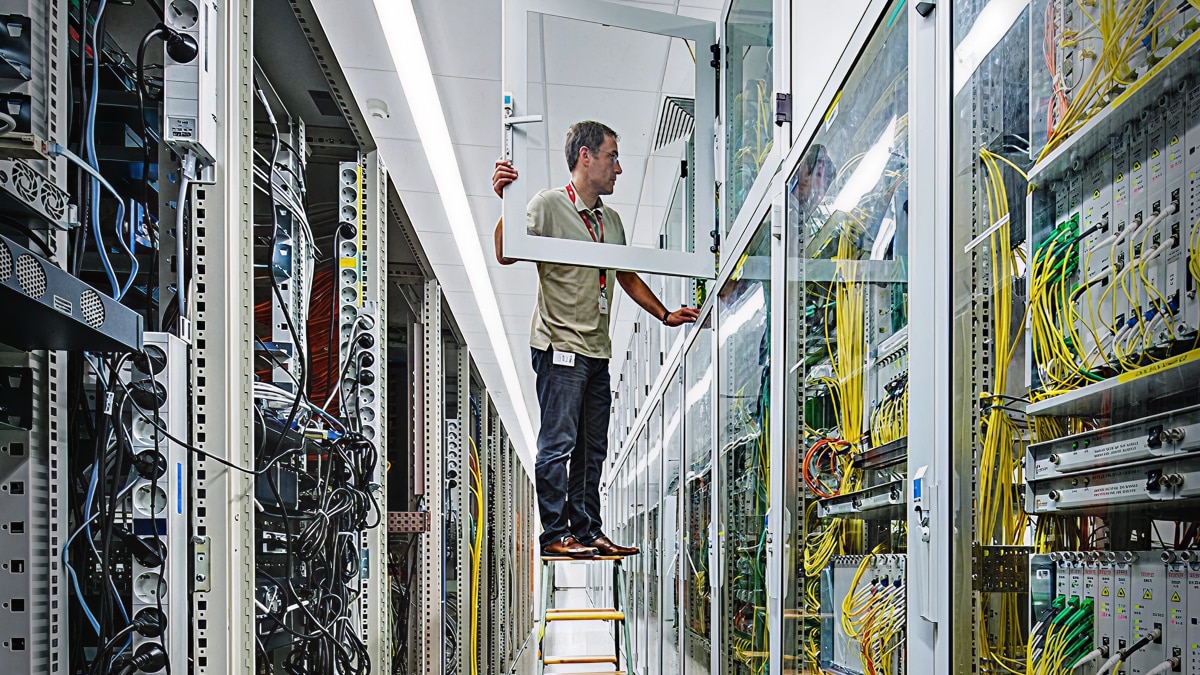
Greater efficiency ahead with AMD
Deutsche Telekom aims to inspire the rest of the telco world to achieve greater sustainability. “We want to shake up the industry and tell software vendors to improve their software to comply with this dynamic scaling of the telco cloud,” says Keipert. “We aim to roll it out in all European footprints because the energy savings are just amazing.”
Deutsche Telekom’s 5G core already runs on AMD EPYC Server CPUs. “The 5G core has gradually built up as customers migrate from 4G to 5G,” says Keipert. “That is why it was important to have this full-stack energy management implemented. We have tens of thousands of CPUs running our 5G core, so the overall power savings from implementing this project are considerable.”
The benefits will only increase as new hardware rolls out, too. “We hope to get even more from the next hardware generation,” says Keipert. “We also want to evolve our full-stack energy management. There are already many features that we are going to test. We can save much more energy here. We expect an additional 20% saving at least with the next AMD EPYC Server CPU platform.”
“The joint efforts and engineering know-how that we put into this project with AMD have been amazing,” says Keipert. “Now that we have deployed the basic stack, which allows us to scale software and hardware, we will verify and improve that on the next CPU generations together with AMD. We look forward to much more power saving with much more efficient CPUs in the future.”
About the Customer
Deutsche Telekom is one of the world's leading telecommunications companies, headquartered in Germany. It provides mobile communications, broadband, and digital services to millions of customers across Europe and the United States. Through its T-Mobile brands, the company plays a major role in 5G networks, cloud solutions, and connected technologies, serving consumers, businesses, and public institutions. It focuses on network expansion, digital transformation, and platform-based services, while investing in cybersecurity, IoT, and infrastructure. For more information visit telekom.com.
Case Study Profile
- Industry:
Telecommunications - Challenges:
High telco cloud energy use, with servers consuming similar power overnight to busy daytime hours even when network traffic dropped significantly - Solution:
3rd and 4th Gen AMD EPYC™ Server CPUs with optimizations, enabling dynamic scaling to cut off-peak energy use without harming 5G performance - Results:
Up to 65% overnight energy savings, boosting efficiency, maintaining 5G performance, with more gains expected from new AMD EPYC Server CPUs - AMD Technology at a Glance:
3rd and 4th Gen AMD EPYC™ Server CPUs - Technology Partners: