Shockbyte Powers Gaming Server Growth with AMD CPUs
Shockbyte deploys AMD CPUs to boost gaming server performance, increase data center density, cut power use, and scale rapidly across world markets
The global gaming industry now generates more revenue than the film and music industries combined.1 With around two-thirds of gamers playing online, server infrastructure has become a huge business opportunity. Shockbyte has established itself as one of the leading service providers for popular game Minecraft and many others. The company’s testing found that AMD CPUs delivered the performance it needs for lag-free online gaming and expansion into the USA market.
“The company started in 2013,” says Mitch Smith, CEO and Founder, Shockbyte. “There was massive demand for Minecraft servers.” One of Shockbyte’s early goals was to make the process of running a game server easier, even as it tripled in size multiple years in a row. Shockbyte also wanted to build a scalable platform using clustering to support a growing commercial business working with studios. “We work with Facepunch as Rust's official dedicated server partner, which is one of the world's most popular survival games. It has a huge community of players running their own dedicated servers to host massive, persistent worlds. We also work with Discord.”
Shockbyte’s activities have diversified considerably from its Minecraft roots. “We now have the consumer side of the business supporting 65 or so games focused on player-owned servers,” says Smith. “Then we have the B2B side, called Shockbyte for Game Studios, where we are a cloud infrastructure provider.”
This rapid growth posed several challenges. “Game launches have a massive spike for the first couple of weeks, and then it drops to barely 10% of that initial player base,” says Smith. “You need to be able to scale to support initial demand, but then start doing migrations to consolidate into fewer machines.” This can be disruptive for the players who remain.
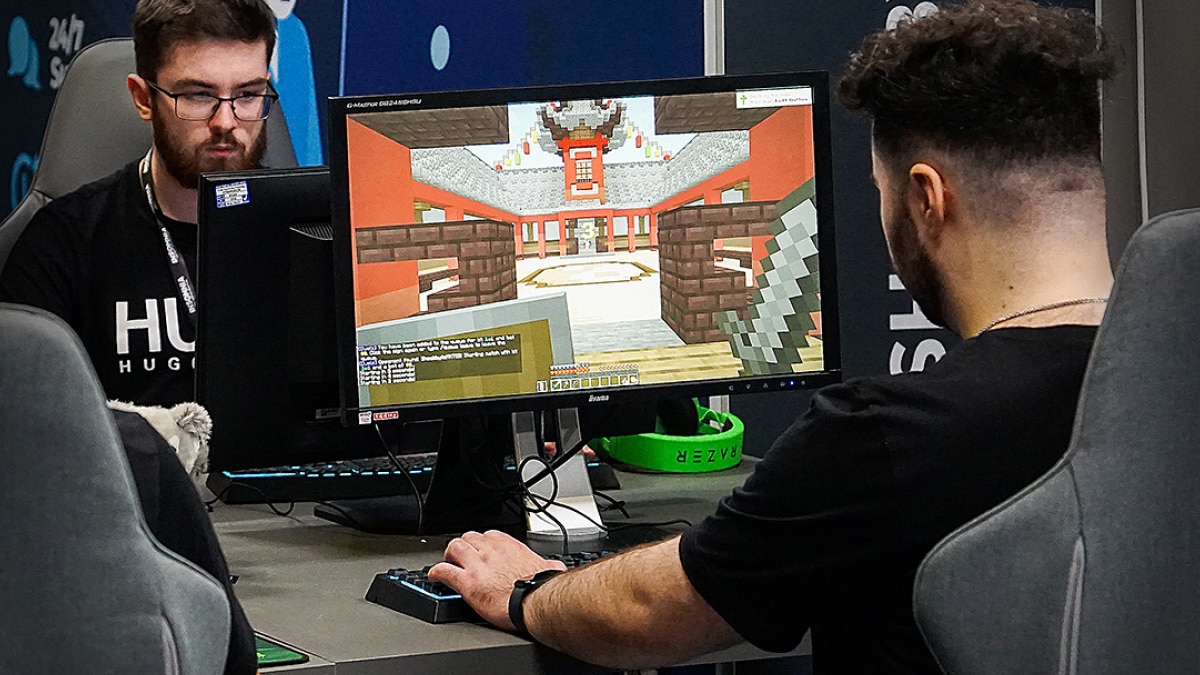
AMD delivers density
This led to a plan to create a clustered infrastructure in-house, which began a journey toward AMD CPUs. “For most of the time the company has been operating, we leased bare metal servers from third parties,” says Liam Charles, Director of IT, Shockbyte. “Around 2023, we started looking into running servers in our own data centers. At the time, we were mostly Intel. This was when socket AM5 Ryzen CPUs had just launched.”
For gamers, AMD already had a great reputation for reliable performance. “We had some Ryzen 3000 and 5000 processors in our portfolio,” says Charles. “It was a minority at the time, but we’d had some of these machines for six plus years without even being rebooted. They worked perfectly.” The biggest factor attracting Shockbyte to AMD was CPU performance, however.
Hardware partner DiGiCOR helped Shockbyte find AMD solutions that would meet Shockbyte’s need for both density and single-core performance. “Our engagement with Shockbyte began around the start of 2024,” says Dez Nguyen, Lead Systems Engineer, DiGiCOR. “We quickly identified unique offerings that would suit their workloads. There had been no enterprise offering available previously for gaming. This industry would traditionally run on consumer-based CPUs in custom-built rack mount systems.”
“Then Supermicro released a high-density solution called MicroCloud, which was specifically designed for the AMD Ryzen 7000 series,” says Nguyen. “That quickly became a no-brainer because of the density. You could house eight nodes in a 3U rackmount.” MicroCloud became the basis of Shockbyte’s initial bare metal deployment in Melbourne, Australia.
Shockbyte’s early success with AMD Ryzen processor–based systems helped shape its infrastructure strategy, leading to broader adoption of EPYC Server CPU–based platforms.
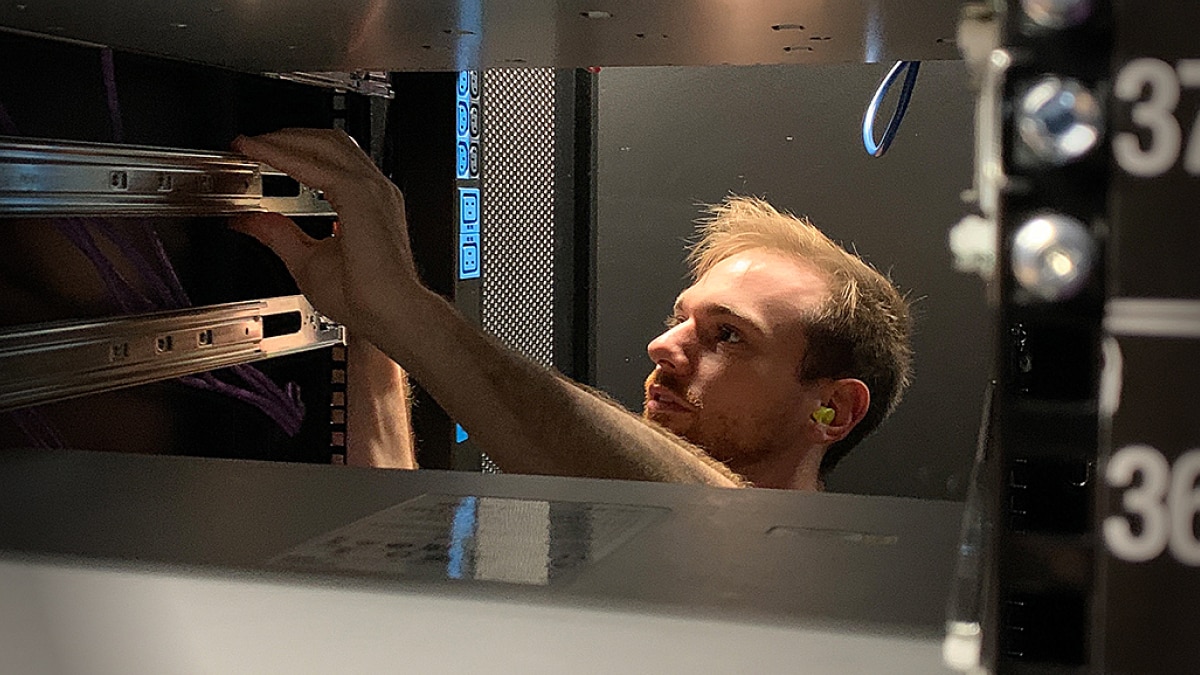
Faster performance, more RAM with AMD CPUs
Before Shockbyte could adopt AMD CPUs, it had to ensure they would meet certain performance requirements. “We test on single thread and multi-thread,” says Charles. “Our previous legacy builds averaged around 2,750 on a PassMark single-threaded benchmark. With our new AMD builds, we average 4,200 globally, which is an approximate increase of 53%. Single-threaded performance is the most important indicator for games and is our biggest focus when picking CPUs. We also do game-specific tests. Since switching to AMD from the Intel Xeon Es we used before, we saw at least 40% increase on the single-thread performance, especially in Minecraft.”
The hardware rollout has involved several stages. “Our first deployment was the Ryzen 7700 processor,” says Charles. “Those were great, but we quickly learned that it would be better if we had more cores for more client servers. When the EPYC 4004 CPUs were available, we moved onto the 4464P, which is roughly equivalent to the Ryzen 7900X, with 24 threads, but supporting more RAM, 192GB.”
“Most of our fleet now uses the AMD EPYC 4464P,” continues Charles. “Then we moved onto the 4545P, and our most recent deployment is the AMD EPYC 9555P. Those are 64-core CPUs with 1.1TB of RAM each, which really allows us to bump up the density. With CPUs that are high core count you often trade single-thread performance for more cores. But the 9555P gives the best of every world. You have a lot of CPU cores to do multi-thread workloads, but the single-thread performance is also excellent. You can run every thread hot and still outperform just about everything else.”
The most important factor—gamer experience—has been exceptional. “Our overall goal is to make it smooth and frictionless to run a game server,” says Charles. “Even a slight micro-stutter is enough to cause complaints. The performance of AMD CPUs has been fantastic.” Shockbyte also needs sufficient performance to compensate for games that haven’t been fully optimized at release, particularly early betas. “Ensuring our hardware can brute force out of these issues means the experience is flawless, even if the game is imperfect. Since switching, we have not had complaints about performance from customers or partners.”
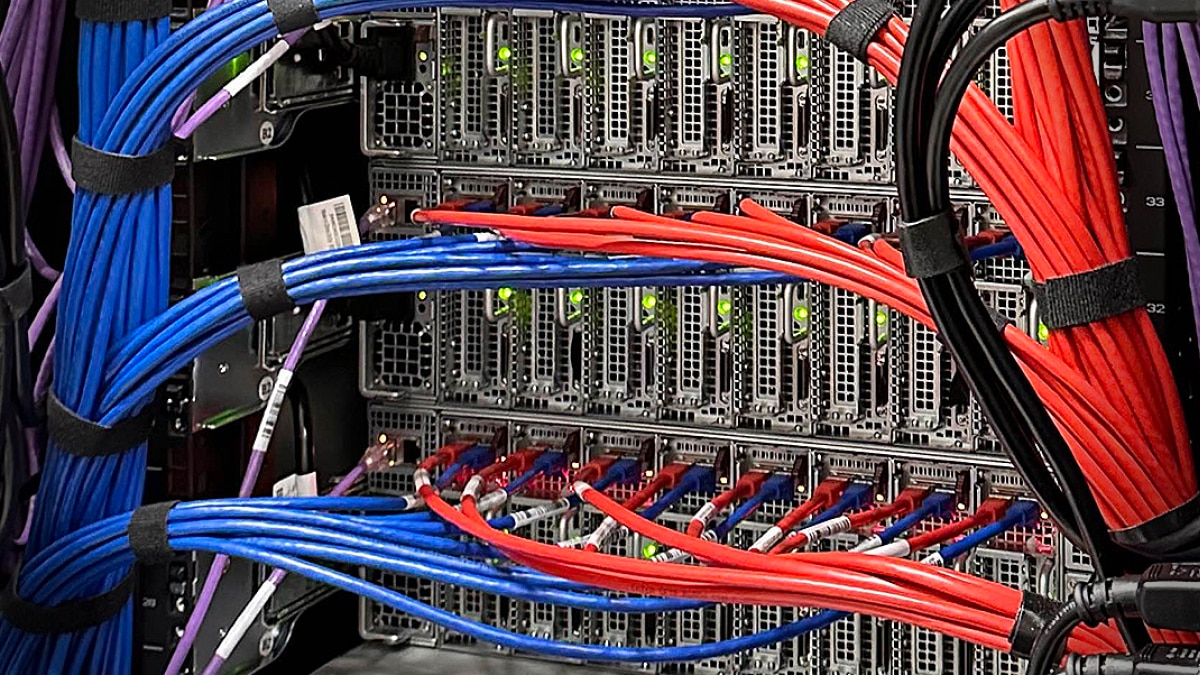
AMD powers expansion into US market
The new AMD processors have dramatically improved Shockbyte’s data center density, particularly the AMD EPYC 9555P Server CPU. “Since we are effectively a cloud provider tailored to games, resource unit economics are important,” says Charles. “For the longest time, we were stuck on 128GB of RAM per system. Now we can go up to 256GB, and with the EPYC 9000 Series Server CPUs, we can go all the way up to 1.5TB. Being able to cut down on the number of machines makes it easier to maintain the footprint. We used to have over 2,000 machines, and now we have just under a thousand. The overall power saving was significant. We’re constantly growing, yet we've cut our power draw by a lot to host more servers. Our legacy builds averaged 0.93W per GB of memory. Our current AMD builds average around 0.65W per GB of memory, which is a 30% reduction in power draw to host the same amount of capacity.”
Shockbyte now has unquestioning trust in AMD technology. “AMD will continue being our go-to for the foreseeable future,” says Charles. AMD EPYC Server CPUs will be an increasingly large part of that future, particularly as newer EPYC 4000 and 9000 Series processors enable greater density and scalability. “Our latest deployment is built on AMD EPYC 9555P servers, with more on order. The wider fleet are all Ryzen or EPYC 4004 and 4005 CPUs.”
“Our big focus will be on the balance in density offered by CPUs like the AMD EPYC 9555P, with a high core count while maintaining great single-thread performance, high memory density, and efficient power draw,” says Charles. “Expanding our US footprint is where we see most of our growth now. The 9555Ps are almost exclusively going to America. We have our newest deployment in Dallas, Texas. We plan to scale that to meet demand. AMD processors are helping with this. It's harder to get data center space or power allocation. Being able to consolidate into two racks what would have required six to eight racks allows us to make the most out of what is available.”
“Like the old adage about IBM, you're not going to get fired if you buy AMD now,” concludes Charles. “Switching to AMD EPYC Server CPUs has been a no-brainer. Gamers tend to be savvy about what they use. Our customers know exactly what they want, and it’s AMD.”
About the Customer
Shockbyte delivers premium Minecraft game server hosting and supports over 60 other titles. Founded in Melbourne, Australia in 2013, the company offers affordable, high-performance servers with instant setup, DDoS protection, mod and plugin support, 24/7 global support, and a custom control panel. With worldwide infrastructure and a strong reputation, Shockbyte helps gamers create, manage, and scale multiplayer worlds easily and reliably. For more information visit shockbyte.com.
Case Study Profile

- Industry:
Game server infrastructure - Challenges:
Rapid growth, launch demand spikes, disruptive migrations, and pressure for greater density, performance, and power efficiency - Solution:
Clustered systems powered by AMD Ryzen and EPYC Server CPUs, in partnership with DiGiCOR and Supermicro - Results:
40% faster single threaded performance, higher density, reduced data center footprint, lower power use, smoother gameplay, and zero customer complaints - AMD Technology at a Glance:
AMD Ryzen 7700 CPUs
AMD Ryzen 7600X CPUs
AMD EPYC 4464P, 4545P, 9555P Server CPUs - Technology Partners: