Uniform x86 Cores for Real-Time AI: Reducing the Hybrid-Core Tax in Physical AI Systems
Jul 23, 2026
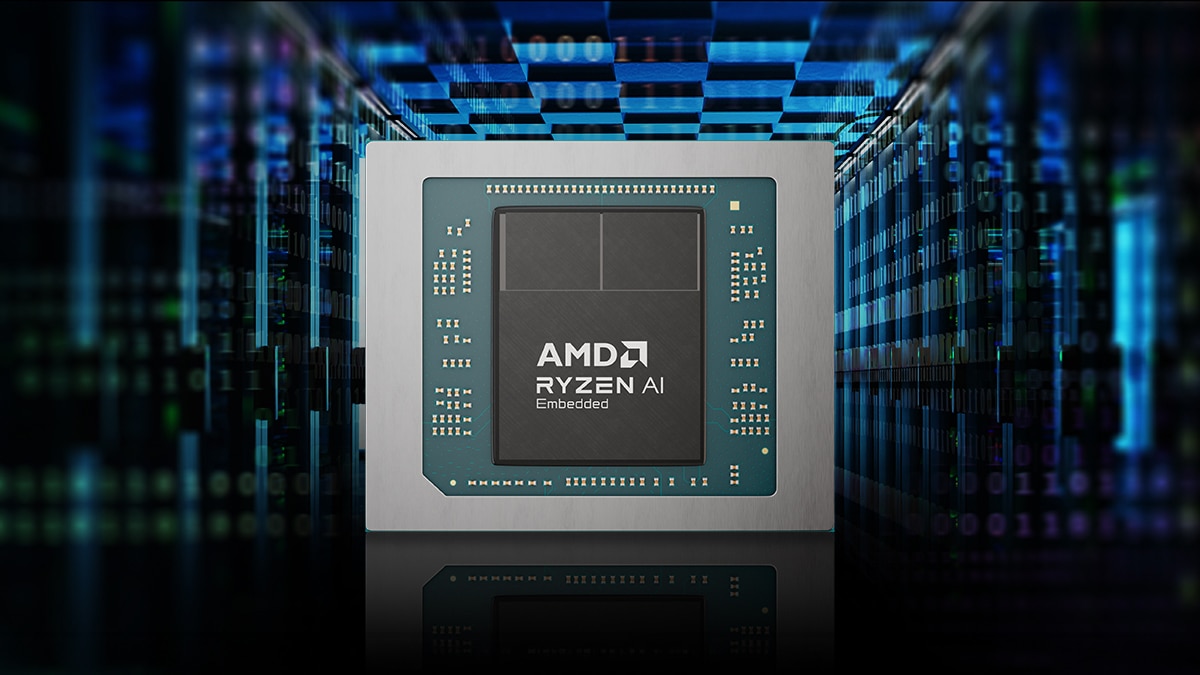
Uniform x86 Cores for Real-Time AI: Reducing the Hybrid-Core Tax in Physical AI Systems
Why do real-time AI systems miss deadlines? It’s probably not because the processor runs out of peak compute or because the platform couldn’t hit a benchmark number. More often, the result is because of small timing variations that surface at the wrong moment. A timing window slips. A thread lands on a core with lower performance or higher cache latency. A data copy takes longer than expected. A system that worked in testing misses timing deadlines under production load.
Individually, those events are small, and in isolation, they may not even be noticeable. But physical AI systems are not isolated workloads. They ingest and process sensory input, plan and act within a continuous control loop. Once you put those small inconsistencies into a continuous feedback system, they begin to compound, and in robotics, a missed timing deadline can have a significant functional impact. This underscores that while performance is important, the problem is significantly more complex than just raw benchmark scores.
It’s not only about how fast a system can run.
It’s also about whether the system behaves consistently every time it runs.
That is where architecture starts to matter.
Where Variability Shows Up
Over the past decade, industry has steadily moved toward more heterogeneous compute designs. Workloads are split across GPUs, NPUs and other specialized engines. Hybrid CPUs, such as the Intel® Core™ Ultra Series 3, are heterogeneous but also combine differentiated CPU core types that are intentionally designed around specialization – performance cores, efficiency cores and low-power cores are each optimized for different roles rather than identical behavior.
When core specialization is applied to physical AI systems, certain assumptions start to break down. These systems are not collections of loosely related workloads. They are tightly coupled environments where perception, inference, planning and control are all active at once and constantly influence each other.
In hybrid architectures like Intel Core Ultra Series 3, the key issue is not peak performance potential, but variation in how that performance is delivered. In hybrid CPUs, there are multiple execution models: different core types, different vector accelerator widths and different latency characteristics, depending on which core type executes a thread. Thread-level behavior needs to be evaluated carefully. In practice, hybrid architectures exhibit timing variation that physical AI systems are especially sensitive to.
If you have spent time debugging real-time systems, you have likely seen this pattern before. The system works most of the time and the performance may appear to be sufficient, but often under a unique combination of circumstances, something drifts just enough to cause failure.
That drift is one form of the hybrid-core tax.
When Architecture Meets Real-Time Behavior
These systems are inherently parallel. Cameras, radar and LiDAR are all streaming in and must be processed concurrently. AI models augment perception and decision making. Feedback paths govern real-time processes. Ideally, no critical task waits its turn.
In a hybrid CPU, the scheduler is constantly making decisions about where to allocate threads. Core type flexibility is useful in general-purpose computing, but it introduces execution time variability. Moving a thread between different core types changes throughput as well as cache size and latency. That can be acceptable in general-purpose systems but is far less acceptable in a millisecond-cadence robotics workload.
AMD Ryzen™ AI Embedded X100 Series processors offer an additional layer of thread-level scheduling flexibility and uniformity that Intel Core Ultra Series 3 CPUs do not provide. With up to 16 identical “Zen 5” cores and SMT enabled, Ryzen AI Embedded X100 Series processors support up to 2x the processing threads of Intel Core Ultra Series CPUs, delivering additional CPU scheduling flexibility when multiple workloads compete for CPU time.
You can see this in measured performance, where the X199 processor is projected to deliver 2.1x the multi-thread performance of Intel Core Ultra Series 3 on CoreMark®¹ and 1.5x higher multi-thread integer throughput (estimated) on SPEC CPU® 2017 SPECrate®2017_int_base.² Just as important, that performance comes from a uniform CPU foundation designed to give developers more scheduling flexibility as concurrent workloads increase.
The Cost of Inconsistent Execution
The next challenge appears in how workloads execute within each core.
Many physical AI pipelines depend on vectorized processing. Workloads such as image transforms, signal processing, matrix operations, sensor fusion and control calculations all rely on SIMD performance. In Intel Core Ultra Series 3 CPUs, AVX capabilities are not uniform. Some cores support wider execution paths than others, so performance can vary depending on where workloads land.
With hybrid CPUs, developers may face choices they would rather avoid. They can parameterize and validate their code to target dissimilar vector acceleration engines and maintain the required vector extension compile options. As another alternative, they can pin workloads to specific cores and give up flexibility. Each approach adds complexity and risk.
Ryzen AI Embedded X100 Series CPUs with AVX-512 eliminate this entire decision space. Every core supports vector code in the same way.
When Data Movement Limits Real-Time Behavior
Even if compute behaves consistently, physical AI systems quickly encounter another constraint: data movement.
In architectures built around an x86 CPU paired with a discrete GPU, memory is not unified. The CPU operates in one domain, and the GPU in another. Moving data between them requires explicit copies, typically over PCIe®. Those copies must be scheduled, synchronized and paid for in latency, power consumption, memory capacity and bandwidth.
Data may move from CPU to GPU and back again multiple times within a single processing pass. Each transition adds delay. Because that delay varies with system load and execution timing, it is difficult to model and hard to remove.
Ryzen AI Embedded X100 processors address this with a unified memory architecture that lets the CPU, GPU and NPU access a common memory pool, reducing explicit data movement and synchronization overhead between compute engines.
Ryzen AI Embedded X100 processors combine a discrete-class iGPU with a shared 32 MB MALL cache and unified memory system, delivering up to 273 GB/s of memory bandwidth with measured sustained throughput 1.3x higher (geomean) than Intel Core Ultra Series 3 CPUs on the STREAM benchmark.3 This raw bandwidth, together with the consistent cache architecture of the Ryzen AI Embedded X100 uniform CPU cores, can help keep frequently accessed data closer to the compute engines, reduce external memory traffic, improve latency and offer more consistency.
The result is a more manageable datapath with fewer transfers and less synchronization overhead.
Real-World Pipelines Don’t Fit Into One API
Real-world perception pipelines often span legacy OpenGL® visualization, newer Vulkan® applications and CUDA code. That mix makes software flexibility important.
The Ryzen AI Embedded X199 processor performs strongly across both graphics APIs, with an expected geomean of 1.7x higher OpenGL performance and 1.4x higher Vulkan performance, compared to the Intel Core Ultra X7 358H.4,5 Performance uplift across both APIs helps existing pipelines remain performant while newer applications take advantage of modern APIs.
At the same time, AMD support for AI software migration plays a different but equally important role. AMD ROCm™ software provides a supported open-source ecosystem, and AMD HIPIFY allows developers to migrate CUDA-based workloads without starting from scratch. AMD ROCm HIPIFY preserves an average of 83% of CUDA code across foundational GPU workloads, 71% across compute-intensive applications and 72% across AI/ML workloads,6 making incremental migration practical.
Your CUDA investment doesn’t have to be a constraint. It can become a stepping stone to a more performant AMD platform.
AI Throughput in Context
In robotics, platforms must support state-of-the-art models while maintaining real-time performance. In this context, Ryzen AI Embedded X199 processors deliver up to 1.3x higher inference throughput than NVIDIA® Jetson™ AGX Orin™ on frontier and foundational models for robotics,7 and deliver 3.5x higher token generation performance (geomean) and 1.4x faster time-to-first-token (geomean) than Intel Core Ultra X7 358H.8 This matters because inference is not an isolated task—it sits within the same real-time pipeline. Those gains improve system responsiveness.
Designing for the Real World
Physical AI systems must operate reliably for years in demanding environments. The AMD embedded portfolio reflects that reality, offering up to 10-year product availability. Ryzen AI Embedded X100 Series processors can also support up to 10 years of 24/7 continuous operation, with select SKUs rated to −40°C to +105°C (Tj).
Even at the silicon level, design choices reflect a focus on long-term stability. Ryzen AI Embedded X100 processors use a chiplet architecture built on mature TSMC 4 nm process technology and well-established packaging technologies. In contrast, competing designs like Intel Core Ultra Series 3 require multiple process nodes, multiple foundries and Intel proprietary assembly and packaging technologies. That approach can offer flexibility, but it also introduces more integration dependencies to manage over long lifecycle deployments.
For decade-long deployments, simplicity and maturity can be advantages.
What It Means for System Design
Physical AI systems are continuous loops: Sense → Infer → Plan → Act → Repeat. In that feedback path, variability accumulates and delays compound. That is why heterogeneous compute works best when anchored by a uniform CPU foundation.
Ryzen AI Embedded X100 processors are designed around consistency—uniform “Zen 5” CPU cores, consistent vector acceleration and a unified compute architecture spanning CPU, GPU and NPU resources.
One model starts with a uniform CPU execution foundation.
The other places more responsibility on software scheduling and workload placement to reconcile differences across dissimilar cores.
In physical AI, that distinction is not theoretical, it’s operational.
Final Takeaway
Ryzen AI Embedded X100 processors deliver a platform that aligns with the realities of physical AI:
- Uniform “Zen 5” cores with full AVX-512 capability and SMT support
- Unified, high-bandwidth memory architecture
- Outstanding performance across OpenGL, Vulkan and inference workloads
- Software flexibility through ROCm software and CUDA migration
- Long lifecycle and industrial-grade deployment support
Read the AMD blog “From Benchmarks to Behavior: Rethinking Performance in Autonomous Robotics” to see how full-system benchmarks for X100 processors reveal real-world robotics performance. Or explore AMD Kria™ AI Solutions to see how production-ready Ryzen AI Embedded X100 SOMs can help you accelerate AI-powered robotics from prototype to deployment.
AMD Ryzen AI Embedded X100 Series processors offer a foundation for systems built to behave as designed—under load, in the real world. X100 is ready for what you do next.

Contributors

Related Blogs
-
Kimi K3 on AMD Instinct GPUs with TokenSpeed
TokenSpeed delivers fast, agentic LLM inference on AMD Instinct™ MI355X GPUs, with optimized kernels and leading Kimi K3 performance.
October 09, 2026
-
scikit workloads with AOCL Data Analytics
Accelerate supported scikit-learn workloads with AOCL-Data Analytics while keeping your existing Python code and familiar scikit-learn APIs.
October 09, 2026
-
MangoBoost Delivers Open AI Models Powered by AMD
Mango Inference a serverless inference service providing production-ready access to open models powered by AMD Instinct™ GPUs and AMD ROCm™ software
October 09, 2026
-
Pre-Training Hybrid LLMs from Scratch in Primus on AMD Instinct™ GPUs — ROCm Blogs
Pre-train hybrid LLMs mixing MLA attention with Gated DeltaNet, Kimi Delta Attention and Mamba2 mixers on AMD Instinct MI355X GPUs, with open recipes.
October 07, 2026
-
DI Series: Serving Kimi-K3 MXFP4 Wide-EP Disaggregated on AMD Instinct MI300X and MI325X — ROCm Blogs
Learn how to serve a 1.4 TiB Kimi-K3 MXFP4 mixture-of-experts model disaggregated across AMD Instinct MI300X and MI325X GPUs.
October 07, 2026
-
AMD Instinct MI455X vs MI355X: A Technical Look at the Advancing AI 2026 Inference Numbers — ROCm Blogs
Explore the MI455X vs MI355X inference numbers from Advancing AI 2026, and learn how each benchmark was measured and what it really means.
October 07, 2026
-
Rapid Validation on AMD Versal Silicon without Leaving MATLAB or Python
AMD Vitis™ Hardware in the Loop (Vitis HIL) bridges simulation and hardware bring-up by enabling system-level verification on evaluation hardware directly from existing MATLAB® or Python™ test environments.
October 07, 2026
-
Completing the GPU Performance Picture: Understanding TAF Alongside Peak FLOPs and MAF — ROCm Blogs
Learn how Typical Attained FLOPs complements Peak FLOPs and Max-Achievable FLOPs, including the methodology and MI325X results
October 05, 2026







Footnotes
- Measurements and projections conducted by AMD as of May 2026 on an AMD Ryzen AI Max+ 395 processor (OPN 100-000002199) configured to reflect Ryzen AI Embedded X199 specifications (AMD Maple CRB, 5.1 GHz CPU, 2.9 GHz GPU, with sustained operation at 45W TDP/sPPT/fPPT, STAPM disabled and 64 GB soldered LPDDR5X-8000), compared to an Intel Core Ultra X7 358H (MSI Prestige 16 Flip AI+ C3MTG MS-2622, 5.1 GHz CPU, 2.5 GHz GPU, PL1 = 45W, PL2 = 64W, MSI BIOS E2622IMS.10E, 32 GB LPDDR5X-8533, measured 30W OEM Sustained Power Limit). Results reflect projected relative CoreMark v1.01 multi-thread performance on Ubuntu® 24.04, comparing measured AMD performance at 45W sustained power to 45W Intel performance projected from 30W sustained power measurements, using scaling factors derived from public benchmark data for the 358H. System manufacturers may vary configurations, yielding different results. Results may vary based on configuration, settings, usage, and other factors. (REX-007)
- Estimated by AMD as of May 2026 on the AMD Ryzen AI Max+ 395 (OPN 100-000002199) at 45W SPL (sPPT=45W, fPPT=64W) and the Intel Core Ultra X7 358H at 30W SPL (PL1=45W, PL2=64W) using SPEC CPU2017_int_base (configuration: GCC-15, rate, harness cpu2017-1.1.9, int base sub score) on test systems comprising:- Ryzen AI Max+ 395 (OPN 100-000002199): AMD Reference Maple Motherboard, 64 GB LPDDR5X-8000 SK Hynix RAM, Kingston Technology KV3000 NVMe SSD 512 GB PCIe Gen4 512 GB storage, Linux Ubuntu 24.04 with Kernel 6.18.15-14-amd (x86_64), Insyde BIOS REM60070A, SMT Enabled, STAPM Disabled. - Intel Core Ultra X7 358H: MSI Prestige 16 Flip AI+ laptop C3MTG MS-2622, 32 GB LPDDR5X-8533 SK Hynix RAM, Kingston Technology KV3000 NVMe SSD 512 GB PCIe Gen4 512 GB storage, Linux Ubuntu 24.04 with Kernel 6.17.0-23-generic (x86_64), MSI BIOS E2622IMS.10E. Ryzen AI Max+ 395 (OPN 100-000002199) device is configured to reflect Ryzen AI Embedded X199 specifications. Intel data measured by AMD at 30W. 45W estimates were derived from AMD 30W measurements based on publicly available benchmark data. OEM published scores will vary based on system configuration and determinism mode used (default performance profile) and other factors. (REX-010)
- Testing conducted by AMD as of May 2026 on an AMD Ryzen AI Max+ 395 (OPN 100-000002199) configured to reflect Ryzen AI Embedded X199 specifications (STAPM disabled; 45W SPL; sPPT 45W; fPPT 64W; LPDDR5X-8000), compared to an Intel Core Ultra X7 358H (30W; PL1 45W; PL2 64W; LPDDR5X-8533). Results reflect relative geometric mean performance across STREAM (GCC 15) on Ubuntu 24.04. System manufacturers may vary configurations, yielding different results. Results may vary based on configuration, settings, usage, and other factors. (REX-009)
- Measurements and projections conducted by AMD as of May 2026 on an AMD Ryzen AI Max+ 395 processor (OPN 100-000002199) configured to reflect Ryzen AI Embedded X199 specifications (AMD Maple CRB, 5.1 GHz CPU, 2.9 GHz GPU, with sustained operation at 45W TDP/sPPT/fPPT, STAPM disabled and 64 GB soldered LPDDR5X-8000), compared to an Intel Core Ultra X7 358H (MSI Prestige 16 Flip AI+ C3MTG MS-2622, 5.1 GHz CPU, 2.5 GHz GPU, PL1 = 45W, PL2 = 64W, MSI BIOS E2622IMS.10E, 32 GB LPDDR5X-8533, measured 30W OEM Sustained Power Limit). Results reflect the relative geomean of offscreen OpenGL frame rates from GFXBench 5.0.0 on Ubuntu 24.04, comparing measured AMD performance at 45W sustained power to 45W Intel performance projected from 30W sustained power measurements, using scaling factors derived from public benchmark data for the 358H. System manufacturers may vary configurations, yielding different results. Results may vary based on configuration, settings, usage, and other factors. (REX-003)
- Measurements and projections conducted by AMD as of May 2026 on an AMD Ryzen AI Max+ 395 processor (OPN 100-000002199) configured to reflect Ryzen AI Embedded X199 specifications (AMD Maple CRB, 5.1 GHz CPU, 2.9 GHz GPU, with sustained operation at 45W TDP/sPPT/fPPT, STAPM disabled and 64 GB soldered LPDDR5X-8000), compared to an Intel Core Ultra X7 358H (MSI Prestige 16 Flip AI+ C3MTG MS-2622, 5.1 GHz CPU, 2.5 GHz GPU, PL1 = 45W, PL2 = 64W, MSI BIOS E2622IMS.10E, 32 GB LPDDR5X-8533, measured 30W OEM Sustained Power Limit). Results reflect the relative geomean of offscreen Vulkan benchmark frame rates from GFXBench 5.0.0 on Ubuntu 24.04, comparing measured AMD performance at 45W sustained power to 45W Intel performance projected from 30W sustained power measurements, using scaling factors derived from public benchmark data for the 358H. System manufacturers may vary configurations, yielding different results. Results may vary based on configuration, settings, usage, and other factors. (REX-002)
- Based on AMD internal testing as of April 2026, validated on an AMD Ryzen AI Max+ 395 processor as a proxy for AMD Ryzen AI Embedded X100 Series CPUs, a CUDA-to-HIP validation suite consisting of 15 CUDA sample applications totaling 1,199 lines of code was migrated from CUDA to HIP. Code preservation was calculated as the percentage of original CUDA source retained after HIP conversion. Foundational workloads consisted of saxpy, matrix transpose, histogram, image blur and prefix sum. Compute-intensive workloads consisted of warp reduction, N-body, SpMV, multi-stream, and cuBLAS GEMM. AI/ML workloads consisted of softmax, layer normalization, attention, convolution and radix sort. Actual results may vary based on application complexity, CUDA library usage, architecture-specific optimizations, low-level CUDA constructs, required code modifications following conversion or other factors. (REX-020)
- Based on AMD internal testing as of May 2026, an AMD Ryzen AI Max+ 395 processor system—configured to reflect Ryzen AI Embedded X199 specifications (5.1 GHz CPU, 2.9 GHz GPU, 55W TDP with sustained operation at 55W TDP/sPPT/fPPT, and LPDDR5X-8533) was used to measure projected inference throughput. Results are compared against a similarly configured NVIDIA AGX Orin 64 GB at 60W TDP and reflect the geometric mean of performance across GR00T N1.5, SmolVLA, Pi0 DROID, Pi0.5 DROID, and OpenVLA models using FP16 quantization. System manufacturers may vary configurations, yielding different results. Results may vary based on configuration, settings, usage, and other factors. (REX-001)
- Based on AMD internal testing as of July 2026, an AMD Ryzen AI Max+ 395 processor, configured to reflect Ryzen AI Embedded X199 specifications (AMD Maple CRB, 5.1 GHz CPU, 2.9 GHz GPU, with sustained operation at 45W TDP/sPPT/fPPT, and 64 GB soldered LPDDR5X-8000) was used to measure inference throughput. Results are compared against Intel Core Ultra X7 358H (MSI Prestige 16 Flip AI+ C3MTG MS-2622, 5.1 GHz CPU, 2.5 GHz GPU, PL1 = 45W, PL2 = 64W, MSI BIOS E2622IMS.10E, 32 GB LPDDR5X-8533, performance mode), and reflect the geometric mean of llama-bench (build: llama-b9453-vulkan) performance across gemma4 26B.A4B MXFP4 MoE, gemma4 26B.A4B Q4_K - Medium, Llama 3.1 8B Q4_K - Medium, qwen35 27B Q4_K - Medium, qwen35moe 35B.A3B MXFP4 MoE, qwen35moe 35B.A3B Q4_K - Medium models. All models fit in <24 GB RAM. System manufacturers may vary configurations, yielding different results. Results may vary based on configuration, settings, usage, and other factors. (REX-017)
© 2026 Advanced Micro Devices, Inc. All rights reserved. AMD, the AMD Arrow logo, ROCm, Ryzen, and combinations thereof are trademarks of Advanced Micro Devices, Inc. Core and Intel are trademarks of Intel Corporation. CoreMark is a registered trademark of the Embedded Microprocessor Benchmark Consortium (EEMBC). Linux is the registered trademark of Linus Torvalds in the U.S. and other countries. Jetson, NVIDIA and ORin are trademarks of NVIDIA Corporation. OpenGL is a trademark of Hewlett Packard Enterprise. PCIe is a registered trademark of PCI-SIG Corporation. SPEC CPU and SPECrate are trademarks or registered trademarks of Standard Performance Evaluation Corporation (SPEC). Ubuntu and the Ubuntu logo are registered trademarks of Canonical Ltd. Vulkan is a trademark of the Khronos Group. Other product names used herein are for identification purposes only and may be trademarks of their respective owners. Certain AMD technologies may require third-party enablement or activation. Supported features may vary by operating system. Please confirm with the system manufacturer for specific features. No technology or product can be completely secure.
Footnotes
- Measurements and projections conducted by AMD as of May 2026 on an AMD Ryzen AI Max+ 395 processor (OPN 100-000002199) configured to reflect Ryzen AI Embedded X199 specifications (AMD Maple CRB, 5.1 GHz CPU, 2.9 GHz GPU, with sustained operation at 45W TDP/sPPT/fPPT, STAPM disabled and 64 GB soldered LPDDR5X-8000), compared to an Intel Core Ultra X7 358H (MSI Prestige 16 Flip AI+ C3MTG MS-2622, 5.1 GHz CPU, 2.5 GHz GPU, PL1 = 45W, PL2 = 64W, MSI BIOS E2622IMS.10E, 32 GB LPDDR5X-8533, measured 30W OEM Sustained Power Limit). Results reflect projected relative CoreMark v1.01 multi-thread performance on Ubuntu® 24.04, comparing measured AMD performance at 45W sustained power to 45W Intel performance projected from 30W sustained power measurements, using scaling factors derived from public benchmark data for the 358H. System manufacturers may vary configurations, yielding different results. Results may vary based on configuration, settings, usage, and other factors. (REX-007)
- Estimated by AMD as of May 2026 on the AMD Ryzen AI Max+ 395 (OPN 100-000002199) at 45W SPL (sPPT=45W, fPPT=64W) and the Intel Core Ultra X7 358H at 30W SPL (PL1=45W, PL2=64W) using SPEC CPU2017_int_base (configuration: GCC-15, rate, harness cpu2017-1.1.9, int base sub score) on test systems comprising:- Ryzen AI Max+ 395 (OPN 100-000002199): AMD Reference Maple Motherboard, 64 GB LPDDR5X-8000 SK Hynix RAM, Kingston Technology KV3000 NVMe SSD 512 GB PCIe Gen4 512 GB storage, Linux Ubuntu 24.04 with Kernel 6.18.15-14-amd (x86_64), Insyde BIOS REM60070A, SMT Enabled, STAPM Disabled. - Intel Core Ultra X7 358H: MSI Prestige 16 Flip AI+ laptop C3MTG MS-2622, 32 GB LPDDR5X-8533 SK Hynix RAM, Kingston Technology KV3000 NVMe SSD 512 GB PCIe Gen4 512 GB storage, Linux Ubuntu 24.04 with Kernel 6.17.0-23-generic (x86_64), MSI BIOS E2622IMS.10E. Ryzen AI Max+ 395 (OPN 100-000002199) device is configured to reflect Ryzen AI Embedded X199 specifications. Intel data measured by AMD at 30W. 45W estimates were derived from AMD 30W measurements based on publicly available benchmark data. OEM published scores will vary based on system configuration and determinism mode used (default performance profile) and other factors. (REX-010)
- Testing conducted by AMD as of May 2026 on an AMD Ryzen AI Max+ 395 (OPN 100-000002199) configured to reflect Ryzen AI Embedded X199 specifications (STAPM disabled; 45W SPL; sPPT 45W; fPPT 64W; LPDDR5X-8000), compared to an Intel Core Ultra X7 358H (30W; PL1 45W; PL2 64W; LPDDR5X-8533). Results reflect relative geometric mean performance across STREAM (GCC 15) on Ubuntu 24.04. System manufacturers may vary configurations, yielding different results. Results may vary based on configuration, settings, usage, and other factors. (REX-009)
- Measurements and projections conducted by AMD as of May 2026 on an AMD Ryzen AI Max+ 395 processor (OPN 100-000002199) configured to reflect Ryzen AI Embedded X199 specifications (AMD Maple CRB, 5.1 GHz CPU, 2.9 GHz GPU, with sustained operation at 45W TDP/sPPT/fPPT, STAPM disabled and 64 GB soldered LPDDR5X-8000), compared to an Intel Core Ultra X7 358H (MSI Prestige 16 Flip AI+ C3MTG MS-2622, 5.1 GHz CPU, 2.5 GHz GPU, PL1 = 45W, PL2 = 64W, MSI BIOS E2622IMS.10E, 32 GB LPDDR5X-8533, measured 30W OEM Sustained Power Limit). Results reflect the relative geomean of offscreen OpenGL frame rates from GFXBench 5.0.0 on Ubuntu 24.04, comparing measured AMD performance at 45W sustained power to 45W Intel performance projected from 30W sustained power measurements, using scaling factors derived from public benchmark data for the 358H. System manufacturers may vary configurations, yielding different results. Results may vary based on configuration, settings, usage, and other factors. (REX-003)
- Measurements and projections conducted by AMD as of May 2026 on an AMD Ryzen AI Max+ 395 processor (OPN 100-000002199) configured to reflect Ryzen AI Embedded X199 specifications (AMD Maple CRB, 5.1 GHz CPU, 2.9 GHz GPU, with sustained operation at 45W TDP/sPPT/fPPT, STAPM disabled and 64 GB soldered LPDDR5X-8000), compared to an Intel Core Ultra X7 358H (MSI Prestige 16 Flip AI+ C3MTG MS-2622, 5.1 GHz CPU, 2.5 GHz GPU, PL1 = 45W, PL2 = 64W, MSI BIOS E2622IMS.10E, 32 GB LPDDR5X-8533, measured 30W OEM Sustained Power Limit). Results reflect the relative geomean of offscreen Vulkan benchmark frame rates from GFXBench 5.0.0 on Ubuntu 24.04, comparing measured AMD performance at 45W sustained power to 45W Intel performance projected from 30W sustained power measurements, using scaling factors derived from public benchmark data for the 358H. System manufacturers may vary configurations, yielding different results. Results may vary based on configuration, settings, usage, and other factors. (REX-002)
- Based on AMD internal testing as of April 2026, validated on an AMD Ryzen AI Max+ 395 processor as a proxy for AMD Ryzen AI Embedded X100 Series CPUs, a CUDA-to-HIP validation suite consisting of 15 CUDA sample applications totaling 1,199 lines of code was migrated from CUDA to HIP. Code preservation was calculated as the percentage of original CUDA source retained after HIP conversion. Foundational workloads consisted of saxpy, matrix transpose, histogram, image blur and prefix sum. Compute-intensive workloads consisted of warp reduction, N-body, SpMV, multi-stream, and cuBLAS GEMM. AI/ML workloads consisted of softmax, layer normalization, attention, convolution and radix sort. Actual results may vary based on application complexity, CUDA library usage, architecture-specific optimizations, low-level CUDA constructs, required code modifications following conversion or other factors. (REX-020)
- Based on AMD internal testing as of May 2026, an AMD Ryzen AI Max+ 395 processor system—configured to reflect Ryzen AI Embedded X199 specifications (5.1 GHz CPU, 2.9 GHz GPU, 55W TDP with sustained operation at 55W TDP/sPPT/fPPT, and LPDDR5X-8533) was used to measure projected inference throughput. Results are compared against a similarly configured NVIDIA AGX Orin 64 GB at 60W TDP and reflect the geometric mean of performance across GR00T N1.5, SmolVLA, Pi0 DROID, Pi0.5 DROID, and OpenVLA models using FP16 quantization. System manufacturers may vary configurations, yielding different results. Results may vary based on configuration, settings, usage, and other factors. (REX-001)
- Based on AMD internal testing as of July 2026, an AMD Ryzen AI Max+ 395 processor, configured to reflect Ryzen AI Embedded X199 specifications (AMD Maple CRB, 5.1 GHz CPU, 2.9 GHz GPU, with sustained operation at 45W TDP/sPPT/fPPT, and 64 GB soldered LPDDR5X-8000) was used to measure inference throughput. Results are compared against Intel Core Ultra X7 358H (MSI Prestige 16 Flip AI+ C3MTG MS-2622, 5.1 GHz CPU, 2.5 GHz GPU, PL1 = 45W, PL2 = 64W, MSI BIOS E2622IMS.10E, 32 GB LPDDR5X-8533, performance mode), and reflect the geometric mean of llama-bench (build: llama-b9453-vulkan) performance across gemma4 26B.A4B MXFP4 MoE, gemma4 26B.A4B Q4_K - Medium, Llama 3.1 8B Q4_K - Medium, qwen35 27B Q4_K - Medium, qwen35moe 35B.A3B MXFP4 MoE, qwen35moe 35B.A3B Q4_K - Medium models. All models fit in <24 GB RAM. System manufacturers may vary configurations, yielding different results. Results may vary based on configuration, settings, usage, and other factors. (REX-017)
© 2026 Advanced Micro Devices, Inc. All rights reserved. AMD, the AMD Arrow logo, ROCm, Ryzen, and combinations thereof are trademarks of Advanced Micro Devices, Inc. Core and Intel are trademarks of Intel Corporation. CoreMark is a registered trademark of the Embedded Microprocessor Benchmark Consortium (EEMBC). Linux is the registered trademark of Linus Torvalds in the U.S. and other countries. Jetson, NVIDIA and ORin are trademarks of NVIDIA Corporation. OpenGL is a trademark of Hewlett Packard Enterprise. PCIe is a registered trademark of PCI-SIG Corporation. SPEC CPU and SPECrate are trademarks or registered trademarks of Standard Performance Evaluation Corporation (SPEC). Ubuntu and the Ubuntu logo are registered trademarks of Canonical Ltd. Vulkan is a trademark of the Khronos Group. Other product names used herein are for identification purposes only and may be trademarks of their respective owners. Certain AMD technologies may require third-party enablement or activation. Supported features may vary by operating system. Please confirm with the system manufacturer for specific features. No technology or product can be completely secure.