
Advancing a Sustainable Future

At AMD, we embrace our role in protecting our planet and helping ourselves and others save energy and reduce GHG emissions. Our environmental programs and initiatives extend across our value chain and we set ambitious goals and publicly report on our progress annually.

sustainability

Our Goals and Progress

Operations


30%
Scope 1 and 2 GHG emissions reduction (2020-30)¹

Target: 50%

See the AMD disclosure on the California Climate and Carbon Disclosure Requirements (AB-1305)11

Supply Chain


100%
Manufacturing Suppliers² with public GHG reduction goals (2020-25)³

Target: 100%

82%
Manufacturing Suppliers sourcing renewable energy (2020-25)⁴

Target: 80%

8%
Supply chain carbon intensity reduction (2024-30)⁵˒⁶

Target: 25%

Products


38x
Energy efficiency increase for AI training and HPC (2020-25)⁷˒⁸

Target: 30x

4x
Estimated increase in rack-level energy efficiency for AI training and inference in 2026 (2024-30)⁹˒¹⁰

Target: 20x

Featured Stories

How AMD and Our Partners Are Advancing Environmental Sustainability

Driving Climate Action

Our Climate Transition Plan includes a science-based emissions reduction goal for our operations; collaboration with Manufacturing Suppliers and industry groups to support a 1.5˚C pathway; and efforts to accelerate product energy efficiency to help others achieve their climate goals.

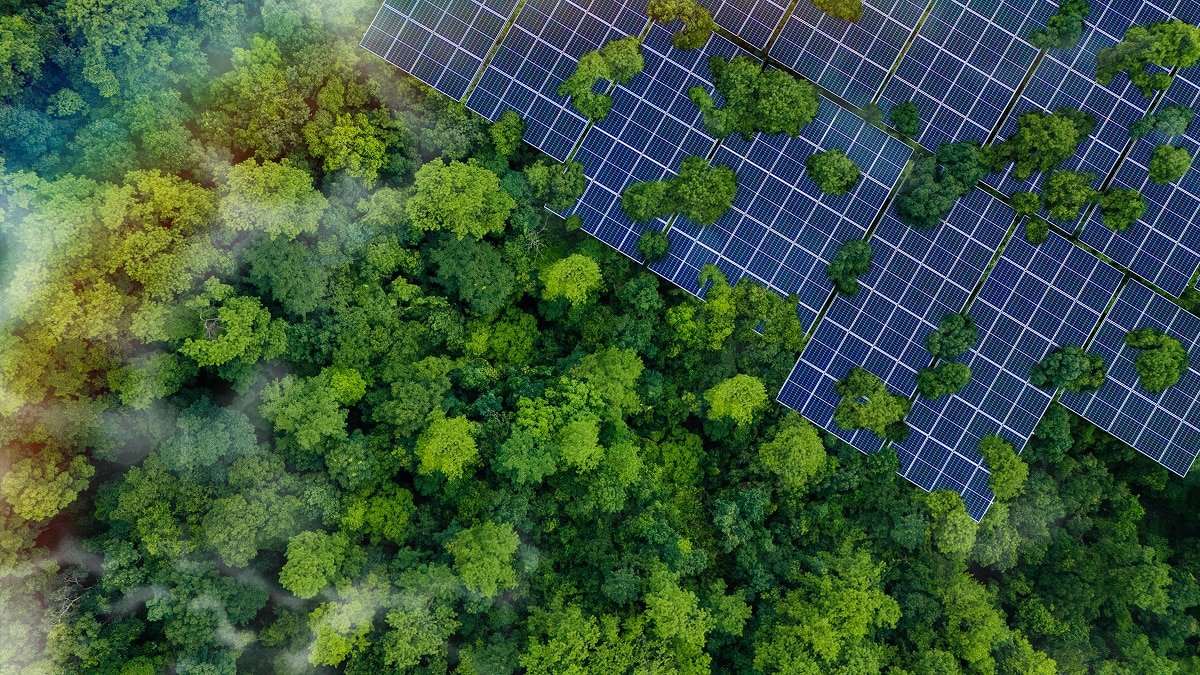
Aerial view of solar panels installed alongside a dense green forest, illustrating renewable energy and sustainability.
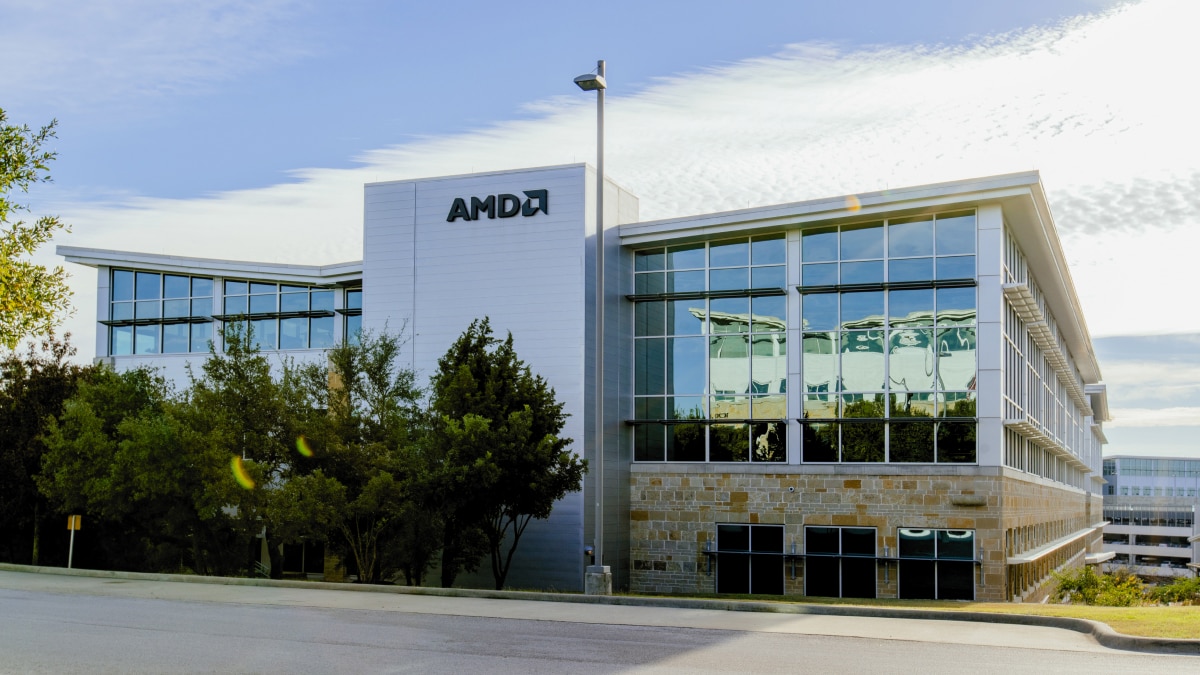
Modern AMD office building with a glass façade, white exterior, and landscaped trees under a blue sky.

Addressing Operational Environmental Impacts

Our approach to circularity and efficiency encompasses practices that optimize resource use and minimize waste throughout the product life cycle.

Advancing Product Circularity and Efficiency

Our approach to circularity and efficiency encompasses practices that optimize resource use and minimize waste throughout the product life cycle.

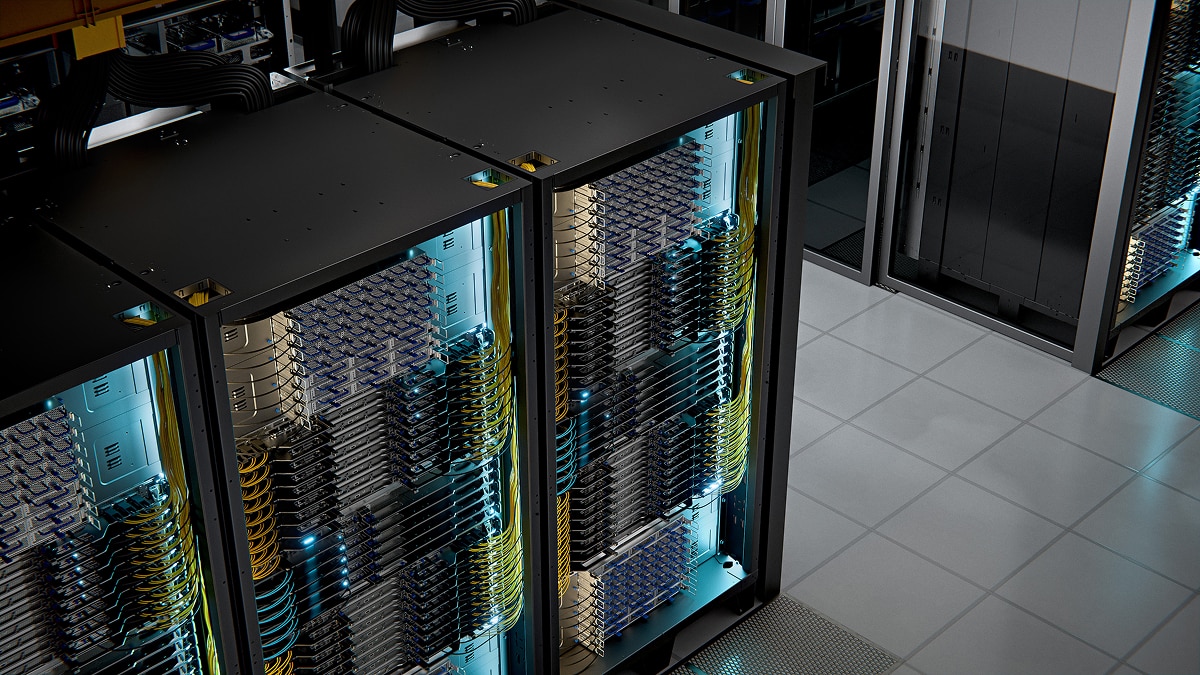
Rows of illuminated server racks with visible networking cables and hardware in a modern data center.

Collaborating on Environmental Solutions

AMD collaborates with enterprises, researchers and others to help them put AMD technology to work to solve some of the world’s most pressing environmental challenges. By understanding our customers’ computing needs, we can work together to apply AMD technology to tackle tough challenges.

upgrading laptops

Energy Generation

Siemens Energy switched to AMD EPYC™ CPUs resulting in triple performance and cutting energy use by 30%, enabling the company to manage controls of huge new renewable energy projects.

upgrading laptops

Telecommunications

Swisscom reduced power usage by 24 percent with 55% fewer Watts per vCPU by switching to AMD EPYC™ CPUs for its cloud.

wind farm

Semiconductor Testing and Packaging

ASE increased its data center compute resources by 2.5 times and improved client PC user productivity by 30 percent with AMD EPYC™ and Ryzen™ CPUs.

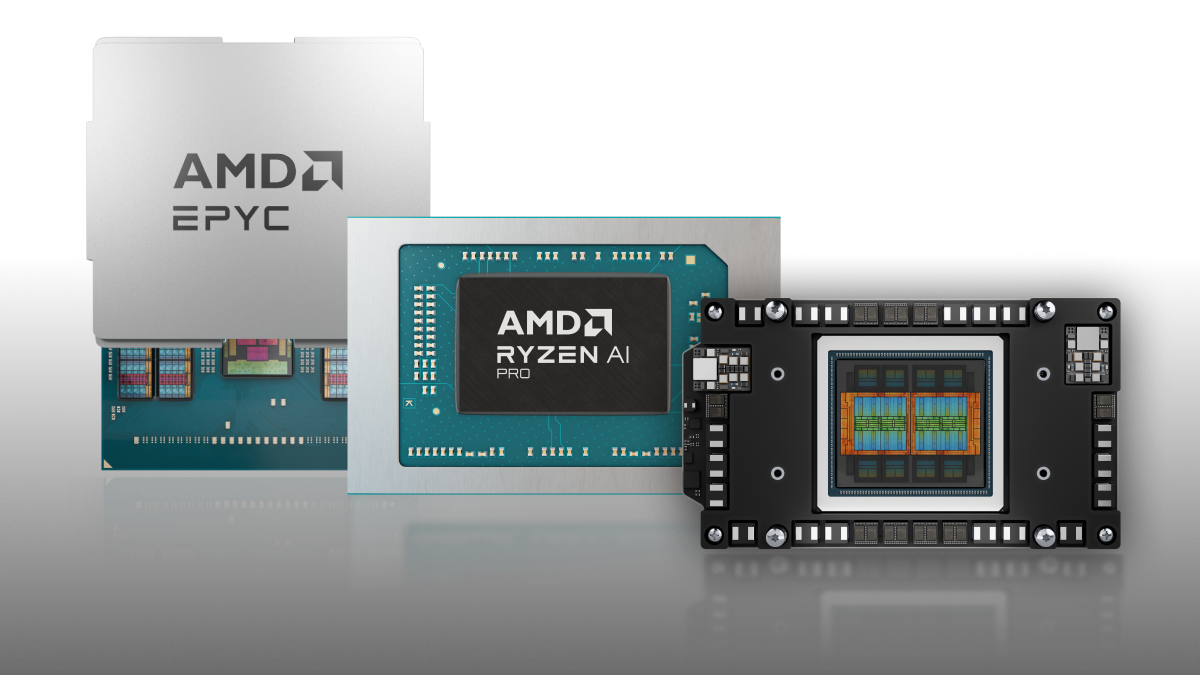
AMD Epyc Chip

Understanding the Environmental Impacts of AMD Products

We strive to create products that enable environmental solutions and help our customers better understand the climate impact of the products they use. Our product carbon footprint assessments estimate total GHG emissions from “cradle-to-gate” product life cycle stages, including raw materials, manufacturing and transportation.

Industry Collaboration

Our environmental sustainability efforts help address issues that affect the broader sector, and AMD actively engages with industry partners on many initiatives.

Responsible Business Alliance Logo
ITI Logo
Semiconductor Climate Consortium Logo

Data in Depth

For a comprehensive view of our environmental performance, explore our data tables, assurance statement and other disclosures.

Footnotes
  1. Reported data include Scope 1 and 2 GHG emissions (base year 2020) and are based on AMD calculations that received external limited-level assurance.
  2. “Manufacturing Suppliers” are defined as suppliers that AMD buys from directly and that provide direct materials and/or manufacturing services to AMD.
  3. AMD received external limited-level assurance and are based on data supplied by our Manufacturing Suppliers. The supplier data were not independently verified by AMD.
  4. AMD defines renewable energy as energy from a source that is not depleted when used, such as wind or solar power. AMD does not require a minimum amount of renewable energy to be sourced by Manufacturing Suppliers to be included in the goal. Data is provided by AMD suppliers and has not been independently verified by AMD.
  5. The AMD supply chain carbon emissions intensity metric is based on Manufacturing Supplier emissions (mtCO2e) divided by AMD net revenue (US$ million). Final performance on the goal will be calculated by subtracting the target year (2030) carbon intensity from the base year (2024) carbon intensity and dividing the difference by the base year (2024). For the base year and the target year, AMD will use Manufacturing Suppliers’ emissions from the corresponding reporting year. For the interim goal years (2025-29), AMD will estimate reporting year emissions for each of these suppliers by taking the previous year emissions (mtCO2e across Scope 1, Scope 2 and Scope 3 Category 1) and dividing by the previous year AMD spend (US$ million) with each individual supplier, then multiplying by the current year AMD spend (US$ million) with each supplier. AMD is taking this approach to balance efforts to promote both accuracy - including the time needed for Manufacturing Suppliers to complete reviews, auditing, and reporting within AMD channels - and transparency, by providing what AMD has determined is a reasonable estimate of these supplier emissions in the reporting year.
  6. Estimated performance on the AMD carbon emissions intensity goal from 2024 to 2025 is a reduction of approximately 8%. The 2024 carbon emissions intensity is 98.3 (2,533,494 mtCO2e /US$25,785 million AMD net revenue). The 2025 estimated carbon emissions intensity is 90 (3,115,021 mtCO2e / US$34,639 million AMD net revenue). This figure and associated estimated goal performance may change when verified 2025 data is received from AMD Manufacturing Suppliers.
  7. Includes AMD high-performance CPU and GPU accelerators used for AI-training and high-performance computing in a 4-Accelerator, CPU-hosted configuration. Goal calculations are based on performance scores as measured by standard performance metrics (HPC: Linpack DGEMM kernel FLOPS with 4k matrix size; AI-training: lower precision training-focused floating-point math GEMM kernels such as FP16 or BF16 FLOPS operating on 4k matrices) divided by the rated power consumption of a representative accelerated compute node, including the CPU host + memory and 4 GPU accelerators.
  8. EPYC-030c: Calculation includes 1) base case kWh use projections in 2025 conducted with Koomey Analytics based on available research and data that includes segment specific projected 2025 deployment volumes and data center power utilization effectiveness (PUE) including GPU HPC and machine learning (ML) installations and 2) AMD CPU and GPU node power consumptions incorporating segment-specific utilization (active vs. idle) percentages and multiplied by PUE to determine actual total energy use for calculation of the performance per watt. The 38x improvement is calculated using the following formula: (base case HPC node kWh use projection in 2025 * AMD 2025 performance per watt improvement using DGEMM and TEC + base case ML node kWh use projection in 2025 *AMD 2025 performance per watt improvement using ML math and TEC) / (base case projected kWh usage in 2025). For more information, visit www.amd.com/en/corporate/corporate-responsibility/data-center-sustainability.html.
  9. The AMD 20x30 energy efficiency goal is based on representative AMD rack configurations that incorporate projected improvements across compute, memory and networking performance as well as power consumption. Additional methodology, assumptions and technical details are available on the AMD Data Center Sustainability webpage.
  10. Progress toward the AMD 20x30 goal is measured by comparing annual AMD rack configurations against a 2024 baseline using a performance-per-watt methodology. The 2026 result reflects a combination of measured product data and modeled estimates where final performance data was not available. Additional assumptions, calculations and progress-to-goal details are available on the AMD Data Center Sustainability webpage.
  11. In the AMD Corporate Responsibility Report and other AMD climate-related disclosures, AMD references this operational GHG reduction goal (market-based emissions) as a “science-based target” aligned with a 1.5°C scenario. Under the California Climate and Carbon Disclosure Requirements (AB 1305), the basis for this statement is that the AMD GHG goal aligns with the Science Based Targets initiative’s (SBTi’s) minimum 1.5°C target ambition of a 4.2% linear annual reduction. The SBTi criteria consider multiple climate scenario models from the IAMC and IEA.

    Interim AMD progress toward the goal is disclosed in the AMD CR Report (pages 30, 33) and measured in mtCO2e of Scope 1 and 2 GHG emissions (market-based). The AMD 2020 base-year value is 61,754 mtCO2e, and the 2030 target-year value is 30,877 mtCO2e, representing a 50% reduction. AMD reports total Scope 1 and 2 GHG emissions for each interim year and obtains external limited-level assurance for the Scope 1 and 2 values as well as the percentage progress toward the goal.

    For fiscal year 2025, the most recent reporting year, AMD reported 42,972 mtCO2e in Scope 1 and 2 emissions, approximately a 30% reduction from the 2020 baseline. The data received external limited-level assurance in accordance with the International Standard on Assurance Engagements (ISAE) 3000 Revised.