AMD and Affinity by Canva Put the Magic into Work for Photographer Peter Neill
The power of AMD processors and Affinity by Canva software preserves the music photographer and CG artist’s creative flow while editing ultra-high-res images
Peter Neill has to edit a lot of large image files. As a music photographer with clients including Queen, U2 and Rick Astley, he develops hundreds of huge RAW files at the end of a shoot, while for Ultrawidewallpapers.net, the website he founded to provide custom desktop wallpapers for owners of ultrawide monitors, and routinely has to post-process over 50 dual 4K images in a day.
The previous hardware and software Neill used for editing images was frustrating: slow and laggy. But switching to Affinity by Canva’s industry-disrupting image-editing software—and from Intel processors to the powerful, cost-effective AMD Ryzen™ CPUs—has restored his creative flow.

Removing roadblocks to creativity
Neill had been using other professional photo editing software for over a decade before he first tried Affinity Photo, as a standalone image editor, in 2023.
“The first thing that jumped out was the responsiveness,” he says. “For me, processing RAW images is such a big thing, and as the files got bigger with higher-resolution cameras, Lightroom, the software I previously used, became very, very laggy. It stopped being organic, and you had to fight with it.”
“When you’re used to turning a dial on your camera and seeing the exposure change, you want your post process to feel the same way,” he explains. “Working in Affinity Photo felt fluid, instead of trying to drag a chain along the ground.”
In 2025, Canva unified its Affinity product range, creating a single new application with the image-editing capabilities of Affinity Photo, plus vector design and page layout features from its other software. In an industry-disrupting move, it made the unified application available for free, with the aim of putting professional-quality tools in the hands of creatives everywhere in the world.
For Neill, the new Affinity by Canva builds on the strength of its predecessors. “I’m still learning its new paradigms, but it has the same advantages, and the interface doesn’t feel as cluttered,” he says.
Embracing the power of AMD processors
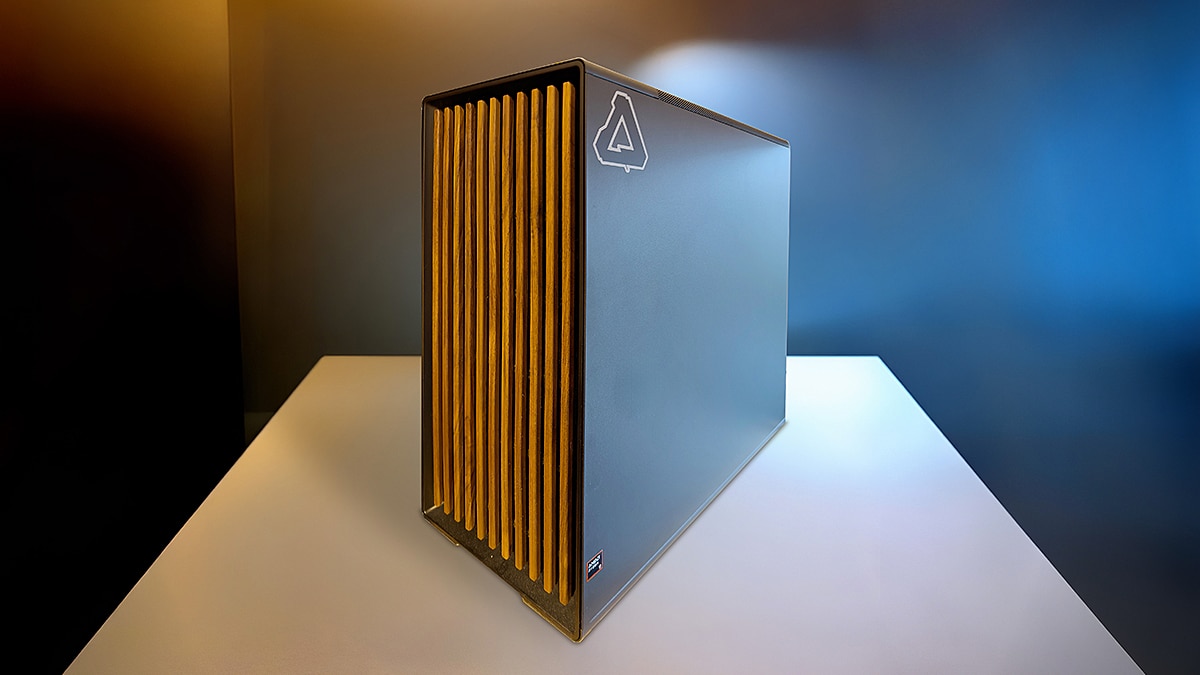
Having worked in IT before becoming a professional photographer, Neill builds his own custom desktop workstations, tailoring them to his creative needs. He says that the experience of switching from Intel to AMD processors has been similar to that of switching to Affinity.
“I went with Intel CPUs for a number of years, not because I actively preferred them, but because of what I got a deal on,” he says. “But I was frustrated with the performance, and with the thermal output. I switched to AMD with the Ryzen 9 3900X CPU, and I’ve been using Ryzen CPUs ever since.”
Neill’s current workstation features a top-of-the-range 16-core Ryzen™ 9 9950X3D CPU. “AMD hardware has been rock-solid-stable for me, and the price point has generally been more competitive”, he says. “It's been an absolute no-brainer for me to embrace it.”
For reviewing images and editing video footage on location, Neill uses a HP ZBook Ultra G1a with an AMD Ryzen™ AI Max+ 395 PRO integrated processor, which combines a 16-core CPU and a 40-core GPU in a single unit.
“It’s glorious,” he says. “The performance is phenomenal, and the battery life is also very good. An equivalent laptop with an onboard NVIDIA GPU would chew through the battery very quickly.”
Neill praises the Ryzen™ AI Max+ PRO processor’s unified memory architecture, which removes the performance hit traditionally associated with transferring data between CPU and GPU.
“After a gig, I can have 4,000 images from multiple cameras, huge 120MB RAW files,” he says. “On my desktop workstation, there’s a noticeable lag as cached images are loaded into RAM, and it drives me nuts, but because the CPU and GPU are combined on a single chip, the Ryzen™ AI Max+ PRO 395 just doesn’t care.”
Pioneering new creative workflows
Both AMD and Affinity power Neill’s other major creative project, Ultrawidewallpapers.net, the website he founded to provide owners of ultrawide monitors with custom desktop images. It now features over 4,000 wallpapers, most created by Neill using an innovative generative AI workflow that modifies the output of AI image-generation models from the FLUX and Z-Image families using over 40 separate LoRAs that Neill has trained on different parts of his own photographic archive.
Neill then performs painstaking post-processing work on the raw AI renders to refine them, blending multiple variations, cloning out imperfections, applying noise and depth-based blur, and cropping and color-correcting the final image. “I treat them like photos,” he says. “I very rarely use them naked. The vast majority of my time is spent in post.”
Neill currently uploads new images to the site weekly, typically processing 50 to 60 dual 4K (7,680 by 2,160-pixel) images in Affinity on his AMD Ryzen™ workstation in a six-hour work session.
“One of the reasons I went with the AMD Ryzen 9 9950X3D CPU was because of its sheer number of cores,” he says. “I open all of the images that I’m editing in Affinity at the same time, then just close the tabs as I finish, and the CPU doesn’t complain.”
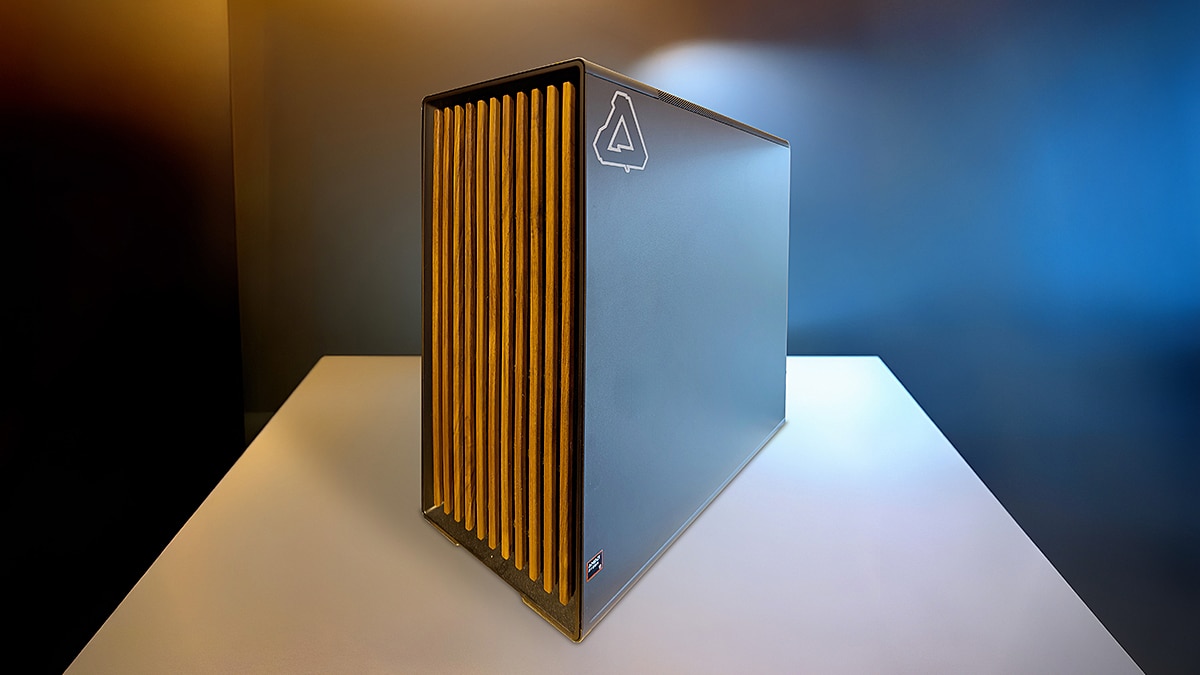
AMD and Affinity: a winning combination
For Peter Neill, the combination of Affinity software and AMD hardware has put the magic back into his creative work.
“Switching to Affinity made me remember the original excitement of RAW control,” he says. “It was the first time in years that I actually sat down and thought, ‘I’m enjoying this.’ I can invariably go back to an old image now and get a better version of it, because if you have to spend less time fighting with the software, there’s more time to be creative.”
That smooth creative flow is made possible by the power and high core count of AMD CPUs. “The Ryzen 9950X3D is just staggeringly fast,” says Neill. “For some time, it felt that AMD had an attitude of chasing a target ahead of them, and they’ve kept that, even though they have surpassed their competitors. Recently, I’ve built several workstations for friends, especially for people who want to learn how to train AI models, and they’ve all had Ryzen CPUs.”
So will Neill carry on using AMD hardware for his professional work? “Oh, 100%. AMD would have to close up shop to stop me,” he laughs. “I depend on it for my workflow, and if something is not only excelling in performance, but proving itself in reliability, you don’t change it.”
About the Customer
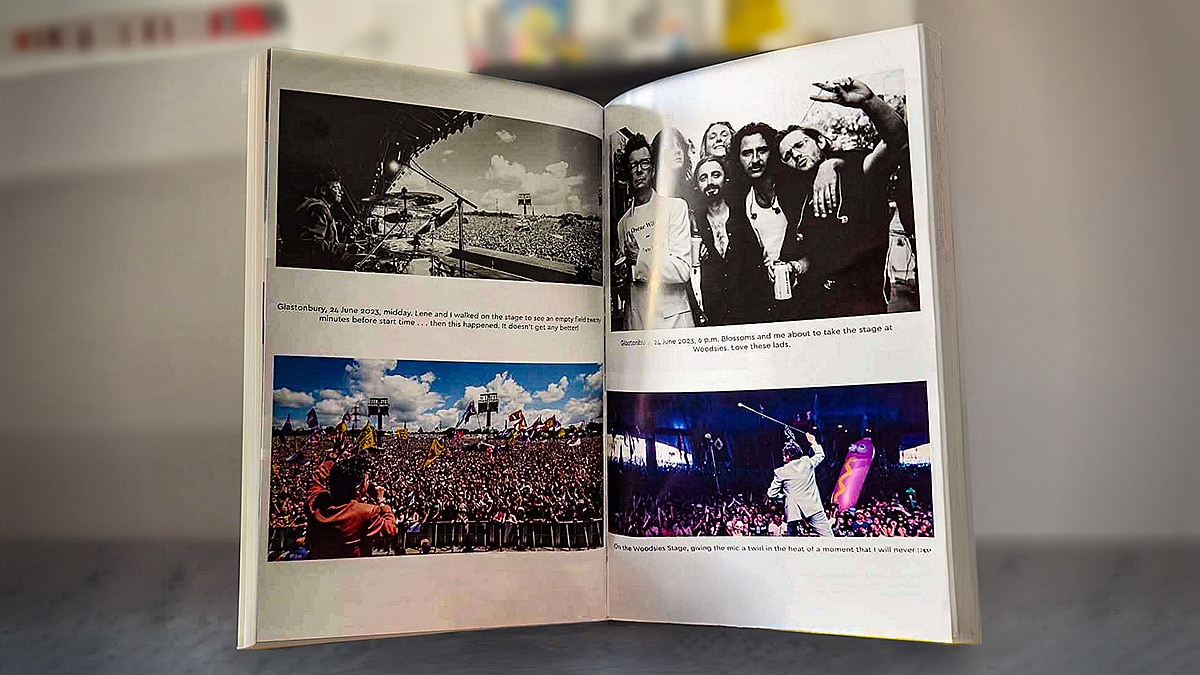
Peter Neill is a music industry photographer and video director whose clients include multi-platinum-selling artists Queen, Justin Timberlake, The Script, U2 and will.i.am, plus Sony Music Entertainment, Columbia Records, Epic Records and Billboard magazine. He has worked with composer Ennio Morricone, and is a regular collaborator with Rick Astley, co-curating the images for his recent autobiography. He founded the website Ultrawidewallpapers.net, for which he creates custom desktop wallpapers for ultrawide monitors. For more information, visit shootthesound.com and ultrawidewallpapers.net.
Case Study Profile

- Industry:
Media & Entertainment - Challenges:
To create a system powerful enough edit large camera RAW files and post-process ultra-high-resolution images in Affinity by Canva software quickly enough to preserve creative flow - Solution:
Neill built a cost-efficient custom content creation workstation based around the 16-core AMD Ryzen™ 9 9950X3D desktop CPU - Results:
The power of the AMD workstation enables Neill to process scores of ultra-high-resolution images in Affinity each week. He now builds similar systems for other artists - AMD Technology at a Glance:
AMD Ryzen™ 9 9950X3D CPU
AMD Ryzen™ AI Max+ PRO 395 CPU

Stay Informed
Stay Up to Date with AMD
Need more information about AMD solutions for your business? Connect with our team to learn how AMD can support your organization.