UNISON’s Yuca Supercomputer Powered by AMD and Dell Technologies Accelerates Science
University of Sonora builds the highest performing research supercomputing cluster in Mexico, powered by Dell PowerEdge servers and AMD EPYC™ Server CPUs and Instinct™ GPUs.
Scientific discovery increasingly relies on high performance computing. Researchers around the world need access to the fastest possible server clusters to continue the advancement of knowledge. University of Sonora (UNISON) wanted to improve Mexico’s profile as a leading contributor to global science. AMD EPYC™ Server CPUs and Instinct accelerators running on Dell PowerEdge XE-Series Servers have given the institution the infrastructure it needed to deliver cutting edge results that expand the boundaries of human understanding.
“UNISON supports a growing community of approximately 536 users, including around 200 intensive researchers,” says Maria Del Carmen Heras Sanchez, Director, High-Performance Computing Area, UNISON. “The High-Performance Computing area of UNISON aims to provide a competitive advantage to the university’s researchers who require cutting-edge tools. This is based on two axes: first, having frontier infrastructure that allows large computational capacity. And on the other hand, internationally standard computing programs that allow those research tasks to be carried out.”
UNISON’s Área de Cómputo de Alto Rendimiento (ACARUS) HPC program started back in 2001 and has developed a long relationship with AMD. In 2012, ACARUS chose to deploy AMD Opteron 6200 Series CPUs, which Heras had encountered through the Mexican Supercomputing Network. The continuing partnership between UNISON and AMD stems from the trust built by this earlier experience. “We were able to provide uninterrupted services to our users thanks to how well the systems worked,” she says. When ACARUS was looking to invest in HPC again through a project starting in 2023, AMD again looked promising. “AMD had more competitive pricing and faster delivery times than the competition.” Also, an existing server GPU provider could not meet demand, so AMD GPUs also looked attractive. “The quality of the experience we had using AMD CPUs made us confident in purchasing AMD GPUs.”
Global technology solutions provider, Dell Technologies has also been an important and consistent partner for UNISON for over a decade. “Since 2012, our first AMD system ran on Dell PowerEdge servers, and we have not had any other brand since,” says Heras. “Dell—through Qualisys, the local company—has treated us very well.”

AMD CPUs and GPUs deliver petaflop performance
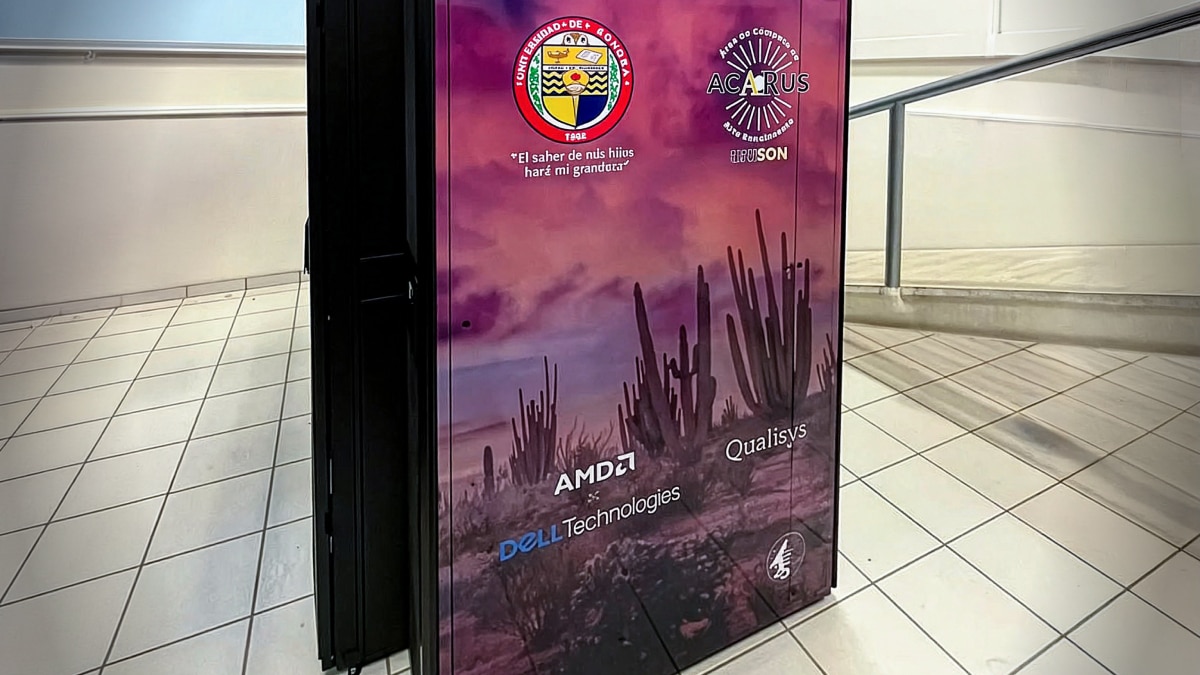
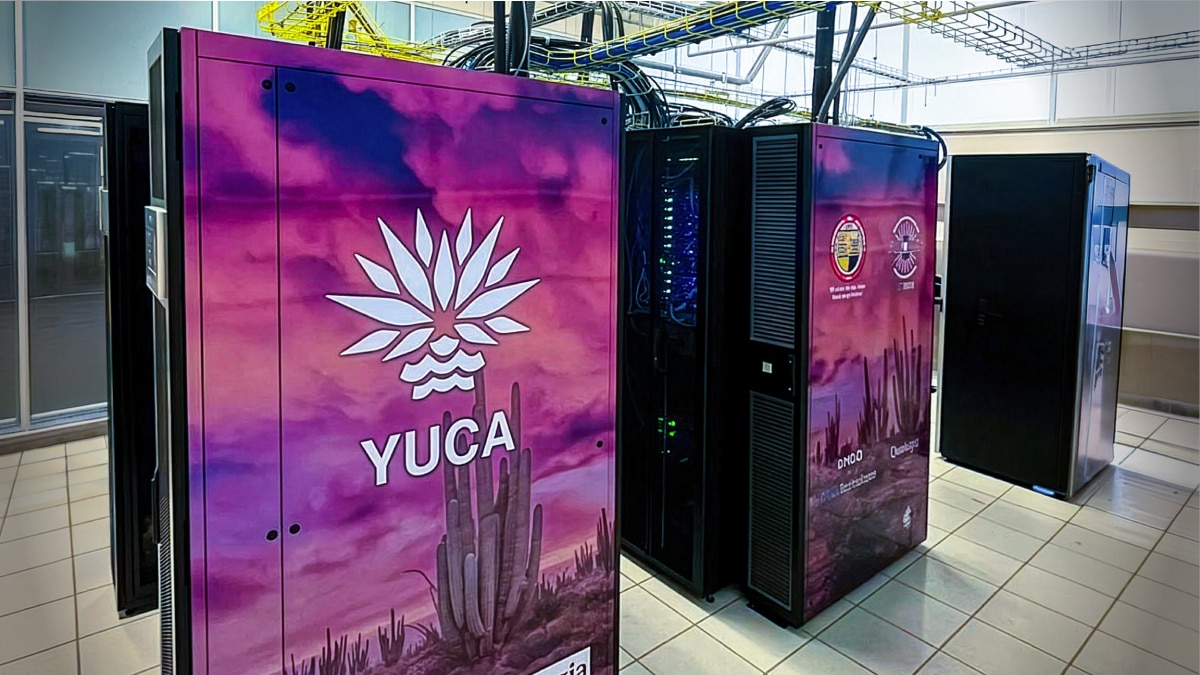
The Yuca system deployed by UNISON consists of 40 dual-socket Dell PowerEdge R-series servers. Of these, 30 are powered by 4th Gen AMD EPYC 9354 Server CPUs, including 24 for CPU compute and six for virtualization. Four additional PowerEdge R-series servers are powered by 4th Gen AMD EPYC 9124 Server CPUs, two for login control and two acting as master control nodes. Six further PowerEdge XE-Series servers powered by 4th Gen AMD EPYC 9224 Server CPUs incorporate two AMD Instinct MI210 GPUs apiece.
UNISON validated the performance of the main Yuca cluster using industry-grade benchmarking tools, including the Linpack floating point 64 (FP64) test. “We obtained 1.5 petaflops as the total performance of the system,” says Heras. “The theoretical performance was 2.3 petaflops. There are specific applications that can reach 2 petaflops.”
It was also reassuring for UNISON that the two currently fastest Exascale computers in the world—El Capitan at the Lawrence Livermore National Laboratory and Frontier at the Oak Ridge National Laboratory—are powered by AMD EPYC Server CPUs and Instinct GPUs. This helped justify the hardware choice. “The number one computer in the TOP500 has AMD technology, so it was proven to have very good performance.”
This trust has proven to be justified, with bullet proof reliability. “The system is operating at 100%,” says Heras. “The performance is what was expected. It has been an excellent decision to choose AMD for both CPU and GPU technology in this supercluster. We receive very good support from AMD personnel. We are very happy.”
AMD technology reduces processing years to hours
The new Yuca system has enabled UNISON to support a wider range of scientific computing workloads. High-energy physics still has the greatest demand, but this has been joined by mathematics, engineering, mechatronics, artificial intelligence, computational sciences, chemical-biological including food science, chemistry, industrial engineering, and mining. “Research workloads have always been what drives growth,” says Heras. “The system operates 24/7/365 delivering services.”
Training has been key in transitioning researchers to Yuca from previous ACARUS clusters. “We have a new generation of users every four or five years,” says Heras. A key difference with Yuca is its use of AMD GPUs rather than accelerators from NVIDIA. “We trained our users so that with ROCm it was transparent. They could now use AMD GPUs through the set of tools that ROCm provides and continue running their CUDA code just as they did on NVIDIA. The ROCm training made the transition for users from NVIDIA technology to AMD GPUs much easier for our researchers.”
The deployment of Yuca has provided enormous benefits for the whole country. “Yuca added value to research in Mexico,” says Heras. “In nine months of Yuca’s operation, there have been 1,435,793 hours of CPU processing executed, which are equivalent to 163.9 natural years. A process that takes approximately one year using one CPU core, if we use the 1,536 cores we have, will take about four hours. That is the competitive advantage that we provide to researchers. There is a single research project from the Department of Physics Research at the University of Sonora, where just one project consumed, over nine months, 335,099 CPU hours, equivalent to 38.25 years. This research group advanced science by 38.25 years.”
“The advantage is clear for research in medicine, epidemiology, in early-warning systems for disasters such as hurricanes and tsunamis, and there is very intense work being done in the area of earthquakes,” adds Heras. “With our GPUs, if a process that takes one year using a single GPU core were run using our 79,872 GPU cores, it would take four hours. The waiting time for results has been drastically reduced.”
Supercomputing supremacy in Mexico
AI is, of course, one of the most important emerging workloads. “There are several projects that involve artificial intelligence,” says Heras. “We are involved in a collaboration with the Center for Research in Computing at the National Polytechnic Institute, called LLM-MX, which is a language model trained from scratch in the Spanish language and Spanish Indigenous languages.”
Data centers are an increasing contributor to global power consumption, so it’s important to optimize performance per Watt—something Dell PowerEdge servers AMD technology is extremely effective at achieving. “The high energy consumption of supercomputing is well known,” says Heras. “We have measured that the entire Yuca system, including switches, PowerEdge servers with AMD GPUs and CPUS, disk servers, and the air conditioning, consumes 696 kilowatts over a 24-hour period. Energy consumption is not excessive.”
UNISON’s experience with Dell Technologies and AMD is encouraging the university to maintain the winning formula for the foreseeable future. “We will continue using AMD,” says Heras. “We are very happy with the results of Yuca. We are so happy that we are now also a national reference.” Other research institutions ask for similar clusters to Yuca. “To say supercomputing is to say Yuca. It is now like a supercomputing unit here in Mexico.”
Heras regularly recommends Dell PowerEdge servers with AMD technology to other research universities. “Yuca is a successful, reliable supercomputing system with moderate energy consumption, and that is thanks to the AMD technology integrated into it,” she says. “Thanks to its partnership with AMD and Dell, University of Sonora has the most powerful supercomputer in Mexico.”
About the Customer
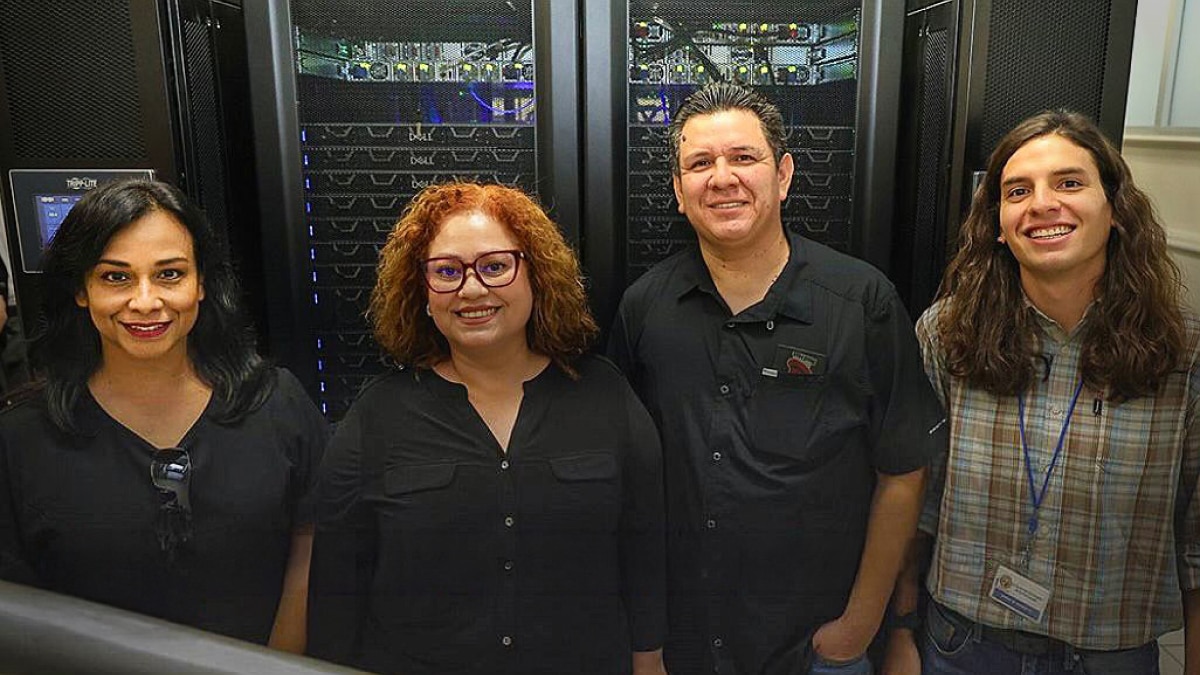
The University of Sonora (UNISON) is a public research university in Hermosillo, Sonora, Mexico, known for broad academic programs and scientific output. Its ACARUS Área de Cómputo de Alto Rendimiento provides advanced high-performance computing (HPC) infrastructure, supercomputing, storage and cloud services, and expert support for complex simulations, big data, AI training and numerical research, enabling faculty, students and external partners to tackle data-intensive projects with scalable computing power. For more information visit acarus.unison.mx.
Case Study Profile

- Industry:
Scientific research - Challenges:
UNISON needed reliable HPC with fast delivery, scalable CPU/GPU power, and strong energy efficiency to support growing, diverse research workloads - Solution:
UNISON deployed the Yuca supercomputer with Dell PowerEdge XE-Series servers with 4th Gen AMD EPYC™ CPUs and Instinct™ MI210 GPUs, delivering scalable performance, reliability, and energy efficiency - Results:
Yuca delivered petaflop performance, ran 24/7 reliably, cut research time from years to hours, and strengthened UNISON’s role in Mexico’s science - AMD Technology at a Glance:
4th Gen AMD EPYC CPUs
AMD Instinct MI210 GPUs - Technology Partners: