Viridien Extends Geoscience-Scale HPC Expertise with AMD
Viridien applies decades of expertise to power scientific discovery and simulation through advanced HPC and AI workloads, enabled by AMD EPYC™ Server CPUs and AMD Instinct™ GPUs
Viridien has been at the forefront of geoscience for nearly a century. Decades of solving some of the world’s most demanding geoscience computing challenges have created production-scale capabilities that deliver value far beyond subsurface imaging. Now Viridien is extending that expertise to advanced scientific discovery and simulation, delivering managed, production-scale HPC and AI capabilities for sectors such as materials science and biotechnology.
Central to this expansion is what Viridien describes as “extreme co-design”: the optimization of hardware, software, algorithms, and infrastructure with technology partners such as AMD. “Geoscience remains our largest high-performance computing workload, supporting Viridien’s seismic imaging services for energy companies,” says Anil Vattalai, EVP HPC and Cloud Solutions, Viridien. “For almost a century, we have helped our customers to address some of the world’s most complex subsurface challenges, building deep expertise in scientific computing along the way.”
“We combine advanced algorithms and high-performance computing expertise to help customers process vast datasets and accelerate decision-making,” explains Vattalai. “Driven by advancements in data acquisition technologies and algorithms such as Full Waveform Inversion, advanced seismic imaging has become extremely compute-intensive, which led Viridien to significantly expand capacity in recent years. Our ability to optimize and manage the complete stack for scientific workloads plays an important part in making Viridien the industry leader in seismic imaging.”
Building on its geoscience heritage, Viridien is applying the same production discipline to workloads with similar computational demands. “We are diversifying into areas with similar HPC demands as geoscience,” continues Vattalai. “The same capabilities that support complex geoscience workloads are increasingly relevant to applications such as computational materials discovery, molecular modelling and drug development, where simulation and AI are helping researchers narrow the search space before laboratory testing.”
For customers in these high-growth application areas, Viridien provides a science-to-science partner and a proven co-design approach: optimizing hardware, software, algorithms and infrastructure around each workload, as it does in production for energy. The result is a scalable, highly optimized managed service built for complex HPC and AI workloads.
What sets Viridien apart for these customers is production scale. Many advanced science and simulation workloads begin in research environments; the challenge is running them reliably, efficiently, and economically in production. Viridien already does this, operating more than a million HPC workloads a day on petabyte-scale projects, with systems tuned to real application code rather than generic benchmarks. The same production discipline that makes Viridien the leader in seismic imaging also positions it to help customers move complex scientific and AI workloads from R&D to full production scale.
One example is Matnex, whose AI platform searches for new elemental compositions to solve critical materials challenges. Workloads like this combine AI, simulation, and large-scale scientific computing, making them a natural fit for Viridien’s production-scale HPC expertise. By bringing computational discovery closer to real-world synthesis, the Matnex example shows how Viridien’s geoscience-scale infrastructure can support adjacent scientific markets beyond energy.
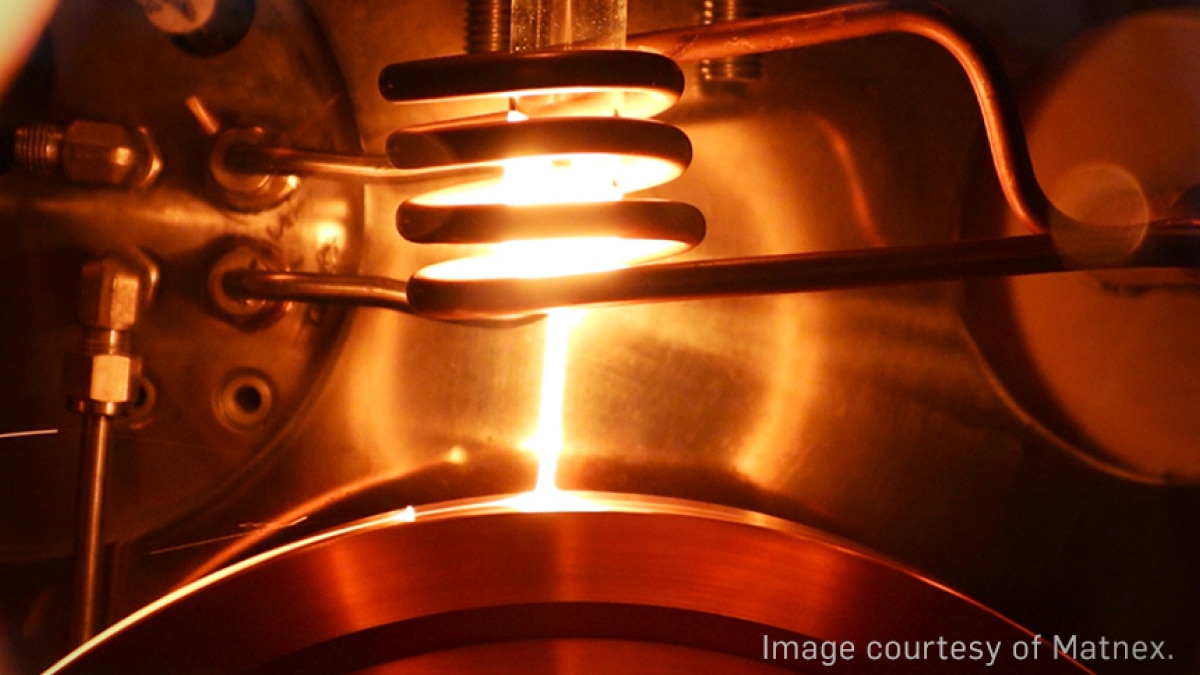
Extreme Co-Design: Hardware, Software and Algorithm Optimization
Viridien’s expansion builds on its long-standing scientific computing heritage. “We’re not forgetting our past,” continues Vattalai. “We remain deeply rooted in 95 years of experience solving complex scientific challenges, including more than 70 years of scientific computing expertise. Today, we apply that experience to help companies facing technology challenges similar to those in the energy industry.”
Viridien’s imaging workloads require massive compute scale. “Our oil and gas clients expect increasingly accurate subsurface images, because this directly impacts high-value decisions,” says Rongxin Huang, VP US Imaging, Viridien. “In deepwater environments, the cost of drilling just one well can exceed more than $100 million. Even small improvements in subsurface accuracy can have a very large economic impact, but this can increase compute demand exponentially. Globally, we now run more than one million HPC workloads per day.”
“Modern seismic imaging uses full-waveform inversion (FWI) involving thousands of subsurface model iterations,” continues Huang. “Each of our projects can involve petabytes of data. Workload performance is not just about raw compute. FWI is also highly sensitive to memory bandwidth. We need a balanced system where GPU, CPU, memory, and interconnect are all aligned. Any imbalance could quickly become a bottleneck.”
Viridien’s need for high-throughput HPC entails a very specialized infrastructure approach. “We cannot use generic HPC and expect that to work well for an application like FWI,” says Vattalai. “We optimize our entire stack, not only with the HPC engineers and research team, but also with technology leaders like AMD.” This results in what Viridien calls “extreme co-design”, where all partners work together to integrate hardware, software, and algorithms.
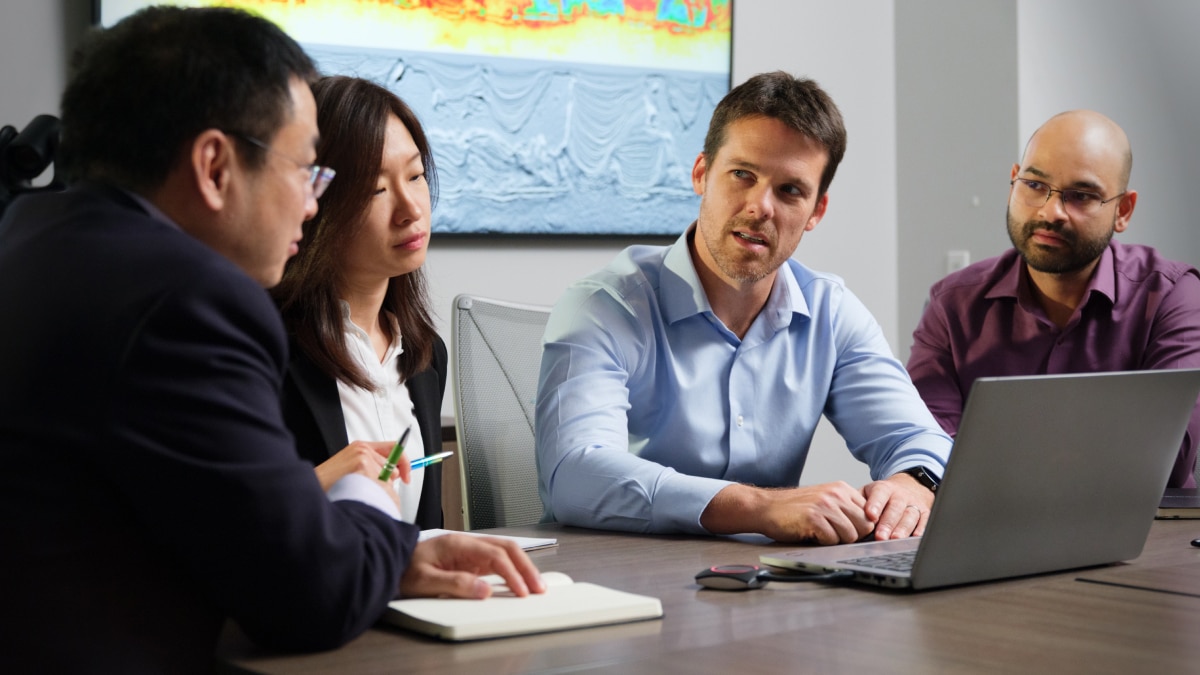
AMD Enables Flexible HPC Solutions
In markets like materials science and the biotech industry, Viridien applies co-designed HPC to help its clients develop new products faster. “In the past, companies had to experiment with different combinations of medical compounds to identify effective drugs,” says Vattalai. “That used to involve a lot of experiments in the lab. Now there are technologies that allow companies to simulate experiments using algorithms. HPC modelling helps researchers identify the most promising candidates before expensive laboratory testing.”
Adjacent scientific markets require infrastructure similar to Viridien’s geoscience workloads, but with a different balance. “FWI involves a lot of floating-point computations that we can implement using GPUs,” explains Vattalai. “But some other workloads require a lot of compute in parallel, favoring high core count CPUs.”
Viridien has been deploying AMD technology for many years, but the company needed to ensure that this remained the right choice as its scope expanded. “We want the best total cost of ownership on our own workloads,” says Jean-Yves Blanc, VP IT Strategy, Viridien. “We don’t run industry benchmarks like the Top 500. We have built our own benchmarks from our data and application code.” Beyond enabling faster output, Viridien looks for hardware partners that understand the full workload. “One of the most important criteria for us is the willingness to work together. That’s why our relationship with AMD is a success.”
Viridien’s tests convinced the company to continue with AMD EPYC Server CPUs and AMD Instinct GPUs as the range of workloads broadened. “We have historically been using AMD EPYC CPUs to power our GPU servers because their many PCI Express lanes are very well-designed for that,” says Blanc. “For new sectors, we’re extensively leveraging the high core count of AMD EPYC Server CPUs.” AMD’s combination of core density, memory bandwidth, PCIe capacity, and GPU integration helps Viridien balance CPU and GPU resources across highly diverse workloads.
"Viridien is a pioneer in applying high-performance computing and AI to some of the hardest problems in science,” says Stephanie Dismore, Senior Vice President and Managing Director at AMD. “We're proud to partner with them and pleased to see that AMD EPYC CPUs and AMD Instinct GPUs are helping them extend that leadership from energy into AI for science and simulation, from materials to drug discovery and beyond."
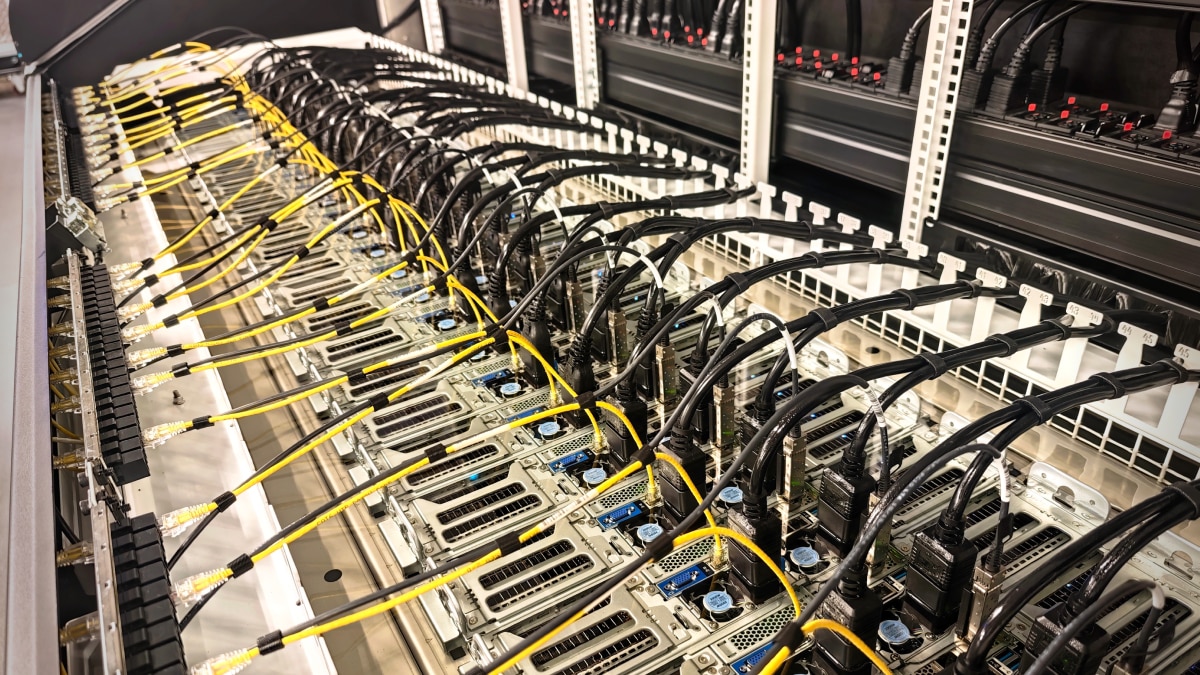
Scaling HPC Performance with AMD
The performance benefits with AMD servers have been clear. “When we run geoscience workloads at our Houston HPC Hub, we have seen 10 to 30% improvement in throughput with the latest generation of AMD EPYC Server CPUs,” says Blanc. Viridien’s GPU servers have tended to use lower core count processors, but this has changed as the company has broadened its workload mix. “Especially for new sectors, there is a very large appetite for massive core count.”
“There has been more focus on GPUs because that makes the biggest impact on our workload with geoscience users,” adds Arunas Vaisvila, VP HPC Global Operations, Viridien. “The latest generation we are deploying is the AMD Instinct MI210 Series.” Viridien made a large deployment of AMD Instinct MI210 GPUs in 2025. “We have several thousands more of those coming, too. The performance with the latest generation is 20 to 30% better.”
The effect on compute density has been transformational. “We no longer measure our density by the racks,” continues Vaisvila. “What used to require an entire aisle can now go into a single rack.” Viridien has continued with its immersion cooling approach, rather than direct liquid or air cooling. “Immersion-cooled infrastructure runs at a more stable temperature and doesn’t have thermal shocks. AMD technology has meshed well with this cooling strategy. AMD GPUs and CPUs behave well thermally in those environments. We have great uptime and stability with AMD.”
Viridien plans to continue its partnership with AMD for the foreseeable future. “These are exciting times,” says Vattalai. “Global energy pricing is turbulent, but demand continues to grow. We have positioned ourselves as a partner for energy companies, helping them make the right decisions to optimize cost, reduce risks and their time to discovery, while improving sustainability, and helping them avoid drilling dry wells.”
Viridien’s expertise is now also creating value for its newer sectors, extending proven, sustainable HPC capabilities to customers who need production-scale scientific computing and AI. “Overall, we are seeing increased demand for high performance computing,” concludes Vattalai. “AMD’s CPUs, GPUs, and software stack continue to deliver strong performance to help meet this demand. AMD has been a great partner in our HPC co-design journey to achieve elevated customer value.” As demand for advanced scientific computing and AI grows across industries, Viridien is applying decades of scientific computing expertise to help customers solve increasingly complex challenges faster, together with AMD.
About the Customer
Viridien is a global technology and services company specializing in geoscience, high-performance computing (HPC), AI and digital solutions for energy, science, and infrastructure customers. The company combines decades of geoscience expertise with advanced Earth data, cloud, and HPC capabilities to help clients improve decision-making, efficiency and risk management. For more information visit viridiengroup.com.
Case Study Profile
- Industry:
Energy - Challenges:
Demand for extreme HPC performance grew as Viridien’s geoscience workflows processed larger datasets and advanced algorithms, with biotech and materials science creating additional pressure on compute resources. - Solution:
Co-designed HPC infrastructure using AMD EPYC™ Server CPUs, AMD Instinct™ GPUs and immersion cooling to improve performance, density, and efficiency. - Results:
10–30% higher HPC throughput, improved GPU performance, greater compute density and scalable workloads across energy and AI for scientific discovery and simulation. - AMD Technology at a Glance:
AMD EPYC Server CPUs
AMD Instinct GPUs