AMD and Fiddler: Enterprise AI Reliability in the Era of Autonomous Agents
Nov 16, 2026
Combining AMD compute and open software with Fiddler evaluation, observability, and governance for enterprise AI agents.
AMD powers the world's leading scientific computing, from the exascale supercomputers driving discovery in the United States and Europe to Lux, the first Genesis Mission system for AI-driven science. With leadership CPUs, GPUs, FPGAs, networking and open ROCm software, AMD gives nations, laboratories and enterprises a single open platform for high-performance computing, AI for science, sovereign AI, agentic AI and the path to quantum computing.
Enterprises want AI that improves productivity and delivers dependable business results. But moving an application into production raises questions that a successful demo cannot answer. Production AI increasingly means agents that plan, call tools, read documents, and act, often hundreds of times inside a single request. Are responses grounded in the right information? Why did an agent choose a particular tool? Is spending increasing because usage is growing, or because the workflow is inefficient?
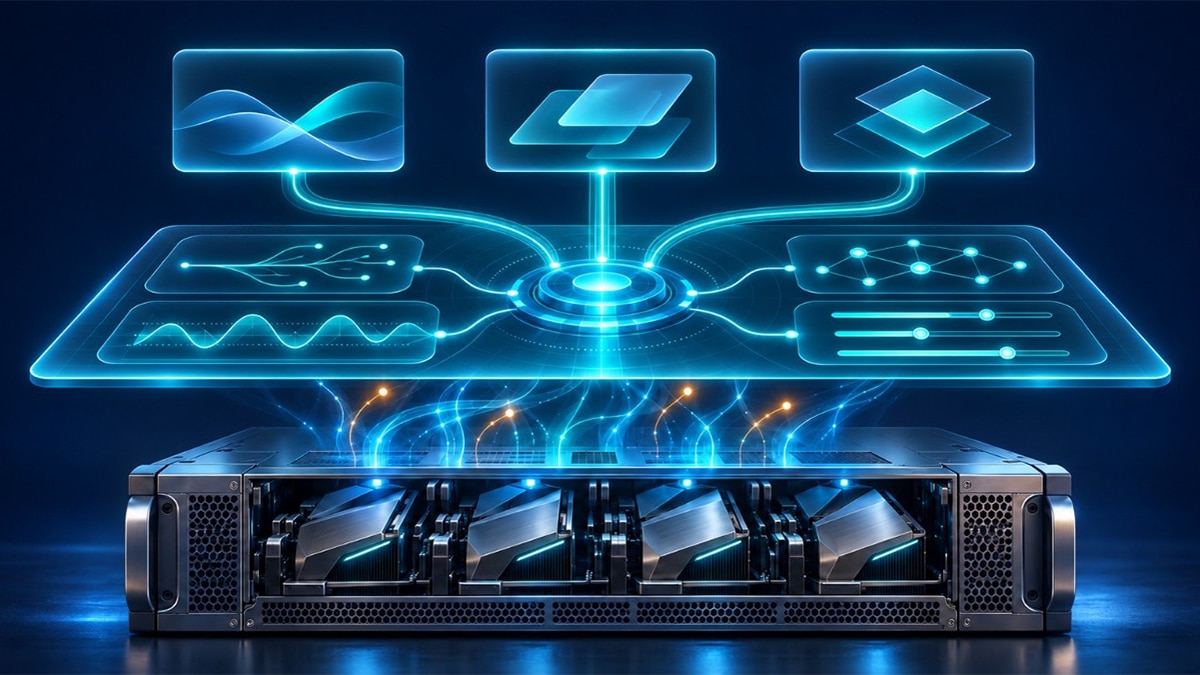
AMD and Fiddler address this together. Autonomy scales as fast as an enterprise’s ability to see and govern what its agents do, and that takes two things working as one: an open, high-performance foundation to run agents on, and oversight that keeps them in check. AMD provides accelerated computing and an open software foundation for running AI workloads. Fiddler provides evaluation, observability, and policy controls that help teams understand and improve AI behavior. The result is autonomous AI that enterprises can scale with greater visibility, stronger governance, and more predictable costs, while preserving architectural choice.
Autonomous Agents Raise the Stakes for Reliability
Consider an enterprise knowledge assistant that helps employees interpret internal policies. It may respond quickly and stay available, so every infrastructure metric shows it as healthy. But if it gives an answer that conflicts with the source policy, infrastructure monitoring alone wouldn’t catch it.
Agentic workflows add complexity. A single request can involve document retrieval, several model calls, and actions across business systems. When the result is wrong or expensive, teams need to identify which step caused the problem. Traditional monitoring was designed for models that return one answer, so it cannot pinpoint which span in a trace of a thousand caused a bad outcome.
The risks extend beyond quality. An adversarial prompt can push an agent outside its intended boundaries, and a coding agent can pass a credential or customer record into a hosted model. These are governance failures as much as technical ones, with consequences for compliance, customers, and reputation.
AMD provides the compute foundation
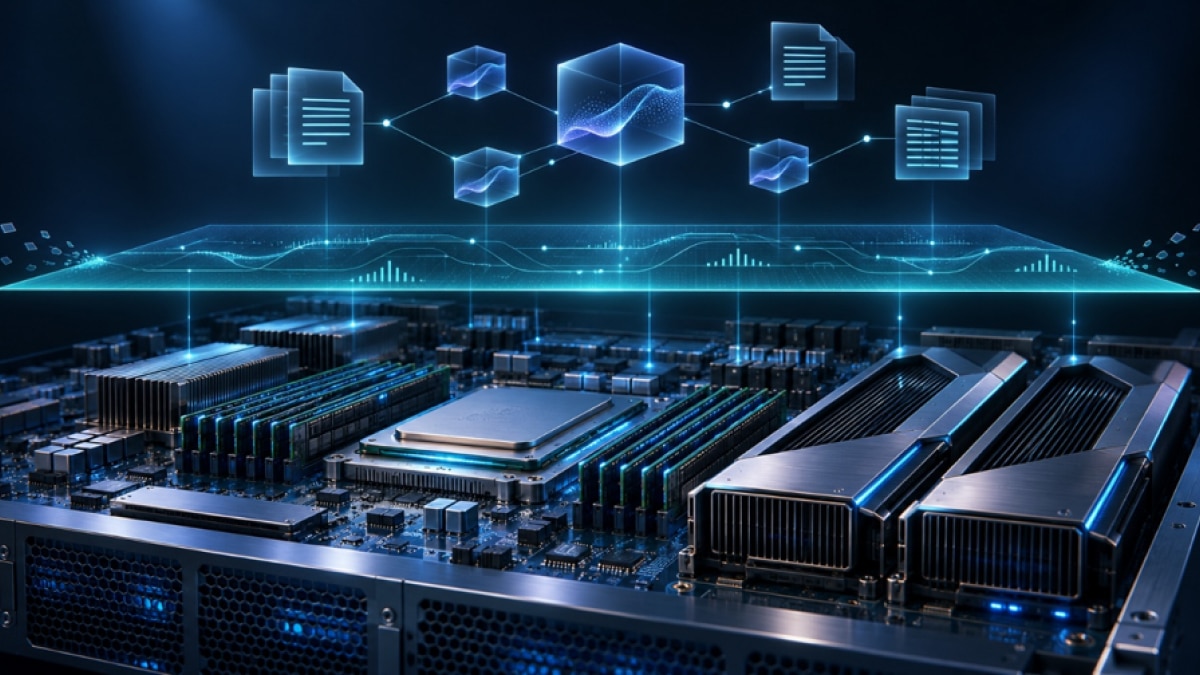
AMD Instinct™ GPUs support demanding AI workloads, including training, fine-tuning, and inference. AMD ROCm™ software provides the tools, libraries, and runtimes developers use to build and run supported workloads on AMD GPUs. This creates an open foundation for serving AI applications and expanding capacity as demand grows. Server and cloud partner options allow teams to evaluate infrastructure against their performance and deployment requirements.
That computing foundation addresses the resources AI needs to operate. Application evaluation and monitoring address how well it performs the task the customer actually cares about.
Fiddler makes AI behavior observable and actionable
In the knowledge assistant example, Fiddler would flag the conflicting answer and show where it came from. Fiddler helps teams evaluate applications before launch and monitor them in production. The Fiddler AI Control Plane records each level of an agentic system, from the application down through session, agent, trace, and individual span. Teams can compare prompts and configurations, track quality signals, and investigate changes in behavior over time. Observability capabilities connect application-level results to individual model calls, tool interactions, and agent handoffs. That context helps engineers locate failing steps, such as a retrieval that returned the wrong document, and prioritize fixes.
Fiddler evaluates risks such as hallucination, harmful content, and sensitive-information exposure. Fiddler Guardrails then enforce policy on the request itself, screening prompts and responses for jailbreaks, prompt injection, toxicity, and PII or PHI before anything reaches a user or a model.
External LLM evaluations are metered per call, so many teams sample traces, and miss the rare jailbreaks and policy violations that matter most. Fiddler Centor Models run in the customer’s environment with no external API calls.
Customers can connect AI operations to business outcomes
An approach that combines suitable compute with continuous evaluation can help enterprises pursue several practical benefits.
- More dependable user experiences: Quality monitoring helps teams identify problematic responses and measure whether changes improve results. This can help reduce avoidable errors and the human effort needed to correct them.
- Faster troubleshooting: Traces and diagnostics help engineers narrow an issue to a specific step, such as retrieval, a model response, or a tool interaction. Teams can target the cause rather than repeatedly changing the entire workflow.
- Better cost decisions: Visibility into token usage and agent activity helps teams identify expensive paths that deliver limited value. They can evaluate whether a configuration change improves the balance between cost, response quality, and speed.
- Stronger accountability: Fiddler’s governance capabilities provide records of AI activity and policy outcomes that can support internal reviews and audit requirements. Fiddler also discovers agents and maintains a unified agent registry, so every agent, model, and application is accounted for in one place. Those records help organizations assign responsibility and assess controls.
Flexibility as requirements evolve: AMD’s open software foundation and Fiddler’s model- and cloud-agnostic approach support evaluating different infrastructure and application choices. Supported components and deployment requirements still need validation for each architecture.
Reliable AI needs a continuous feedback loop
For enterprise customers, success means knowing that AI delivers the intended result at an acceptable cost and within defined operating policies. That requires ongoing measurement rather than a one-time check at launch.
AMD provides a computing foundation for demanding AI workloads. Fiddler provides insight into application behavior and tools to evaluate and govern it. Their complementary roles point to a practical customer benefit: expanding AI use with better evidence of quality, clearer accountability, and more informed operational decisions.
Start with a priority use case, define what a successful outcome looks like, and measure it through development and production. That feedback gives teams a stronger basis for deciding where to improve AI and where to scale it.
To learn more, request a Fiddler demo at fiddler.ai/demo, or contact your AMD or Fiddler representative.
Footnotes
- Unless stated otherwise, AMD has not tested or verified the third-party claims found herein. GD-182a.
- AMD, the AMD Arrow logo, AMD Instinct, ROCm and combinations thereof are trademarks of Advanced Micro Devices, Inc. Fiddler® and Fiddler AI™ are trademarks or registered trademarks of Fiddler Labs, Inc. in the United States and other countries. Other product names used in this publication are for identification purposes only and may be trademarks of their respective owners.


Related Blogs
-
AMD and Rancher Government Solutions Bring Security-Focused HPC and AI to Kubernetes
AMD and RGS simplify HPC and AI on Kubernetes with a hardened reference architecture for efficient GPU scheduling and utilization.
November 16, 2026
-
Scaling Enterprise AI with AMD Compute and HiddenLayer Security
AMD and HiddenLayer combine high-performance compute and AI security to help enterprises protect data, manage risk and scale AI adoption
November 16, 2026
-
Exascale Was the Beginning: AMD Instinct™ MI430X GPUs
The AMD Instinct MI430X is the first GPU designed from the outset for the convergence of high-precision compute and AI for science.
November 12, 2026
-
Beyond Embedding Quantization: Quark UINT4 Qwen3.8-Flash-Next on Ryzen AI Halo — ROCm Blogs
Explore n-gram table choices for Qwen3.8-Flash-Next with AMD Quark UINT4, including accuracy and response-length tradeoffs.
November 11, 2026
-
AI Is the New Electricity. And the Meter Is Running.
AMD helps enterprises scale AI while managing costs with leadership compute, open platforms and ecosystem partnerships.
November 11, 2026
-
Parallelism for Long-Context Serving: GLM-5.3-Flash on MI300X — ROCm Blogs
Measured throughput of GLM-5.3-Flash on MI300X: how KV-cache capacity shapes TP8 and DP8+EP8 serving, with BF16 and FP8 KV cache.
November 10, 2026
-
Accelerating GLM-5.2 on AMD Instinct MI355X: EvalScope Benchmarks with Prefix Caching — ROCm Blogs
Learn how to optimize GLM-5.2 FP8 long-context inference on AMD Instinct MI355X GPUs using prefix caching and end-to-end inference stack tuning.
November 10, 2026
-
AMD EPYC 9006 SP7-based Platforms Are Now Shipping
AMD EPYC 9006 SP7-based Platforms are shipping, giving data centers the compute to scale agents, feed GPUs, and run demanding workloads.
November 10, 2026