AMD EPYC™ 9006 SP7-based Platforms Are Shipping: Advance Your Infrastructure for Agentic AI
Nov 10, 2026
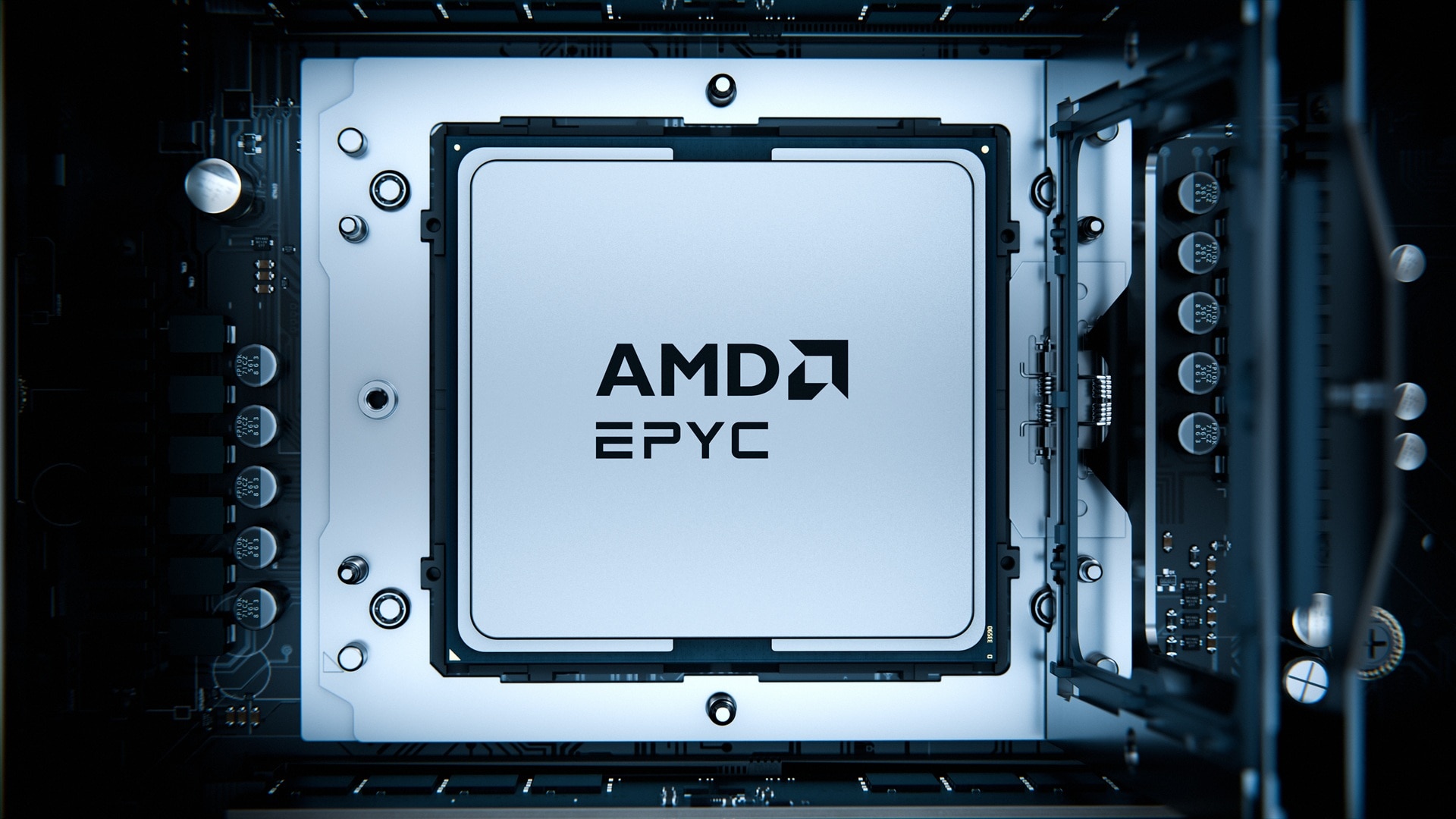
AMD EPYC™ 9006 SP7-based platforms are shipping now, giving customers access to a processor family built for the full range of compute demands reshaping modern infrastructure, from agentic AI to high-performance computing (HPC) and virtualization. AMD EPYC 9006 SP7 Server CPUs are the first of four planned processor families in the portfolio, with AMD EPYC 9006 SP8, 9006X SP7, and 9006 LP Server CPUs to follow, giving customers purpose-built options to scale agentic AI and demanding workloads. For IT and infrastructure leaders planning next-generation deployments, that means the CPUs needed to run agents, keep GPUs productive, and support enterprise workloads are available today.
The Best CPU for the Agentic AI Era1
AMD EPYC 9006 SP7 Server CPUs lead the AMD EPYC 9006 Series portfolio in core count and performance. Built to serve the Agent Sandbox, AI Host Node, and General-Purpose CPU roles, AMD EPYC 9006 SP7 Server CPUs give customers the scale to run more agents, keep AI accelerators productive, and handle demanding general-purpose workloads while achieving exceptional total cost of ownership. The family brings these first-to-market capabilities:
- Highest number of cores/threads combination with up to 256 cores and 512 threads2
- Frequencies up to 5.3 GHz with 96 cores3
- Support for JEDEC-standard MRDIMM-12800 delivering up to 1.6 TB/s of memory bandwidth per socket4
- PCIe® Gen 6 I/O for x86 platforms5
Scale Agent Execution
Agentic workflows don't run as a single process. They fan out into many concurrent agents, tool calls, and subagent tasks, and that concurrency needs dense, efficient compute to run on. AMD EPYC 9006 SP7 Server CPUs provide the core and thread density these workflows demand: up to 256 cores and 512 threads per socket let customers run more agents and the services they call within the same rack footprint, while leadership performance/watt helps maximize agent capacity within a fixed power envelope.
Keep AI Accelerators Productive
Agentic AI depends heavily on GPUs for inference, but it's the CPU that keeps those GPUs supplied with data and work. AMD EPYC 9006 SP7 Server CPUs deliver the highest frequency in its class, up to 5.3GHz, for leadership per-core performance in host-node roles6, paired with a PCIe Gen 6 I/O subsystem that provides twice the bandwidth per lane versus the previous generation. Combined with up to 1.6TB/s of memory bandwidth, AMD EPYC 9006 SP7 Server CPUs help move large context windows and datasets fast enough to keep accelerators productive rather than waiting on data.
Handle Demanding Workloads Beyond AI
Agentic systems don't run in isolation. To get work done, agents use tools and connectors to query databases, call APIs, search enterprise knowledge, and access business applications. These activities rely on the same general-purpose CPU infrastructure enterprises already use, with demand growing as more agents are deployed. AMD EPYC 9006 SP7 Server CPUs bring the performance and capacity to support these workloads. With up to 512 threads available, IT teams can consolidate virtual machines onto fewer servers. For HPC workloads, AMD EPYC 9006 SP7 Server CPUs help shorten time to insight for complex simulations across life sciences, quantum chemistry, and weather forecasting through high memory bandwidth and leadership compute performance, based on published SPECrate® benchmark results.7
Extending Customer Choice with Cloud Offerings
Cloud providers offer AMD EPYC™ Server CPUs through cloud instances and their internal SaaS software, giving customers flexible ways to deploy compute for AI data preparation, agent orchestration, HPC, and enterprise applications. A wide range of cloud instances, including general-purpose, AI-optimized, and HPC, are based on AMD EPYC 9006 SP7 Server CPUs.
Oracle Cloud Infrastructure (OCI) is expanding that choice with upcoming OCI Compute E7 instances powered by AMD EPYC 9006 Server CPUs. These instances will support enterprise applications and the CPU services that underpin agentic AI, including agent orchestration, concurrent agent sandboxes, and retrieval services.
Microsoft is bringing that choice to advanced AI model development on Azure.
Available Now
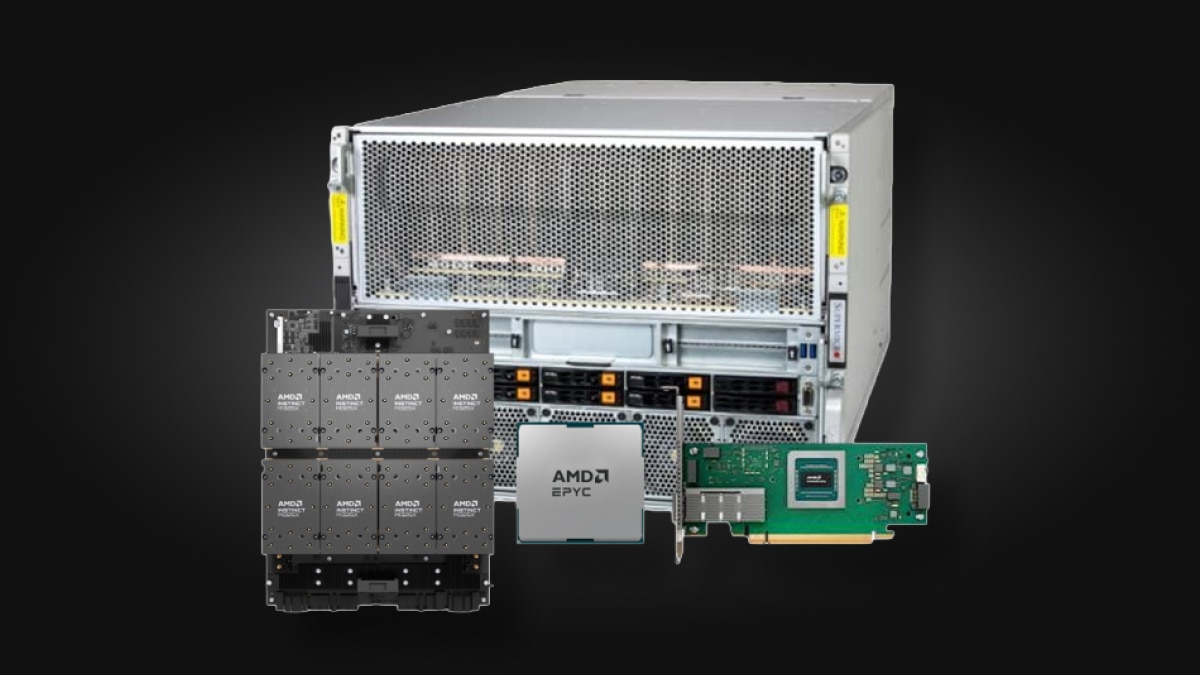
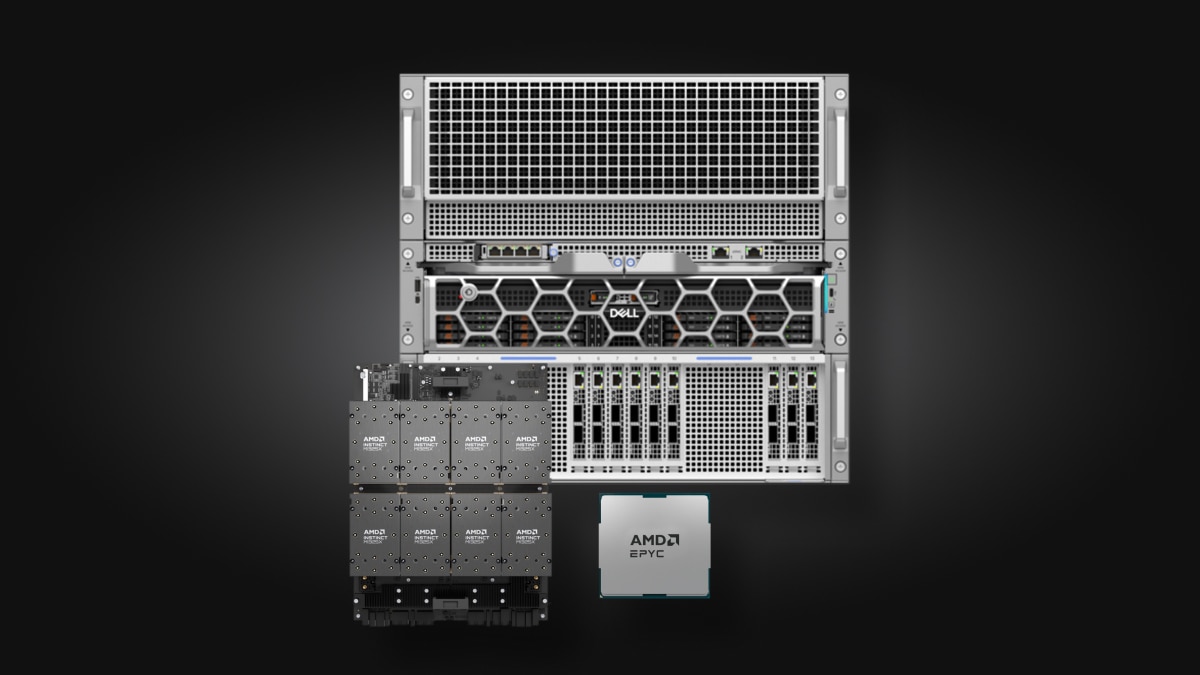
AMD EPYC 9006 SP7-based platforms are now shipping from leading OEM/ODM partners. In addition, instances from major cloud service providers (CSP) are available. For IT and infrastructure leaders evaluating how to scale agentic AI alongside existing HPC and virtualization demands, AMD EPYC 9006 SP7 Server CPUs deliver the performance and scale to run more agents, get more from GPU accelerators, increase VM density, and accelerate time to insight for complex HPC simulations, all at exceptional total cost of ownership.
Visit the AMD EPYC 9006 SP7 Server CPUs product page to explore how to advance your infrastructure for agentic AI and find available platforms to get started.

Contributors

Related Blogs
-
Introducing AMD Instinct™ Coder 355: The next generation AI Assisted Coding Platform for the Enterprise
The AMD Instinct Coder 355 is a turnkey, fully supported, on-premises AI coding platform that combines AMD EPYC™ processors, AMD Instinct™ GPUs, Supermicro® AI servers, Spectro Cloud PaletteAI Inference Launchpad software, and the GLM-5.3 model into a single integrated solution.
November 09, 2026
-
Introducing AMD Instinct™ Coder 355: A Turnkey AI Assisted Coding Platform for the Enterprise
The AMD Instinct Coder 355 is a turnkey, fully supported, on-premises AI coding platform that combines AMD EPYC™ processors, AMD Instinct™ GPUs, Dell PowerEdge servers, Spectro Cloud PaletteAI Inference Launchpad software, and the GLM-5.3 model into a single integrated solution.
November 09, 2026
-
Blackfuel: Building a Global Cloud for AI Inference
Blackfuel creates first AMD-powered inference deployment for more open, outcome-driven future for AI infrastructure
November 05, 2026
-
FlyDSL Mono Kernels for High-Interactivity LLM Serving in ATOM — ROCm Blogs
FlyDSL mono kernels cut decode latency in ATOM, with MiniMax-M3 and DeepSeek-V4.1 results.
November 02, 2026
-
-
Rightsizing Cloud Workloads on AMD Part 1 Foundations
Learn the foundations of rightsizing cloud workloads on AMD: define goals, choose the right time, classify workloads, and select relevant benchmarks.
October 01, 2026
-
EPYC CPUs Deliver for Every Layer of the Agentic AI Stack
Agentic systems combine multiple CPU roles into a workflow. The latest AMD EPYC CPU generation lets customers optimize for each task.
September 18, 2026
-
Building Infrastructure for an AI World in Motion
The biggest risk is not choosing the wrong technology today. It is building infrastructure that cannot adapt tomorrow.
September 17, 2026




Footnotes
- EPYC-029E: Claim of “best CPU for cloud, enterprise, and AI” is based on AMD’s assessment of the best overall combination of projected performance, thread density, enterprise workload results, AI benchmark performance, energy efficiency, memory subsystem capabilities, I/O capabilities, process technology, and built-in security features among evaluated general-purpose enterprise server CPUs as of 7/23/2026. “Best” reflects the strongest overall combination across the evaluated cloud, enterprise, and AI criteria and does not imply leadership in every individual workload or metric. Products not available for comparable testing or not positioned as general-purpose enterprise server CPUs were not included.
- EPYC-025E: As of November 2026, 6th Gen AMD EPYC 9996 has 256 cores and 512 threads per socket with SMT enabled, which is higher than any other publicly disclosed server CPU. NVIDIA Vera has 88 cores and 176 threads per socket. Intel Xeon 6980P has 128 cores and 256 threads per socket.
- 9xx6-030A: Peak frequency comparison based on published specifications as of October 13, 2026. 6th Gen AMD EPYC 9686F (96C, high-frequency): 5.3 GHz max boost frequency. Source: amd.com. Intel Xeon 6972P (96C): 3.9 GHz max turbo frequencySource: https://ark.intel.com. 5th Gen AMD EPYC 9575F (64C, high-frequency): 5.0 GHz max boost frequency. Source: amd.com. Intel Xeon 6960P (72C): 3.9 GHz max turbo frequency. Source: https://ark.intel.com. As of October 13, 2026, no other publicly available server processor with 96 or more cores offers a 5.3 GHz max frequency (Intel Xeon 6972P 96C: 3.9 GHz; NVIDIA Vera 88C: up to 3.2 GHz; Arm AGI 136C: up to 3.7 GHz; Intel Xeon 6776P with PCT: 4.6 GHz at 64C). Max boost for AMD EPYC processors is the maximum frequency achievable by any single core on the processor under normal operating conditions for server systems. Intel and Xeon are trademarks of Intel Corporation or its subsidiaries.
- EPYC-032E: AMD EPYC™ 9006 processors support up to 16 channels of 12,800 MT/s MRDIMM memory, providing up to 1,638.4 GB/s of theoretical memory bandwidth per socket. Intel® Xeon® 6 processors and ARM AGI processors support up to 12 channels of 8,800 MT/s MRDIMM memory, providing up to 844.8 GB/s of theoretical memory bandwidth per socket. AMD EPYC 9006 Series processors are the first CPUs to support JEDEC-standard MRDIMM memory at 12,800 MT/s, as of 11/05/2026.
- EPYC-035D: AMD EPYC 9006 CPUs are the only Server CPUs in production that support up to 128 PCIe® Gen 6 lanes in a single socket.
- 9xx6-049D: SPECrate®2026_int_base per-core comparison based on the published 2P 6th Gen AMD EPYC 9686F result and the highest published 96-core Intel Xeon SPECrate®2026_int_base result from www.spec.org as of 11/05/2026, and NVIDIA published estimates for NVIDIA Vera. Per-core results use total processor cores (cores per socket x sockets). 2P AMD EPYC 9686F (GCC 16.1) delivers 1.26x the per-core performance of 2P NVIDIA Vera (GCC 15.2) and 1.73x the per-core performance of 2P Intel Xeon 6952P (Intel oneAPI 2025.3). Configurations: 2P AMD EPYC 9686F: 96 cores per socket (192 cores total), SMT on, 32x 64GB DDR5-8000 RDIMM, 500W Default CPU Power, power determinism mode, GCC 16.1, 384 copies, SPECrate®2026_int_base 1270, published Nov-2026, https://www.spec.org/cpu2026/results/res2026q4/cpu2026-20261020-00766.html 2P NVIDIA Vera: 88 cores
- 9xx6-004C: SPECrate®2017_int_base comparison based on published scores from www.spec.org as of 11/05/2026 and AMD internal estimates for 2P NVIDIA Vera and 2P Arm AGI as of 10/10/2026. Highest performing 2P server CPU based on the highest published 2P SPECrate®2017_int_base score and the highest published score per CPU (per socket). Results and configurations below are in the format of: [processor], [cores], [Default CPU Power or TDP], [1Ku price in USD], [score], [score / CPU W], [score / 1Ku price in USD], [score / core], [Link to score] 2P AMD EPYC 9996, 512C, 600W, $14904 USD, 5470, 9.117, 0.367, 10.68, https://www.spec.org/cpu2017/results/res2026q4/cpu2017-20261020-52013.html 2P AMD EPYC 9965, 384C, 500W, $11988 USD, 3260, 6.520, 0.272, 8.49, https://www.spec.org/cpu2017/results/res2026q4/cpu2017-20261005-51950.html 2P Intel Xeon 6990E+, 576C, 450W, $14995 USD, 3050, 6.778, 0.203, 5.30, https://www.spec.org/cpu2017/results/res2026q2/cpu2017-20260518-51499.html 2P Intel Xeon 6980P, 256C, 500W, $13955 USD, 2510, 5.020, 0.180, 9.80, https://www.spec.org/cpu2017/results/res2025q4/cpu2017-20251126-50522.html 2P NVIDIA Vera, 176C, 450W, pricing not published, AMD estimate 1459, 3.242, n/a, 8.29 2P Arm AGI, 272C, 300W, pricing not published, AMD estimate 1944, 6.480, n/a, 7.15 NVIDIA Vera and Arm AGI scores are AMD internal estimates based on AMD engineering projections and subject to change; NVIDIA Vera estimate based on published Phoronix testing, https://www.phoronix.com/review/nvidia-vera-benchmarks/. Pricing not published for NVIDIA Vera or Arm AGI. Intel CPU W and prices at https://ark.intel.com/ as of 11/05/2026. Starting with the 6th Gen AMD EPYC™ server processor family, AMD uses Default CPU Power to describe processor power consumption, succeeding AMD's historical TDP reference. Default CPU Power reflects total power consumed across the processor's compute and I/O dies for the stated performance target. Default CPU Power and TDP may both serve as processor power references for product comparison, platform planning, and performance-per-watt analysis. SPEC®, SPEC CPU®, SPECrate® and SPECint® are registered trademarks of the Standard Performance Evaluation Corporation. See www.spec.org for more information. AMD CPU prices as of 11/05/2026. Results may vary due to factors including system configurations, software versions and BIOS settings. 9xx6-011C: SPECrate®2026_int_base comparison based on published scores from www.spec.org as of 11/05/2026. Highest performing server CPU based on the highest published SPECrate®2026_int_base score, overall and per CPU. Generational comparison based on the highest published 2P AMD EPYC 9996 score and the highest published 2P AMD EPYC 9965 scores compiled with AOCC 5.1.0 (2.0x the performance, ~1.7x the performance / CPU W and ~1.6x the performance / CPU $) and with AOCC 5.2.0 (1.8x, ~1.5x and ~1.4x). Results and configurations below are in the format of: [processor], [cores], [Default CPU Power or TDP], [1Ku price in USD], [compiler], [score], [score / CPU W], [score / 1Ku price in USD], [Link to score] 2P AMD EPYC 9996, 512C, 600W, $14904 USD, AOCC 6.0, 2560, 4.267, 0.172, https://www.spec.org/cpu2026/results/res2026q4/cpu2026-20261014-00694.html 2P AMD EPYC 9965, 384C, 500W, $11988 USD, AOCC 5.1.0, 1270, 2.540, 0.106, https://spec.org/cpu2026/results/res2026q2/cpu2026-20260210-00037.html 2P AMD EPYC 9965, 384C, 500W, $11988 USD, AOCC 5.2.0, 1430, 2.860, 0.119, https://spec.org/cpu2026/results/res2026q2/cpu2026-20260601-00269.html Next highest published SPECrate®2026_int_base score: 8P Intel Xeon Platinum 8490H, 1660, https://www.spec.org/cpu2026/results/res2026q3/cpu2026-20260629-00321.html. The 2P AMD EPYC 9996 score is also higher than the NVIDIA published estimate for 2P NVIDIA Vera (925), https://nvdam.widen.net/s/nmw5vblpqd/nvidia_vera_cpu_architecture_whitepaper?nvid=nv-tblg-543584. For reference, the Starting with the 6th Gen AMD EPYC™ server processor family, AMD uses Default CPU Power to describe processor power consumption, succeeding AMD's historical TDP reference. Default CPU Power reflects total power consumed across the processor's compute and I/O dies for the stated performance target. Default CPU Power and TDP may both serve as processor power references for product comparison, platform planning, and performance-per-watt analysis. SPEC®, SPEC CPU® and SPECrate® are registered trademarks of the Standard Performance Evaluation Corporation. See www.spec.org for more information. AMD CPU prices as of 11/05/2026. Results may vary due to factors including system configurations, software versions and BIOS settings.