Announcing New AMD Versal™ Prime Series Gen 2 Devices: Industry-Leading Scalar Compute, Smaller Form Factor
May 27, 2026
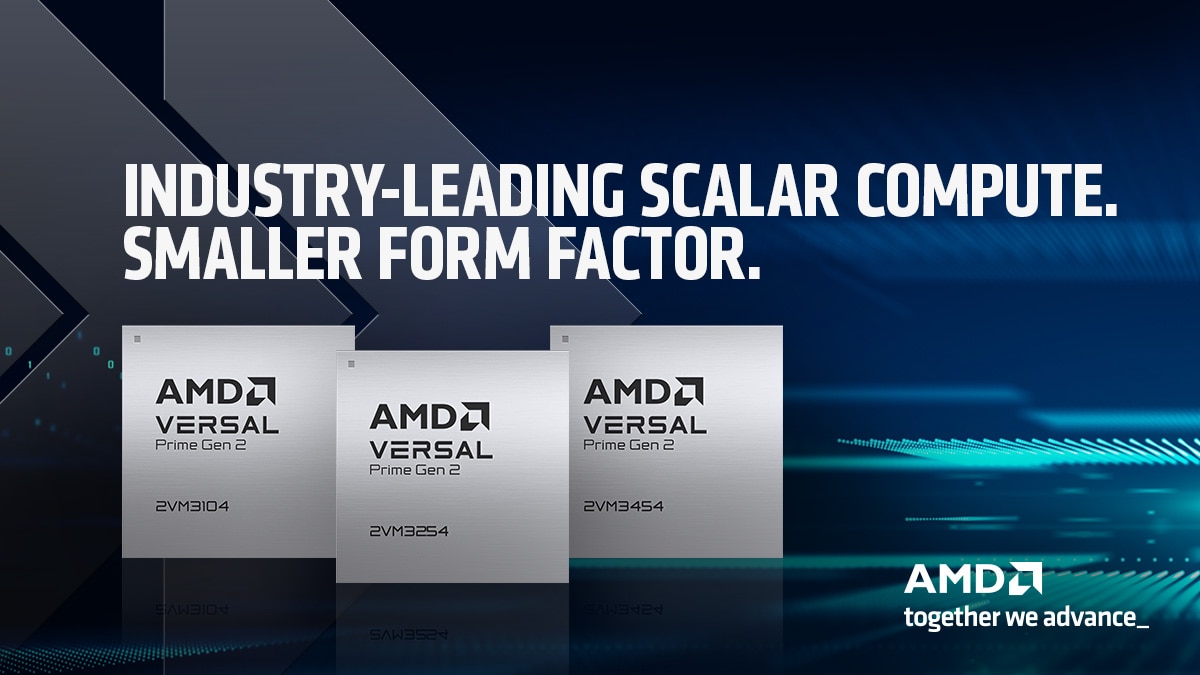
AMD began shipping the first production units of the AMD Versal™ Prime Series Gen 2 2VM3858 device in late 2025. Since then, the Versal 2VM3558 device has also entered full production, and the Versal 2VM3358 device is now sampling and on track to reach production later this year. With the majority of previously-announced Versal Prime Gen 2 adaptive SoCs now in customers’ hands, today AMD is announcing the expansion of this portfolio with three new devices: the Versal 2VM3454, 2VM3254, and 2VM3104. These new adaptive SoCs deliver up to 100k DMIPs of scalar compute in packaging as small as 23 mm x 23 mm for embedded applications in Pro AV, broadcast, industrial IoT, and beyond.
Next-Level Performance, Optimized for Area
Versal Prime Series Gen 2 adaptive SoCs combine high-performance embedded CPUs for scalar processing, world-class programmable logic, cutting-edge video encode/decode IP, and support for DDR5 & LPDDR5X memory to enable next-generation embedded systems. The earliest Versal Prime Gen 2 devices, the 2VM3858, 2VM3558, and 2VM3358, feature 8 Arm® Cortex®-A78AE application cores and 10 Cortex-R52 real-time cores, delivering up to 10X scalar compute vs. previous AMD Versal or Zynq™ UltraScale+™ adaptive SoCs.1, 2 While this level of compute is compelling for applications such as avionics and robotics that involve complex algorithms, decision making, and control, it comes with footprint and resource trade-offs that aren’t ideal for every use case.
The Versal 2VM3454, 2VM3254, and 2VM3104 devices and the previously announced Versal 2VM3654 device offer an optimized processing system (PS) featuring 4 Cortex-A78AE application cores, 6 Arm Cortex-R52 real-time cores, and a smaller Arm Mali™-G78AE GPU. While still delivering up to 5X scalar compute vs. existing AMD adaptive SoCs,3, 4 and more scalar compute than any competing FPGA SoC or adaptive SoC in the market today,5 these devices offer multiple advantages for area-constrained applications:
- 23 mm x 23 mm packaging options for the Versal 2VM3254 and 2VM3104 devices – 27% smaller than the previous minimum package size in the Versal Prime Series Gen 2
- More programmable logic per square millimeter versus comparably sized eight-core Versal Prime Series Gen 2 devices
| Comparable Devices | Comparable Devices | |||||||
| Device | 2VM3104 | 2VM3254 | 2VM3358 | 2VM3454 | 2VM3654 | 2VM3558 | ||
| PS Application Cores | 4 | 4 | 8 | 4 | 4 | 8 | ||
| Logic Cells | 225k | 303k | 207k | 565k | 696k | 492k | ||
| LUTs | 103k | 138k | 95k | 258k | 318k | 225k | ||
| Min. Pkg Size (mm) | 23 x 23 | 23 x 23 | 27 x 27 | 29 x 29 | 29 x 29 | 31 x 31 | ||
Table 1 Programmable logic resources and minimum package sizes for comparable four-core and eight-core devices
Scalable for Embedded Systems with Evolving Needs
We designed Versal Prime Series Gen 2 adaptive SoCs with scalability in mind. The combination of a common processing system architecture with an expanded range of device densities and available package sizes allows customers to strike the right balance of performance, power, and size in each of their products, all while maximizing software and IP reuse. Additionally, we offer the Versal 2VM3654, 2VM3454, 2VM3254, and 2VM3104 devices in a common footprint, allowing board designers to build a single hardware platform that supports any of these four devices. This migration path provides customers with the flexibility to select the optimal device for each application without updating their PCB design. With these capabilities, Versal Prime Series Gen 2 devices enable increased engineering efficiency and reduced time to market, particularly as system requirements evolve over time.
Start Today with Early Access Design Tools
The Versal Prime Series Gen 2 2VM3654 and 2VM3454 adaptive SoCs will start sampling later this year, and early access design tools for the Versal 2VM3654 are available now. These devices are also an excellent entry point for customers interested in the Versal 2VM3254 or 2VM3104 devices prior to their expected availability in 2027. To get started with the Versal Prime Series Gen 2 2VM3654 or 2VM3454 adaptive SoCs, contact sales to request enrollment in the early access program.
Learn more about new AMD Versal Prime Gen 2 devices.
Footnotes
- Based on AMD testing in August 2025, using the Drystone Benchmarking code test on AMD Versal AI Edge Series Gen 2 and Versal Prime Series Gen 2 devices configured with 8 Arm Cortex-A78AE processors with application cores @2.2 GHz and 10 Arm Cortex-R52 processors with real-time cores @1.05 GHz, compared to the published combined total DMIPs / scalar compute specification of first generation Versal AI Edge Series and Versal Prime Series devices. Testing environment for each series: highest available speed grade, 0.88V PS operating voltage, split-mode operation, and the maximum supported operating frequency. Processor manufacturers may vary configurations, yielding different results. Results may vary based on a variety of factors, including by device, device configuration, and operating conditions. (VER-104)
- Based on AMD testing in August 2025, using the Dhrystone Benchmarking code test on AMD Versal AI Edge Series Gen 2 and Versal Prime Series Gen 2 devices configured with 8 Arm Cortex-A78AE processors with application cores @2.2 GHz and 10 Arm Cortex-R52 processors with real-time cores @1.05 GHz, compared to the published combined total DMIPs / scalar compute specification of AMD Zynq UltraScale+ MPSoC. Testing environment for each series: highest available speed grade, 0.88V PS operating voltage, split-mode operation, and maximum supported operating frequency. Processor manufacturers may vary configurations, yielding different results. Results may vary based on a variety of factors, including by device, device configuration, and operating conditions. (VER-105)
- Based on AMD testing in August 2025, using the Dhrystone Benchmark on select 8-core AMD Versal Prime Series Gen 2 devices configured with 8 Arm Cortex-A78AE processors with application cores @2.2 GHz and 10 Arm Cortex-R52 processors with real-time cores @1.05 GHz, extrapolated to devices with 4 Arm Cortex A78AE processors and 6 Arm Cortex-R52 processors, compared to the published combined total DMIPs / scalar compute specification of 1st generation Versal Prime Series devices. Testing environment for Versal Prime Series Gen 2 devices: highest available speed grade, 0.88V PS operating voltage, split-mode operation, and the maximum supported operating frequency. Processor manufacturers may vary configurations, yielding different results. Results may vary based on a variety of factors, including by device, device configuration, and operating conditions. (VER-107)
- Based on AMD testing in August 2025, using the Drystone Benchmarking code test on select AMD Versal Prime Series Gen 2 8-core devices configured with 8 Arm Cortex-A78AE processors with application cores @2.2 GHz and 10 Arm Cortex-R52 processors with real-time cores @1.05 GHz, extrapolated to devices with 4 Arm Cortex-A78AE processors and 6 Arm Cortex-R52 processors, compared to the published combined total DMIPs / scalar compute specification of AMD Zynq UltraScale+ MPSoC. Testing environment for Versal Prime Series Gen 2 devices: highest available speed grade, 0.88V PS operating voltage, split-mode operation, and maximum supported operating frequency. Processor manufacturers may vary configurations, yielding different results. Results may vary based on a variety of factors, including by device, device configuration, and operating conditions. (VER-108)
- Based on an April 2026 AMD internal analysis of currently available comparable devices with a hard processing system, comparing the published number of high-performance and /or application cores as applicable, maximum frequencies, and max DMIPs of AMD Versal Prime Series Gen 2 devices vs. select Altera Agilex 5 Series devices, select Efinix Titanium FPGAs, and Microchip Polarfire SoC FPGAs. System manufacturers may vary configurations, yielding different results. Results may vary based on a variety of factors, including the device, device configuration, and operating conditions. (VER-106)
Footnotes
- Based on AMD testing in August 2025, using the Drystone Benchmarking code test on AMD Versal AI Edge Series Gen 2 and Versal Prime Series Gen 2 devices configured with 8 Arm Cortex-A78AE processors with application cores @2.2 GHz and 10 Arm Cortex-R52 processors with real-time cores @1.05 GHz, compared to the published combined total DMIPs / scalar compute specification of first generation Versal AI Edge Series and Versal Prime Series devices. Testing environment for each series: highest available speed grade, 0.88V PS operating voltage, split-mode operation, and the maximum supported operating frequency. Processor manufacturers may vary configurations, yielding different results. Results may vary based on a variety of factors, including by device, device configuration, and operating conditions. (VER-104)
- Based on AMD testing in August 2025, using the Dhrystone Benchmarking code test on AMD Versal AI Edge Series Gen 2 and Versal Prime Series Gen 2 devices configured with 8 Arm Cortex-A78AE processors with application cores @2.2 GHz and 10 Arm Cortex-R52 processors with real-time cores @1.05 GHz, compared to the published combined total DMIPs / scalar compute specification of AMD Zynq UltraScale+ MPSoC. Testing environment for each series: highest available speed grade, 0.88V PS operating voltage, split-mode operation, and maximum supported operating frequency. Processor manufacturers may vary configurations, yielding different results. Results may vary based on a variety of factors, including by device, device configuration, and operating conditions. (VER-105)
- Based on AMD testing in August 2025, using the Dhrystone Benchmark on select 8-core AMD Versal Prime Series Gen 2 devices configured with 8 Arm Cortex-A78AE processors with application cores @2.2 GHz and 10 Arm Cortex-R52 processors with real-time cores @1.05 GHz, extrapolated to devices with 4 Arm Cortex A78AE processors and 6 Arm Cortex-R52 processors, compared to the published combined total DMIPs / scalar compute specification of 1st generation Versal Prime Series devices. Testing environment for Versal Prime Series Gen 2 devices: highest available speed grade, 0.88V PS operating voltage, split-mode operation, and the maximum supported operating frequency. Processor manufacturers may vary configurations, yielding different results. Results may vary based on a variety of factors, including by device, device configuration, and operating conditions. (VER-107)
- Based on AMD testing in August 2025, using the Drystone Benchmarking code test on select AMD Versal Prime Series Gen 2 8-core devices configured with 8 Arm Cortex-A78AE processors with application cores @2.2 GHz and 10 Arm Cortex-R52 processors with real-time cores @1.05 GHz, extrapolated to devices with 4 Arm Cortex-A78AE processors and 6 Arm Cortex-R52 processors, compared to the published combined total DMIPs / scalar compute specification of AMD Zynq UltraScale+ MPSoC. Testing environment for Versal Prime Series Gen 2 devices: highest available speed grade, 0.88V PS operating voltage, split-mode operation, and maximum supported operating frequency. Processor manufacturers may vary configurations, yielding different results. Results may vary based on a variety of factors, including by device, device configuration, and operating conditions. (VER-108)
- Based on an April 2026 AMD internal analysis of currently available comparable devices with a hard processing system, comparing the published number of high-performance and /or application cores as applicable, maximum frequencies, and max DMIPs of AMD Versal Prime Series Gen 2 devices vs. select Altera Agilex 5 Series devices, select Efinix Titanium FPGAs, and Microchip Polarfire SoC FPGAs. System manufacturers may vary configurations, yielding different results. Results may vary based on a variety of factors, including the device, device configuration, and operating conditions. (VER-106)

Related Blogs
-
Rapid Validation on AMD Versal Silicon without Leaving MATLAB or Python
AMD Vitis™ Hardware in the Loop (Vitis HIL) bridges simulation and hardware bring-up by enabling system-level verification on evaluation hardware directly from existing MATLAB® or Python™ test environments.
October 07, 2026
-
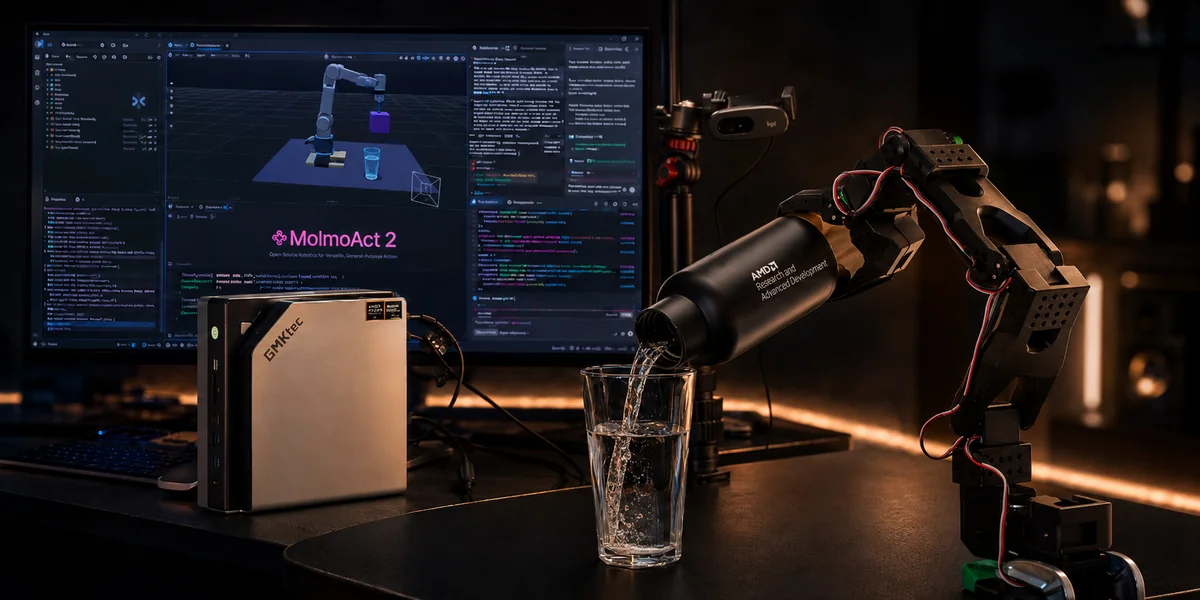
Running MolmoAct2 Robot Policy on an AMD Ryzen AI Max+ 395 Mini PC — ROCm Blogs
In this tutorial, users are introduced to a state of the art vision-language-action model and the steps to implement the model directly optimized for the AMD Ryzen AI Max+ 395 Computer.
September 29, 2026
-
AMD Expands Automotive-Grade FPGAs with Spartan UltraScale+ XA FPGAs for ADAS Applications
The Spartan™ UltraScale+™ XA device joins the AMD portfolio of automotive-grade, safe, and highly scalable FPGAs and adaptive SoCs.
September 29, 2026
-
Beyond TOPS: AMD Ryzen™ AI Embedded X100 at the Edge
Scale agentic AI at the edge with AMD Ryzen™ AI Embedded X100 Series: more concurrent agents, unified memory, x86 compatibility, and long life.
September 24, 2026
-
From Sensor to Insight: Production-Ready Single-Chip Edge AI. Proven.
AMD Versal™ AI Edge Series Gen 2 and Vitis™ AI accelerate production-ready edge and physical AI. Learn how they speed up your deployment.
September 22, 2026
-
Enabling Physical AI Agents with Lemonade — ROCm Blogs
Learn to deploy local agents for interactive robot arm manipulation using the Lemonade framework.
August 24, 2026
-
IPMX Demystified: What We’ve Learned and How to Deploy
The Internet Protocol Media Experience (IPMX) has entered a new phase. Official IPMX testing and certification program is now live, and at ISE 2026 the industry unveiled its first wave of certified products. Manufacturers can now evaluate IPMX as a deployable standard rather than a promising framework. This article walks through what IPMX is, how the certification program works, what the first certified products tell us, what early deployments are showing, and how Adeas-Nextera FPGA IP cores running on AMD adaptive silicon can help manufacturers reach certifiable products faster.
August 03, 2026
-
AMD Ryzen™ AI Embedded X100 Series: Consolidating Compute, Graphics and AI at the Edge
Explore AMD Ryzen™ AI Embedded X100 Series processors for edge AI, imaging, signal processing, graphics and workload consolidation.
July 23, 2026