Optimize Microsoft SQL Server licensing costs on Amazon EC2 and Amazon RDS with AMD CPU-powered instances
Sep 03, 2026

For many organizations running Microsoft SQL Server on AWS, software licensing is one of the largest contributors to total cost. This is especially true for License Included deployments, where pricing scales with vCPU count. In this post, we look at how to help reduce SQL Server licensing costs by choosing AMD CPU-powered Amazon EC2 and Amazon RDS instances that align more closely with workload requirements.
Cloud migration often improves agility and scalability, but it can also expose cost areas that were less visible on premises. Licensing is one of those areas, particularly for commercial database platforms.
For SQL Server workloads on AWS, licensing decisions can significantly affect total cost of ownership. As infrastructure becomes easier to scale, software licensing often becomes a larger part of the cost optimization discussion.
In some SQL Server environments, licensing accounts for most of the monthly cost. Because License Included pricing on AWS is tied to vCPU count, reducing the number of vCPUs needed for a workload can be an effective way to lower spend.
The rest of this post explains why vCPU count matters for SQL Server licensing and how AMD CPU-powered instances can help you optimize both performance and cost on Amazon EC2 and Amazon RDS for SQL Server.
Why cloud licensing can be harder to optimize
Many licensing models were created for on-premises environments, where infrastructure was relatively fixed. In the cloud, where resources can be provisioned and resized more frequently, those same models can be more difficult to track and optimize.
That means teams need to think about licensing alongside performance, resilience, and cost. Without a clear strategy, it is easy to carry forward oversized deployments that increase spend without improving outcomes.
Right-sizing licensed workloads is one way to address this. For SQL Server, that often starts with understanding how instance selection affects vCPU count and, by extension, licensing cost.
Why SQL Server licensing matters on AWS
Microsoft SQL Server is a common choice for enterprise applications on AWS, but it can also be one of the more expensive workloads to run when licensing is not optimized. On AWS, customers typically choose either Bring Your Own License (BYOL) on Amazon EC2 or License Included deployments on Amazon EC2 and Amazon RDS for SQL Server. For License Included environments, ongoing cost is closely tied to the size of the instance you select.
In many SQL Server License Included environments, software licensing is the primary cost driver. Even modest gains in instance sizing and vCPU efficiency can help reduce annual costs.
Why vCPU count matters
In the SQL Server License Included model, vCPU count is the main cost driver. Because licensing scales with provisioned vCPUs, instance selection has a direct impact on software costs.
This creates a common challenge: organizations often scale up instances to gain more memory or performance headroom, but doing so can also raise licensing costs. For SQL Server workloads, adding more compute is not always the most cost-effective solution.
A more effective strategy is to match workload requirements with instances that deliver strong per-core performance and the right memory profile. This can help reduce vCPU requirements while maintaining application performance.
How AMD CPU-powered instances can help
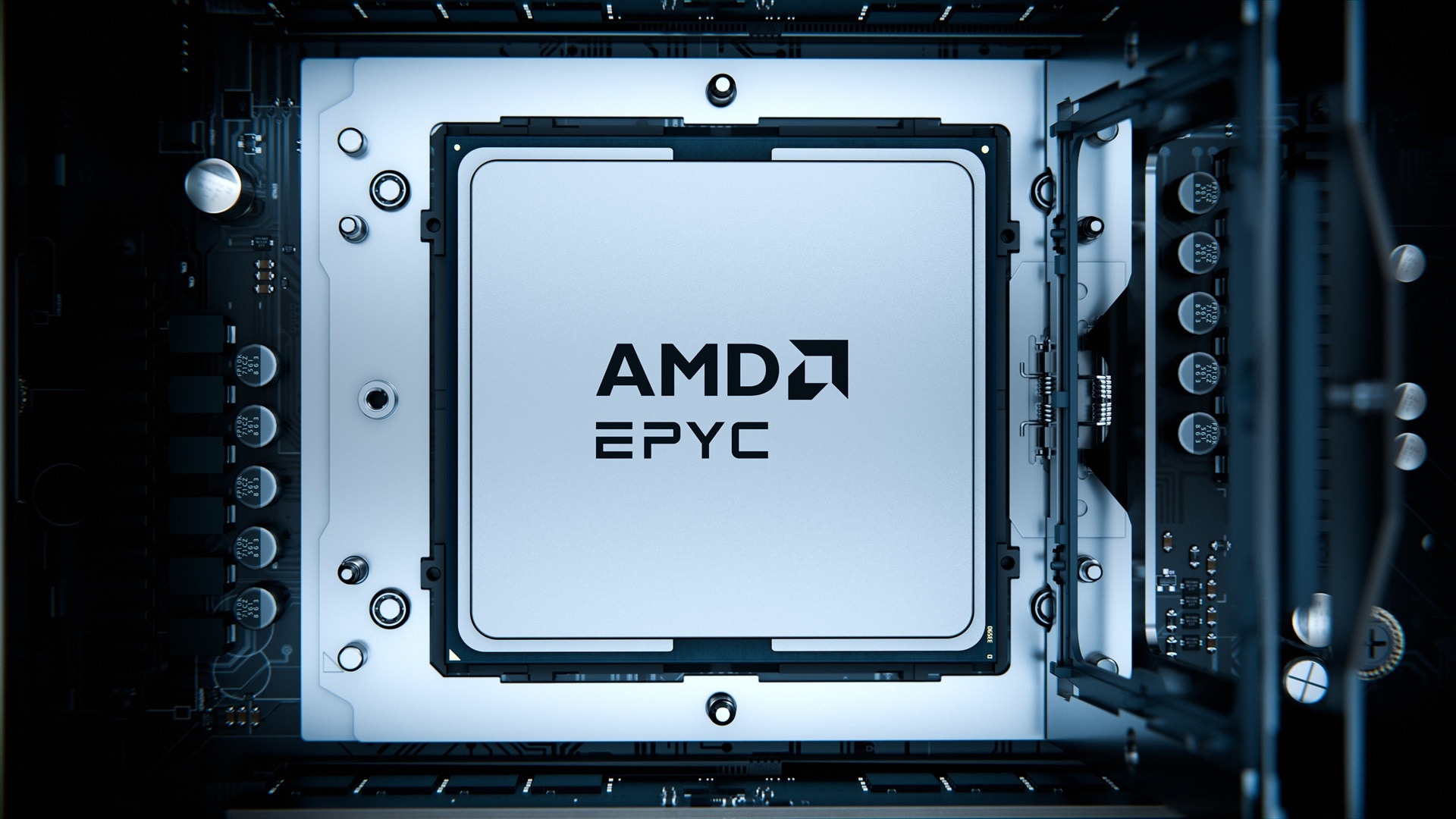
AWS offers several instance families powered by AMD EPYC™ processors that can be a good fit for SQL Server workloads. When the right instance is selected, customers may be able to maintain performance while reducing the number of licensed vCPUs required for the workload.
For SQL Server workloads, instance selection should balance computing, memory, and cost. AMD CPU-powered instances can help maintain performance while improving efficiency per licensed vCPU.
In scenarios where a workload can be consolidated onto fewer vCPUs without affecting service levels, moving to a well-matched AMD CPU-based instance can reduce SQL Server licensing costs substantially while preserving the memory and throughput the application needs.
Optimizing SQL Server on Amazon EC2
If you run SQL Server on Amazon EC2, start by reviewing actual workload characteristics instead of matching legacy infrastructure one-to-one. In many cases, older deployments were sized conservatively, which can lead to unnecessary licensing cost in the cloud.
Memory-optimized instance families such as R8a can be valuable for SQL Server because they provide substantial memory capacity relative to vCPU count. This helps organizations support memory-intensive database workloads while keeping licensing exposure under control.
A practical approach is to assess actual CPU utilization, memory pressure, and performance requirements, then select an AMD CPU-powered instance that aligns with those needs. Where workloads are overprovisioned today, this can create an immediate opportunity to lower SQL Server licensing costs.
Conclusion
For SQL Server on AWS, licensing is often one of the biggest levers for cost optimization. Because License Included pricing scales with vCPU count, selecting an instance that better fits workload requirements can help reduce total cost without sacrificing performance.
AMD CPU-powered Amazon EC2 and Amazon RDS instances can help with right-size SQL Server workloads on AWS. By evaluating CPU, memory, and licensing requirements together, you can optimize price performance and licensing costs.

Related Blogs
-
EPYC CPUs Deliver for Every Layer of the Agentic AI Stack
Agentic systems combine multiple CPU roles into a workflow. The latest AMD EPYC CPU generation lets customers optimize for each task.
September 18, 2026
-
Building Infrastructure for an AI World in Motion
The biggest risk is not choosing the wrong technology today. It is building infrastructure that cannot adapt tomorrow.
September 17, 2026
-
Advancing AI 2026: From Gigawatt Data Centers to Agentic PCs
Explore how AMD connects data center, cloud, and local AI to enable secure, cost-aware agentic workflows across enterprise PCs.
September 16, 2026
-
From LEAP 2026: Advancing AI Across the Middle East
At LEAP 2026, AMD’s role helping build open AI infrastructure and turn investments into measurable business and economic value was on display.
September 09, 2026
-
The Data Center Math has Changed
Run more work on fewer servers to reduce power, space and licensing costs while creating capacity for what comes next.
September 02, 2026
-
Optimizing ATOM and vLLM-ATOM for High-Interactivity Inference — ROCm Blogs
Cut per-token latency on AMD Instinct MI355X GPUs: see how ATOM, vLLM-ATOM, and AITER strip fixed costs out of the LLM decode path.
August 31, 2026
-
Modern Security from Silicon to OS: Why SMBs Should Move Beyond Windows Server 2016
Windows Server 2016 support is ending. Modernize SMB and ROBO security with Windows Server 2025 and AMD EPYC 4005 CPUs.
August 17, 2026
-
Introducing AMD Instinct™ Coder: A Turnkey AI Coding Platform for the Enterprise
The AMD Instinct Coder is a turnkey, fully supported, on-premises AI coding platform that combines AMD EPYC™ processors, AMD Instinct™ GPUs, Supermicro® AI servers, Spectro Cloud PaletteAI Inference Launchpad software, and an AMD Inference Microservices (AIMs) optimized GLM-5.2 model into a single integrated solution.
August 05, 2026