Hack. Build. Move: AMD Open Robotics Hackathon Recap
Dec 22, 2025
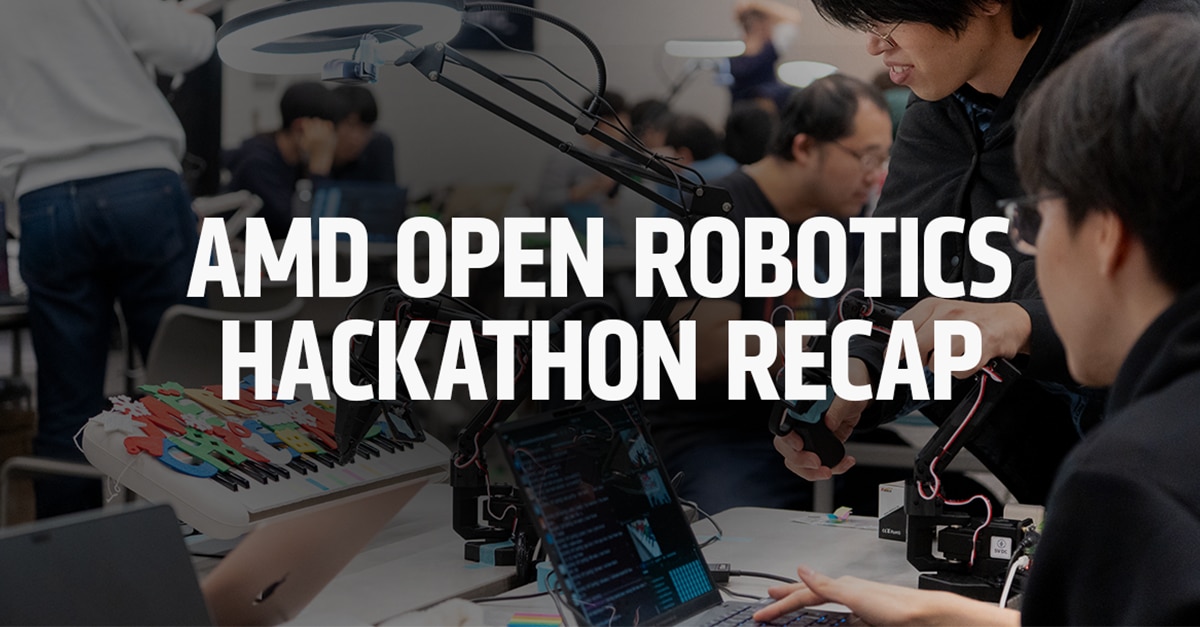
The AMD Open Robotics Hackathon brought together innovators, engineers, and robotics enthusiasts across two iconic cities: Tokyo and Paris, with one shared goal: turn ideas into moving, intelligent machines. Across both events, teams pushed past theory and simulation to build real, working robotic systems, fueled by creativity, collaboration, and hands-on experimentation.
What emerged was more than a competition—it was a showcase of what’s possible when accessible AI, open robotics platforms, and passionate builders come together.
The Challenge: From First Motion to Real‑World Impact
The AMD Open Robotics Hackathon featured a practical robotics challenge. It guided teams from their first interaction to solving real problems using LeRobot and AMD AI solutions.
Mission 1: Getting Robots Moving
Mission 1 served as a "hello world" introduction to LeRobot. The day started with an instructor-led workshop where participants learned to set up the LeRobot development environment from start to finish using the AMD AI technologies. The tasks included picking up a small object and placing it into a bin. This phase laid the foundation, proving that every team could make their robot see, move, and interact with the physical world.
Mission 2: Creative Unleashed
Mission 2 shifted gears into a two-day freestyle build. Teams defined their own problems, explored real-world use cases, and designed original robotic solutions that demonstrated technical depth, creativity, and practical relevance. With venues open around the clock, many teams pushed late into the night—iterating, debugging, and refining ideas until their robots performed exactly as intended.
This is where experimentation turned into innovation.
Enabling Innovation, Empowering Builders
AMD created an environment where teams could focus on outcomes rather than obstacles. Developers trained models using AMD Instinct™ MI300X GPUs on the AMD Developer Cloud, ran advanced inference on AMD Ryzen™ AI processor powered laptops, and deployed their solutions on SO-101 robotics kits, creating a seamless path from cloud-based training to edge-based execution.
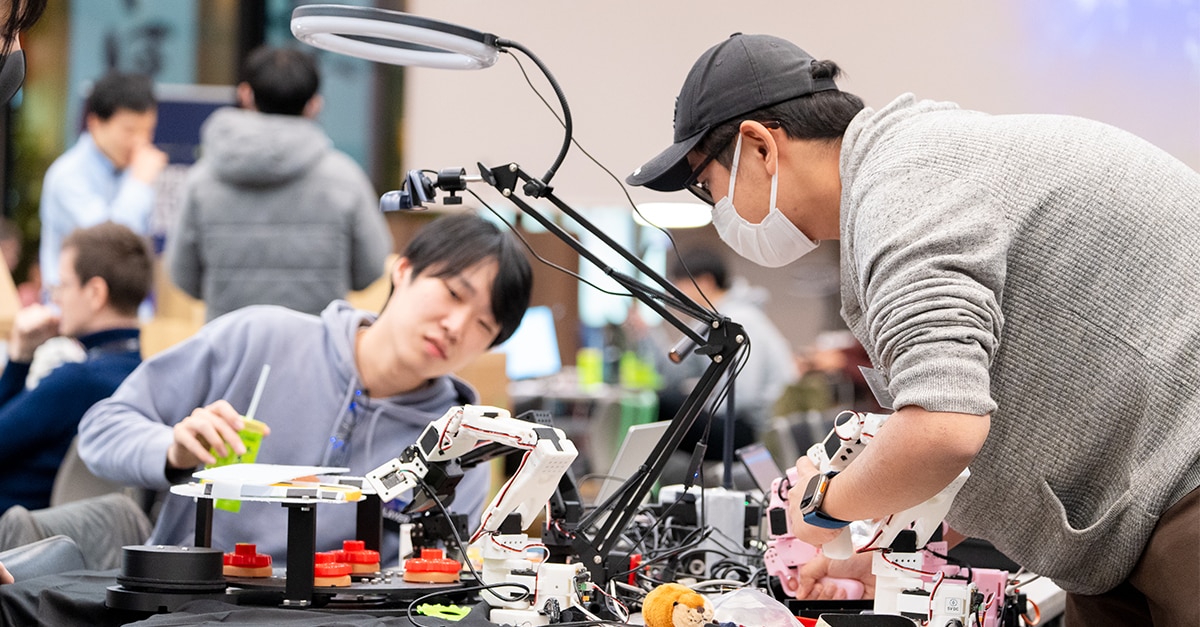
This end-to-end workflow enabled rapid experimentation, from teleoperation and dataset capture to model training, inference, and real-time control, allowing teams to iterate quickly and turn ideas into working robotic systems.
Teams were encouraged to experiment freely, collaborate openly, and even bring their own hardware. All projects were developed specifically for the hackathon and documented in public GitHub repositories, ensuring transparency, reproducibility, and continued learning beyond the event itself.
Tokyo Hackathon Highlights
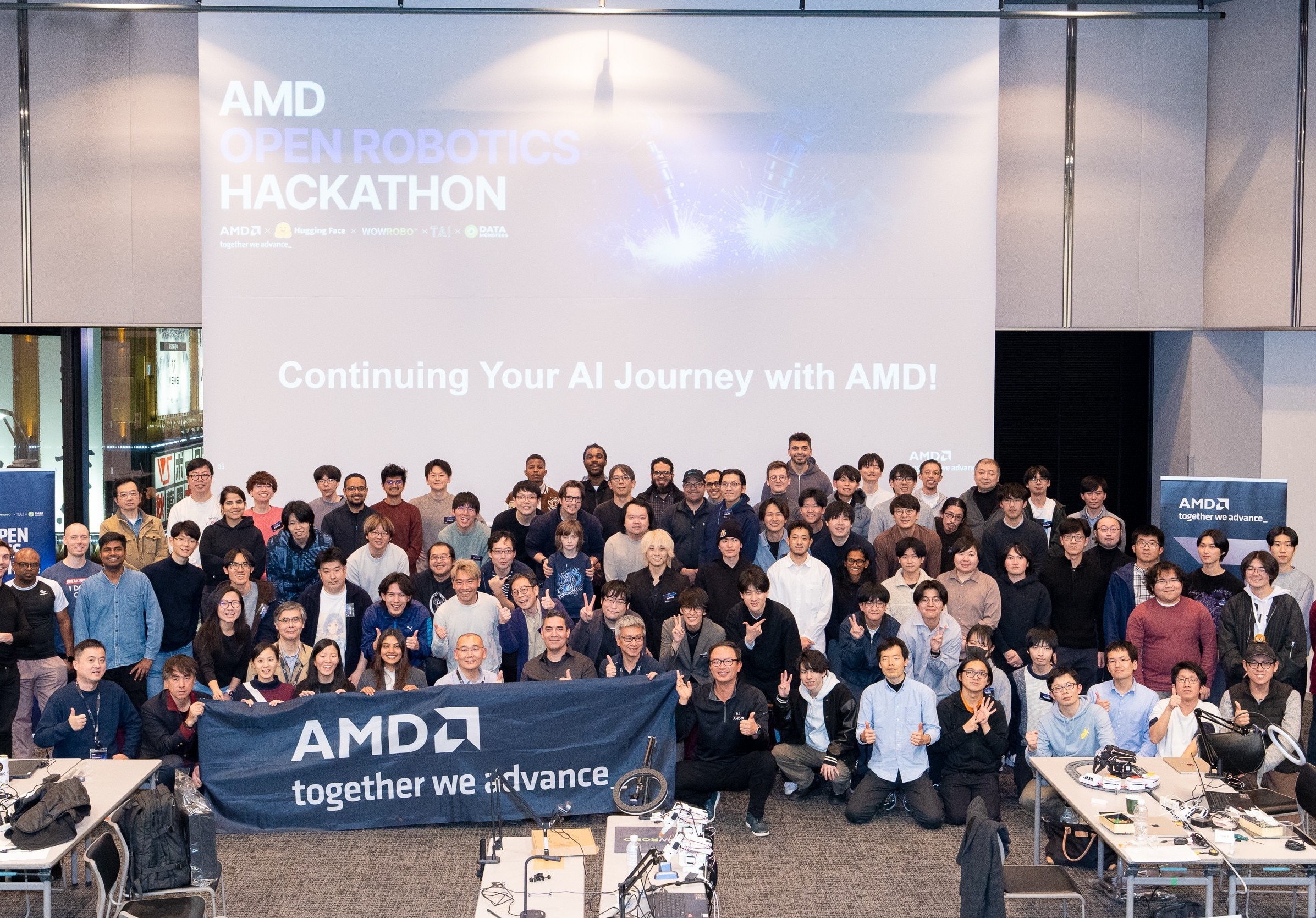
Tokyo set a high standard with an impressive 100 participants across 36 teams, all transforming bold ideas into functioning robotic systems in just a few days. More than 20 teams successfully submitted complete projects, with 8 standout teams emerging as top winners after final evaluations.
Participants rapidly moved beyond basic manipulation, using teleoperation, dataset capture, training, and real time inference to build more capable robotic behaviors.
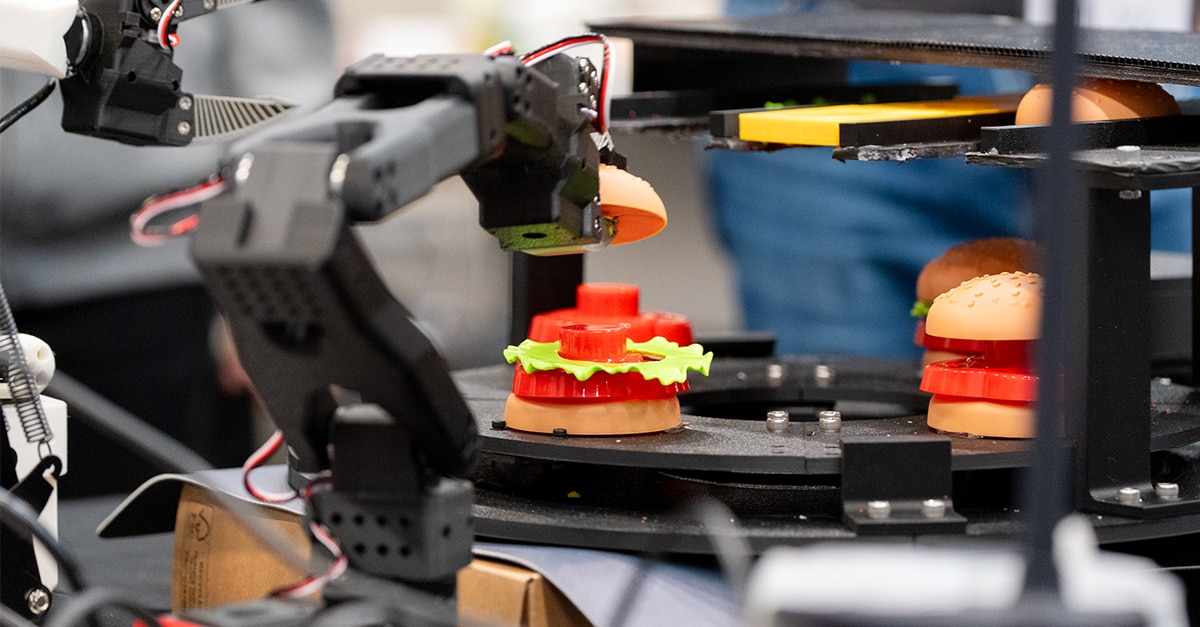
The teams delivered practical, creative projects, ranging from donut packing and pasta making to cart moving robots, sushi delivery, burger cooking, Zen Garden automation, and robot-assisted food feeding, demonstrating a fast transition from fundamentals to real-world, multistep applications.
Tokyo Winners

- 1st Place:
- Team 9 – GreatAkihabara
- 2nd Place:
- Team 28 OIT 大工大PulluP
- Team 11 kufusha
- 3rd Place:
- Team 5 Footakagool
- Team 17 Rainy Night
- Team 4 Cog Bots
- Team 41 RoboTAI
- Team 26 でんとつー
These teams stood out for their technical excellence, innovation, and polished final demos.
Paris Hackathon Highlights
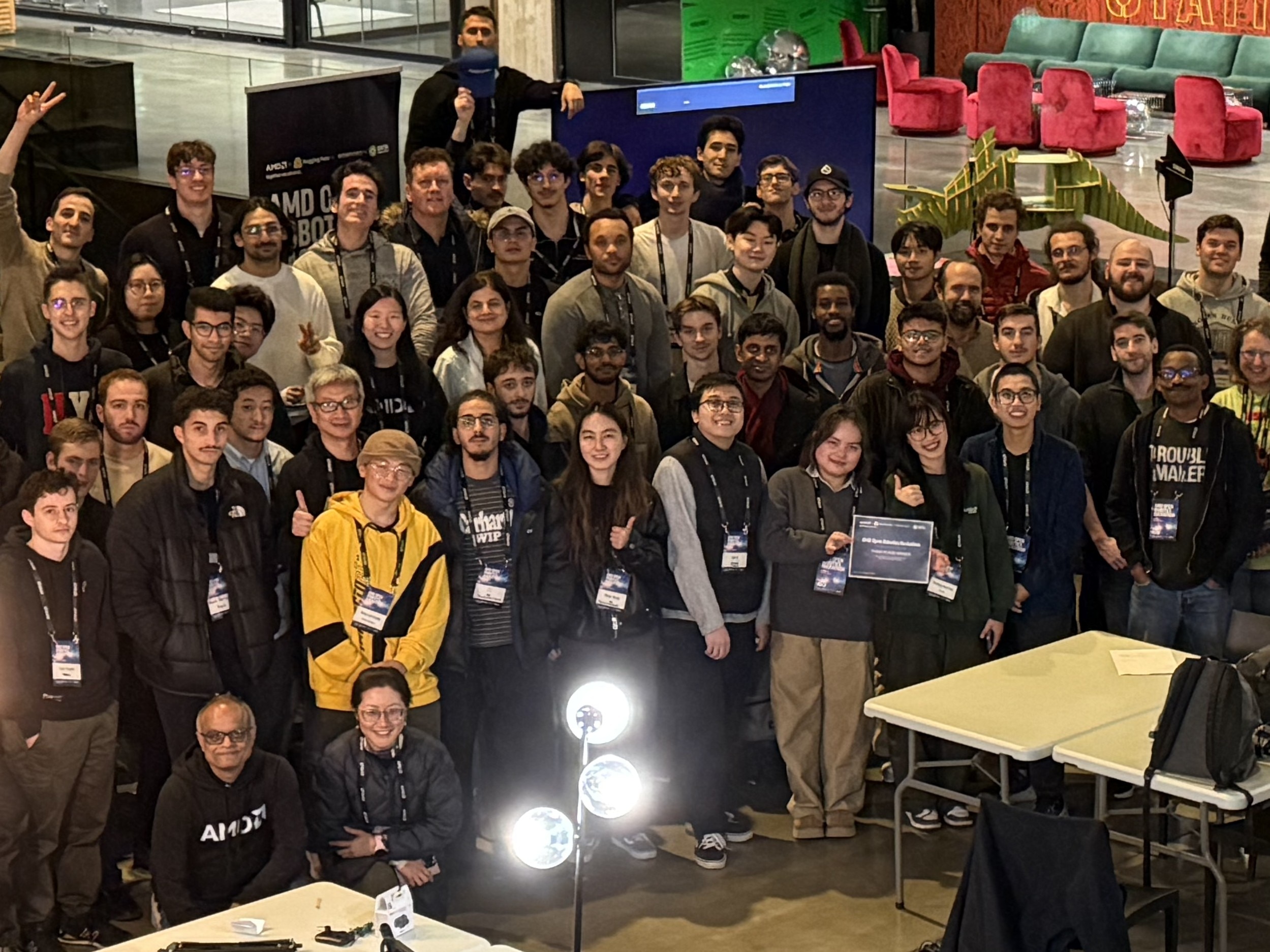
Paris welcomed 72 participants across 25 teams, creating a vibrant mix of technical skills, creativity, and teamwork. From clever mechanical designs to smart control algorithms, the Paris hackathon showed how diverse perspectives can drive powerful robotic solutions.
Paris Winners
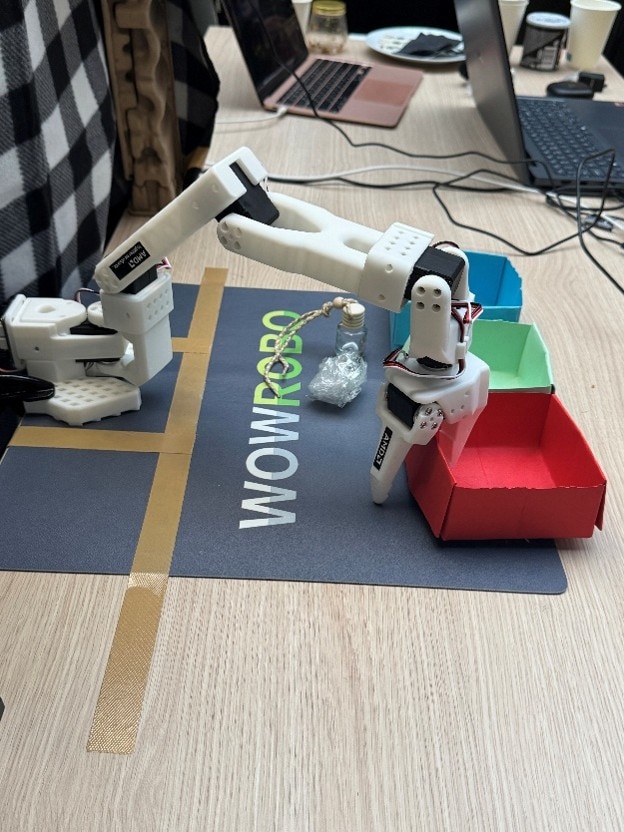
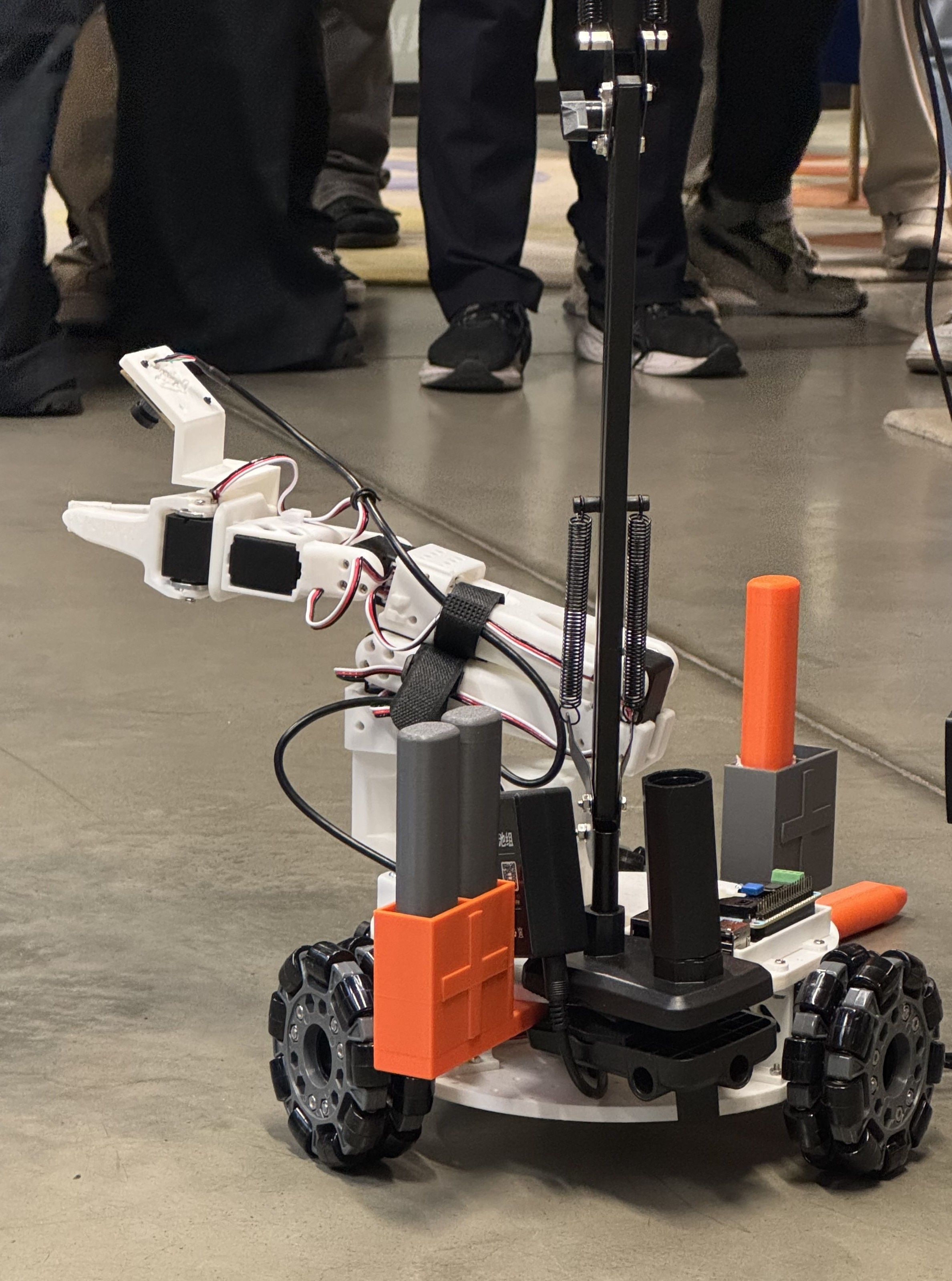
- 1st Place:
- Team 6 – Inverse Kinema‑tricks
- 2nd Place:
- Team 7 – Mecha Labs
- Team 5 – Stereobot
- 3rd Place:
- Team 15 – Bartolos Crew
- Team 13 – Tihado
- Team 12 – TheTeam
- Team 9 – Fractales
The winning teams impressed judges with strong system integration, thoughtful problem solving, and compelling demonstrations.
Thank You to Our Partners
The success of the AMD Robotics Hackathon would not have been possible without the incredible support of our partners and collaborators. We’d like to extend a sincere thank you to:
- Hugging Face – for enabling open, accessible AI and fostering an incredible developer ecosystem
- WOWrobo – for their robotics expertise and hands-on support
- TAI – for contributing to the technical and community foundation of the event
- Data Monsters – for organizing, supporting, and powering the hackathon experience end‑to‑end
Your contributions helped create an environment where innovation, learning, and creativity could thrive.
Looking Ahead
From Tokyo to Paris, the AMD Open Robotics Hackathon showed once more that innovation thrives when passionate minds come together. Congratulations to all participants and winners for their hard work, creativity, and dedication. We look forward to seeing how these ideas develop and what future hackathons will bring.
Stay tuned for more updates, media highlights, and upcoming events!


Related Blogs
-
Day 0 Support for Muse Spark Open on AMD
AMD is excited to announce Day-0 support for Meta’s latest Muse Spark Open model family on AMD Instinct™ MI350X and MI355X GPUs
October 15, 2026
-
Introducing FastFlow SDK
Explore AMD FastFlow-SDK for local AI development on AMD Ryzen™ AI NPUs, from running models to customizing inference and optimizing operators with FastFlow, IRON, and HRX.
October 15, 2026
-
MiniCPM Day 0 Support Across AMD Hardware
Explore Day 0 support for MiniCPM-V 4.7 on AMD Radeon™ GPUs, Ryzen™ AI Max processors, and Ryzen™ AI NPUs for on-device AI inference.
October 14, 2026
-
Long Context, One Node: Serving GLM-5.3-FP8 on MI300X with DP8+EP8 — ROCm Blogs
Learn how to serve GLM-5.3-FP8 on one AMD Instinct™ MI300X node with DP8+EP8 and vLLM v0.28 for long-context workloads, and compare it with TP=8.
October 13, 2026
-
Meet the Next AMD Ryzen™ AI Halo
Meet the next AMD Ryzen™ AI Halo developer platform, powered by the AMD Ryzen™ AI Max+ PRO 495 processor. Run larger local LLMs, up to 300B parameters, thanks to the 192GB of unified memory that comes on the new platform.
October 12, 2026
-
AMD AI NIC™ Technology Driving AI-Ready Ethernet
Learn how AMD AI NIC™ technology helps organizations build AI-ready Ethernet networks with open standards, programmability, and transport innovation.
October 11, 2026
-
Kimi K3 on AMD Instinct GPUs with TokenSpeed
TokenSpeed delivers fast, agentic LLM inference on AMD Instinct™ MI355X GPUs, with optimized kernels and leading Kimi K3 performance.
October 09, 2026
-
scikit workloads with AOCL Data Analytics
Accelerate supported scikit-learn workloads with AOCL-Data Analytics while keeping your existing Python code and familiar scikit-learn APIs.
October 09, 2026