
AMD & AI in 2026
AI is reshaping the way work is done, but its full potential for end users is realized when it’s brought closer, onto the device they’re using. The mission at AMD is to introduce AI at every level – from the cloud to local devices – offering an open ecosystem of intelligent computing that helps professionals create, collaborate, and build smarter every day.
At CES 2026, AMD announced a range of new AI products and initiatives including new AMD Ryzen™ AI processors designed to bring on-device AI capabilities to more users. Building on an already strong foundation of AI-capable CPUs, AMD is giving partners even greater flexibility to target customers across every market, addressing challenges ranging from everyday productivity to the most demanding creative and technical workloads.
Here is your partner-level view into 2026 and the new AMD Ryzen AI processors your customers will want to know about.
Built for Choice and Scale
AMD Ryzen™ AI 400 Series Processors
AMD Ryzen AI 400 Series processors deliver exceptional CPU, GPU, and NPU performance in modern laptops and desktops, supporting the next generation of Copilot+ PCs and AI-enhanced workflows.
Compared to competitor products, they can deliver up to:
- 1.2x faster multitasking1
- 1.7x faster content creation2
- 1.1x faster gaming3
- 1.7x higher unplugged productivity4
- 1.3x faster multitasking performance across office productivity apps5
It’s all thanks to a combination of up to 60 TOPS6 of NPU performance, groundbreaking “Zen 5” and “Zen 5c” CPU cores, and AMD RDNA™ 3.5 architecture graphics; AMD Ryzen AI 400 processors enable fast, responsive AI experiences across productivity, content creation, and development tasks. They’re also optimized for power efficiency while still delivering strong performance when users need it most; enabling up to 24 hours of battery life in select OEM systems,7 these processors are ideal for customers who are emerging into the possibilities AI affords and want to take advantage of AI-accelerated applications, even while they’re on the go.
Who they’re for
- Knowledge workers and power users
- Creators working with image, video, and design tools
- Developers experimenting with local AI models and automation
Example workloads
- AI-assisted document creation and summarization
- Image generation and editing accelerated on-device
- Local code generation and testing workflows
Learn more about AMD Ryzen AI 400 Series processors at amd.com.
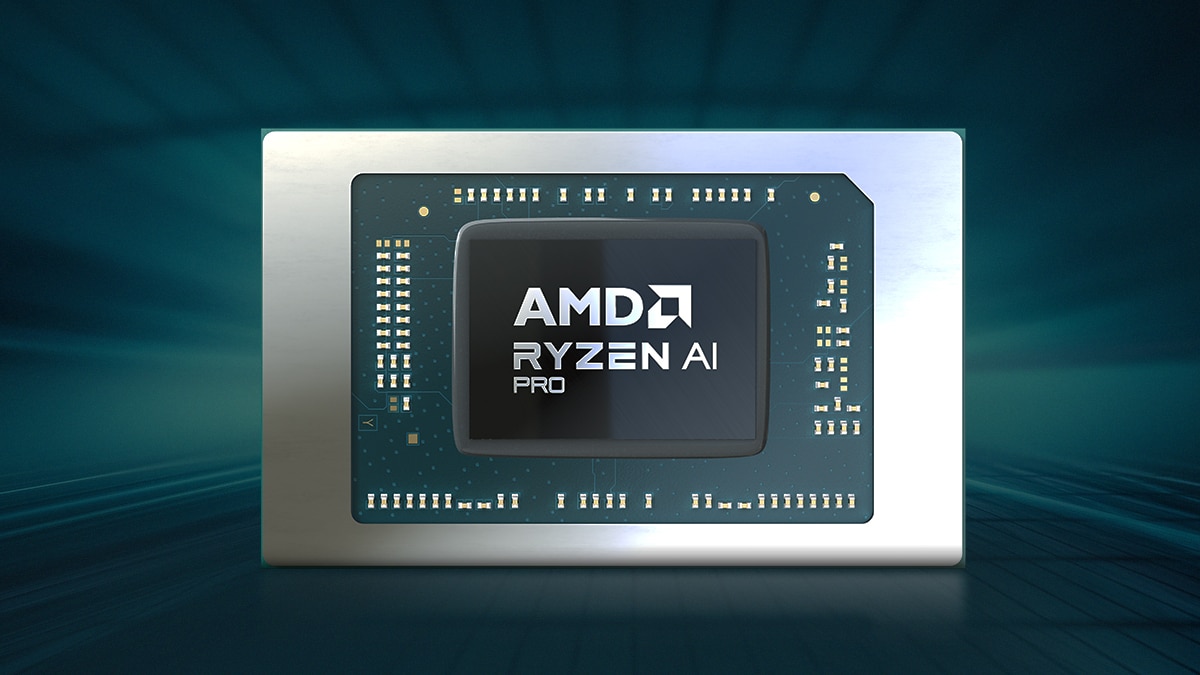
AMD Ryzen™ AI PRO 400 Series Processors
Building on the foundation of AMD Ryzen AI 400 Series processors, the PRO variants extend AMD AI leadership in the commercial and enterprise space, combining winning AI performance with AMD PRO technologies for security, stability, and fleet manageability.
Customers who introduce these processors to their workflows can expect:
- Up to 60% faster average multithreaded performance vs the competition8
- Up to 14% faster office productivity and multitasking vs the competition9
- Up to 48% faster average performance vs a four year old non-AI PC10
Like their non-PRO counterparts, these processors deliver an array of “Zen 5” CPU cores, up to 60 TOPs NPU, and AMD RDNA 3.5™ architecture GPU cores. Designed for IT-managed environments, these processors support long-term platform stability, multi-layered security, and seamless deployment alongside existing systems, thanks to AMD PRO technologies.
Partners can confidently position AMD Ryzen AI PRO 400 CPU systems as drop-in AI PC upgrades for enterprise customers modernizing their fleets, ensuring that they can not only boost productivity, but enjoy the levels of security, accessibility, and ease of deployment they expect with other commercial AMD products.
Who they’re for
- Enterprises refreshing aging PC fleets
- Professionals on the go
- Technical experts and power users in commercial roles
Example workloads
- AI-enhanced collaboration and meeting summarization
- Secure local processing of sensitive data
- Productivity gains across multitasking-heavy roles
Learn more about AMD Ryzen AI PRO 400 Series processors at amd.com.
AMD Ryzen™ AI Max Processors: New Additions to the Family
AMD Ryzen AI Max processors represent the most advanced AMD AI PC silicon to date. Designed for customers who demand nothing less than maximum on-device performance without requiring discrete GPUs, this family combines high core-count CPUs, powerful AMD RDNA™ architecture graphics, and large unified memory pools to support the most demanding AI and creative workloads.
New additions launching this year, the AMD Ryzen™ AI Max+ 392 and AMD Ryzen™ AI Max+ 388 processors expand the product family, enabling partners to target both premium and upper mid-range systems with incredible AI and graphics possibilities. Delivering up to 12 “Zen 5” CPU cores, AMD Radeon™ 8060S graphics with up to 40 graphics cores, and up to 50 NPU TOPS (up to 122 TOPS overall), they are custom-made to offer customers uncompromising performance for AI-led workflows.
The AMD Ryzen AI Max processor family is perfect for workflows such as local LLM inference, large-model experimentation, advanced creative tasks, and development environments where unified memory and GPU acceleration are critical.
Who they’re for
- Developers and AI enthusiasts
- Veteran creators and engineers
- Customers exploring local AI at scale
Example workloads
- Running and fine-tuning AI models locally
- AI-assisted video, 3D, and design workflows
- High-performance multitasking without discrete GPUs
Learn more about AMD Ryzen AI Max Series processors at amd.com.
Moving Forward Together
With these new AMD Ryzen AI 400, Ryzen AI PRO 400, and Ryzen AI Max processors, AMD offers one of the most comprehensive AI PC portfolios in the industry, designed to scale from today’s everyday productivity to the advanced AI workloads customers face tomorrow.
Reach out to your AMD representative or visit amd.com to learn more and discover how you can deliver AI PC conversations to your customers with confidence.
AMD Arena
Build expertise with training on AMD AI solutions, AMD EPYC™ server CPUs, AMD Instinct™ GPUs and more across the AMD portfolio.
Subscribe
Get monthly updates on the latest AMD products, training resources and Meet the Experts webinars.

Related Articles
-
AMD Technologies Power Gaming
AMD technologies power gaming for home desktops, mobile devices, and even the servers you play on, delivering cutting-edge experiences to customers. L…
-
AMD Ryzen™ PRO 6000 Series Processors
With AMD Ryzen™ PRO 6000 Series processors, businesses get the best of all worlds: uncompromising performance and premium mobile experiences for work …
-
A Leap Ahead in Power and Efficiency
AMD Ryzen™ 6000 Series mobile processors deliver leadership in computing efficiency, with the updated “Zen 3+” CPU core and AMD RDNA™ 2 game-ready gra…
-
AMD Ryzen™ PRO 7040 Series Processors
The new AMD Ryzen™ PRO 7040 Series processors, one of the world’s most advanced & power efficient processors for business will wow customers.
-
From 4nm to AI: AMD Ryzen™ Processors
Explore AMD in PC technology: from 4nm to AI. Discover how AMD Ryzen™ processors lead in AI integration, battery life, & power in the modern computing…
-
AMD Ryzen™ PRO 8040 Series Mobile Processors
AMD Ryzen™ PRO 8040 Series processors are the answer to today’s most pressing business demands. Packed with cutting-edge technologies, these new mobil…
-
AMD Ryzen™ AI 300 Series Processors
A new era of AI computing is upon us. Use the power of AMD Ryzen™ AI 300 Series processors to enjoy everything AI-enhanced today and in the future.
-
AMD Ryzen™ AI PRO 300 Series Processors
AI advancements aren’t slowing down, and neither is AMD. Prepare for the future of business computing with AMD Ryzen™ AI PRO 300 Series processors; th…


Related Training Courses
Related Webinars
Footnotes
- Testing done as of November 2025 by AMD to measure multitasking performance by running Procyon Office Suite with Microsoft Teams on “Balanced” power mode. Configuration for AMD Ryzen™ AI 9 HX 470 processor: AMD reference board, Radeon™ 890M integrated graphics, Graphics Driver 25.20.24-251007a, 32GB LPDDR5x-8533 memory, Windows 11 Home. Configuration for Intel Core Ultra 9 288V processor: HP OmniBook Ultra Flip, Arc 140V integrated graphics, Graphics driver 32.0.101.8136, 32GB LPDDR5x-8533 memory, Windows 11 Home. System manufacturers may vary configurations, yielding different results. GPT-2.
- Testing done as of December 2025 by AMD to measure content creation performance in the following applications and benchmarks on “Best Performance” power mode: Blender (CPU Classroom), Cinebench nT, Handbrake, PugetBench for Photoshop, PugetBench for DaVinci Resolve Studio, 7zip. Configuration for AMD Ryzen™ AI 9 HX 470 processor (28W): ASUS Zenbook S16, Radeon™ 890M integrated graphics, Graphics Driver 25.20.32-251114n, 32GB LPDDR5x-8533 memory, Windows 11 Pro. Configuration for Intel Core Ultra 9 288V processor (30W): HP OmniBook Ultra Flip, Arc 140V integrated graphics, Graphics driver 32.0.101.7026, 32GB LPDDR5x-8533 memory, Windows 11 Home. System manufacturers may vary configurations, yielding different results. GPT-10.
- Testing done as of December 2025 by AMD to measure gaming performance in the following games at 1080p low settings on “Best Performance” power mode: Black Myth Wukong, Borderlands 3, Counter-Strike 2, Cyberpunk 2077, F1 25, Monster Hunter Wilds, Sid Meier's Civilization V. Configuration for AMD Ryzen™ AI 9 HX 470 processor (28W): ASUS Zenbook S16, Radeon™ 890M integrated graphics, Graphics Driver 25.20.32-251114n, 32GB LPDDR5x-8533 memory, Windows 11 Pro. Configuration for Intel Core Ultra 9 288V processor (30W): HP OmniBook Ultra Flip, Arc 140V integrated graphics, Graphics driver 32.0.101.7026, 32GB LPDDR5x-8533 memory, Windows 11 Home. System manufacturers may vary configurations, yielding different results. GPT-12.
- Testing done as of November 2025 by AMD to measure Cinebench 2024 nT performance while unplugged on Balanced power mode. Configuration for AMD Ryzen AI 9 HX 470 processor: ASUS Zenbook S16, Radeon™ 890M integrated graphics (driver 25.20.32-251114n), 32GB 8533MHz memory, Windows 11 Pro. Configuration for Intel Core Ultra 9 288V processor: HP OmniBook Ultra Flip, Arc 140V integrated graphics (driver 32.0.101.8136), 32GB 8533MHz memory, Windows 11 Home. System manufacturers may vary configurations, yielding different results. GPT-9.
- Testing done as of December 2025 by AMD to measure multitasking performance by running Procyon Office Suite with Microsoft Teams on “Best Performance” power mode. Configuration for AMD Ryzen™ AI 9 HX 470 processor: ASUS Zenbook S16, Radeon™ 890M integrated graphics, Graphics Driver 25.20.32-251114n, 32GB LPDDR5x-8533 memory, Windows 11 Pro. Configuration for Intel Core Ultra 9 288V processor: HP OmniBook Ultra Flip, Arc 140V integrated graphics, Graphics driver 32.0.101.7026, 32GB LPDDR5x-8533 memory, Windows 11 Home. System manufacturers may vary configurations, yielding different results. GPT-11.
- Trillions of Operations per Second (TOPS) for an AMD Ryzen processor is the maximum number of operations per second that can be executed in an optimal scenario and may not be typical. TOPS may vary based on several factors, including the specific system configuration, AI model, and software version. GD-243.
- Testing done as of November 2025 by AMD to measure battery life in video playback and web browsing. Configuration for AMD Ryzen AI 9 HX 470 processor: ASUS Zenbook S16, Radeon™ 890M integrated graphics, 32GB 8533MHz memory. Configuration for AMD Ryzen AI 7 450 processor: ASUS Zenbook S14, Radeon™ 860M integrated graphics, 32GB 8533MHz memory. Configuration for AMD Ryzen AI 7 445 processor: ASUS Zenbook S14, Radeon™ 840M integrated graphics, 16GB 8000MHz memory. All testing done using graphics driver 25.20.32-251114n and running Windows 11 Pro in “Power Efficiency” power mode. System manufacturers may vary configurations, yielding different results. GPT-5.
- Testing as of December 2025, by AMD Performance Labs using Cinebench 2024 and Geekbench 6 benchmark tests, measuring the multi-threaded performance of AMD AI Ryzen 9 HX PRO 470 processor vs. Intel Core Ultra 9 288V processor. Configuration for AMD processor: AMD reference board, Radeon™ 890M graphics, 32GB LPDDR5 RAM @8533MHZ, 1TB SSD, VBS=ON, Windows 11, tested in balanced mode. Configuration for Intel k9processor: HP Omnibook Ultra, Arc 140V graphics, 32GB LPDDR5 RAM @ 8533MHz, 1TB SSD, VBS=ON, Windows 11, tested in in balanced mode. Laptop manufacturers may vary configurations yielding different results. Results may vary depending on use of the latest drivers. GPP-01.
- Testing as of December 2025 by AMD Performance Labs using the Procyon Office Productivity benchmark while running Microsoft Teams 3x3 video conference. Configuration for AMD Ryzen™ AI 9 HX PRO 470 processor: AMD reference board, Radeon™ 890M graphics, 32GB LPDDR5 RAM @8533MHZ, 1TB SSD, VBS=ON, Windows 11. Configuration for Intel Core Ultra 9 288V processor: HP Omnibook Ultra, Arc 140v graphics, 32GB RAM @ 8533MHz, 1TB SSD, VBS=ON, Windows 11. Laptop manufacturers may vary configurations yielding different results. GPP-02
- Testing as of December 2025 by AMD Performance Labs using the following benchmarks: Cinebench 2024, Geekbench 6, Passmark 11, and Procyon Office Productivity. Configuration for AMD Ryzen™ AI 9 HX PRO 470 processor: AMD reference board, Radeon™ 890M graphics, 32GB LPDDR5 RAM @8533MHZ, 1TB SSD, VBS=ON, Windows 11. Configuration for AMD Ryzen 9 PRO 6950HS processor: HP Elitebook 865 G9, Radeon™ 680M graphics, 64GB RAM @ 4800MHz, 2TB SSD, VBS=ON, Windows 11 Pro. Laptop manufacturers may vary configurations yielding different results. GPP-03
- Testing done as of November 2025 by AMD to measure multitasking performance by running Procyon Office Suite with Microsoft Teams on “Balanced” power mode. Configuration for AMD Ryzen™ AI 9 HX 470 processor: AMD reference board, Radeon™ 890M integrated graphics, Graphics Driver 25.20.24-251007a, 32GB LPDDR5x-8533 memory, Windows 11 Home. Configuration for Intel Core Ultra 9 288V processor: HP OmniBook Ultra Flip, Arc 140V integrated graphics, Graphics driver 32.0.101.8136, 32GB LPDDR5x-8533 memory, Windows 11 Home. System manufacturers may vary configurations, yielding different results. GPT-2.
- Testing done as of December 2025 by AMD to measure content creation performance in the following applications and benchmarks on “Best Performance” power mode: Blender (CPU Classroom), Cinebench nT, Handbrake, PugetBench for Photoshop, PugetBench for DaVinci Resolve Studio, 7zip. Configuration for AMD Ryzen™ AI 9 HX 470 processor (28W): ASUS Zenbook S16, Radeon™ 890M integrated graphics, Graphics Driver 25.20.32-251114n, 32GB LPDDR5x-8533 memory, Windows 11 Pro. Configuration for Intel Core Ultra 9 288V processor (30W): HP OmniBook Ultra Flip, Arc 140V integrated graphics, Graphics driver 32.0.101.7026, 32GB LPDDR5x-8533 memory, Windows 11 Home. System manufacturers may vary configurations, yielding different results. GPT-10.
- Testing done as of December 2025 by AMD to measure gaming performance in the following games at 1080p low settings on “Best Performance” power mode: Black Myth Wukong, Borderlands 3, Counter-Strike 2, Cyberpunk 2077, F1 25, Monster Hunter Wilds, Sid Meier's Civilization V. Configuration for AMD Ryzen™ AI 9 HX 470 processor (28W): ASUS Zenbook S16, Radeon™ 890M integrated graphics, Graphics Driver 25.20.32-251114n, 32GB LPDDR5x-8533 memory, Windows 11 Pro. Configuration for Intel Core Ultra 9 288V processor (30W): HP OmniBook Ultra Flip, Arc 140V integrated graphics, Graphics driver 32.0.101.7026, 32GB LPDDR5x-8533 memory, Windows 11 Home. System manufacturers may vary configurations, yielding different results. GPT-12.
- Testing done as of November 2025 by AMD to measure Cinebench 2024 nT performance while unplugged on Balanced power mode. Configuration for AMD Ryzen AI 9 HX 470 processor: ASUS Zenbook S16, Radeon™ 890M integrated graphics (driver 25.20.32-251114n), 32GB 8533MHz memory, Windows 11 Pro. Configuration for Intel Core Ultra 9 288V processor: HP OmniBook Ultra Flip, Arc 140V integrated graphics (driver 32.0.101.8136), 32GB 8533MHz memory, Windows 11 Home. System manufacturers may vary configurations, yielding different results. GPT-9.
- Testing done as of December 2025 by AMD to measure multitasking performance by running Procyon Office Suite with Microsoft Teams on “Best Performance” power mode. Configuration for AMD Ryzen™ AI 9 HX 470 processor: ASUS Zenbook S16, Radeon™ 890M integrated graphics, Graphics Driver 25.20.32-251114n, 32GB LPDDR5x-8533 memory, Windows 11 Pro. Configuration for Intel Core Ultra 9 288V processor: HP OmniBook Ultra Flip, Arc 140V integrated graphics, Graphics driver 32.0.101.7026, 32GB LPDDR5x-8533 memory, Windows 11 Home. System manufacturers may vary configurations, yielding different results. GPT-11.
- Trillions of Operations per Second (TOPS) for an AMD Ryzen processor is the maximum number of operations per second that can be executed in an optimal scenario and may not be typical. TOPS may vary based on several factors, including the specific system configuration, AI model, and software version. GD-243.
- Testing done as of November 2025 by AMD to measure battery life in video playback and web browsing. Configuration for AMD Ryzen AI 9 HX 470 processor: ASUS Zenbook S16, Radeon™ 890M integrated graphics, 32GB 8533MHz memory. Configuration for AMD Ryzen AI 7 450 processor: ASUS Zenbook S14, Radeon™ 860M integrated graphics, 32GB 8533MHz memory. Configuration for AMD Ryzen AI 7 445 processor: ASUS Zenbook S14, Radeon™ 840M integrated graphics, 16GB 8000MHz memory. All testing done using graphics driver 25.20.32-251114n and running Windows 11 Pro in “Power Efficiency” power mode. System manufacturers may vary configurations, yielding different results. GPT-5.
- Testing as of December 2025, by AMD Performance Labs using Cinebench 2024 and Geekbench 6 benchmark tests, measuring the multi-threaded performance of AMD AI Ryzen 9 HX PRO 470 processor vs. Intel Core Ultra 9 288V processor. Configuration for AMD processor: AMD reference board, Radeon™ 890M graphics, 32GB LPDDR5 RAM @8533MHZ, 1TB SSD, VBS=ON, Windows 11, tested in balanced mode. Configuration for Intel k9processor: HP Omnibook Ultra, Arc 140V graphics, 32GB LPDDR5 RAM @ 8533MHz, 1TB SSD, VBS=ON, Windows 11, tested in in balanced mode. Laptop manufacturers may vary configurations yielding different results. Results may vary depending on use of the latest drivers. GPP-01.
- Testing as of December 2025 by AMD Performance Labs using the Procyon Office Productivity benchmark while running Microsoft Teams 3x3 video conference. Configuration for AMD Ryzen™ AI 9 HX PRO 470 processor: AMD reference board, Radeon™ 890M graphics, 32GB LPDDR5 RAM @8533MHZ, 1TB SSD, VBS=ON, Windows 11. Configuration for Intel Core Ultra 9 288V processor: HP Omnibook Ultra, Arc 140v graphics, 32GB RAM @ 8533MHz, 1TB SSD, VBS=ON, Windows 11. Laptop manufacturers may vary configurations yielding different results. GPP-02
- Testing as of December 2025 by AMD Performance Labs using the following benchmarks: Cinebench 2024, Geekbench 6, Passmark 11, and Procyon Office Productivity. Configuration for AMD Ryzen™ AI 9 HX PRO 470 processor: AMD reference board, Radeon™ 890M graphics, 32GB LPDDR5 RAM @8533MHZ, 1TB SSD, VBS=ON, Windows 11. Configuration for AMD Ryzen 9 PRO 6950HS processor: HP Elitebook 865 G9, Radeon™ 680M graphics, 64GB RAM @ 4800MHz, 2TB SSD, VBS=ON, Windows 11 Pro. Laptop manufacturers may vary configurations yielding different results. GPP-03