More AI. More Control. AMD Instinct MI350P Comes to Windows Server.
Nov 17, 2026
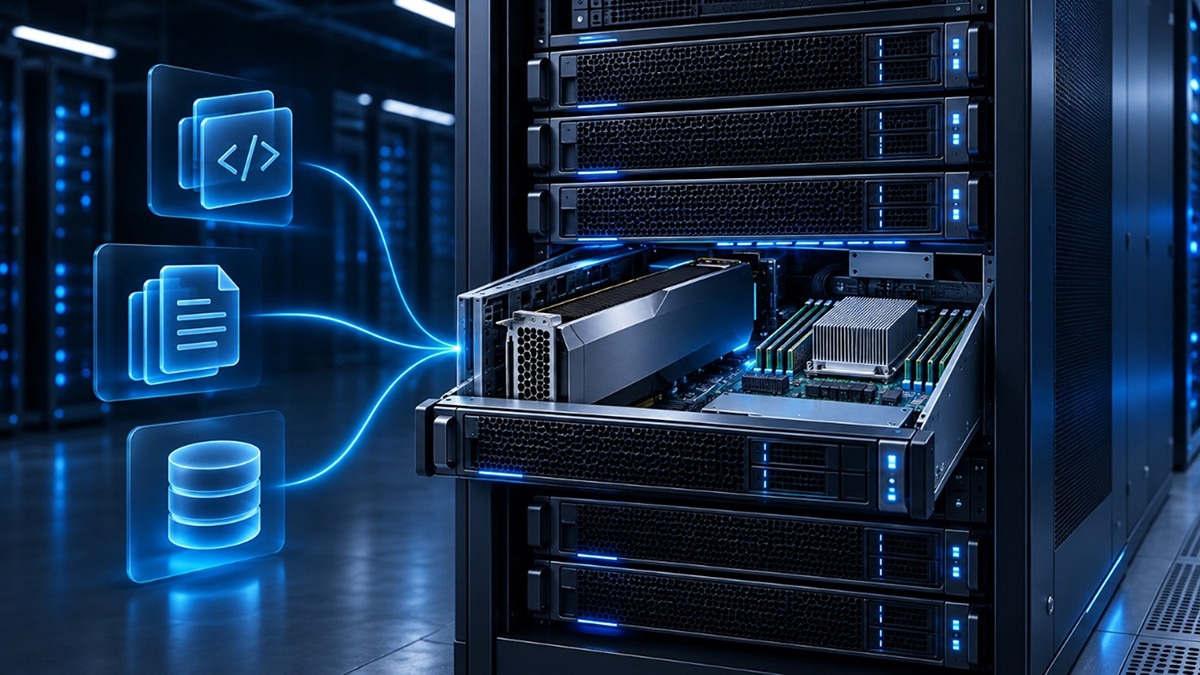
Enterprise AI is transforming how businesses build software, use their data, and empower employees. For IT leaders, the next data center refresh is an opportunity to modernize business-critical applications while making room for coding agents, enterprise copilots, and AI-powered insights—all while maintaining control over enterprise data.
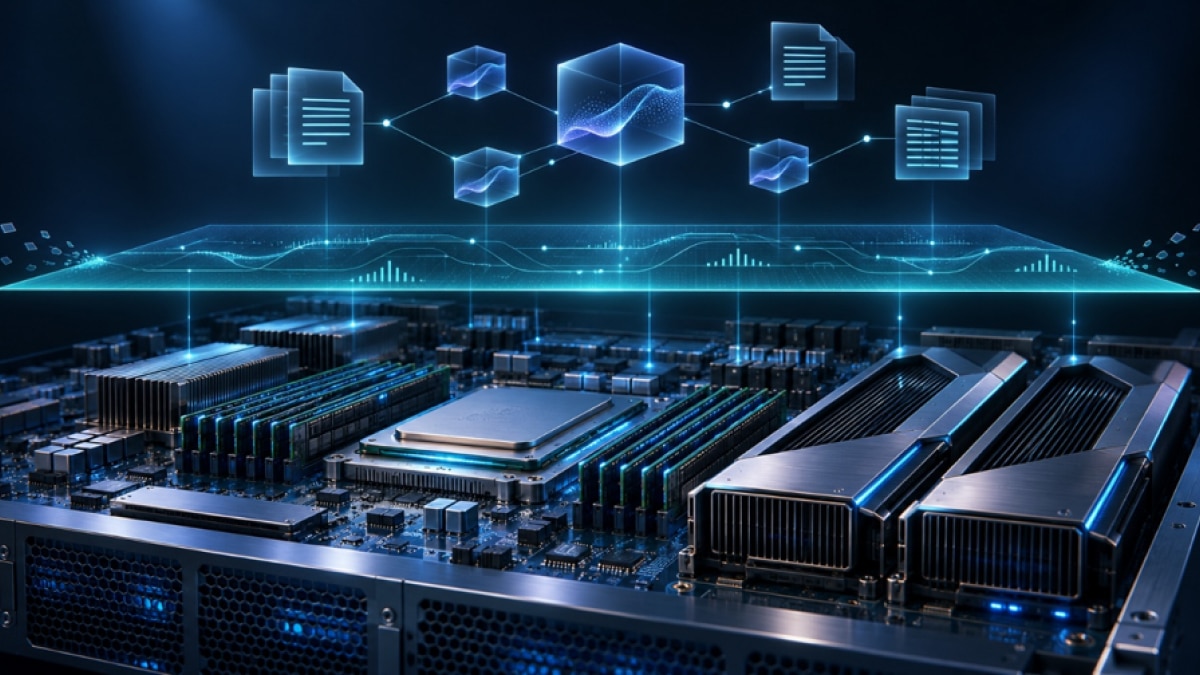
Creating that room starts with addressing practical constraints: budgets, rack space, power, and cooling. With high performance, high core counts, and energy efficiency, AMD EPYC™ processors can help enterprises consolidate existing workloads onto fewer servers. That consolidation can free up space, power, and cooling capacity for new AI infrastructure, helping organizations pursue AI initiatives within existing data center limits.
AMD and Microsoft are announcing AMD Instinct™ MI350P GPU support for Windows Server 2025 and the upcoming Windows Server 2028, bringing GPU-accelerated AI inference to enterprise Windows environments. With AMD Inference Microservice (AIMs) and GPU partitioning supported at launch, customers deploying on-premises gain tools to simplify model deployment and allocate GPU capacity across workloads while supporting their data sovereignty and residency requirements.
Together, AMD EPYC™ processors and AMD Instinct™ GPUs address complementary infrastructure needs: EPYC CPUs help consolidate traditional workloads, while Instinct GPUs provide acceleration for AI inference. This gives enterprise a way to connect infrastructure refresh investments with new AI services while planning for capacity and cost across both.
Making the Infrastructure Refresh Work for AI
An infrastructure refresh shapes what an enterprise can deliver for years to come. Today, that means planning for established databases and business applications alongside the inference services that will support new AI experiences.
Coding agents, enterprise copilots, and knowledge assistants introduce new inference requirements alongside established database and business applications. Planning for these workloads together helps enterprises determine where to invest in compute capacity and how to accommodate AI within their existing infrastructures.
AMD’s data center portfolio helps customers plan across these needs. Refreshing older infrastructure with AMD EPYC™ processor-based servers can enable consolidation, helping organizations run existing workloads on fewer systems. Depending on the workload and configuration, this can reduce demands on rack space, power, and cooling, creating headroom for new infrastructure.
AMD Instinct MI350P GPUs bring accelerated inference into that plan. Enterprises can evaluate their application modernization and AI investments together, matching CPU and GPU resources to their workloads within a common capacity and budget strategy.
Bringing AI to Enterprise Data
The information that makes enterprise AI valuable often requires the greatest care: proprietary source code, customer records, financial information, and internal business knowledge.
For organizations seeking on-premises AI, Windows Server provides an enterprise platform for hosting and managing inference services accelerated by AMD Instinct MI350P GPUs. This brings inference closer to enterprise information and the applications that use it, giving customers control over where prompts, retrieved content, and responses are processed.
This supports data sovereignty and residency objectives while allowing organizations to apply their own identity, authorization, retention, and auditing policies. Applications can be designed to retrieve only the information each user is permitted to access.
Local inference enables enterprises to choose hybrid intelligence based on their business needs. Organizations can host suitable workloads on premises to manage cloud token consumption and retain control over sensitive information, while continuing to use frontier cloud models where their capabilities meet business needs. This flexibility helps customers build an AI cost structure around their own workloads and usage patterns.
Maximize GPU capacity with partitioning
Enterprise AI services have different resource requirements. An embedding model or a smaller language model may need only a portion of a GPU’s capacity.
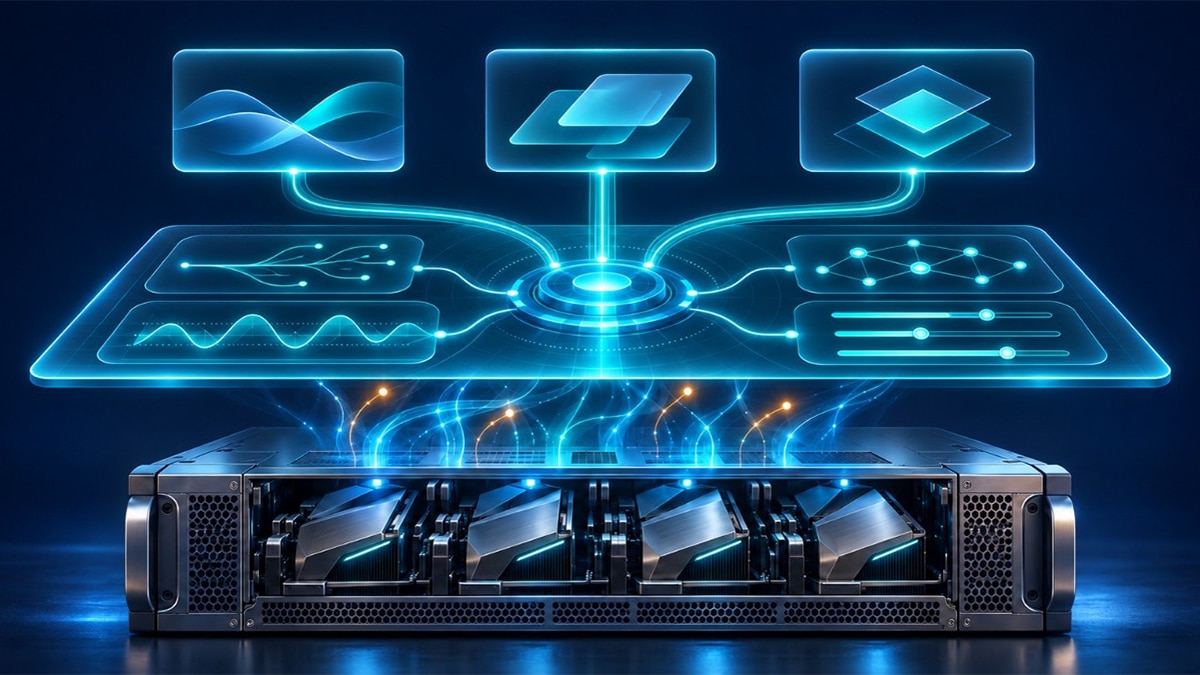
With GPU partitioning supported, customers can divide an Instinct MI350P GPU into supported partitions and allocate resources across workloads. This gives IT teams more flexibility to run multiple model services and match resource allocations to application needs.
AMD Inference Microservices simplifies deployment of supported models, while GPU partitioning gives IT teams more flexibility for allocating the underlying hardware. Together, they help enterprises maximize their GPU investments and increase organizational efficiency.
Supporting AI Across Enterprise Workflows
Windows Server GPU acceleration provides a platform for a broad range of enterprise applications.
SQL-connected applications and RAG: SQL Server 2025’s native vector capabilities help enterprises build applications that retrieve information by meaning and use it to ground AI responses. Locally hosted embedding models running on Instinct MI350P GPUs can supply vectors to these workflows while keeping embedding inference within enterprise-controlled infrastructure. Our planned demonstration with Microsoft’s SQL Server team introduces GPU-accelerated embedding generation into an existing RAG pipeline, showing how customers can extend an established application with local AI inference.
Coding agents and developer assistance: Shared model services running on Instinct MI350P GPUs can support coding agents used by teams of developers, helping them understand internal codebases, draft changes and find engineering documentation. Hosting inference centrally gives organizations another way to manage AI costs across developer teams while keeping proprietary code within enterprise-controlled infrastructure.
Enterprise copilots and knowledge assistants: Shared inference endpoints can support applications that summarize documents, search for approved knowledge, and help employees complete business tasks using relevant enterprise information.
AI assistance through AVD hybrid: Applications delivered through remote sessions can connect to centrally hosted shared inference services. Multiple users can access AI assistance within their existing workflows without requiring a dedicated inference GPU for each user or an accelerator at every endpoint.
A Foundation for the Next Enterprise Data Center
Enterprises need infrastructure that supports today’s business and leaves room for what comes next.
AMD EPYC processors, AMD Instinct MI350P GPUs, and AIMs bring complementary capabilities to that investment. Customers can consolidate traditional workloads, allocate GPU capacity across AI services, and build shared inference endpoints around their cost and data sovereignty requirements.
Together, AMD and Microsoft are helping Windows Server customers connect their next data center refresh with AI services for the applications and teams that run their businesses.


Related Blogs
-
AMD and Rancher Government Solutions Bring Security-Focused HPC and AI to Kubernetes
AMD and RGS simplify HPC and AI on Kubernetes with a hardened reference architecture for efficient GPU scheduling and utilization.
November 16, 2026
-
AMD Advances AI Training Across More Workloads in MLPerf® Training 6.1
See how AMD Instinct™ GPUs deliver faster training and broader coverage in MLPerf® Training 6.1, with generational and round-over-round gains.
November 16, 2026
-
Scaling Enterprise AI with AMD Compute and HiddenLayer Security
AMD and HiddenLayer combine high-performance compute and AI security to help enterprises protect data, manage risk and scale AI adoption
November 16, 2026
-
AMD and Fiddler: Enterprise AI Reliability in the Era of Autonomous Agents
AMD and Fiddler combine high-performance compute, open software, observability and governance to support reliable enterprise AI agents.
November 16, 2026
-
Reproducing AMD MLPerf Training v6.1 Submission Result — ROCm Blogs
Learn how to reproduce AMD's MLPerf Training v6.1 submission result.
November 15, 2026
-
Technical Deep Dive into AMD MLPerf Training v6.1 Results — ROCm Blogs
In this blog, we share the technical details of how we accomplish the results in our MLPerf Training v6.1 submission.
November 15, 2026
-
Exascale Was the Beginning: AMD Instinct™ MI430X GPUs
The AMD Instinct MI430X is the first GPU designed from the outset for the convergence of high-precision compute and AI for science.
November 12, 2026
-
Beyond Embedding Quantization: Quark UINT4 Qwen3.8-Flash-Next on Ryzen AI Halo — ROCm Blogs
Explore n-gram table choices for Qwen3.8-Flash-Next with AMD Quark UINT4, including accuracy and response-length tradeoffs.
November 11, 2026