

World’s Best Server CPU Portfolio for the Agentic Era2
AMD EPYC™ 9006 Series Server CPUs power agentic AI and diverse workloads—running the agents, AI host nodes, and general-purpose that turn intelligence into action with leadership performance per watt and total cost of ownership (TCO).
Agent Sandbox CPU
Run More Agents. Per Watt. Per Dollar. Per Rack.3,4,5
Scale more agents within the same power envelope. Highest thread density and leadership performance per watt maximize agent capacity across racks and systems.6
AI Host Node CPU
Get More from GPU Accelerators.
Maximize GPU utilization and token generation. High‑frequency, fast CPU‑to‑GPU communication, and memory bandwidth keep AI workloads running end to end.
General-Purpose CPU
Choose the Right CPU for the Job.
Match the right processor to each workload. The broadest CPU portfolio balancing performance, efficiency, and density for general-purpose, orchestration, and agent-driven workloads.7


Turn Intelligence into Action
Broadest Server CPU Portfolio for Agentic AI7
Match the right purpose-built processor to your workload—across agentic AI, cloud, enterprise, and HPC environments.


Cloud, Enterprise, HPC, and AI
AMD EPYC 9006 SP7 Server CPU
Designed for highest core density and leadership performance to support AI-first and cloud environments—helping scale agentic workloads, virtual machines, and AI host nodes efficiently.
Agentic Profiles: Agent Sandbox CPU | AI Host Node CPU | General Purpose CPU
Enterprise and General-Purpose
AMD EPYC 9006 SP8 Server CPU
Deliver balanced compute, memory, and I/O to run business-critical applications, virtualization, and mixed enterprise workloads—alongside emerging agentic AI services.
Agentic Profiles: Agent Sandbox CPU | General Purpose CPU
HPC and Technical Computing
AMD EPYC 9006X SP7 Server CPU
Accelerate simulation, modeling, and memory‑intensive workloads with enhanced cache and bandwidth—enabling faster time-to-insight and supporting agent-driven analysis.
Agentic Profile: General Purpose CPU
Host Node for AI
AMD EPYC 9006 LP Server CPU
Built for AI host node deployments, enabling efficient, scalable AI infrastructure with optimized performance per system and strong accelerator utilization.
Agentic Profile: AI Host Node CPU
Leadership Rack-Level Performance
Overall Rack Performance within a 100kW Power Budget8
Up to 3.3x
Up to 2.37x
Up to 1.46x
1.0
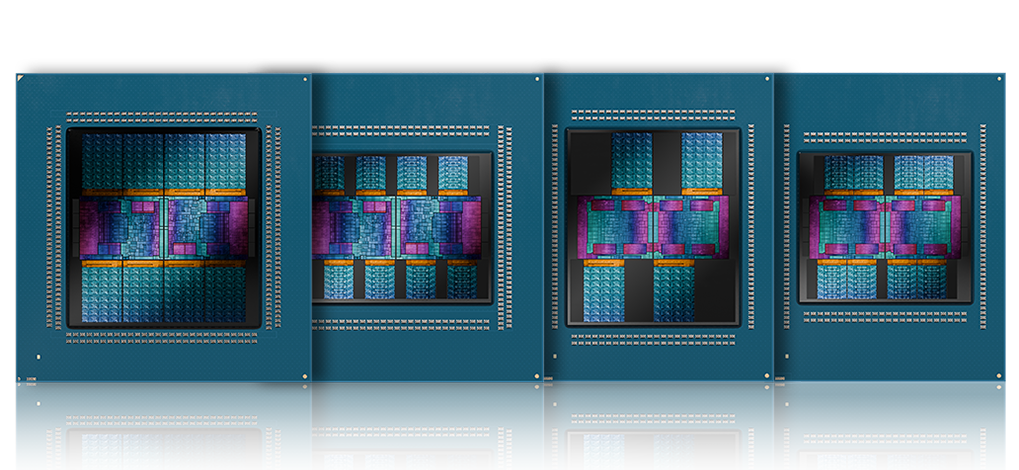
Built on “Zen” 6 and “Zen” 6c Core Architectures
AMD EPYC 9006 Server CPUs combine “Zen” 6 and “Zen” 6c cores to support the diverse demands of agentic AI and modern data center workloads—balancing high-frequency performance for AI host nodes with high core density to scale agents efficiently across systems.

Partners
Broad and Growing Ecosystem
AMD works with a variety of partners to build and develop optimized solutions featuring AMD EPYC 9006 Series Server CPUs.







Model Specifications
- 9006 SP7
- 9006 SP8
*Subject to Change
*Subject to Change

Frequently Asked Questions
Agentic AI turns AI into multi-step systems, where planning, retrieval, and tool execution run on CPUs. As agents scale, platforms like AMD EPYC™ 9006 Series Server CPUs use high core and thread density to handle that growing CPU demand efficiently.
AMD EPYC™ 9006 Series Server CPUs combine up to 256 cores, 512 threads, high memory bandwidth, and PCIe® Gen6 to keep agents running in parallel and data moving quickly across CPUs and GPUs.
Both—the AMD EPYC 9006 Server CPU portfolio delivers high-frequency cores for latency-sensitive orchestration and AI host-node tasks, and high-density cores (up to 256) to enable large-scale parallel agent execution.
Simultaneous multithreading (SMT) lets each core run two threads at once, raising effective capacity. In agentic AI environments, SMT helps maximize utilization of each core and can improve throughput for mixed, multi-stage workflows.
AMD EPYC 9006 Series Server CPUs are designed for leadership thread per watt, helping customers scale more agents within the same power envelope, enabling higher AI throughput and improved TCO.
Resources
Footnotes
- EPYC-029E: Claim of “best CPU for cloud, enterprise, and AI” is based on AMD’s assessment of the best overall combination of projected performance, thread density, enterprise workload results, AI benchmark performance, energy efficiency, memory subsystem capabilities, I/O capabilities, process technology, and built-in security features among evaluated general-purpose enterprise server CPUs as of 7/23/2026. “Best” reflects the strongest overall combination across the evaluated cloud, enterprise, and AI criteria and does not imply leadership in every individual workload or metric. Products not available for comparable testing or not positioned as general-purpose enterprise server CPUs were not included.
- EPYC-067: Based on AMD internal analysis and modeling of representative infrastructure workloads underlying agentic AI systems as of June, 2026. Performance comparisons reflect estimated rack‑scale throughput within a modeled 100kW deployment and include proxy workloads spanning web services, data infrastructure, and orchestration layers. Results are derived from a combination of AMD testing, third‑party data, and projections, and may vary based on system configuration, software stack, and workload mix. See AMD Agentic AI rack‑scale performance blog and AMD methodology description for details on assumptions, workloads, and measurement approach.
- 9xx6-014: Comparison based on published Top-of-stack core counts and CPU W, Default CPU Power for 6th Gen EPYC, and TDPs for 5th Gen EPYC, Intel® Xeon®, and Nvidia Vera for estimated Highest Agents / CPU W across 6th Gen AMD EPYC™ 256C at 400W, AMD EPYC™ 9965 (500W TDP), Nvidia Vera (450W TDP), ARM AGI (300W TDP), Intel® Xeon® 6980P (500W TDP), and Intel Xeon 6990E+ (450W TDP) powered servers as of 7/22/2026. 2 threads per core (SMT). 1 thread per core for ARM AGI.
Agent counts are estimates derived from available CPU thread resources used as a proxy under a consistent theoretical workload. Actual agent capacity and throughput will vary based on workload, model, memory, software, orchestration, and system configuration.
Starting with the 6th Gen AMD EPYC™ server processor family, AMD uses Default CPU Power to describe processor power consumption, succeeding AMD's historical TDP reference. Default CPU Power reflects total power consumed across the processor's compute and I/O dies for the stated performance target. Default CPU Power and TDP may both serve as processor power references for product comparison, platform planning, and performance-per-watt analysis. Intel Xeon TDP from ark.intel.com. Nvidia Vera TDP from https://developer.nvidia.com/blog/nvidia-vera-cpu-sets-a-new-standard-for-agentic-workloads-in-ai-f…. ARM AGI Specifications from https://www.arm.com/products/cloud-datacenter/arm-agi-cpu#Specifications
- 9xx6-013: Comparison based on published Top-of-stack core counts and 1Ku pricing for estimated highest Agents / CPU $ and threads / CPU $ AMD EPYC™ 9006 (512 threads), AMD EPYC™ 9005 (384 threads), and Intel® Xeon® 6 (256 threads) SKUs as of 7/22/2026. Threads derived as 2 threads per core (SMT). Intel and Xeon are trademarks of Intel Corporation or its subsidiaries. Source: https://www.amd.com/content/dam/amd/en/documents/solutions/ai/methodology-description.pdf
- 9xx6-012: Based on estimated performance data for Nvidia, Intel®, and AMD EPYC™ Server Processors for Agentic AI, the AMD EPYC9996 provides the most agents per rack at a 100Kw power envelope per rack.
Compared to the cores per rack of Nvidia Vera (88c) powered server racks:
- The AMD EPYC 9996 (256C) provides 2.08x the cores (and threads with SMT) per rack
- The AMD EPYC 9965 (192C) provides 1.86x the cores (and threads with SMT) per rack
- The Intel Xeon 6980P (128C) provides 1.24x the cores (and threads with SMT) per rack
Source: https://www.amd.com/content/dam/amd/en/documents/solutions/ai/methodology-description.pdf
Agent counts are estimates derived from available CPU thread resources used as a proxy under a consistent theoretical workload. Actual agent capacity and throughput will vary based on workload, model, memory, software, orchestration, and system configuration.
- EPYC-025D: As of July 2026, 6th Gen EPYC 9996 has 256 cores and 512 threads with SMT enabled which is higher than any other publicly disclosed 1P CPU
- EPYC-068 - The AMD EPYC server CPU portfolio spans the industry’s broadest ranges of data center deployments, from general-purpose enterprise, cloud, telecom, SMB, and HPC systems to emerging AI environments including sandboxed agentic AI deployments and GPU head node servers. AMD EPYC 6th Generation platforms extend this breadth by uniquely combining high core and thread density of up to 512 threads, advanced memory bandwidth of up to 16 channels of 12.8 GT/s MRDIMM support, next-generation PCIe® Gen 6 connectivity, and select SKUs with boost frequencies up to 5 GHz.
- 9xx6-021: Rack-level general purpose performance comparison within a 100 kW rack power constraint based on AMD analysis as of July 2026 comparing 2P AMD EPYC™ “Venice” 9996 (512 total cores) vs 2P Nvidia Vera (176 total cores, Olympus).. Performance reflects geometric mean across 6 workloads: estimated SPECrate® 2017_int_base, Server-Side Java® Multi-JVM Max jOPS, Web serving (NGINX/WRK), Key-Value store (Redis), In-memory caching (Memcached), and Relational DB (TPROC-C). All platforms use 2-socket nodes. System manufacturers may vary configurations, yielding different results. See https://www.amd.com/content/dam/amd/en/documents/solutions/ai/methodology-description.pdf for full derivations and assumptions. TPROC-C workload is an open-source workload derived from TPC-Benchmark™ Standard, and as such is not comparable to published TPC-C™ results, as the results do not comply with the TPC-C Benchmark Standard. TPC, TPC Benchmark and TPC-C are trademarks of the Transaction Processing Performance Council. Preliminary performance estimates based on AMD engineering projections or measurements as of July 22, 2026 and subject to change. SPEC® and SPECint® are registered trademarks of Standard Performance Evaluation Corporation. Learn more at spec.org.
Footnotes
- EPYC-029E: Claim of “best CPU for cloud, enterprise, and AI” is based on AMD’s assessment of the best overall combination of projected performance, thread density, enterprise workload results, AI benchmark performance, energy efficiency, memory subsystem capabilities, I/O capabilities, process technology, and built-in security features among evaluated general-purpose enterprise server CPUs as of 7/23/2026. “Best” reflects the strongest overall combination across the evaluated cloud, enterprise, and AI criteria and does not imply leadership in every individual workload or metric. Products not available for comparable testing or not positioned as general-purpose enterprise server CPUs were not included.
- EPYC-067: Based on AMD internal analysis and modeling of representative infrastructure workloads underlying agentic AI systems as of June, 2026. Performance comparisons reflect estimated rack‑scale throughput within a modeled 100kW deployment and include proxy workloads spanning web services, data infrastructure, and orchestration layers. Results are derived from a combination of AMD testing, third‑party data, and projections, and may vary based on system configuration, software stack, and workload mix. See AMD Agentic AI rack‑scale performance blog and AMD methodology description for details on assumptions, workloads, and measurement approach.
- 9xx6-014: Comparison based on published Top-of-stack core counts and CPU W, Default CPU Power for 6th Gen EPYC, and TDPs for 5th Gen EPYC, Intel® Xeon®, and Nvidia Vera for estimated Highest Agents / CPU W across 6th Gen AMD EPYC™ 256C at 400W, AMD EPYC™ 9965 (500W TDP), Nvidia Vera (450W TDP), ARM AGI (300W TDP), Intel® Xeon® 6980P (500W TDP), and Intel Xeon 6990E+ (450W TDP) powered servers as of 7/22/2026. 2 threads per core (SMT). 1 thread per core for ARM AGI.
Agent counts are estimates derived from available CPU thread resources used as a proxy under a consistent theoretical workload. Actual agent capacity and throughput will vary based on workload, model, memory, software, orchestration, and system configuration.
Starting with the 6th Gen AMD EPYC™ server processor family, AMD uses Default CPU Power to describe processor power consumption, succeeding AMD's historical TDP reference. Default CPU Power reflects total power consumed across the processor's compute and I/O dies for the stated performance target. Default CPU Power and TDP may both serve as processor power references for product comparison, platform planning, and performance-per-watt analysis. Intel Xeon TDP from ark.intel.com. Nvidia Vera TDP from https://developer.nvidia.com/blog/nvidia-vera-cpu-sets-a-new-standard-for-agentic-workloads-in-ai-f…. ARM AGI Specifications from https://www.arm.com/products/cloud-datacenter/arm-agi-cpu#Specifications - 9xx6-013: Comparison based on published Top-of-stack core counts and 1Ku pricing for estimated highest Agents / CPU $ and threads / CPU $ AMD EPYC™ 9006 (512 threads), AMD EPYC™ 9005 (384 threads), and Intel® Xeon® 6 (256 threads) SKUs as of 7/22/2026. Threads derived as 2 threads per core (SMT). Intel and Xeon are trademarks of Intel Corporation or its subsidiaries. Source: https://www.amd.com/content/dam/amd/en/documents/solutions/ai/methodology-description.pdf
- 9xx6-012: Based on estimated performance data for Nvidia, Intel®, and AMD EPYC™ Server Processors for Agentic AI, the AMD EPYC9996 provides the most agents per rack at a 100Kw power envelope per rack.
Compared to the cores per rack of Nvidia Vera (88c) powered server racks:
- The AMD EPYC 9996 (256C) provides 2.08x the cores (and threads with SMT) per rack
- The AMD EPYC 9965 (192C) provides 1.86x the cores (and threads with SMT) per rack
- The Intel Xeon 6980P (128C) provides 1.24x the cores (and threads with SMT) per rack
Source: https://www.amd.com/content/dam/amd/en/documents/solutions/ai/methodology-description.pdf
Agent counts are estimates derived from available CPU thread resources used as a proxy under a consistent theoretical workload. Actual agent capacity and throughput will vary based on workload, model, memory, software, orchestration, and system configuration. - EPYC-025D: As of July 2026, 6th Gen EPYC 9996 has 256 cores and 512 threads with SMT enabled which is higher than any other publicly disclosed 1P CPU
- EPYC-068 - The AMD EPYC server CPU portfolio spans the industry’s broadest ranges of data center deployments, from general-purpose enterprise, cloud, telecom, SMB, and HPC systems to emerging AI environments including sandboxed agentic AI deployments and GPU head node servers. AMD EPYC 6th Generation platforms extend this breadth by uniquely combining high core and thread density of up to 512 threads, advanced memory bandwidth of up to 16 channels of 12.8 GT/s MRDIMM support, next-generation PCIe® Gen 6 connectivity, and select SKUs with boost frequencies up to 5 GHz.
- 9xx6-021: Rack-level general purpose performance comparison within a 100 kW rack power constraint based on AMD analysis as of July 2026 comparing 2P AMD EPYC™ “Venice” 9996 (512 total cores) vs 2P Nvidia Vera (176 total cores, Olympus).. Performance reflects geometric mean across 6 workloads: estimated SPECrate® 2017_int_base, Server-Side Java® Multi-JVM Max jOPS, Web serving (NGINX/WRK), Key-Value store (Redis), In-memory caching (Memcached), and Relational DB (TPROC-C). All platforms use 2-socket nodes. System manufacturers may vary configurations, yielding different results. See https://www.amd.com/content/dam/amd/en/documents/solutions/ai/methodology-description.pdf for full derivations and assumptions. TPROC-C workload is an open-source workload derived from TPC-Benchmark™ Standard, and as such is not comparable to published TPC-C™ results, as the results do not comply with the TPC-C Benchmark Standard. TPC, TPC Benchmark and TPC-C are trademarks of the Transaction Processing Performance Council. Preliminary performance estimates based on AMD engineering projections or measurements as of July 22, 2026 and subject to change. SPEC® and SPECint® are registered trademarks of Standard Performance Evaluation Corporation. Learn more at spec.org.