

What is Vitis Hardware in the Loop?
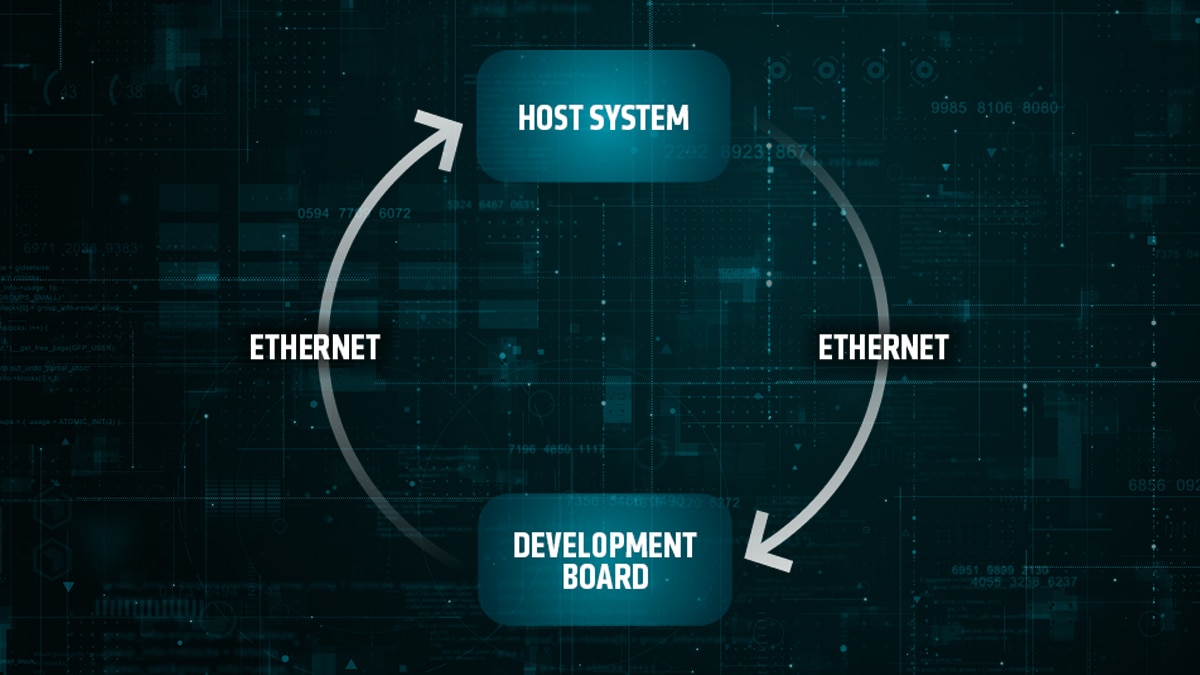
AMD Vitis™ Hardware in the Loop (Vitis HIL) connects your chip design directly to a real development board so you can test it at full speed — without waiting for a slow software simulation. Your test data and analysis scripts stay in MATLAB® or Python™. Only the computation moves to real silicon.
Dramatically Faster Than Software-Only Simulation
System-level software simulation can take hours or days. Vitis HIL deploys your design on actual hardware, cutting verification time to minutes. What changed is where the computation runs — not how you work.
Stay in MATLAB® or Python™
No new testbench language to learn. Reuse your existing test data and scripts as is. A simple API sends data to the board over high-speed Ethernet and retrieves results — no other changes required.
Confirm Behavior Before Final Hardware
Run full-system throughput tests on an evaluation kit — even before your production board is ready. Catch integration issues early, confirm real-world behavior, and ship with confidence.
AMD Vitis Unified Software Platform
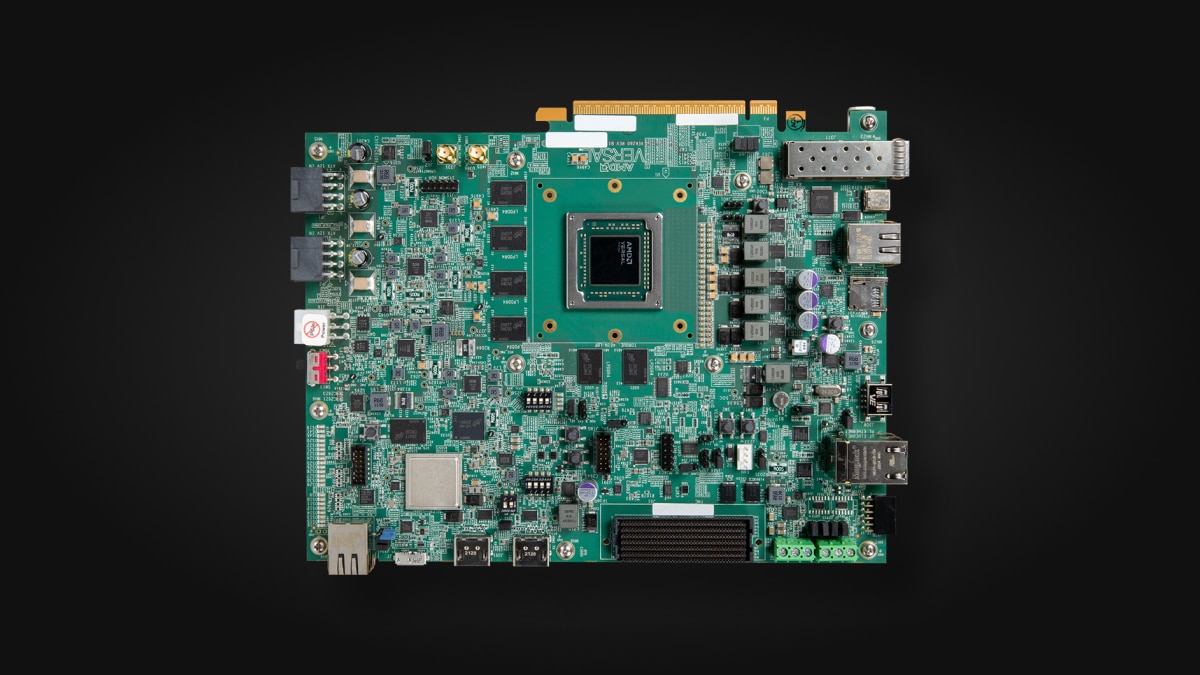
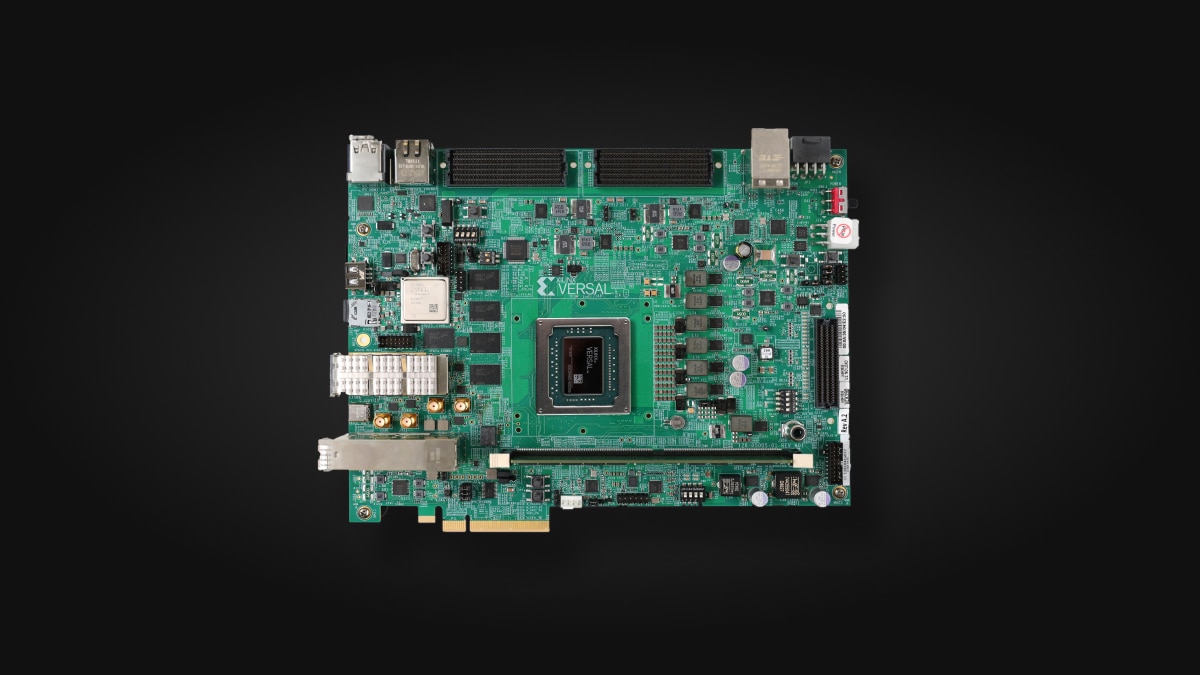
The Vitis software provides the complete toolchain to set up and run a Vitis HIL flow for heterogeneous designs — chips that combine AI Engines and programmable logic. The platform handles subsystem configuration, SD card image generation, board boot, and the high-speed Ethernet API that bridges your host environment to the hardware. Both the AMD Versal™ AI Core Series (VCK190 Evaluation Kit) and Versal AI Edge Series (VEK280 Evaluation Kit) are fully supported by the same 10-step flow.
While Vitis HIL is primarily designed for heterogeneous designs that combine AI Engines with programmable logic, the same flow can also be applied to PL-only designs. Engineers working on traditional FPGA implementations without AI Engines can use Vitis HIL to validate their programmable logic designs against a host-based test environment using the same 10-step process.
Hardware in the Loop with AMD Vitis Unified Software Platform
See the complete Vitis HIL flow in action — from Vitis subsystem setup through to real-time result verification on AMD Versal hardware. This demonstration walks through every step using MATLAB® and Python™ showing exactly how fast and straightforward testing on real silicon can be.
Vitis Hardware in the Loop Flow
Set up Vitis HIL using the Vitis Unified Software Platform in 10 steps, split across two phases: getting the hardware ready, then running your tests.
Setup
Prepare Vitis Subsystem
Configure a Vitis subsystem component with your AI Engine and programmable logic content.
Generate SD Card Image
Run a single build command. The Vitis software bundles all device configuration into a bootable SD card image.
Program SD Card
Flash the generated image onto a physical SD card. The development board boots from this card.
Boot the Board
Insert the SD card, power on the development board, and let it boot and configure your design.
Start Vitis HIL Server
Launch the Vitis HIL server process on the board. It processes incoming data and commands from your host.
Test
Generate Test Data
Create your test input data in MATLAB® or Python™ exactly as you would for any existing simulation.
Transmit to Hardware
Use the data in MATLAB® or Python™ API to send data to the board over a high-speed Ethernet interface.
Compute on Hardware
The development board executes the computation using your actual chip design — not a model.
Receive Results
The board transmits computed output back to your host system over Ethernet. The loop completes.
Analyze & Verify
Inspect results in MATLAB® or Python™. Check throughput, accuracy, and full-system behavior.
Explore The Hands-On Hackster.io Project
Adam Taylor on Hackster.io: Step-by-Step Vitis HIL
Walk through a complete hands-on demonstration of the Vitis HIL flow using the AMD Vitis Unified Software Platform. Adam Taylor's Hackster.io project covers every step from Vitis subsystem setup to final result verification on real hardware.
Evaluation Hardware
The AMD Vitis HIL flow is supported on two AMD Versal evaluation kits. Both run the identical 10-step flow — choose the board that fits your target application.
The Vitis subsystem configuration, SD card image generation, Vitis HIL server setup, and your MATLAB® or Python™ test scripts are identical on both kits. You can prototype on one board and move to the other without rewriting any code — your designs are portable across the AMD Versal portfolio.
Required Software, Tools and Host Environment
The following tools and licenses are required to run the complete Vitis HIL flow on AMD Versal hardware.
AMD Vitis Unified Software Platform
- Version: 2026.1 (or later)
- Additional AI Engine tools license (required for heterogeneous AI Engine + PL designs)
AMD Vivado Enterprise or Pro
- AMD Vivado™ Enterprise (perpetual)
- AMD Vivado Pro (subscription)
MATLAB® or Python™
- MATLAB® + DSP System Toolbox
- Python™ 3 + numpy, scipy, matplotlib
Contact your local AMD FAE for licensing quotes and options
Resources
Contact AMD
Ready to get started with Vitis HIL for your specific design? AMD can help you choose the right evaluation kit and workflow.