AMD in Space: Proven Expertise, Products Support Missions
Mar 30, 2026
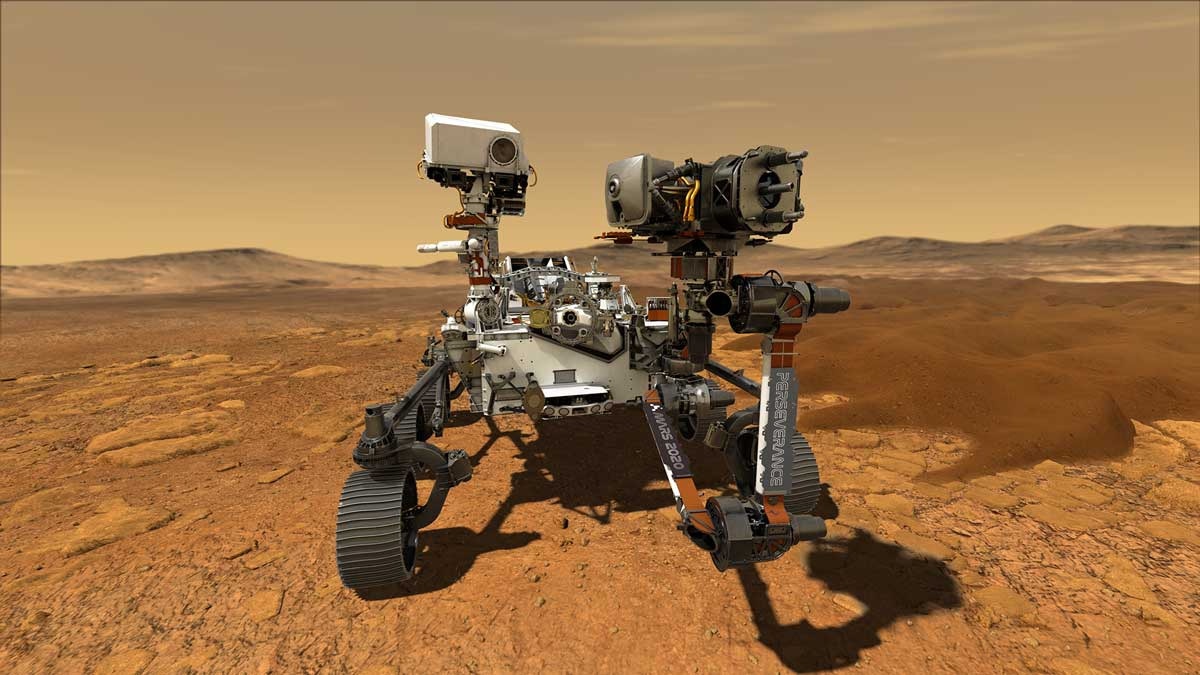
To lead in space, America must lead in silicon. With NASA recently announcing a shift from short-duration missions to sustained lunar presence and deep-space exploration, autonomous, high-performance computing is no longer optional – it’s mission-critical.
AMD is helping power that transformation, delivering the compute that enables the next era of exploration.
As missions like Artemis II and NISAR increase in scale and complexity, high-performance computing and AI inference are becoming foundational. With over two decades of flight-proven space heritage, from the Mars rover to Earth observation satellites, AMD technologies are helping turn vast streams of complex data into actionable intelligence at the edge.
Our comprehensive portfolio of CPUs, GPUs, FPGAs and adaptive SoCs enable mission partners to deploy the right compute for every environment. The result is lower latency, greater resilience, and the ability to build intelligent, autonomous space systems that can operate reliability in the harshest conditions.
Proven Resilience for the New Space Era
From lunar exploration to the surface of Mars and into the outer solar system, our space-grade FPGAs and adaptive SoCs have supported some of the most demanding space missions, where onboard processing must operate reliably in extreme conditions with limited communication to Earth. These deployments highlight the importance of resilient, low-power compute platforms capable of autonomous operations.
Across the broader ecosystem, AMD delivers the flexibility and reliability required for long-duration space programs.
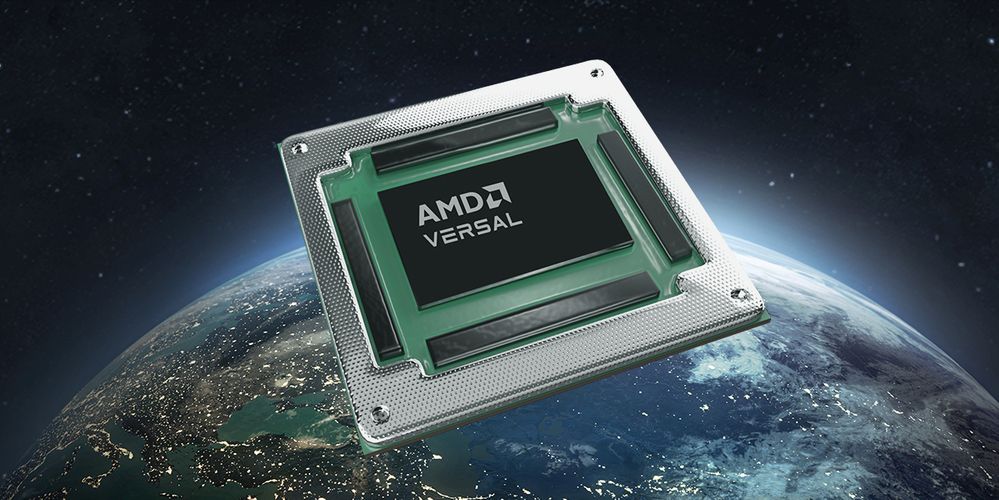
Blue Origin, a leader in space technology, recently shared that it’s using AMD Versal™ AI Edge Gen 2 adaptive SoCs in its development flight computers that are currently flying in the vehicle testbed that will eventually power the Mark 2 lander that will land astronauts on the moon as early as 2028.
And NEC recently announced it is building Japan's first optical communication satellite constellation with AMD tech. The company will demonstrate high-speed network routing in space using AMD Versal adaptive SoCs to provide high-performance signal processing of data transmissions within the constellation and to help improve connectivity on Earth.
Computing at the Lunar Edge
As NASA shifts toward sustained lunar operations, the distance to Earth creates a critical latency and bandwidth gap. Radiation tolerant, space-grade AMD Versal adaptive SoCs close this gap by integrating programmable logic, AI engines and Arm® cores to enable on-board high-performance processing in orbit and directly on the lunar surface.
By moving compute closer to the data source, spacecraft and surface systems can analyze sensor data in real time with reduced latency and dependence on limited bandwidth. This capability is critical for lunar surface operations, where systems must operate with increasing autonomy and resilience.
Reconfigurable Systems for Evolving Missions
NASA’s focus on flexible, iterative mission architectures aligns closely with the strengths of AMD FPGA-based adaptive computing. By enabling on-orbit reconfiguration, operators can address operational challenges in real-time. These include:
- Updating algorithms after launch.
- Deploying new AI models as mission needs evolve.
- Optimizing performance throughout the mission life cycle.
This adaptability ensures NASA’s most ambitious investments deliver high-performance long after they have left the launch pad.
Accelerating AI-Driven Insights for Data-Intensive Missions
The NISAR mission, a collaboration between NASA and ISRO (India Space Research Organization), highlights the critical need for on-board, AI-driven intelligence. Generating massive volumes of synthetic aperture radar (SAR) data, NISAR requires sophisticated on-orbit processing to bypass the constraints of Earth-bound transmission.
AMD adaptive SoCs solve this by enabling on-board processing tasks, such as data-filtering, compression and range-Doppler processing directly on the spacecraft. By ensuring only the most valuable insights are transmitted to Earth, this approach improves mission efficiency while enabling faster insights for climate monitoring, disaster response and environmental analysis.
Reliable, High-Performance Computing for the Harshest Environment
NASA’s ambitious vision for future missions requires hardware that can meet stringent reliability and safety requirements.
Capping a journey of nearly seven months, the NASA Mars rover Perseverance landed on the surface of Mars with several instruments enabled by AMD FPGAs, from navigation to collection and examination of soil and rock samples. Our FPGAs also played a key role in the spacecraft involved in the NASA OSIRIS REx mission, marking the first U.S. mission to collect samples from an asteroid.
Designed and qualified to operate in extreme environments, our space-grade adaptive SoCs provide:
- Radiation tolerance validated through proton, heavy ion and gamma testing.
- Support for fault-tolerant system design techniques.
- Compliance with standards including MIL-PRF-38535.
- Long-term life cycle support aligned with multi-decade missions.
These capabilities ensure consistent performance across the full duration of complex exploration programs.
Advancing the Next Era of American Space Leadership
NASA’s initiatives represent a defining moment for ensuring American space leadership. By combining proven expertise in high-performance and adaptive computing, we enable the intelligent, flexible and radiation-tolerant systems required to meet these ambitions.
From lunar landers to deep-space missions, AMD technologies are the backbone for these extreme environments. By delivering real-time processing, AI-driven insights and mission adaptability, we ensure NASA and our commercial partners can navigate the complexities of deep-space exploration.
As the pace of innovation accelerates, the comprehensive AMD compute portfolio remains central to driving discovery, strengthening partnerships, enabling exploration and advancing the next era of American leadership in space.

Related Blogs
-
Rapid Validation on AMD Versal Silicon without Leaving MATLAB or Python
AMD Vitis™ Hardware in the Loop (Vitis HIL) bridges simulation and hardware bring-up by enabling system-level verification on evaluation hardware directly from existing MATLAB® or Python™ test environments.
October 07, 2026
-
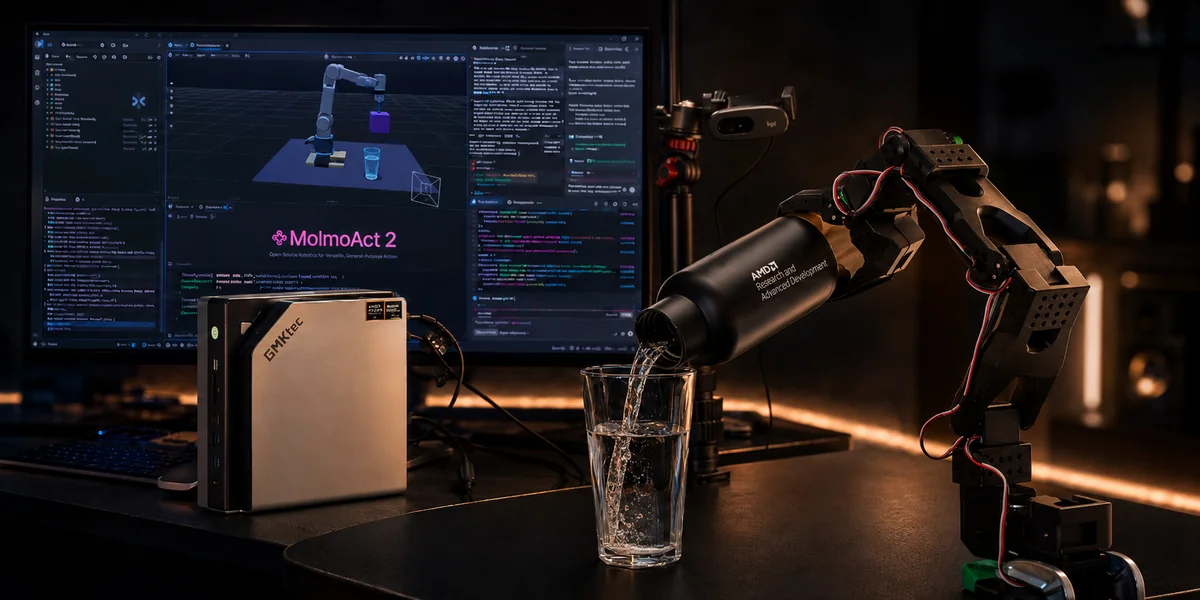
Running MolmoAct2 Robot Policy on an AMD Ryzen AI Max+ 395 Mini PC — ROCm Blogs
In this tutorial, users are introduced to a state of the art vision-language-action model and the steps to implement the model directly optimized for the AMD Ryzen AI Max+ 395 Computer.
September 29, 2026
-
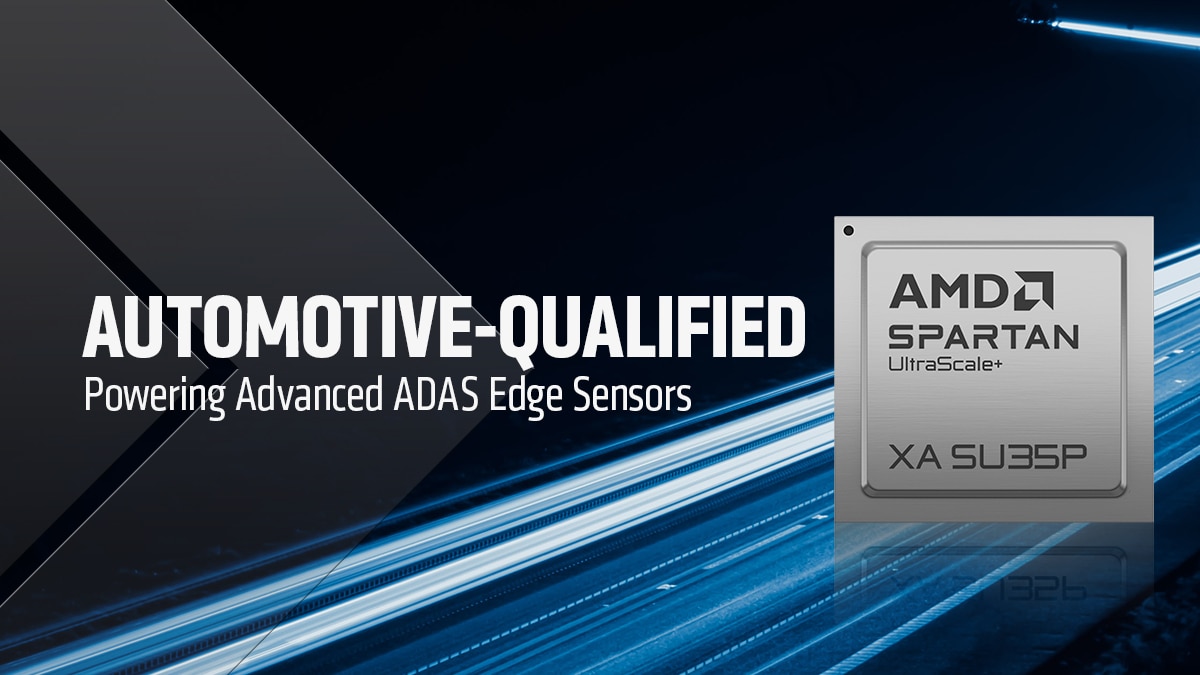
AMD Expands Automotive-Grade FPGAs with Spartan UltraScale+ XA FPGAs for ADAS Applications
The Spartan™ UltraScale+™ XA device joins the AMD portfolio of automotive-grade, safe, and highly scalable FPGAs and adaptive SoCs.
September 29, 2026
-
Beyond TOPS: AMD Ryzen™ AI Embedded X100 at the Edge
Scale agentic AI at the edge with AMD Ryzen™ AI Embedded X100 Series: more concurrent agents, unified memory, x86 compatibility, and long life.
September 24, 2026
-
From Sensor to Insight: Production-Ready Single-Chip Edge AI. Proven.
AMD Versal™ AI Edge Series Gen 2 and Vitis™ AI accelerate production-ready edge and physical AI. Learn how they speed up your deployment.
September 22, 2026
-
Enabling Physical AI Agents with Lemonade — ROCm Blogs
Learn to deploy local agents for interactive robot arm manipulation using the Lemonade framework.
August 24, 2026
-
IPMX Demystified: What We’ve Learned and How to Deploy
The Internet Protocol Media Experience (IPMX) has entered a new phase. Official IPMX testing and certification program is now live, and at ISE 2026 the industry unveiled its first wave of certified products. Manufacturers can now evaluate IPMX as a deployable standard rather than a promising framework. This article walks through what IPMX is, how the certification program works, what the first certified products tell us, what early deployments are showing, and how Adeas-Nextera FPGA IP cores running on AMD adaptive silicon can help manufacturers reach certifiable products faster.
August 03, 2026
-
From CUDA® to AMD ROCm™ Software Without Starting Over
Ryzen AI Halo launches at Micro Center, powering agentic PCs for developers building larger, next-generation local AI applications.
July 23, 2026