AMD Silo AI and University of Bologna Start Spatial AI Collaboration for Robotics and Autonomous Driving
May 19, 2026
The research collaboration will focus on building geometry-aware perception modules on the AMD ROCm™ open software stack
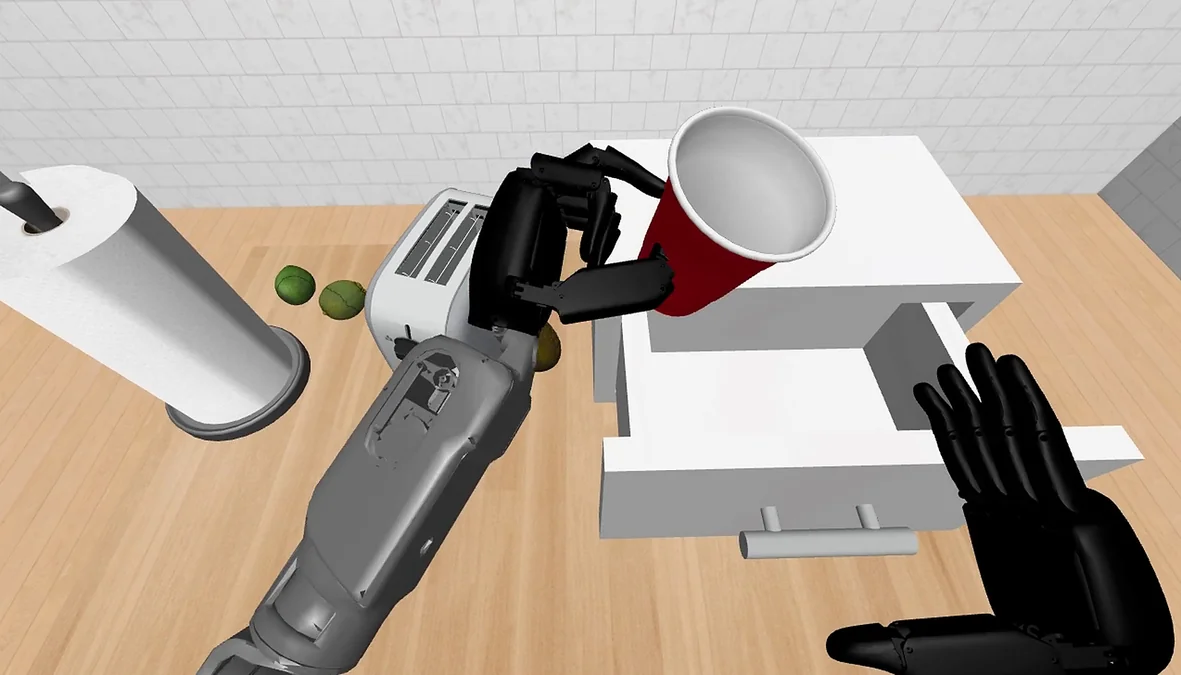
AMD Silo AI and University of Bologna through its Department of Computer Science and Engineering (DISI) are starting a research collaboration to bring explicit 3D geometry into the Vision Language Action (VLA) and world-model pipeline for robotics and autonomous driving, natively on AMD ROCm™. The work establishes DISI leading research group in stereo vision and depth estimation, CVLab, as the spatial AI node of a two-node academic hub alongside the University of Modena and Reggio Emilia (UniMoRE). Together, the hub feeds into the World Models Foundry, the AMD Silo AI open Physical AI research program, and aligns with European initiatives including the EU AI Factory for Science.
“The next wave of robotics and autonomous driving will depend on AI systems that do more than classify or generate. They must build a grounded understanding of the world in 3D, stay consistent across time and viewpoint, and run efficiently on compute platforms. That is exactly where this collaboration is focused on,” says Niko Vuokko, Senior Director of Software Development, AMD. “Together with DISI and other ecosystem parties, we are building the Spatial AI layer that VLA and world-model pipelines still lack. Our goal is to turn frontier research in geometrical understanding into open, high-performance ROCm native software that moves the whole Physical AI ecosystem forward,” he adds.
DISI CVLab is a leading computer vision group with deep expertise in stereo vision, depth estimation, and 3D reconstruction, and a strong publication record at CVPR, ICCV, and ECCV. AMD Silo AI and CVLab will co-design perception and representation modules that bring explicit 3D geometry and depth into end-to-end VLA and world-model architectures. The work will target AMD Instinct™ MI-series GPUs and future ROCm platforms.
The research has three main thrusts:
Geometry-aware perception backbones, including stereo, depth, multi-view, BEV, and 3D scene representations.
Efficient geometry-aware training and inference on ROCm, including BEV and point-cloud pipelines and geometry modules integrated into end-to-end VLA architectures.
Robotics- and AD-centric evaluation using simulation and real data, with a focus on spatial reasoning, 3D consistency, and robustness to viewpoint and occlusion.
Matteo Poggi, Associate Professor at the University of Bologna (DISI) says, “For years, our work has focused on helping machines recover depth, shape, and structure from images. This collaboration gives us the opportunity to bring that line of research into a larger VLA and world-model stack for robotics and autonomous driving. With AMD, we can translate geometry-aware vision research into ROCm-native building blocks, test them on relevant platforms, and release them openly so they can be used and improved by the wider community.”
The research has direct industry relevance through the partnership with Generative Bionics, a leading Italian robotics company that designs and deploys full-stack humanoid systems for real-world applications. Generative Bionics maintains a tight engineering collaboration with DISI, UniMoRE, and AMD, bringing deployment experience that bridges research into working robotic platforms.
About the University of Bologna and CVLab
The University of Bologna, founded in 1088, is Europe's oldest and one of the most distinguished research universities. CVLab is a research group within the Department of Computer Science and Engineering with deep expertise in stereo vision, depth estimation, 3D reconstruction, and geometry-aware perception. The group has a strong publication record at CVPR, ICCV, ECCV, and ICRA, and contributes actively to open-source benchmarks and tools for 3D vision.


Related Blogs
-
Ultralytics YOLO on AMD GPUs: Train, Run, and Deploy with ROCm™ — ROCm Blogs
Learn how to train, run, and deploy Ultralytics YOLO26 models on AMD GPUs with PyTorch on ROCm and MIGraphX, starting with Ultralytics 8.4.171.
October 25, 2026
-
NeuroSpark Expands AI Compute Choice with AMD
NeuroSpark uses AMD Instinct GPUs and ROCm software on OCI to deliver flexible, cost-effective AI training and inference
October 23, 2026
-
Sovereign AI for European Customer Conversations
LeadDesk, QuTwo, and AMD Silo AI collaborate on a sovereign AI stack that brings near-frontier, open-weight models to European customer conversations.
October 22, 2026
-
AMD and Advantech - Architecting the Next Generation of Regulated Casino Games
Discover how Advantech and AMD are redefining regulated casino gaming with Ryzen Embedded 8000 Series processors, integrated RDNA 3 graphics, XDNA AI acceleration, and purpose-built DPX platforms. The solution enables immersive multi-screen experiences, predictive maintenance, stronger security, lower power consumption, simplified designs, and long-term platform availability for gaming OEMs worldwide.
October 21, 2026
-
Micro-World 2: Streaming Real-time Interactive World Model — ROCm Blogs
This blog demonstrates how Micro-World 2 combines precisely annotated action data, four-step diffusion distillation, and ROCm-optimized inference to deliver controllable, long-horizon, real-time world generation on a single AMD Instinct GPU through a fully open-source pipeline.
October 20, 2026
-
MoE Training Optimization with Primus — ROCm Blogs
Learn how to speed up MoE training on AMD Instinct GPUs with Primus: a fused MoE megakernel, FP8/MXFP8 expert GEMMs, and training-at-scale tuning.
October 20, 2026
-
Optimizing World Action Models on AMD GPUs — ROCm Blogs
Speed up World Action Models on AMD GPUs with GEAK kernels, fewer denoising steps, and latent actions, cutting FastWAM latency 25× at about 97 percent success.
October 20, 2026
-
Bringing Ultra-Fast, Interactive LLM Inference to AMD Instinct™ MI355X GPUs — ROCm Blogs
Accelerate single-request LLM inference on AMD Instinct MI355X with megakernels, speculative decoding, and MXFP4 for 1.9-3.3x faster decode.
October 19, 2026