The New Standard for Cloud Compute: AMD
Jan 27, 2026
News Snapshot:
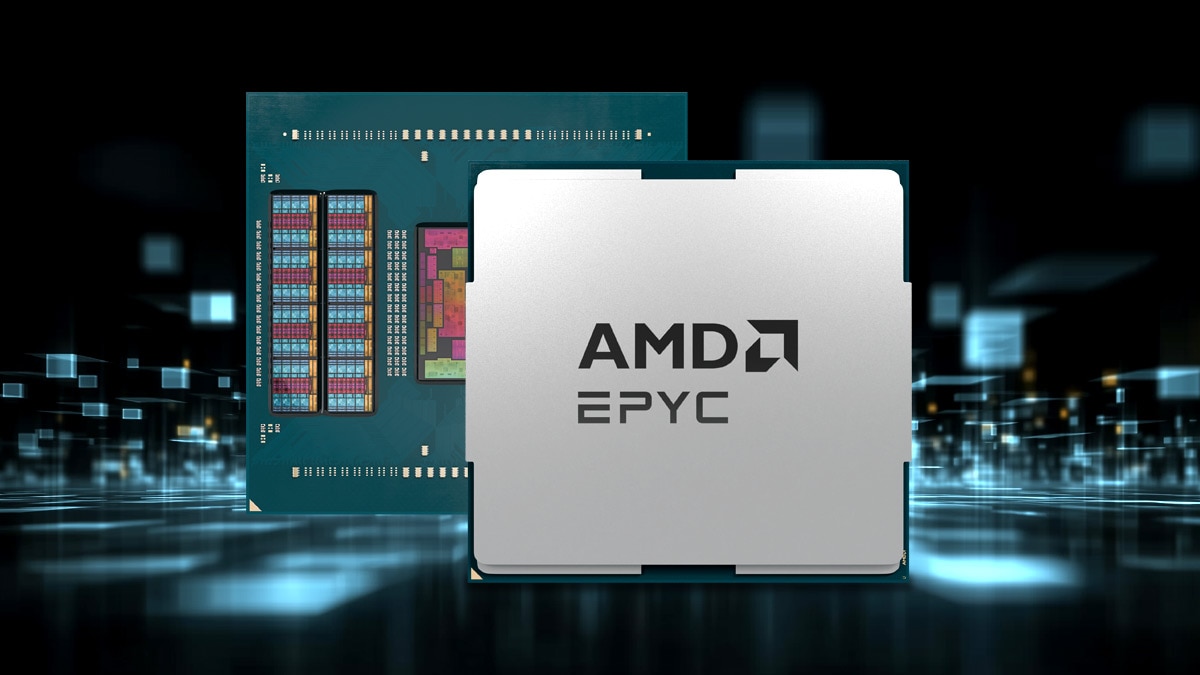
- AWS, Azure, Google Cloud, and Oracle Cloud Infrastructure (OCI) expanded their portfolios with AMD EPYC™ server CPUs in 2025 to deliver leadership performance, efficiency, and workload-optimized innovation.
- New instances and services spanned AI, HPC, databases, and general compute, with more growth expected in 2026 and beyond.
- Amazon shared that EPYC CPU-based instances deliver the highest x86 performance in the AWS cloud.
A Cloud Ecosystem Growing With AMD
2025 was a landmark year for AMD EPYC™ CPUs in the cloud. What looks like a long list of cloud deployments is really a single story.
Across hyperscalers, OEMs, cloud service providers, and fast-growing AI clouds, the industry is demanding AMD for performance, efficiency, security features, and scalability.
AWS and AMD: Igniting a New Era of CPU Compute
Since first introducing AMD EPYC CPU-based instances in 2018, AWS has steadily expanded its portfolio. In 2025, it extended that trajectory with a new wave of 5th Gen AMD EPYC CPU–based offerings that Amazon claims provide the highest x86 performance in the AWS cloud.
The latest EPYC CPU-based EC2 families underscore this progress with a set of carefully-tuned instance shapes designed around how organizations operate at scale. EC2 C8a instances advanced memory bandwidth by 33% of the previous generation, while EC2 X8aedz provided double the compute performance over 2nd generation Intel Xeon-based x2iezn instances, helping accelerate complex EDA workloads and shorten design cycles.
Other EPYC CPU-based instances included the memory-optimized EC2 R8a , the high-performance, HPC-focused EC2 Hpc8a , and EC2 M8a that delivers versatile, general-purpose performance.
Across all these new EPYC instance families, developers and enterprises are now able to shift formerly on-premises performance workloads into the AWS cloud and achieve better speed, flexibility, and cost efficiency over previous-generation EPYC CPU-based instances.
Whether powering next-generation analytics, high-throughput databases, scientific modeling, or digital engineering pipelines, AMD EPYC CPU-powered instances in AWS are driving new capabilities that simply weren’t practical at this scale before 2025.
Google Cloud: Expanding What EPYC Can Do
The continued evolution of cloud computing demands platforms that deliver breakthrough performance, efficiency, and scalability across a wide range of workloads – from everyday business apps to high-performance computing (HPC) and AI.
This is evident in Google Cloud’s adoption of 5th Gen AMD EPYC processors to power its broad portfolio of VM families: C4D, N4D, H4D, and G4.
With AMD, Google Cloud can offer VMs that enable organizations to run web, enterprise, AI, and HPC workloads quickly and cost-effectively. Customers can scale global applications with high throughput and low latency, help protect sensitive data with hardware-based security features, and move traditionally on-premises workloads into the cloud with confidence.
Each VM is designed to offer the right balance between performance and total cost of ownership for general-purpose and specialized workloads.
C4D VMs enable customers’ performance-sensitive general-purpose workloads with up to 80% higher web server throughput vs the previous generation1 and a confidential computing option, while the new N4D VMs offer a cost-effective solution with up to 3.5x the price-performance on web-serving workloads compared to prior generation N2D2, as well as custom VM shapes. H4D HPC VMs, meanwhile, deliver more than 12,000 gflops of whole-node performance and over 950 GB/s of memory bandwidth for demanding technical computing workloads, according to Google testing3.
Microsoft Azure: Broadening its AMD EPYC Portfolio
Microsoft Azure continued to expand its portfolio of EPYC CPU-based services.
Last year, Azure unveiled a host of VMs designed to meet the needs of various workloads, including the Dasv7, Easv7, and Fasv7 VM families with up to 130% improvement generationally on web server application performance. The HBv5 VM brings 6.6 TB/s of memory bandwidth to high-performance computing workloads, and the storage optimized Laosv4 and Lasv4 VM families bring low-latency local NVMe storage to customers with the most demanding data-heavy workloads. Azure also unveiled NVads V710 v5 GPU-accelerated VMs for graphics-intensive workloads and expanded its confidential computing offerings with DCasv6 and ECasv6 confidential VMs .
Confidential computing isolates AI models, data, and workloads in hardware-based trusted execution environments (TEEs) with encrypted and integrity-protected memory. With AMD Secure Encrypted Virtualization (SEV), proprietary AI models and highly sensitive data remain protected while in use. All leading cloud service providers have deployed AMD SEV at scale, meaning customers, large and small, can leverage the industry's most mature and broad confidential computing ecosystem4.
Azure also introduced Microsoft SQL Server 2025 running on AMD EPYC processors, delivering mission-critical database performance at scale with exceptional efficiency.
Oracle: Accelerating AI & Enterprise Data
Oracle Cloud Infrastructure (OCI) has focused on delivering cloud services optimized for large-scale enterprise workloads, with AMD EPYC processors playing a large part in helping achieve that vision.
The introduction of E6 virtual machine and bare metal instances powered by 5th Gen AMD EPYC processors provides customers with a high-performance, cost-effective foundation for large, distributed workloads—enabling faster processing, massive scalability, and greater efficiency without requiring architectural changes. With Oracle’s Flex VM shapes, enterprises can get the exact amount of compute and memory they need as their cloud workloads scale.
That performance extends into the data layer. Oracle Exadata Database Service and Oracle Autonomous Database powered by 5th Gen EPYC help customers modernize core database platforms with excellent efficiency and consistency in their on-premises data center, in the Oracle cloud, and even in other major clouds. By aligning compute and database infrastructure on a common AMD architecture, Oracle delivered a unified platform for data-intensive enterprise operations.
5th Gen EPYC processors helped Oracle to deliver an unparalleled combination of power, scalability, and cost-efficiency that meets the demands of today’s most complex workloads.
The Future of Cloud on AMD
Across hyperscalers, CSPs, enterprises, and emerging AI clouds, demand for AMD EPYC continues to accelerate. The world’s most innovative providers are leveraging AMD not just for performance, but for energy efficiency, scalability, and total cost of ownership.
As workloads become more complex—from AI and HPC to large-scale analytics, SaaS, and confidential computing—the cloud requires a computing foundation to match. AMD is delivering it.
2025 was a breakout year for AMD in the cloud, but we are still early in what’s possible as leading CPUs, GPUs, an open ecosystem, and rapid cloud innovation continue to come together.

Related Blogs
-
-
Rightsizing Cloud Workloads on AMD Part 1 Foundations
Learn the foundations of rightsizing cloud workloads on AMD: define goals, choose the right time, classify workloads, and select relevant benchmarks.
October 01, 2026
-
EPYC CPUs Deliver for Every Layer of the Agentic AI Stack
Agentic systems combine multiple CPU roles into a workflow. The latest AMD EPYC CPU generation lets customers optimize for each task.
September 18, 2026
-
Building Infrastructure for an AI World in Motion
The biggest risk is not choosing the wrong technology today. It is building infrastructure that cannot adapt tomorrow.
September 17, 2026
-
Advancing AI 2026: From Gigawatt Data Centers to Agentic PCs
Explore how AMD connects data center, cloud, and local AI to enable secure, cost-aware agentic workflows across enterprise PCs.
September 16, 2026
-
From LEAP 2026: Advancing AI Across the Middle East
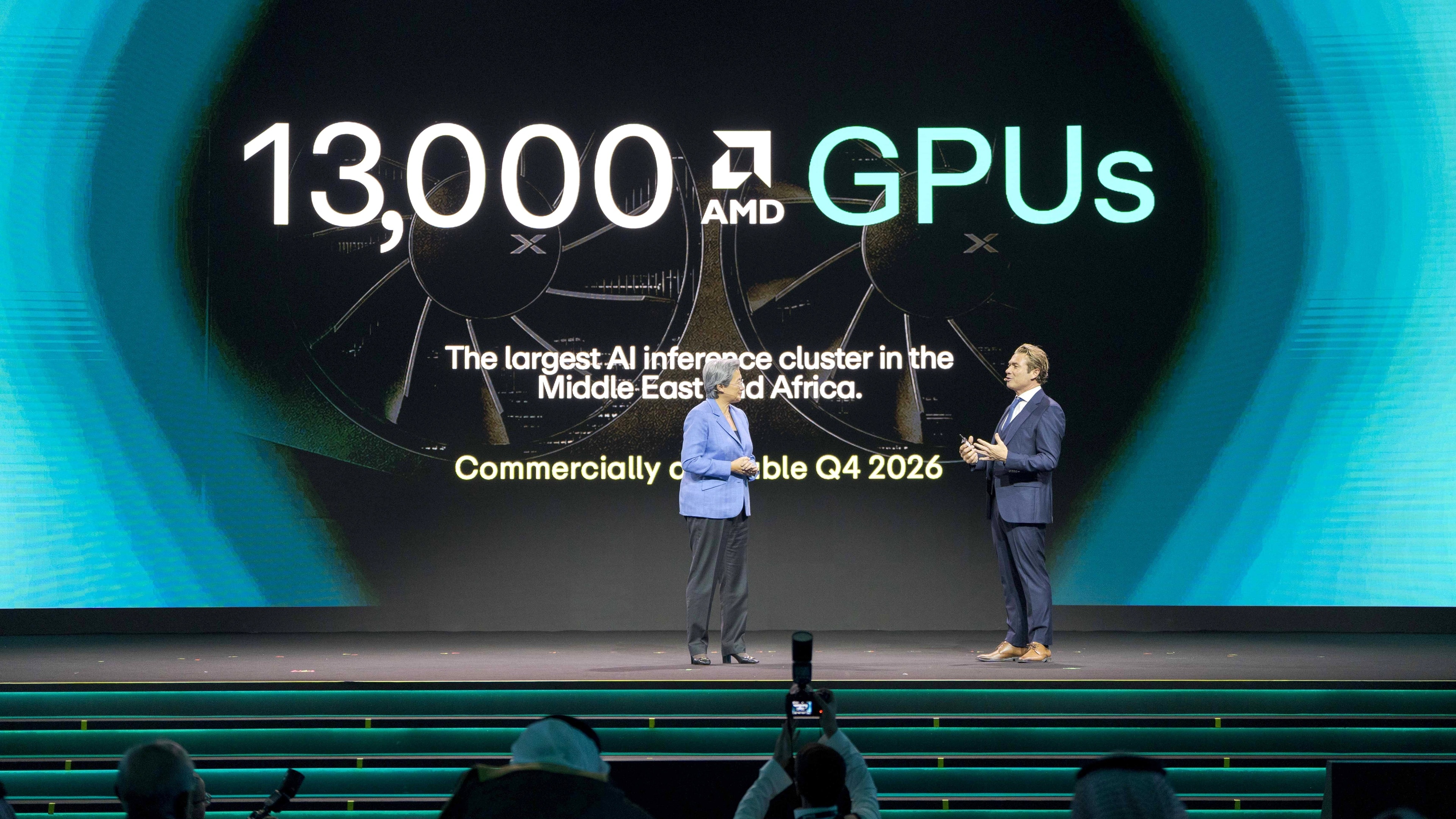
At LEAP 2026, AMD’s role helping build open AI infrastructure and turn investments into measurable business and economic value was on display.
September 09, 2026
-
Optimize SQL Server Costs with AMD on AWS
Optimize SQL Server licensing costs on AWS with AMD-powered Amazon EC2 and Amazon RDS instances while maintaining performance.
September 03, 2026
-
The Data Center Math has Changed
Run more work on fewer servers to reduce power, space and licensing costs while creating capacity for what comes next.
September 02, 2026






Footnotes
- Google Cloud Blog: C4D now GA: up to 80% higher performance for your business-critical workloads
- Google Cloud Blog: N4D now GA: Gain up to 3.5x price-performance for scale-out workloads
- Google Cloud Blog: H4D VMs: Next-generation HPC-optimized VMs
- EPYC-056 - Confidential Computing on EPYC is enabled by the SEV security feature, which was introduced with 1st Generation EPYC in 2017. 2nd Gen EPYC powered the first confidential computing cloud instance in Google Cloud in 2020. EPYC: powers the highest number of confidential VM options available on all major CSPs; Supports both host and guest in the Linux Kernel; Is available on all major Linux Distributions; Has support on VMware; supports confidential containers.
Footnotes
- Google Cloud Blog: C4D now GA: up to 80% higher performance for your business-critical workloads
- Google Cloud Blog: N4D now GA: Gain up to 3.5x price-performance for scale-out workloads
- Google Cloud Blog: H4D VMs: Next-generation HPC-optimized VMs
- EPYC-056 - Confidential Computing on EPYC is enabled by the SEV security feature, which was introduced with 1st Generation EPYC in 2017. 2nd Gen EPYC powered the first confidential computing cloud instance in Google Cloud in 2020. EPYC: powers the highest number of confidential VM options available on all major CSPs; Supports both host and guest in the Linux Kernel; Is available on all major Linux Distributions; Has support on VMware; supports confidential containers.