AMD AI DevDay 2026: The Future of Scalable, Developer-First AI
May 06, 2026
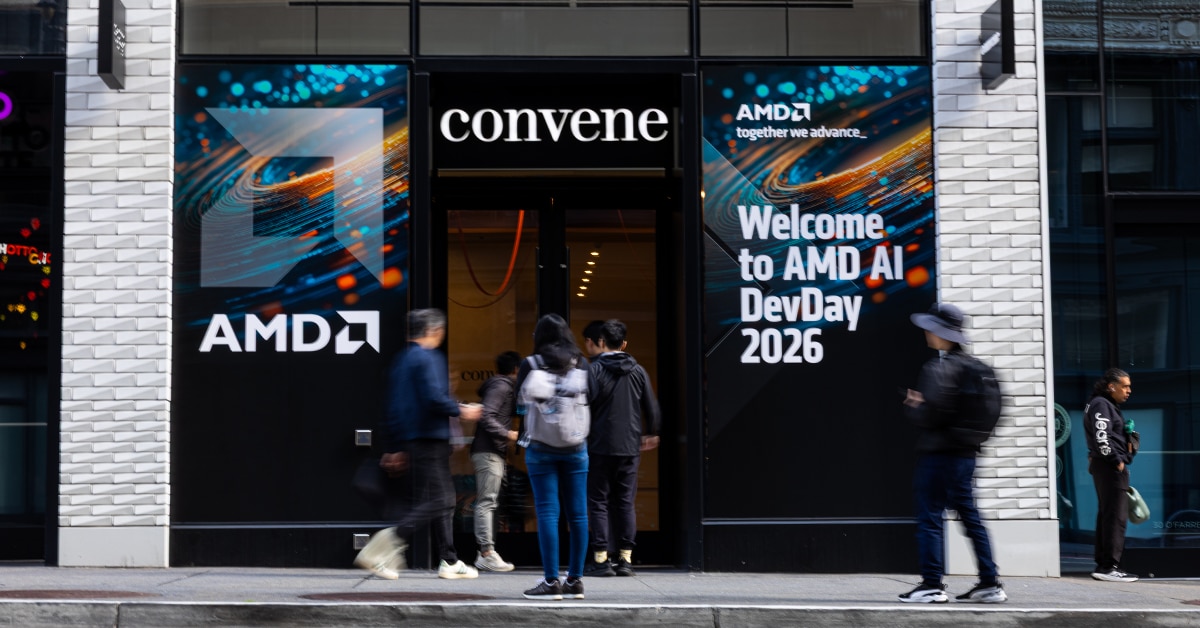
AMD brought together engineers, researchers, and AI builders from across the ecosystem for the AI DevDay 2026 in San Francisco. The event showcased high-signal keynotes, technical deep dives, hands-on workshops, live demos, and a clear message: AMD is pushing toward an open, full-stack AI compute ecosystem for developers.
The Agentic Shift
The industry is rapidly shifting toward agentic AI systems, where models move beyond single-turn responses into multi-step reasoning and execution workflows. As Vamsi Boppana, SVP of AI at AMD, noted:
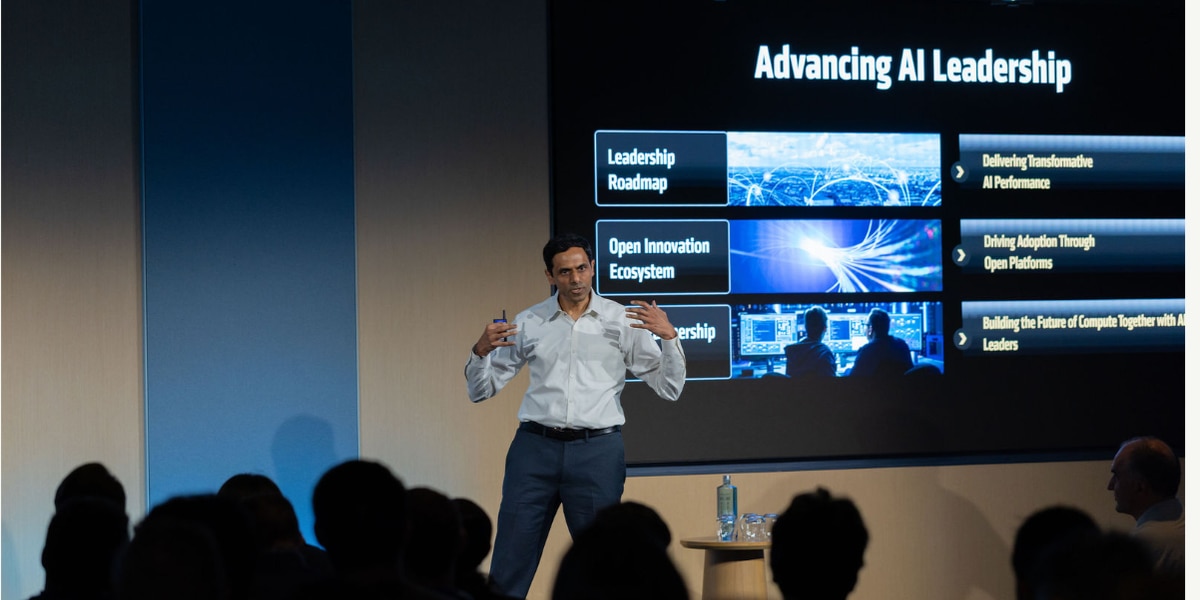
To support this, AMD is expanding the AMD ROCm™ software stack with Day 0 model support, Triton performance CI, nightly Hugging Face integration, and upstream contributions to projects such as vLLM and SGLang.
AMD also introduced AI Endpoint APIs, powered by Fireworks AI and running on the AMD Instinct™ MI350X GPUs, offering OpenAI-compatible access for scalable deployments. Through the AMD AI Developer Program, developers receive 25M free API tokens at launch. The platform includes models like Kimi K2.5 from Moonshot AI for multimodal agent workflows with reasoning traces, and MiniMax M2.7, a Mixture-of-Experts model optimized for complex tool use and multi-step tasks. Both support LoRA fine-tuning, serverless usage, and dedicated GPU deployments.
One Stack, Every Tier
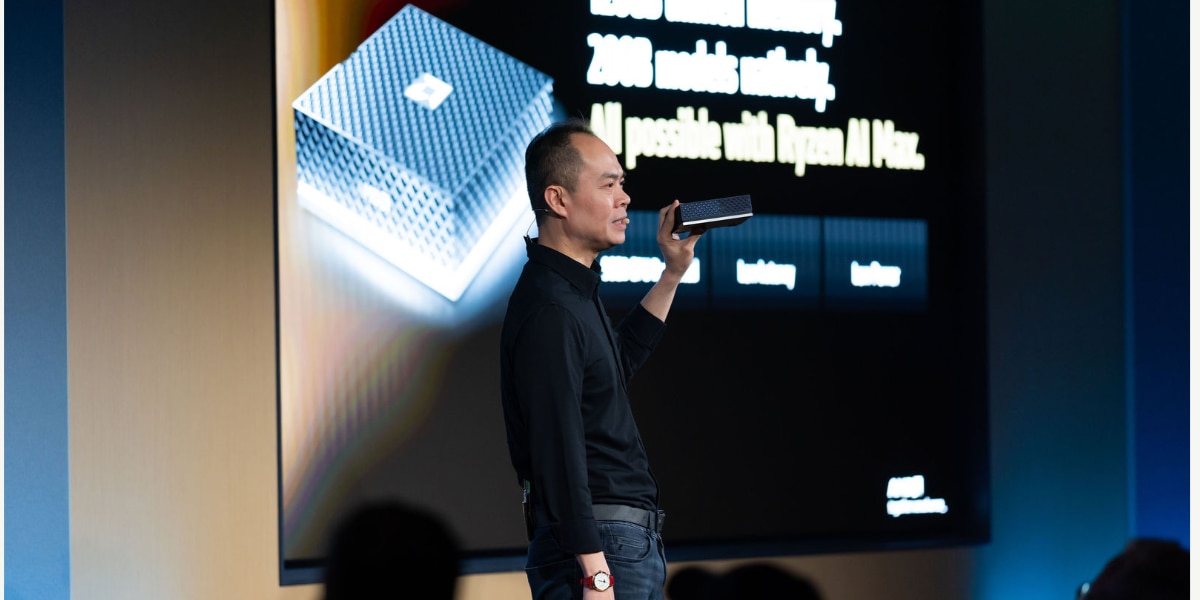
Jack Huynh, Senior Vice President and General Manager of Computing and Graphics at AMD, outlined how the AMD unified hardware and software stack is designed to support developers from local experimentation to large scale deployment. He described a model where the same stack spans all tiers of compute, enabling consistent development workflows across environments. For developers, this translates into what he described as cloud-like development capability under their own control. The ability to build locally, test aggressively, and optimize before deployment reduces friction and improves iteration speed, especially when scaling workloads to production environments.
Anush Elangovan, Vice President of Software Development at AMD, emphasized a foundational principle shaping the software strategy.
This framing highlights how modern AI systems are increasingly defined by throughput efficiency and latency optimization. In agentic workflows, performance is not only about raw compute. It is about how quickly systems can generate, process, and coordinate tokens across multiple steps. Anush also reinforced the broader software philosophy of AMD, noting that open development and community driven engineering are central to improving performance and accelerating innovation across the stack. This approach aligns with the continued investment in ROCm software and open AI tooling ecosystems.
Workshops: Hands On Learning for Every Level
The workshop sessions focused on practical development across agents, robotics, synthetic data, and local AI systems.
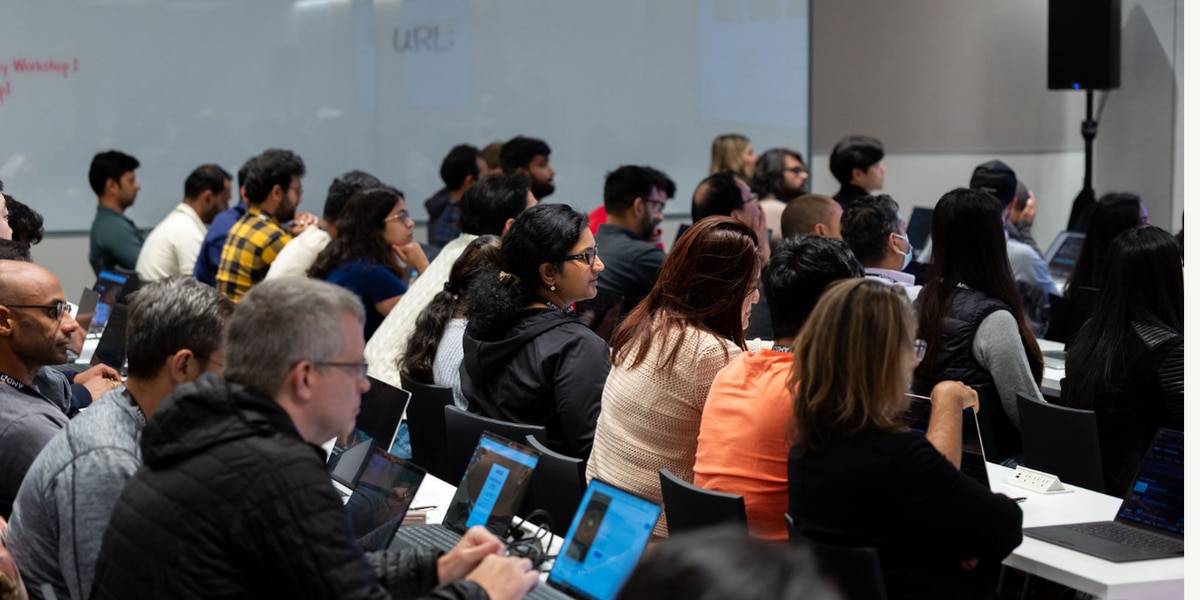
Topics included building personal AI agents using open-source models, synthetic data generation in digital twin environments, reinforcement learning on the Ryzen™ AI PCs, robotics integration for AI desk systems, and scaling AI education through the AMD University Program.
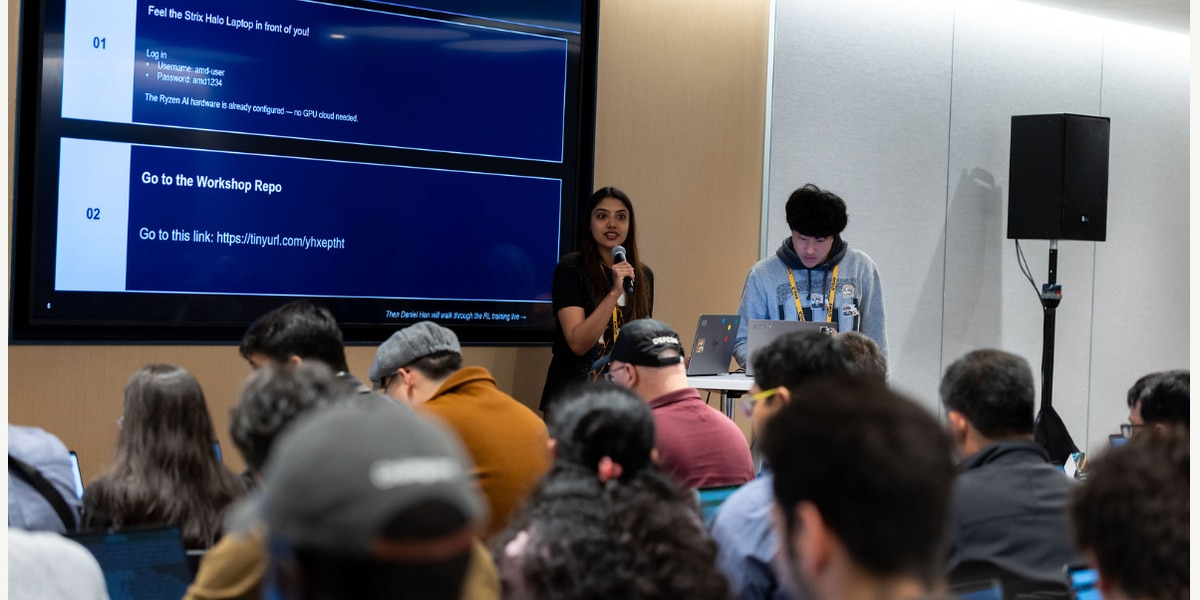
All workshops were fully subscribed and exceeded their intended capacity, reflecting strong developer interest and high engagement across every track.
Demo Showcase: AI in Action
The demo floor highlighted how AMD powered systems are being used in real world applications. Examples included a GPU accelerated real time KYC system for identity verification, robotic learning systems powered by teleoperation data generation, local AI workflow execution through Halo Playbooks, a fully local AI Interviewer with voice interaction, private document intelligence through AnythingLLM, and multimodal agent systems running entirely on device. Across all demos, the consistent direction was clear. AI is moving closer to the user, with more workloads executing locally, securely, and in real time.
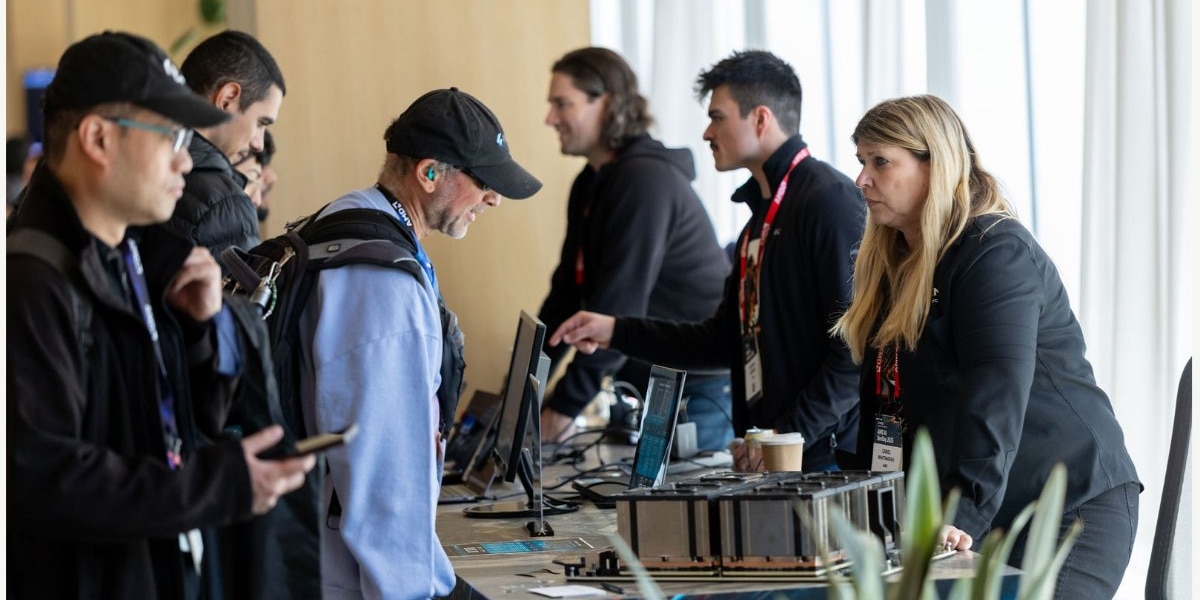
The OpenClaw booth also drew strong engagement, giving attendees a hands-on interactive experience while highlighting the ROCm ecosystem. As part of a social media contest under the hashtag #ROCmClaw, participants had the chance to win $500 in GPU credits, adding an extra layer of excitement and community participation around the demo space. Three winners were selected as part of the contest.
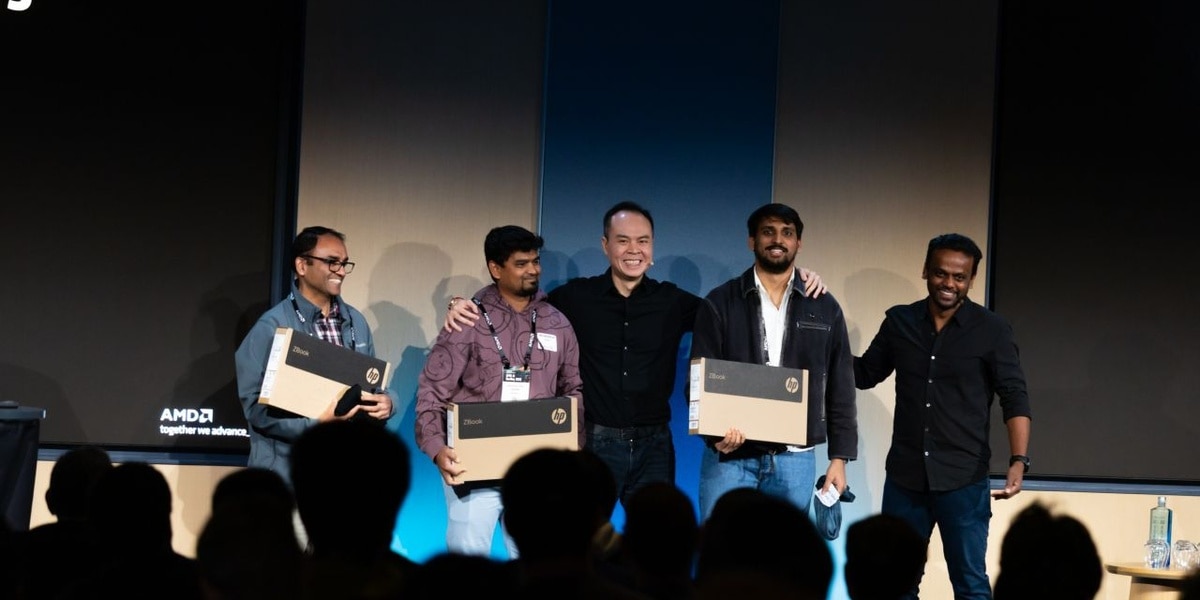
To add to the excitement throughout the day, the event also featured major giveaways. Attendees walked away with the AMD Radeon™ graphics cards and Ryzen™ AI laptops, adding a celebratory close to an already high-energy showcase.
Special thanks to our sponsors Vultr, Modular, and HP for supporting the event and helping bring together the developer and engineering community driving this next phase of AI.
Final Thoughts
AMD AI Dev Day 2026 reinforced a clear direction for the future of AI systems. The industry is shifting toward agentic architecture, scalable infrastructure, and developer centric tooling that spans the full compute stack. AI is no longer defined by model capability alone. It is defined by systems thinking, execution speed, and the ability to build, scale, and optimize across every tier of compute with consistency and control. This shift is already being shaped in practice through tools like AMD AI Playbooks and the broader AMD Developer ecosystem, which are designed to help developers move from experimentation to production with fewer barriers and greater control.
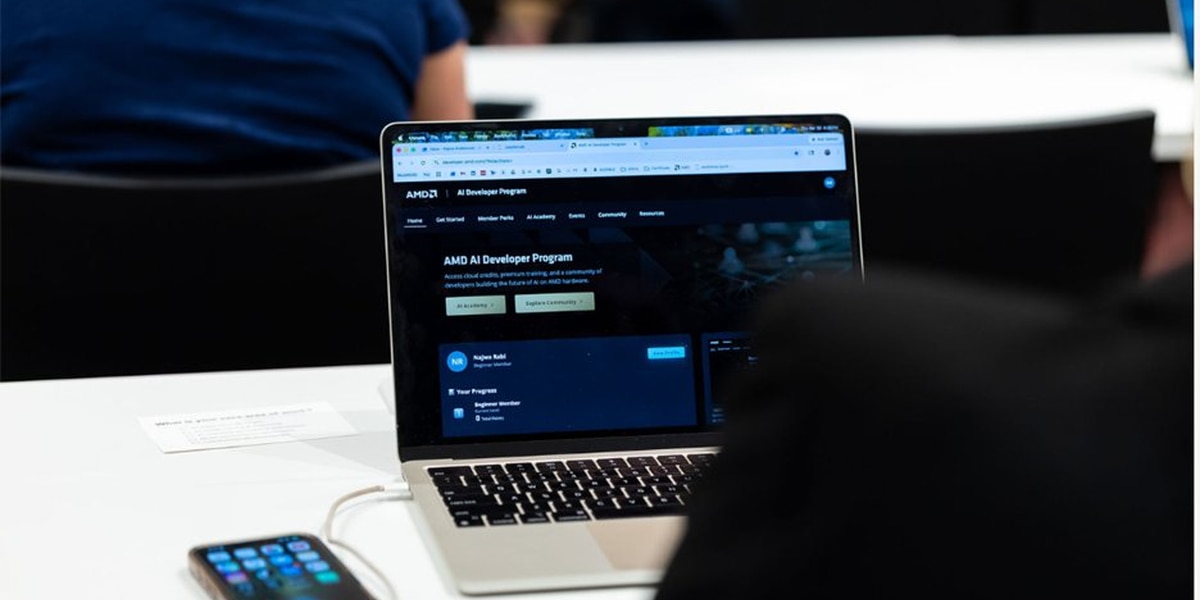
To continue building with AMD, developers can join the AMD AI Developer Program, explore AMD AI Playbooks, and stay connected with the latest tools and resources across the stack.
We look forward to seeing you all at the next Advancing AI event.

Related Blogs
-
MiniCPM Day 0 Support Across AMD Hardware
Explore Day 0 support for MiniCPM-V 4.7 on AMD Radeon™ GPUs, Ryzen™ AI Max processors, and Ryzen™ AI NPUs for on-device AI inference.
October 14, 2026
-
Long Context, One Node: Serving GLM-5.3-FP8 on MI300X with DP8+EP8 — ROCm Blogs
Learn how to serve GLM-5.3-FP8 on one AMD Instinct™ MI300X node with DP8+EP8 and vLLM v0.28 for long-context workloads, and compare it with TP=8.
October 13, 2026
-
Meet the Next AMD Ryzen™ AI Halo
Meet the next AMD Ryzen™ AI Halo developer platform, powered by the AMD Ryzen™ AI Max+ PRO 495 processor. Run larger local LLMs, up to 300B parameters, thanks to the 192GB of unified memory that comes on the new platform.
October 12, 2026
-
AMD AI NIC™ Technology Driving AI-Ready Ethernet
Learn how AMD AI NIC™ technology helps organizations build AI-ready Ethernet networks with open standards, programmability, and transport innovation.
October 11, 2026
-
Kimi K3 on AMD Instinct GPUs with TokenSpeed
TokenSpeed delivers fast, agentic LLM inference on AMD Instinct™ MI355X GPUs, with optimized kernels and leading Kimi K3 performance.
October 09, 2026
-
scikit workloads with AOCL Data Analytics
Accelerate supported scikit-learn workloads with AOCL-Data Analytics while keeping your existing Python code and familiar scikit-learn APIs.
October 09, 2026
-
MangoBoost Delivers Open AI Models Powered by AMD
Mango Inference a serverless inference service providing production-ready access to open models powered by AMD Instinct™ GPUs and AMD ROCm™ software
October 09, 2026
-
MoRI UMBP Empowers AMD Instinct GPUs
See how UMBP, MoRI and SGLang optimize KV cache reuse to boost AMD Instinct™ MI355X GPU agentic AI performance and cost efficiency
October 09, 2026