AMD Ryzen™ AI PRO 400 Series CPUs Deliver Advanced AI for Desktops
Mar 02, 2026
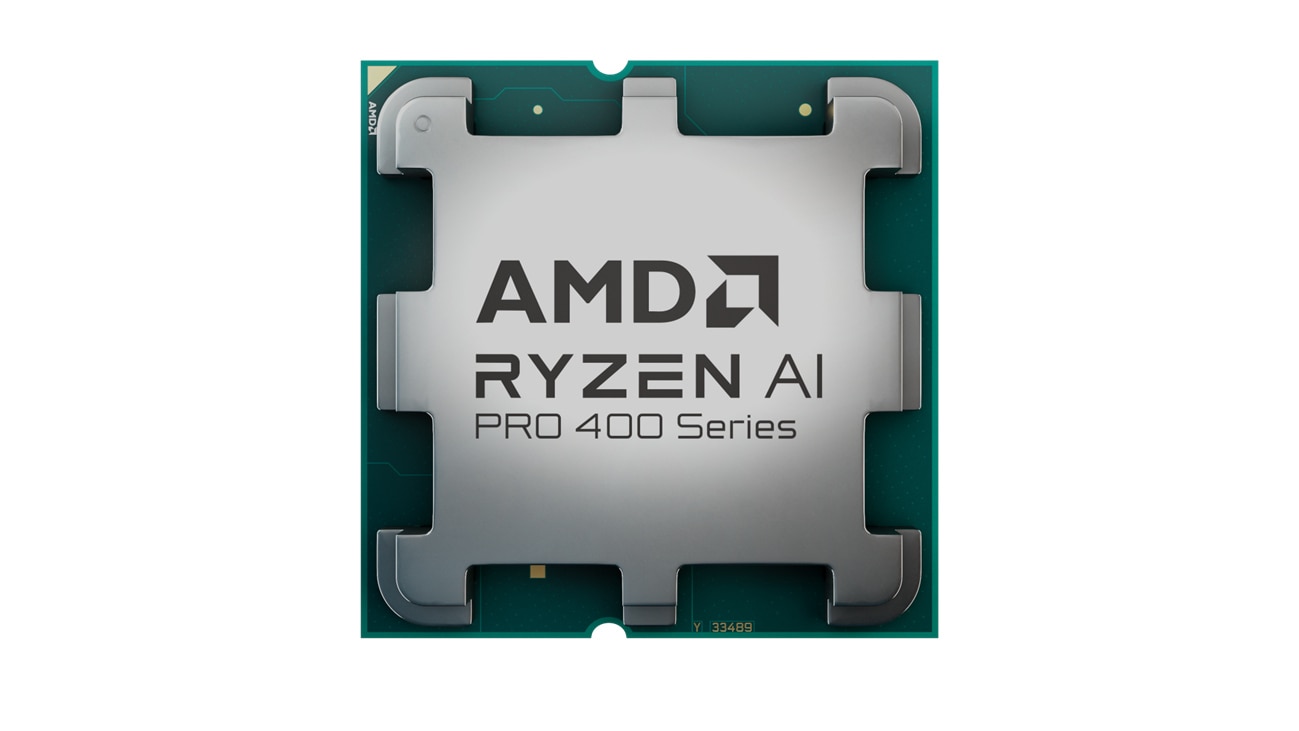
On March 2 at MWC 2026, AMD is bringing Ryzen™ AI PRO 400 Series processors to the AM5 desktop platform. These new CPUs provide commercial PCs with the advanced on-device AI capabilities corporate customers have come to expect from their mobile devices while including AMD PRO features IT staff can rely on for remote fleet management and enterprise-grade security.
As AI PC adoption rises, ITDMs must define and standardize the baseline level of AI PC performance they wish to adopt. Up until now, those conversations have focused almost entirely on mobile systems, but I'd argue next-generation AI integration for commercial desktops is critical for three reasons.
First, it allows IT staff to plan a single refresh and rollout without splitting software compatibility by system form factor. Fragmentation is a perennial problem in fleet refresh cycles, and the issues it causes tend to appear well after adoption. Staggered and incomplete system swaps can cause problems when an organization tries to standardize its system imaging protocols, security suites, and application support across multiple hardware generations. Standardizing AI performance and NPU support across desktops and laptops avoids this problem.
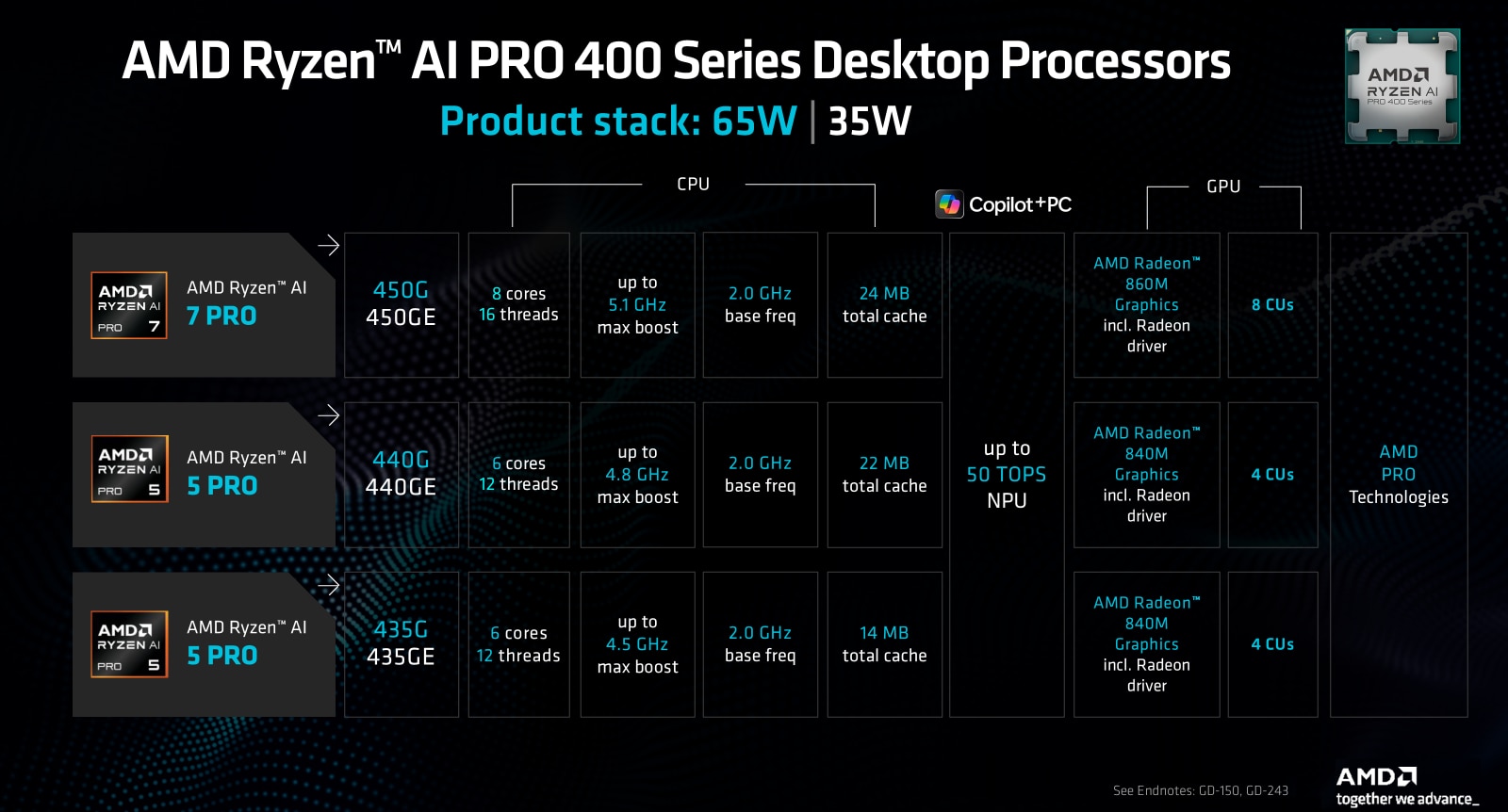
Second, it pairs AI capabilities with the known strengths of desktop platforms. Where mobile systems need to balance performance, battery life, and system heat, desktops tend to have more headroom for higher performance. The NPU inside AMD Ryzen™ AI PRO 400 Series processors offers up to 50 TOPS of AI performance and qualifies as a Microsoft Copilot+ PC-capable processor. Customers, therefore, get the best of both worlds: desktop flexibility and performance, paired with the same robust AI support AMD mobile processors have already established.
Finally, desktop memory upgrades tend to be less expensive than their mobile counterparts. Memory prices are currently quite high, and many laptops have moved to soldered memory configurations that cannot be expanded post-purchase. Desktop PCs based on the AM5 platform, in contrast, use standard DDR5 and can be upgraded with additional memory when prices eventually fall. Companies trying to balance AI PC availability against higher refresh costs may find desktop systems an attractive alternative.
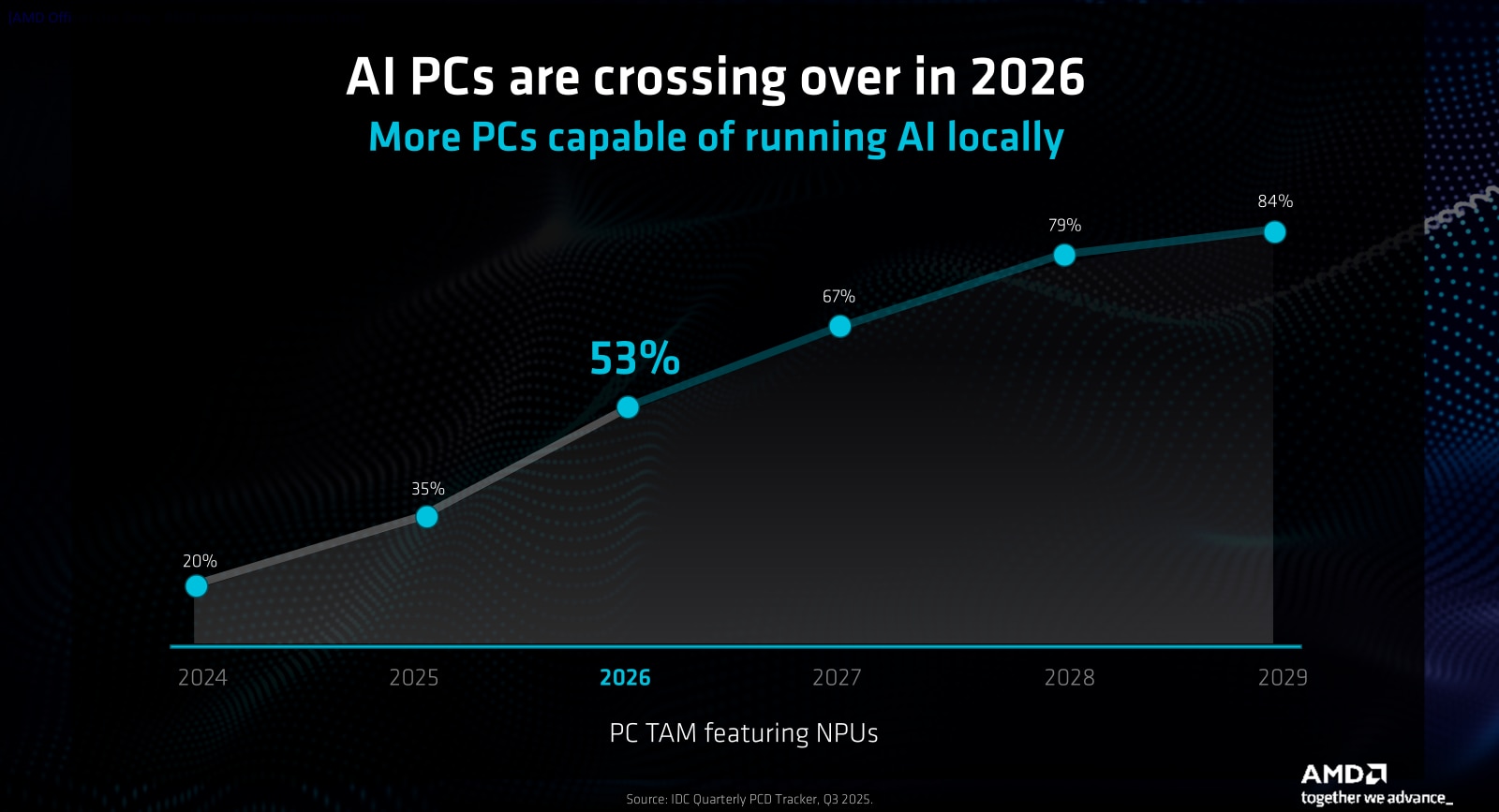
As the chart above shows, 2026 is an important inflection point for overall AI PC adoption as these new systems cross the 50 percent threshold. By 2029, IDC predicts over 80% of PCs are expected to be AI PCs and to feature an integrated neural processor (NPU). As AI PCs move from a minority of the market to a commanding majority, software support and OS integration will follow apace. AMD Ryzen AI PRO 400 Series processors are available in multiple configurations to help companies balance varying CPU and GPU requirements against a single NPU configuration
Measuring the Value of AI and AI PCs
AI and AI PCs are new enough that comprehensive assessments of their productivity potential are still relatively thin on the ground. AMD has partnered with Principled Technologies and Signal65 to better understand the advantages these technologies can offer -- not just in the abstract but mapped to different personas with workloads and responsibilities that reflect the assignments many of us engage with on a daily basis. We've evaluated four thus far: Knowledge workers, tech experts, power users, and road warriors. Road warriors are presumed to be mobile-first professionals, but the other three categories apply equally to all PC form factors.
We expect to evolve this persona project as software support for AI and NPUs improves and use cases are refined, but the initial reports point to significant improvements, even at this early stage. Power users (modeled as project managers), can save up to 16.6 hours per week. Tech experts and knowledge worker modeling suggests similar gains. The particulars vary according to each persona, but amount of time saved per week is significant in every case.
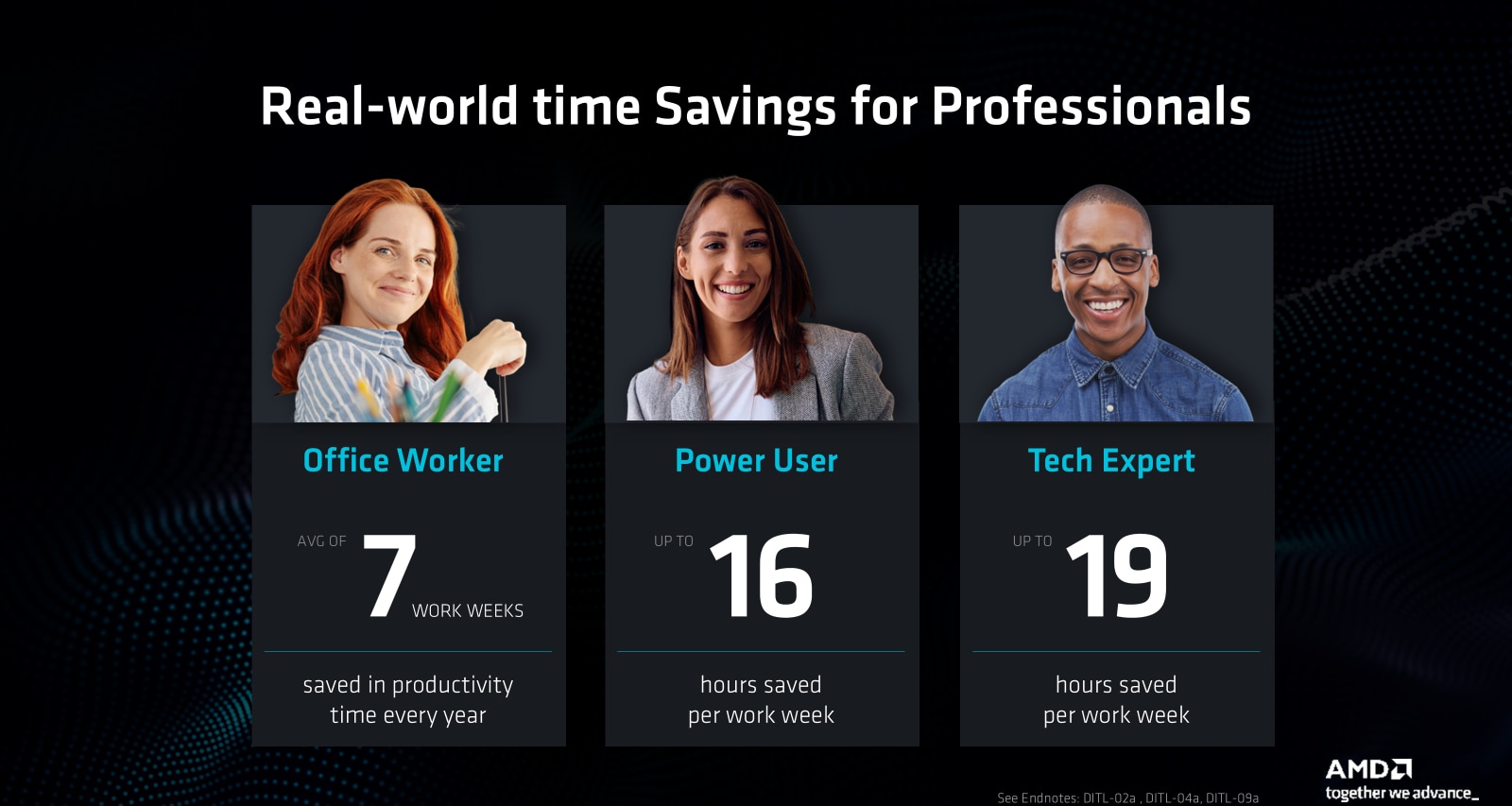
These improvements echo what we've heard from customers. AI is already powerful and useful at the individual level and across teams, and AMD Ryzen AI PRO 400 Series desktop processors extend these benefits to more users. AI rollouts are naturally going to feel a bit uncertain given how new artificial intelligence is, but none of that uncertainty should be coming from your technology and OEM partners. With AMD Ryzen AI 400 Series processors, none of it has to.
Feel free to schedule a meeting at MWC or just stop by Stand 2M61 in Hall 2 if you'd like to talk about AI PCs, discuss the AMD EPYC™ 8005 server CPUs we just announced, or learn more about commercial AI deployments and how AMD PRO processors can help you achieve your business goals.
GD-150: Boost Clock Frequency is the maximum frequency achievable on the CPU running a bursty workload. Boost clock achievability, frequency, and sustainability will vary based on several factors, including but not limited to: thermal conditions and variation in applications and workloads. GD-150.
GD-243: Trillions of Operations per Second (TOPS) for an AMD Ryzen processor is the maximum number of operations per second that can be executed in an optimal scenario and may not be typical. TOPS may vary based on several factors, including the specific system configuration, AI model, and software version. GD-243.
DITL-02a: Based on the Signal65 whitepaper entitled "Measuring Modern AI PCs: Accelerating the Modern Office Worker" (https://signal65.com/research/measuring-modern-ai-pcs-accelerating-the-modern-office-worker/). Testing by Signal65 (3rd party) was done as of September 2025 by measuring various tasks with and without the assistance of a corresponding AI application and was done on a Lenovo ThinkPad T14s Gen 6 with an AMD Ryzen™ AI 7 PRO 360 processor @22W, Radeon™ 880M graphics, 32GB RAM, 1TB SSD, VBS=ON, Windows 11 Pro. An "AI-enabled PC" is defined as a PC that can run AI applications and has at least 40 TOPS. The "typical office worker" is defined as an individual who utilizes productivity applications, manages daily communications typical in an office setting (e.g., email correspondence), and collaborates with others across various office-centric tasks. The office worker workflows (and corresponding AI applications) that were measured include: summarization of emails (Microsoft Copilot), creating notes in relation to Microsoft Teams calls (Microsoft Copilot), protecting against phishing attack emails (Bufferzone), presentation updates (Click to Do), ending emails with various adjustments (Microsoft Copilot), and gathering feedback on documents (LM Studio). System manufactures may vary configurations yielding different results. DITL-02a.
DITL-04a: Based on the Principled Technologies whitepaper entitled "AMD Ryzen AI Knowledge Worker Performance" (https://www.principledtechnologies.com/AMD/Ryzen-AI-power-user-performance-1025-v2.pdf). Testing by Principled Technologies (3rd party) was done as of September 2025 with and without the assistance of a corresponding AI application and on an HP Elitebook X G1a 14 AI with an AMD Ryzen™ AI 9 HX PRO 375 processor, Radeon™ 890M graphics, 32GB RAM, 1TB SSD, VBS=ON, Windows 11 Pro. An "AI-enabled PC" is defined as a PC that can run AI applications and has at least 40 TOPS. The "typical power user" is defined as an information-focused professional who spends their work-days managing communication, documentation, planning and coordination within various teams across projects (e.g., project manager, business analyst, etc.). The typical power user workflows (and corresponding AI applications) that were measured include: summarization of emails (Microsoft Copilot), creating notes in relation to Microsoft Teams calls (Microsoft Copilot), composing of an email (Microsoft Copilot), creating a Gantt chart in Microsoft Excel (Microsoft Copilot), summarizing comments on a JIRA ticket (Atlassian Intelligence), and generating a project plan (Microsoft Copilot). A typical power user's work week is defined as follows: summarization of emails (20x weekly iterations), creating notes in relation to Microsoft Teams calls (20x weekly iterations), composing of an email (40x weekly iterations), creating a Gantt chart in Microsoft Excel (1x weekly iteration), summarizing comments on a JIRA ticket (10x weekly iterations), and generating a project plan (1x weekly iteration).System manufactures may vary configurations yielding different results. DITL-04a.
DITL-09a: Based on the Principled Technologies whitepaper entitled "AMD Ryzen AI tech expert performance" (https://www.principledtechnologies.com/AMD/Ryzen-AI-tech-expert-performance-1025.pdf) was done as of September 2025 with and without the assistance of a corresponding AI application and on Testing by Principled Technologies (3rd party) was done as of September 2025 with and without the assistance of a corresponding AI application and on an HP Elitebook X G1a 14 AI with an AMD Ryzen™ AI 9 HX PRO 375 processor, Radeon™ 890M graphics, 32GB RAM, 1TB SSD, VBS=ON, Windows 11 Pro. An "AI-enabled PC" is defined as a PC that can run AI applications and has at least 40 TOPS. The "typical tech expert" is defined as a highly technical professional that divide their work days between periods of coding (or other technical work), communicating with colleagues/clients via email, and staying on top of administrative tasks (e.g., software developers). The typical tech expert workflows/tasks (and corresponding AI applications) that were measured include: summarization of emails (Microsoft Copilot), creating notes in relation to Microsoft Teams calls (Microsoft Copilot), summarizing comments on a JIRA ticket (Atlassian Intelligence), building a predefined application (VS Code LLM hosted by Lemonade Server), and drafting and reviewing a document (LM Studio). A typical tech expert's weekly workflow is defined (for purposes of this claim) as follows: summarization of emails (25x weekly iterations), creating notes in relation to Microsoft Teams calls (10x weekly iterations), summarizing comments on a JIRA ticket (25x weekly iterations), building a predefined application (1x iteration every two months), and drafting and reviewing a document (3x weekly iterations). System manufactures may vary configurations yielding different results. DITL-09a.

Related Blogs
-
Kimi K3 on AMD Instinct GPUs with TokenSpeed
TokenSpeed delivers fast, agentic LLM inference on AMD Instinct™ MI355X GPUs, with optimized kernels and leading Kimi K3 performance.
October 09, 2026
-
MangoBoost Delivers Open AI Models Powered by AMD
Mango Inference a serverless inference service providing production-ready access to open models powered by AMD Instinct™ GPUs and AMD ROCm™ software
October 09, 2026
-
Pre-Training Hybrid LLMs from Scratch in Primus on AMD Instinct™ GPUs — ROCm Blogs
Pre-train hybrid LLMs mixing MLA attention with Gated DeltaNet, Kimi Delta Attention and Mamba2 mixers on AMD Instinct MI355X GPUs, with open recipes.
October 07, 2026
-
DI Series: Serving Kimi-K3 MXFP4 Wide-EP Disaggregated on AMD Instinct MI300X and MI325X — ROCm Blogs
Learn how to serve a 1.4 TiB Kimi-K3 MXFP4 mixture-of-experts model disaggregated across AMD Instinct MI300X and MI325X GPUs.
October 07, 2026
-
AMD Instinct MI455X vs MI355X: A Technical Look at the Advancing AI 2026 Inference Numbers — ROCm Blogs
Explore the MI455X vs MI355X inference numbers from Advancing AI 2026, and learn how each benchmark was measured and what it really means.
October 07, 2026
-
How Agentic AI Is Expanding the Role of the DPU
As agentic AI drives more stateful workloads, DPUs are becoming critical for networking, storage, KV-cache management, and infrastructure efficiency.
October 05, 2026
-
MoRI UMBP Empowers AMD Instinct GPUs
See how UMBP, MoRI and SGLang optimize KV cache reuse to boost AMD Instinct™ MI355X GPU agentic AI performance and cost efficiency
October 01, 2026
-
Automating Performance Bottleneck Identification with the TraceLens Agent — ROCm Blogs
TraceLens Agent is an agentic workflow that examines GPU traces to deliver a prioritized optimization report, detailing root causes and fixes.
September 29, 2026