

AMD Instinct™ MI430X GPUs in the News



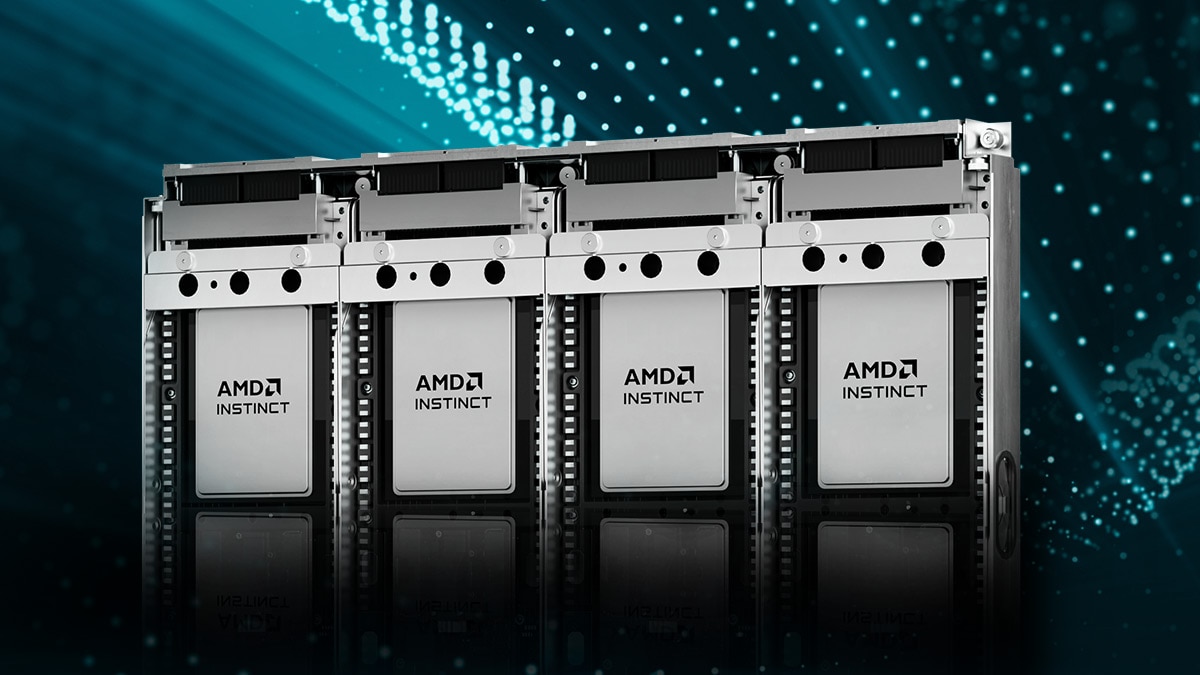
AMD Instinct™ MI430X GPUs
AMD Instinct™ MI430X GPUs are designed for scientific HPC and sovereign AI, combining FP64 accuracy for simulation and modeling with modern AI capability for inference, training, and fine-tuning.
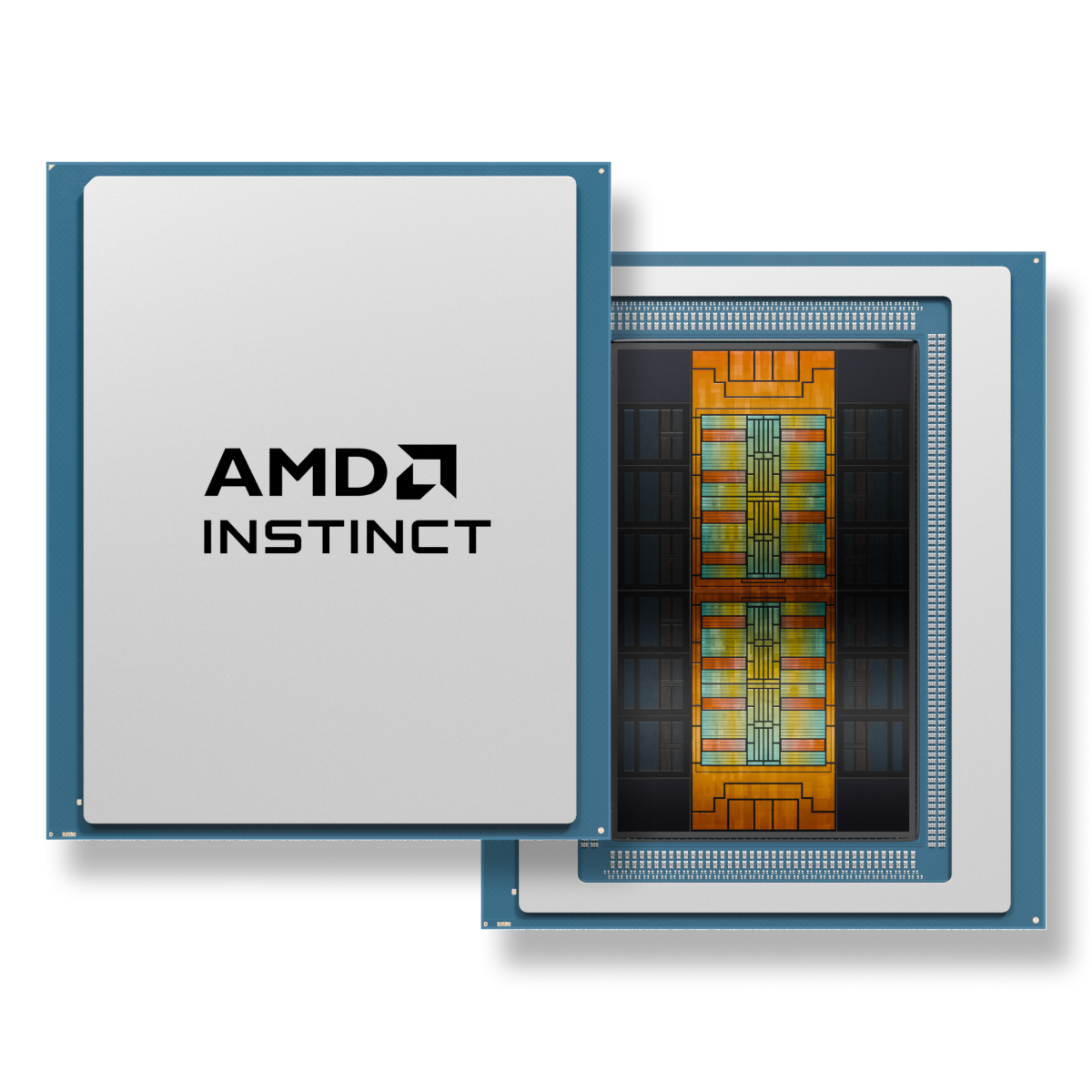
Why AMD Instinct™ MI430X GPUs
AMD Instinct MI430X GPUs offer a heterogeneous compute capable AI-for-Science platform designed for a future where AI, simulation, and data-driven science converge in a single workflow, while preserving scientific trust.
- Industry leading hardware-based FP64 performance1
- Modern AI capabilities supporting scientific AI
- Industry leading memory capacity and bandwidth2
- Open software ecosystem
AMD Instinct™ MI430X GPU Performance
AMD Instinct MI430X
NVIDIA Vera Rubin

AMD Instinct™ GPU Solutions for Key Industries



Built on an Open Software Ecosystem

Case Studies
-
VDURA Advances AI data Infrastructure Performance with AMD
VDURA optimizes AI data infrastructure performance efficiency with AMD EPYC™ Server CPUs, AMD Instinct™ GPUs, and AMD Pensando™ DPUs.
September 30, 2026
-
Orion Pharma Accelerates Drug Discovery with AMD
What does it take to bring AI to the forefront of pharmaceutical research? In this interview, Heikki Käsnänen, Head of Molecular Intelligence and Data…
September 17, 2026
-
Viridien Extends Geoscience-Scale HPC Expertise with AMD
Viridien applies decades of expertise to power scientific discovery and simulation through advanced HPC and AI workloads, enabled by AMD EPYC™ Server …
September 17, 2026
-
Vultr Advances AI Infrastructure as a Service with AMD
Vultr makes AI infrastructure affordable and accessible with cloud GPU and bare metal servers advanced by AMD Instinct™ GPUs and AMD EPYC™ Server CPUs…
August 11, 2026




Frequently Asked Questions
AMD Instinct™ MI430X GPU is a new GPU purpose-built for sovereign AI, scientific computing and high-performance computing (HPC). AMD Instinct MI430X GPU is designed to support converged AI and HPC workloads by combining industry-leading HBM4 memory, high-performance FP64 compute and the open AMD ROCm™ software platform. By offering 288 TFLOPS peak hardware-based FP64 performance, AMD Instinct MI430X is built to help governments, research institutions and national laboratories tackle the world's most demanding simulations and AI applications.
Scientific computing and sovereign AI increasingly require infrastructure capable of supporting both traditional HPC and modern AI. AMD Instinct MI430X enables organizations to consolidate these workloads on a single platform while improving efficiency, simplifying infrastructure and maintaining the openness and flexibility required for national-scale deployments.
For AI gigafactories and high-performance computing centers, AMD Instinct MI430X is designed to deliver the numerical fidelity and throughput required for the most demanding workloads. As next-generation AI models increasingly rely on training data generated from high-fidelity simulations, AMD Instinct MI430X helps researchers and institutions build AI systems on accurate scientific data – enabling greater confidence in AI-driven discovery across fields such as climate science, materials research, nuclear engineering and fluid dynamics.
AMD Instinct™ MI430X GPUs deliver uncompromised accuracy and throughput across converged HPC and AI workflows, with 288 TFLOPS hardware-based FP64 for scientific computing alongside support for modern AI data types and software capabilities. With industry-leading 432GB of HBM4 and 23.3 TB/s memory bandwidth, AMD Instinct MI430X is built for large simulations and memory-intensive models – reducing server count, lowering infrastructure complexity, and improving efficiency when scaling massive datasets.
Yes, the next US DOE/ORNL Discovery system and two European systems the Alice Recoque and Herder systems are expected to be deployed with AMD Instinct MI430X GPUs.
Powered by AMD ROCm™ software, AMD Instinct MI430X provides an open foundation with programming models, compilers, libraries, runtimes, and deployment tools for both HPC and AI. This commitment to open standards supports interoperability and long-term portability across software, system, and networking choices – helping sovereign operators innovate without lock-in.
The AMD Instinct MI430X is estimated to have 8.7X better hardware-based FP64 peak FLOP performance over NVIDIA Vera Rubin.3
The AMD Instinct MI430X GPUs are expected to be available in 2027. More details will be provided in the future.


Stay Informed
Sign up to receive the latest data center news and server content.
Footnotes
- Based on engineering projections by AMD performance labs in July 2026, to estimate peak theoretical precision performance of an AMD Instinct™ MI430X GPU using FP64 (Vector) datatype vs. AMD Instinct MI300X, NVIDIA B200, B300 and Vera Rubin GPUs with FP64 (Vector) datatype. Results subject to change when products are released in market. MI400-001C
- Calculations by AMD Performance Labs in June 2026, based on published memory capacity and memory bandwidth of AMD Instinct™ MI455X and MI430X GPUs vs. the published memory capacity and memory bandwidth specifications of a NVIDIA Vera Rubin GPU. System manufacturers may vary configurations, yielding different results. MI400-004
- Based on engineering projections by AMD performance labs in July 2026, to estimate peak theoretical precision performance of an AMD Instinct™ MI430X GPU using FP64 (Vector) datatype vs. NVIDIA Rubin GPU with FP64 (Vector) datatype. Results subject to change when products are released in market. MI400-001B
- Based on engineering projections by AMD performance labs in July 2026, to estimate peak theoretical precision performance of an AMD Instinct™ MI430X GPU using FP64 (Vector) datatype vs. AMD Instinct MI300X, NVIDIA B200, B300 and Vera Rubin GPUs with FP64 (Vector) datatype. Results subject to change when products are released in market. MI400-001C
- Calculations by AMD Performance Labs in June 2026, based on published memory capacity and memory bandwidth of AMD Instinct™ MI455X and MI430X GPUs vs. the published memory capacity and memory bandwidth specifications of a NVIDIA Vera Rubin GPU. System manufacturers may vary configurations, yielding different results. MI400-004
- Based on engineering projections by AMD performance labs in July 2026, to estimate peak theoretical precision performance of an AMD Instinct™ MI430X GPU using FP64 (Vector) datatype vs. NVIDIA Rubin GPU with FP64 (Vector) datatype. Results subject to change when products are released in market. MI400-001B