


Leadership Performance and Integration for Real-World, Mixed Workloads
AMD Ryzen™ AI Embedded X100 Series processors combine an x86 CPU, a discrete-class integrated GPU (iGPU), and an NPU in a single SoC to deliver high-performance heterogeneous processing for autonomous systems. Built for the demanding compute requirements of physical AI, Ryzen AI X100 Series processors enable deterministic, low-latency performance for applications that need to sense, perceive, and act in real time.
Built for Real Physical AI Workloads
Enables perception, reasoning and control on a single device, for real-world, autonomous workloads
Single-chip Integration
Eliminates the complexity of fragmented architectures by integrating a CPU, GPU, and NPU on a single SoC, minimizing communication latency, power, and cost.
Deterministic, Real-Time Performance
Predictable, low-latency execution for real-time workloads, enabled by a unified memory architecture, virtualization and cache allocation technology.
Scalable, Open Software Approach
Avoid vendor lock-in with the Kria™ AI Robotics Software Suite, featuring an open, fully optimized software stack, including AMD ROCm™ software, and compatible with Linux, Xen Hypervisor, and industry standard AI frameworks.


Performance Built for Embedded Workloads
Power Concurrent Workloads with expected
2.1x
Higher multi-thread CPU Int Throughput vs. Intel Core Ultra Series 3 (CoreMark®)¹
Deliver Immersive Experiences with expected
1.6x
faster graphics vs. Intel Core Ultra Series 3 (Unigine Heaven Pro “ Extreme “)²
Unlock System-Level Performance with up to
1.7x
the memory bandwidth of Intel Core Ultra Series 3
Accelerate Physical AI with up to
1.3x
throughput for Frontier & Foundational VLAs vs. NVIDIA Jetson AGX Orin³
Combine AI with Signal Processing with up to
3x
FP32 compute vs. NVIDIA Jetson T5000
Enhance real-time imaging with average
1.7x
faster beamforming for cardiac ultrasound vs. NVIDIA RTX 4000 Ada⁴
See how the AMD Ryzen AI Embedded X100 Series processors can unlock performance for your design.
Key Applications
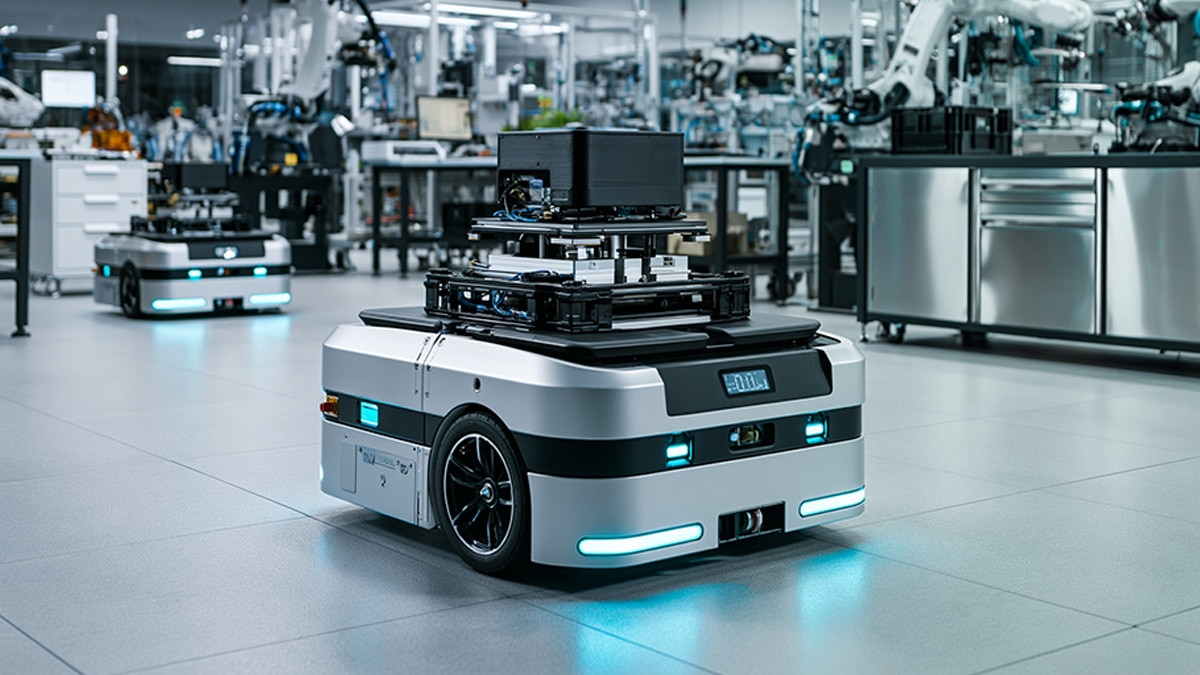
Robotics
Delivering always-on, real-time, deterministic performance for autonomous perception, planning, and control of AMRs, cobots, humanoids, and other robot types.
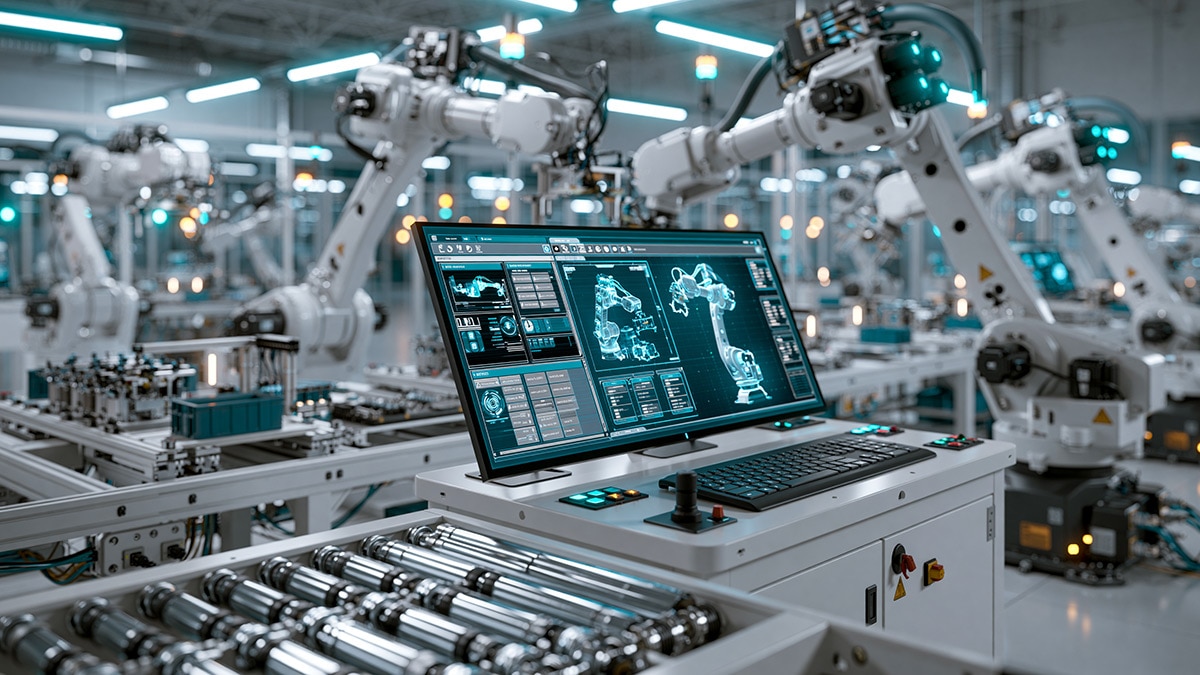
Industrial
Driving multi-sensor processing and workload consolidation in a single chip for industrial PCs, smart retail, and machine-vision applications.
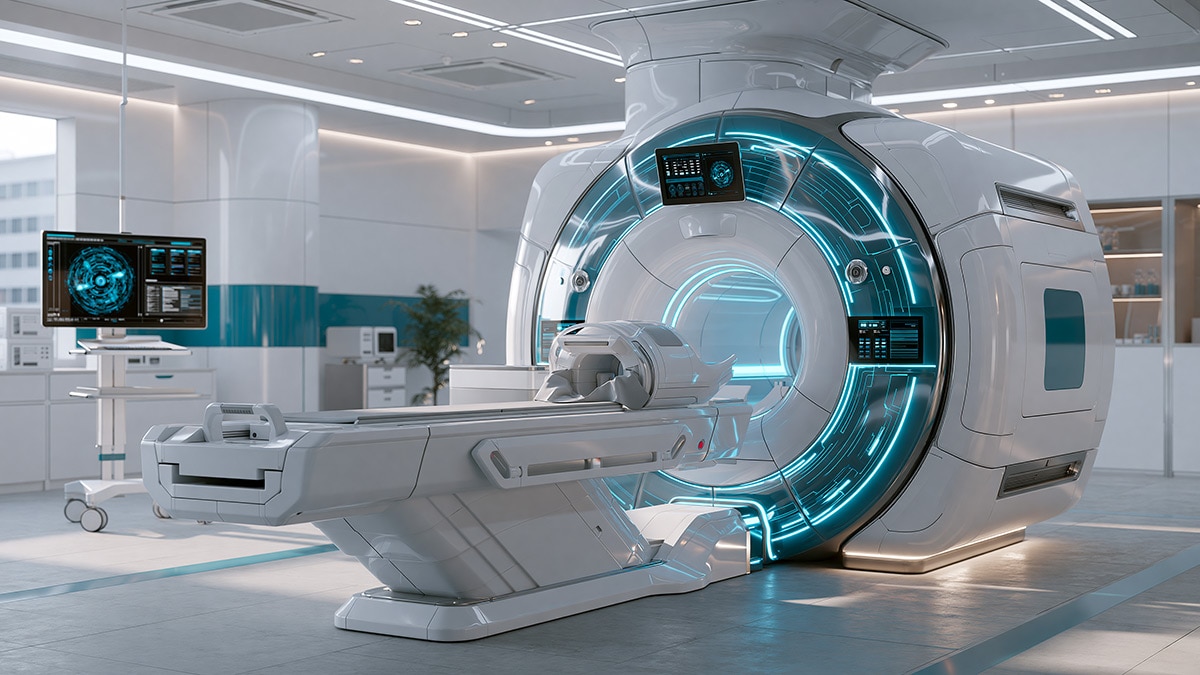
Healthcare
Enabling real-time imaging with AI analytics for enhanced diagnostics and precise, robotic control for minimally invasive procedures.
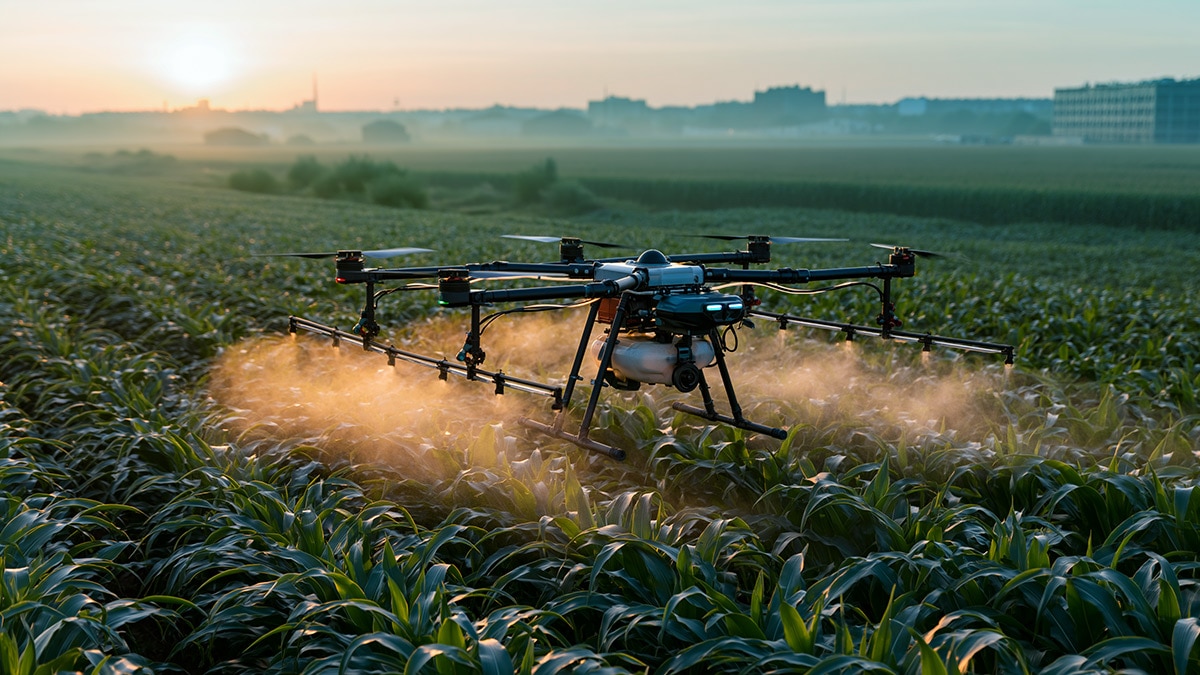
Unmanned Aircraft Systems
Accelerating multi-sensor processing, autonomous navigation, and rapid decision-making for smart farming, infrastructure inspection, and more.

Media Production Workflows
Multichannel compositing and mixing; AI-assisted replays and tagging; Software-defined media processing for broadcast and pro AV applications.

Interactive Entertainment
Enabling advanced multi-display visuals in high-end gaming systems; Real-time personalization and adaptive gameplay.
What the Ecosystem is Saying



Model Specifications
Get Started
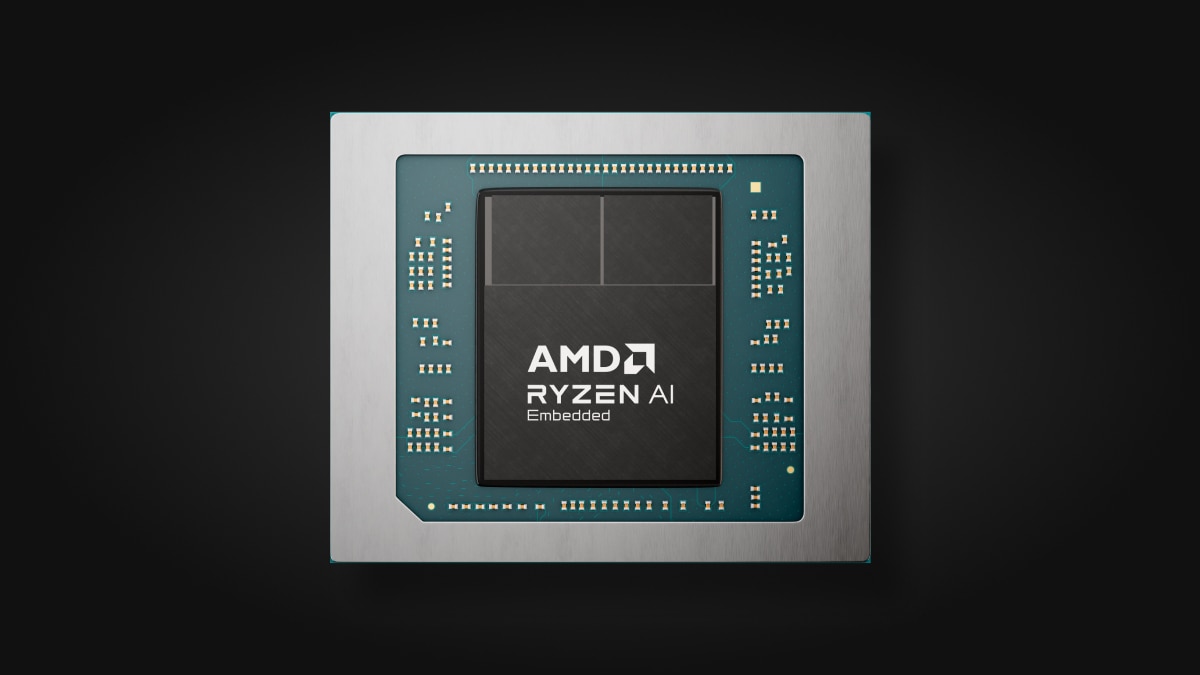
AMD Ryzen AI Embedded X100 Series Processors
Design your own solution with Ryzen AI X100 Series processors, for maximum flexibility and performance.
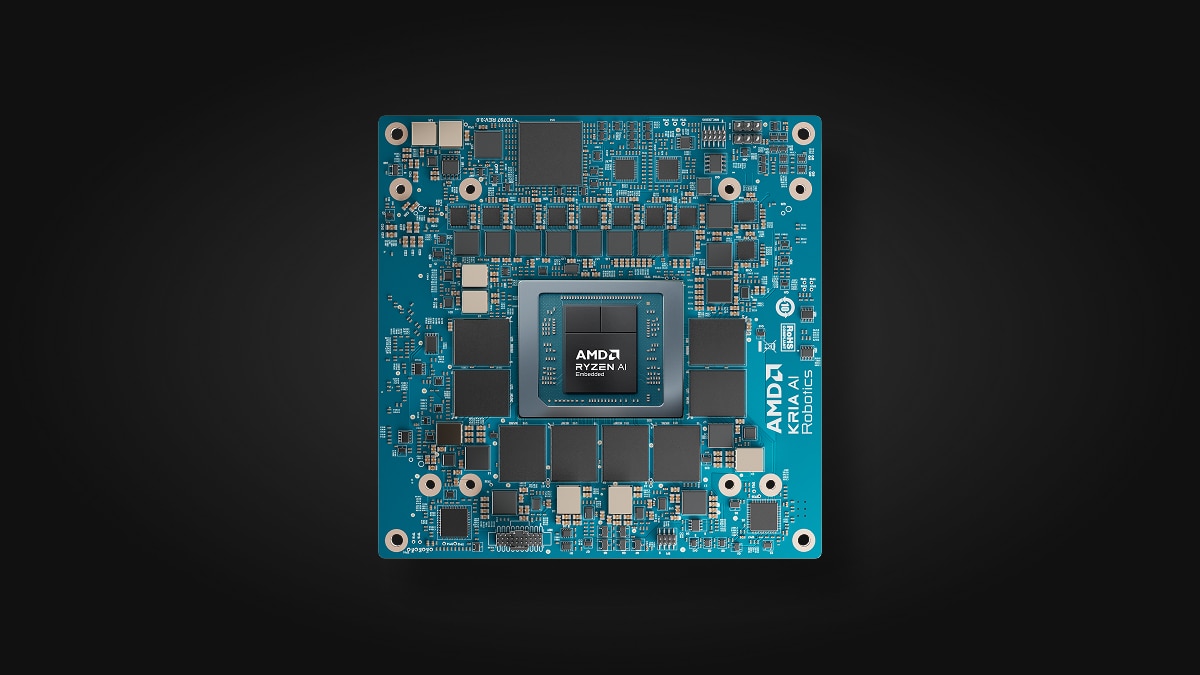
AMD Kria™ AI SOM
Build with AMD Kria AI and partner SOMs for faster time to market.
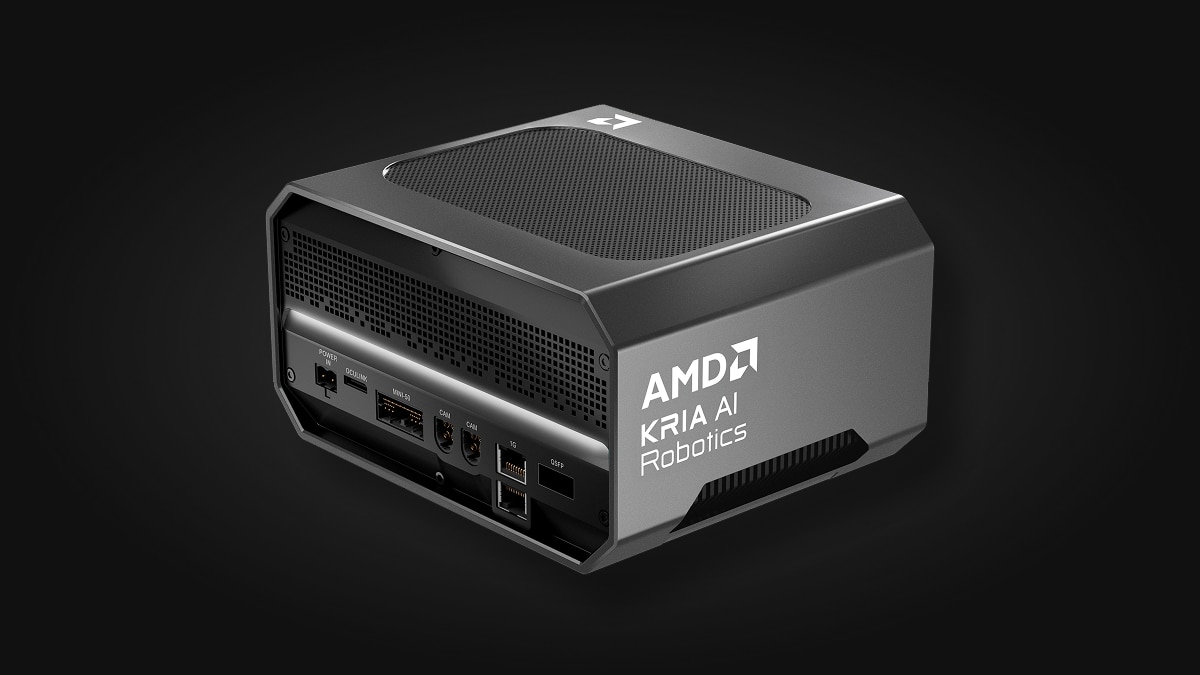
AMD Kria™ AI Robotics Platform
Get started with the AMD Kria AI Robotics Developer Platform and get from concept to prototype quickly.
Ecosystem Partners
AMD Embedded Partners play a key role in accelerating adoption of AMD embedded high performance and adaptive computing technology.




Open Software
AMD ROCm™ Open Software
AMD ROCm software is an open-source GPU computing platform enabling high-performance AI, HPC, and data analytics workloads across AMD accelerators using industry-standard programming frameworks.
AMD Ryzen™ AI Software
AMD Ryzen AI Software is a developer platform enabling AI inference and acceleration on Ryzen AI Embedded Series processors, optimizing performance, efficiency, and deployment across applications.
AMD Robotics Software Suite
AMD Robotics Software Suite is a fully open robotics stack, including off the shelf pipelines and reference designs. It includes multiple SDKs delivering accelerated ROS libraries, virtualization and real-time support, and optimized AI models for physical AI.
Software Ecosystem
AMD ROCm and Ryzen AI software solutions are built on open standards and provide compatibility across various open-source ML tools and frameworks.















Contact Us
Stay Informed
Sign up to receive the latest embedded news and content.
Contact an Embedded Expert
Need further help? Fill out our form to be contacted by the AMD Embedded team.
Footnotes
- Measurements and projections conducted by AMD as of May 2026 on an AMD Ryzen AI Max+ 395 processor (OPN 100-000002199) configured to reflect Ryzen AI Embedded X199 specifications (AMD Maple CRB, 5.1 GHz CPU, 2.9 GHz GPU, with sustained operation at 45W TDP/sPPT/fPPT, STAPM disabled and 64 GB soldered LPDDR5X-8000), compared to an Intel Core Ultra X7 358H (MSI Prestige 16 Flip AI+ C3MTG MS-2622, 5.1 GHz CPU, 2.5 GHz GPU, PL1 = 45W, PL2 = 64W, MSI BIOS E2622IMS.10E, 32 GB LPDDR5X-8533, measured 30W OEM Sustained Power Limit). Results reflect projected relative CoreMark v1.01 multi-thread performance on Ubuntu 24.04, comparing measured AMD performance at 45W sustained power to 45W Intel performance projected from 30W sustained power measurements, using scaling factors derived from public benchmark data for the 358H. System manufacturers may vary configurations, yielding different results. Results may vary based on configuration, settings, usage, and other factors. (REX-007)
- Measurements and projections conducted by AMD as of May 2026 on an AMD Ryzen AI Max+ 395 processor (OPN 100-000002199) configured to reflect Ryzen AI Embedded X199 specifications (AMD Maple CRB, 5.1 GHz CPU, 2.9 GHz GPU, with sustained operation at 45W TDP/sPPT/fPPT, STAPM disabled and 64 GB soldered LPDDR5X-8000), compared to an Intel Core Ultra X7 358H (MSI Prestige 16 Flip AI+ C3MTG MS-2622, 5.1 GHz CPU, 2.5 GHz GPU, PL1 = 45W, PL2 = 64W, MSI BIOS E2622IMS.10E, 32 GB LPDDR5X-8533, measured 30W OEM Sustained Power Limit). Results reflect projected relative performance running the Unigine Heaven 4.0 Pro “Extreme” preset on Ubuntu 24.04, comparing measured AMD performance at 45W sustained power to 45W Intel performance projected from 30W sustained power measurements, using scaling factors derived from public benchmark data for the 358H. System manufacturers may vary configuration, yielding different results. Results may vary based on configuration, settings, usage, and other factors. (REX-004)
- Based on AMD internal testing as of May 2026, an AMD Ryzen AI Max+ 395 processor system—configured to reflect Ryzen AI Embedded X199 specifications (5.1 GHz CPU, 2.9 GHz GPU, 55W TDP with sustained operation at 55W TDP/sPPT/fPPT, and LPDDR5X-8533) was used to measure projected inference throughput. Results are compared against a similarly configured NVIDIA AGX Orin 64 GB at 60W TDP and reflect the geometric mean of performance across GR00T N1.5, SmolVLA, Pi0 DROID, Pi0.5 DROID, and OpenVLA models using FP16 quantization. System manufacturers may vary configurations, yielding different results. Results may vary based on configuration, settings, usage, and other factors. (REX-001)
- Based on Internal testing by AMD as of July 2026. Ryzen AI X199 performance evaluated using AMD Ryzen AI Max+ PRO 395 and AMD Radeon 8060S graphics as a proxy, configured with 128 GB of LPDDR5x 8000 MT/s memory, compared to a system configured with AMD Ryzen 7 9800X3D CPU and a discrete NVIDIA RTX 4000 SFF Ada GPU with 20 GB GDDR6 VRAM. Both configurations running Ubuntu Linux 24.04.3 with Container OS Debian GNU/Linux 13 with Vulkan for GPU acceleration. Beamforming performance compares total time from RF data copy to Display for systems with 128 channels at 50mm scan depth and varying scan angles. 1.7x calculated as the average time improvement across multiple scan types including Planewave Hyperechoic Scatterers, Planewave Hypoechoic, Planewave Carotid Cross, Planewave Carotid Long, and Planewave Simulation Resolution Distortion. System manufacturers may vary configurations, yielding different results. Results may vary. (REX-015)
© 2026 Advanced Micro Devices, Inc. All rights reserved. AMD, the AMD Arrow logo, Kria, Ryzen, ROCm, and combinations thereof are trademarks of Advanced Micro Devices, Inc. CoreMark is a registered trademark of the Embedded Microprocessor Benchmark Consortium. Intel and Intel Core are trademarks of Intel Corporation or its subsidiaries. Linux is the registered trademark of Linus Torvalds in the U.S. and other countries. NVIDIA and NVIDIA Jetson are trademarks and/or registered trademarks of NVIDIA Corporation in the U.S. and other countries. OpenGL and Vulkan are trademarks of the Khronos Group Inc. PyTorch is a trademark of The Linux Foundation. Ubuntu and the Ubuntu logo are registered trademarks of Canonical Ltd. Xen is a trademark of the Linux Foundation. Other product names used herein are for identification purposes only and may be trademarks of their respective owners. Certain AMD technologies may require third-party enablement or activation. Supported features may vary by operating system. Please confirm with the system manufacturer for specific features. No technology or product can be completely secure.
Footnotes
- Measurements and projections conducted by AMD as of May 2026 on an AMD Ryzen AI Max+ 395 processor (OPN 100-000002199) configured to reflect Ryzen AI Embedded X199 specifications (AMD Maple CRB, 5.1 GHz CPU, 2.9 GHz GPU, with sustained operation at 45W TDP/sPPT/fPPT, STAPM disabled and 64 GB soldered LPDDR5X-8000), compared to an Intel Core Ultra X7 358H (MSI Prestige 16 Flip AI+ C3MTG MS-2622, 5.1 GHz CPU, 2.5 GHz GPU, PL1 = 45W, PL2 = 64W, MSI BIOS E2622IMS.10E, 32 GB LPDDR5X-8533, measured 30W OEM Sustained Power Limit). Results reflect projected relative CoreMark v1.01 multi-thread performance on Ubuntu 24.04, comparing measured AMD performance at 45W sustained power to 45W Intel performance projected from 30W sustained power measurements, using scaling factors derived from public benchmark data for the 358H. System manufacturers may vary configurations, yielding different results. Results may vary based on configuration, settings, usage, and other factors. (REX-007)
- Measurements and projections conducted by AMD as of May 2026 on an AMD Ryzen AI Max+ 395 processor (OPN 100-000002199) configured to reflect Ryzen AI Embedded X199 specifications (AMD Maple CRB, 5.1 GHz CPU, 2.9 GHz GPU, with sustained operation at 45W TDP/sPPT/fPPT, STAPM disabled and 64 GB soldered LPDDR5X-8000), compared to an Intel Core Ultra X7 358H (MSI Prestige 16 Flip AI+ C3MTG MS-2622, 5.1 GHz CPU, 2.5 GHz GPU, PL1 = 45W, PL2 = 64W, MSI BIOS E2622IMS.10E, 32 GB LPDDR5X-8533, measured 30W OEM Sustained Power Limit). Results reflect projected relative performance running the Unigine Heaven 4.0 Pro “Extreme” preset on Ubuntu 24.04, comparing measured AMD performance at 45W sustained power to 45W Intel performance projected from 30W sustained power measurements, using scaling factors derived from public benchmark data for the 358H. System manufacturers may vary configuration, yielding different results. Results may vary based on configuration, settings, usage, and other factors. (REX-004)
- Based on AMD internal testing as of May 2026, an AMD Ryzen AI Max+ 395 processor system—configured to reflect Ryzen AI Embedded X199 specifications (5.1 GHz CPU, 2.9 GHz GPU, 55W TDP with sustained operation at 55W TDP/sPPT/fPPT, and LPDDR5X-8533) was used to measure projected inference throughput. Results are compared against a similarly configured NVIDIA AGX Orin 64 GB at 60W TDP and reflect the geometric mean of performance across GR00T N1.5, SmolVLA, Pi0 DROID, Pi0.5 DROID, and OpenVLA models using FP16 quantization. System manufacturers may vary configurations, yielding different results. Results may vary based on configuration, settings, usage, and other factors. (REX-001)
- Based on Internal testing by AMD as of July 2026. Ryzen AI X199 performance evaluated using AMD Ryzen AI Max+ PRO 395 and AMD Radeon 8060S graphics as a proxy, configured with 128 GB of LPDDR5x 8000 MT/s memory, compared to a system configured with AMD Ryzen 7 9800X3D CPU and a discrete NVIDIA RTX 4000 SFF Ada GPU with 20 GB GDDR6 VRAM. Both configurations running Ubuntu Linux 24.04.3 with Container OS Debian GNU/Linux 13 with Vulkan for GPU acceleration. Beamforming performance compares total time from RF data copy to Display for systems with 128 channels at 50mm scan depth and varying scan angles. 1.7x calculated as the average time improvement across multiple scan types including Planewave Hyperechoic Scatterers, Planewave Hypoechoic, Planewave Carotid Cross, Planewave Carotid Long, and Planewave Simulation Resolution Distortion. System manufacturers may vary configurations, yielding different results. Results may vary. (REX-015)
© 2026 Advanced Micro Devices, Inc. All rights reserved. AMD, the AMD Arrow logo, Kria, Ryzen, ROCm, and combinations thereof are trademarks of Advanced Micro Devices, Inc. CoreMark is a registered trademark of the Embedded Microprocessor Benchmark Consortium. Intel and Intel Core are trademarks of Intel Corporation or its subsidiaries. Linux is the registered trademark of Linus Torvalds in the U.S. and other countries. NVIDIA and NVIDIA Jetson are trademarks and/or registered trademarks of NVIDIA Corporation in the U.S. and other countries. OpenGL and Vulkan are trademarks of the Khronos Group Inc. PyTorch is a trademark of The Linux Foundation. Ubuntu and the Ubuntu logo are registered trademarks of Canonical Ltd. Xen is a trademark of the Linux Foundation. Other product names used herein are for identification purposes only and may be trademarks of their respective owners. Certain AMD technologies may require third-party enablement or activation. Supported features may vary by operating system. Please confirm with the system manufacturer for specific features. No technology or product can be completely secure.