Is Your PC Fleet Ready for What’s Next?
Explore how AMD PRO helps IT teams build secure, manageable, business-ready PC fleets.

Hitachi Case Study
Hitachi projects significant cost savings and scales its global Device-as-a-Service infrastructure using AMD Ryzen™ PRO processors
Hitachi projects significant cost savings as it scales its global Device-as-a-Service infrastructure using AMD Ryzen™ PRO processors
Hitachi, Ltd. employs over 280,000 people across 47 countries worldwide. IT Strategy & Digital Integration Division, which supports internal IT across the Hitachi Group, operates as a group corporate function focused on driving business value through IT. As part of the Hitachi Group's client device strategy, the division has set a vision of "Delivering the best experience (EX) to Hitachi colleagues worldwide." In line with this vision, the division has been working to improve employee productivity and motivation, enhance agility, including onboarding support, strengthen security measures, optimize costs, and promote the adoption of AI PCs.
Following the COVID-19 pandemic, Hitachi saw a surge in the use of online meetings and cloud applications. As a result, the Group's IT infrastructure, which is primarily centered on Virtual Desktop Infrastructure (VDI) and thin client, struggled to maintain the responsiveness required for day-to-day operations.
In addition, amid the global surge in component prices that drove up client device procurement costs, optimizing the overall IT budget, including operational expenses, became a critical priority.
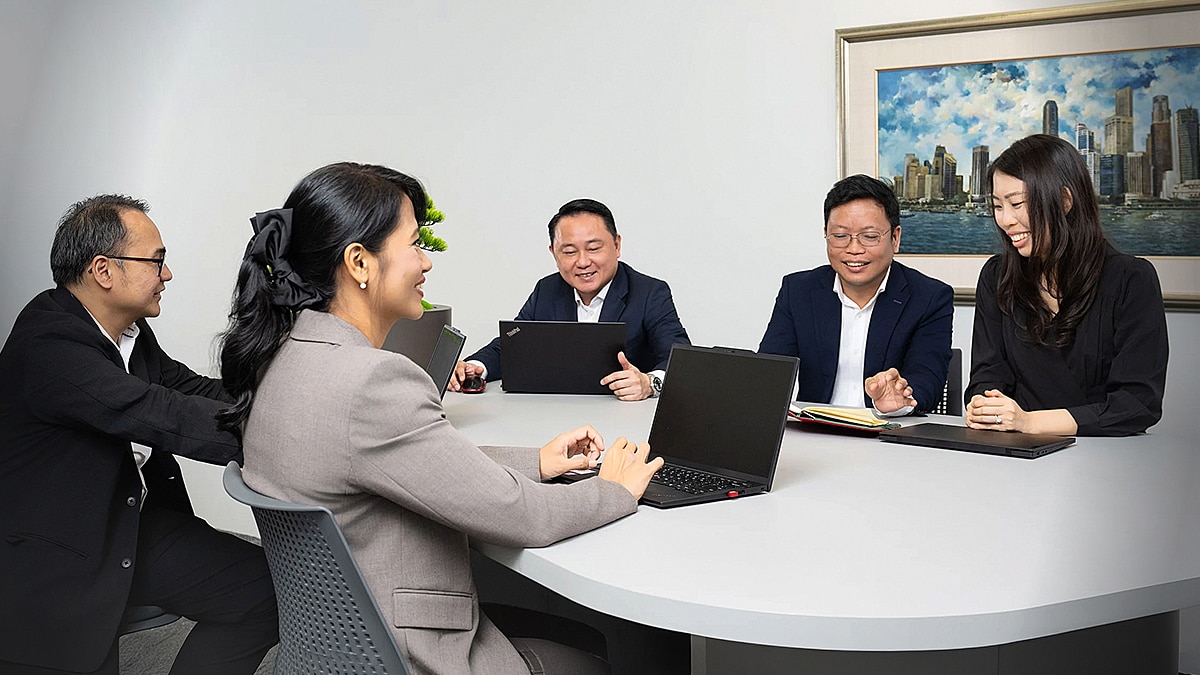
Under these circumstances, to drive business contribution and deliver the best possible EX to employees, the IT Strategy & Digital Integration Division identified two strategic focus areas.
The first is the expansion of Device as a Service (DaaS). Rather than purchasing and managing PCs internally, DaaS covers the full Life Cycle Management (LCM) process through a subscription model, including procurement, kitting, operation, data wiping, and disposal. This enables the rationalization of the total IT budget across the Hitachi Group, including overlapping operational costs. In addition, IT personnel previously required for LCM can be reassigned to business-critical areas such as digital transformation initiatives. Expanding DaaS globally, in addition to domestic deployment, is expected to generate further cost efficiencies.
However, from the perspective of employee EX, it was necessary to meet operational requirements such as delivery within a minimum of three days, business readiness within as little as ten minutes, and compliance with group-wide security standards to ensure safe and secure usage. Therefore, the selection of high-performance client devices that could ensure a stable supply of components, even amidst soaring prices, became essential.
The second strategic focus was the adoption and group-wide standardization of high-performance, high-quality, and cost-effective PCs. These devices needed to deliver sufficient local processing power to handle sustained intensive workloads in evolving work environments such as remote work, while also meeting security requirements, including data volatility.
Following careful evaluation, the IT Strategy & Digital Integration Division first adopted Lenovo laptops equipped with AMD Ryzen™ processors as data-volatile PCs to replace thin clients. Subsequently, the following AMD Ryzen™ and Ryzen PRO processor-based PCs were designated as standard Hitachi Group PCs for office automation (OA) use:
The software stack was standardized using Microsoft 365 Apps, Microsoft Endpoint Configuration Manager, and Microsoft Intune as the common foundation, ensuring consistent user experience and manageability across 47 countries.
Commenting on the migration decision, Koki Takahashi, General Manager of the UX Solutions Department within the Employee Experience Division of the IT Strategy & Digital Integration Division, stated: "AMD delivered reliable processor and graphics performance while remaining price competitiveness with recent-generation hardware."
The AMD Ryzen™ and Ryzen PRO CPU-powered PCs, adopted as standard devices, were highly valued for the stability of their global supply even amidst fluctuating demand. This stability aligns with the short lead-time operations required for DaaS.
Furthermore, this approach provides significant advantages in both procurement and operational costs. According to estimates by the IT Strategy & Digital Integration Division, AMD CPU-based PCs provide a cost advantage of approximately 5,000 yen per unit compared to the previously used processors. At a procurement scale of approximately 85,000 units, this results in total projected savings of approximately 425 million yen. Takahashi commented on the impact of the standard device refresh: "By adopting AMD processor-based PCs as our standard devices, combining cost competitiveness with stable performance that supports uninterrupted business operations, we were able to align our hardware strategy with company-wide IT objectives."
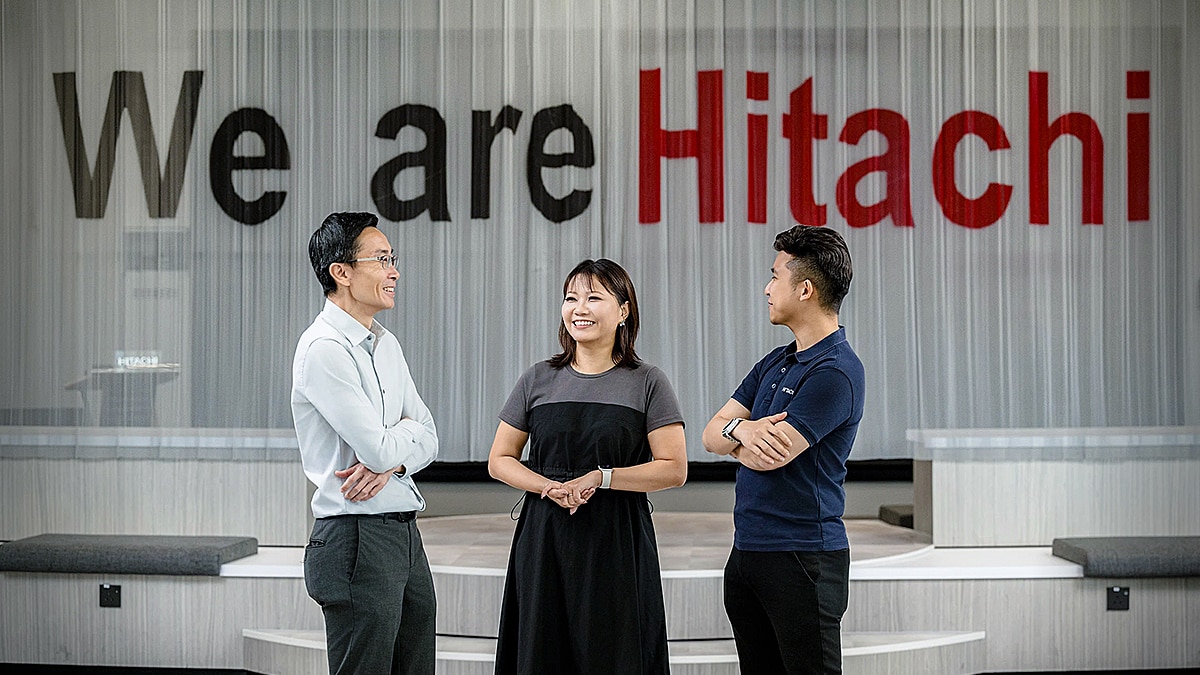
The AMD CPU-based PCs adopted by the IT Strategy & Digital Integration Division serve as the standard device for Hitachi Group employees worldwide. To deliver a satisfactory employee experience, it was essential to address and eliminate user concerns about usability and reliability. Operating environments vary significantly across the globe, and concerns were specifically raised regarding device heat generation and operational stability in high-temperature, high-humidity regions such as Southeast Asia and India.
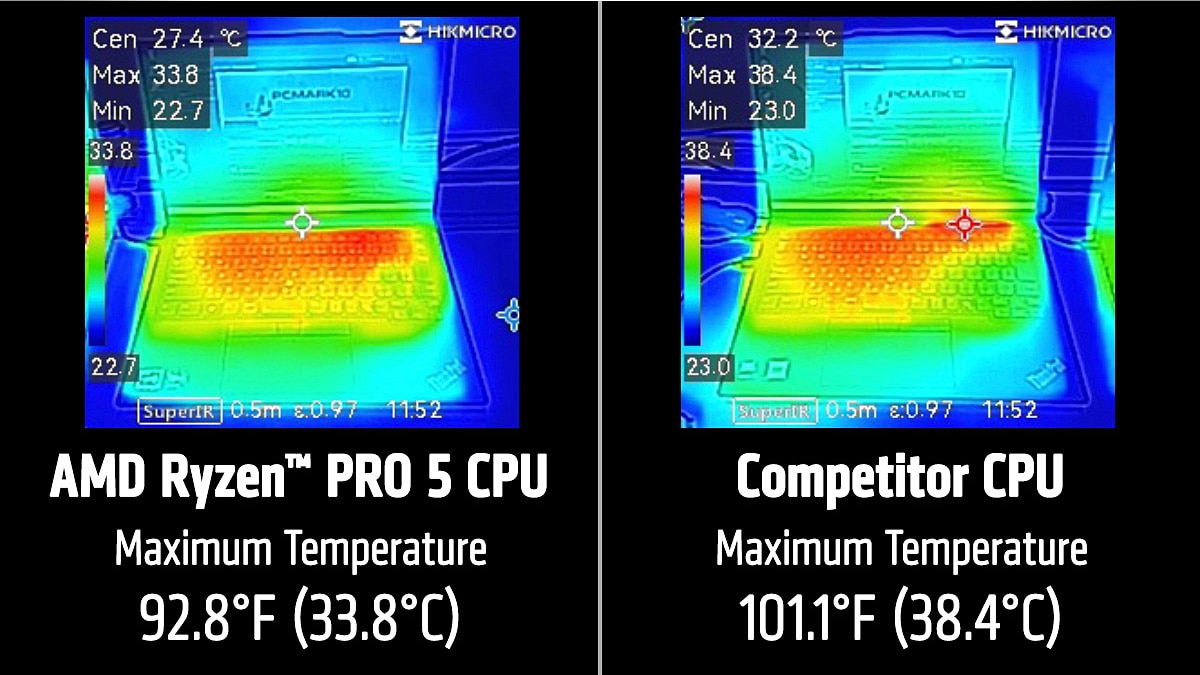
To address these challenges, Hitachi conducted its own comparative performance validation testing using identical chassis models (Lenovo ThinkPad E14). The company evaluated CPU temperature, stability, and performance side-by-side by running models equipped with AMD Ryzen™ PRO processors against those with competing processors under continuous, general business workloads. The results confirmed that the AMD Ryzen™ PRO models operated more stably at lower temperatures: the AMD CPU-powered model reached a maximum temperature of 92.8°F (33.8°C), while the competing model reached 101.1°F (38.4°C).
This difference represented a critical factor directly affecting perceived performance and reliability, particularly in high-temperature regions. Takahashi commented: "Presenting temperature data based on actual usage environments was a decisive factor in gaining understanding across regions."
Through this validation process, the Hitachi Group established the technical reliability necessary to deploy AMD CPU-powered PCs as a global standard.
As of September 2025, AMD CPU-based PCs account for 49 percent of devices within the Hitachi Group, with the share expected to exceed 50 percent, or approximately 150,000 units, during fiscal year 2025.
The IT Strategy & Digital Integration Division is accelerating the full-scale deployment of AI PCs to improve the future productivity of the Hitachi Group. In particular, by establishing a device-level environment capable of leveraging local AI agents, the division aims to ensure security while enabling automation of routine tasks and high-speed AI assistance. This approach is expected to enhance responsiveness and operational efficiency. Takahashi commented: "We believe that advances in AI will accelerate document creation and approval processes, leading to significant improvements in productivity across the Hitachi Group."
In addition to improving productivity, future AI PCs are expected to reduce environmental impact through energy-efficient AI processing by NPUs. Their low power consumption also enables smaller batteries, which in turn contribute to lighter devices and improved mobility.
The IT Strategy & Digital Integration Division has announced plans to transition 50 percent of PCs provided through DaaS to AI PCs by the end of fiscal year 2027. Furthermore, to promote practical adoption in the field, the division has introduced an AI Ambassador program to share concrete successful use cases across business units and encourage broader utilization.
AMD CPU-based PCs are also evolving into AMD Ryzen™ AI, leveraging data center CPU, GPU, and NPU technologies to deliver high-speed, low-latency local AI while keeping sensitive data secure on the device. Going forward, AMD CPU-based PCs will continue to serve as a key pillar supporting productivity gains and faster decision-making across the Hitachi Group's global operations.
Hitachi, Ltd. is a global Social Innovation Business company that combines IT, OT, and products across Digital Systems & Services, Energy, Mobility, and Connective Industries. It employs about 280,000 people worldwide. Within the Hitachi Group, the Corporate IT Digital Division coordinates IT in collaboration with business-unit and group-company IT teams, building common measures to drive growth through IT and digital technology, reduce IT costs, and manage security risks. IT general managers in Europe, the United States, China, India, and Singapore help lead global standardization. For more information visit hitachi.com.
For more than 50 years AMD has driven innovation in high-performance computing, graphics, and visualization technologies. Billions of people, leading Fortune 500 businesses, and cutting-edge scientific research institutions around the world rely on AMD technology daily to improve how they live, work and play. AMD employees are focused on building leadership high-performance and adaptive products that push the boundaries of what is possible. For more information about how AMD is enabling today and inspiring tomorrow, visit the AMD (NASDAQ: AMD) website, blog, LinkedIn, and Twitter pages.



Need more information about AMD solutions for your business? Connect with our team to learn how AMD can support your organization.
What does it take to bring AI to the forefront of pharmaceutical research? In this interview, Heikki Käsnänen, Head of Molecular Intelligence and Data…
September 17, 2026
Zyphra demonstrates full-stack AMD AI training by pretraining its ZAYA1-8B model from scratch across 1,536 AMD Instinct™ MI300X GPUs using AMD Pensand…
August 19, 2026
Rubrik, the Security and AI Operations company, boosted cybersecurity with AMD EPYC™ CPUs, gaining performance, cost savings and AI efficiency for nex…
May 08, 2026
Using SIRIUS OS and model-based design, Sokratel enables multi-rate, real-time control for renewable energy and industrial systems.
April 06, 2026
© 2026 Advanced Micro Devices, Inc. All rights reserved. AMD, the AMD Arrow logo, Ryzen, Threadripper, and combinations thereof are trademarks of Advanced Micro Devices, Inc. Other product names contained herein are for identification purposes only and may be trademarks of their respective owners. Certain AMD technologies may require third-party enablement or activation. Supported features may vary by operating system. Please confirm with the system manufacturer for specific features. No technology or product can be completely secure.
All performance and cost savings claims are provided by Hitachi and have not been independently verified by AMD. Performance and cost benefits are impacted by a variety of variables. Results herein are specific to Hitachi and may not be typical. GD-181
The information contained herein is for informational purposes only and is subject to change without notice. While every precaution has been taken in the preparation of this document, it may contain technical inaccuracies, omissions and typographical errors, and AMD is under no obligation to update or otherwise correct this information. Advanced Micro Devices, Inc. makes no representations or warranties with respect to the accuracy or completeness of the contents of this document, and assumes no liability of any kind, including the implied warranties of noninfringement, merchantability or fitness for particular purposes, with respect to the operation or use of AMD hardware, software or other products described herein. No license, including implied or arising by estoppel, to any intellectual property rights is granted by this document. Terms and limitations applicable to the purchase or use of AMD products are as set forth in a signed agreement between the parties or in AMD’s Standard Terms and Conditions of Sale. GD-18u