Smart Retail White Paper
Read the “Simplified On-Ramp To AI-Powered Smart Retail” white paper for a closer look at how retailers can approach AI at the edge, including practical use cases and the infrastructure needed to support them.

AMD Partner Insights
How AMD Helps Turn Data Into Action
Retail has always been a difficult business to operate in, with tight margins, fluctuating demand and supply chain complexity all ensuring retail businesses remain under constant pressure to deliver the best experiences to customers.
The modern retail landscape has accelerated these challenges, as customers increasingly expect seamless physical and digital experiences across everywhere they encounter the brand, with new levels of convenience and personalization at each touch point.
In the digital age, retailers can generate huge amounts of information from customer interactions: transactions, website visits, loyalty systems and more, but as many as 73% of retail businesses struggle to extract actionable insights from the data they collect.1 The challenge they face is turning all of that data into decisions quickly enough to protect margins and improve the customer experience.
AI offers a route to turning data into something useful that retailers can act on. With up to 97% of retailers expected to maintain or increase their spending on AI tools, AMD offers partners a perfect opportunity to introduce the benefits of AMD solutions.2
Retail AI isn’t one application running in one location. It’s various workloads spread across the entire business, ranging from the data center through the cloud to the store edge.
Data center: ERP, databases, analytics, virtualization, supply chain platforms, central IT and model development tools.
Cloud: E-commerce, recommendation engines, customer analytics, scalable applications and workloads that need to adapt to seasonal peaks or promotional periods.
Store edge: Computer vision, intelligent checkouts, inventory monitoring, video analytics, smarter systems and other workloads where decisions need to happen quickly and close to the customer.
Rather than throwing more compute at their problems, retailers need the right compute in the right places, helping them handle each workload without increasing latency, bandwidth usage or cost. AMD offers retailers a range of solutions across each domain from the cloud to the edge, helping to deliver operational efficiency, smart customer insights, and performance gains where it matters.
AMD gives retail customers options across each layer of this environment. Much of the retail world already runs on AMD hardware, with seven of the 10 largest Fortune 100 Retailers running AMD EPYC™ server CPUs.3
In the data center, AMD EPYC server CPUs can support core workloads such as ERP, databases, analytics, virtualization, e-commerce and supply chain applications, while giving customers the performance and efficiency needed to grow their compute capabilities without unnecessarily expanding their infrastructure.
The same applies in the cloud, where retail workloads can change quickly around busy periods, promotions or fluctuations in customer demand. Online personalization provider Qubit, for example, moved its product recommendation engine to Google Cloud instances advanced by AMD EPYC server CPUs and achieved a 13% cost savings. For retailers running similar workloads at scale, that kind of efficiency can help keep cloud costs manageable as usage grows.
Read our Qubit case study to learn more
Moving closer to the store floor, AMD technologies can also support the computer vision and edge AI workloads retailers are increasingly adopting. These include intelligent checkout, loss prevention, inventory monitoring, customer flow analysis and other applications where data needs to be processed quickly. Edge platforms advanced by AMD EPYC server CPUs, AMD Ryzen™ Embedded processors, and AMD adaptive computing technologies give customers different options depending on where processing needs to happen and what each workload demands.
AMD also works with software, OEM and infrastructure partners on tested retail solutions, giving customers a more direct route into areas such as self-checkout, inventory management and video analytics.
Palexy is one example of this in action; its retail analytics platform uses Google Cloud VMs powered by AMD processors to analyze video from physical stores, helping customers understand areas such as customer behavior and store operations. Moving to instances powered by AMD processors delivered 50% better performance alongside 30% cost savings.
Read our Palexy case study for more details
As retail AI continues to develop, AMD also offers accelerated computing through AMD Instinct™ GPUs and the AMD ROCm™ open software platform for customers running more demanding AI workloads. Combined with AMD CPUs, embedded, and adaptive computing technologies, partners can help customers build solutions around the workloads they actually have, rather than approaching every retail AI requirement in the same way.
Security also remains important as more data moves between the data center, cloud, and store edge. AMD EPYC server CPUs include AMD Infinity Guard security features that are designed to help protect sensitive data and systems, supporting retailers as they introduce new services while continuing to handle customer, payment, loyalty and other information.4
Retail businesses are already sitting on huge amounts of useful data, and AI is creating new ways to put that information to work across everything from store inventory and recommendations to loss prevention and the customer experience.
For AMD partners, the opportunity is to help customers put the right infrastructure behind those workloads. With AMD technologies spanning thedata center, cloud and store edge, partners can help retailers modernize their existing environments and introduce AI where it can make a meaningful difference.
Visit the AMD Retailer and E-Commerce Solutions page to learn more about supporting retail businesses with AMD solutions.
Build expertise with training on AMD AI solutions, AMD EPYC™ server CPUs, AMD Instinct™ GPUs and more across the AMD portfolio.
Get monthly updates on the latest AMD products, training resources and Meet the Experts webinars.

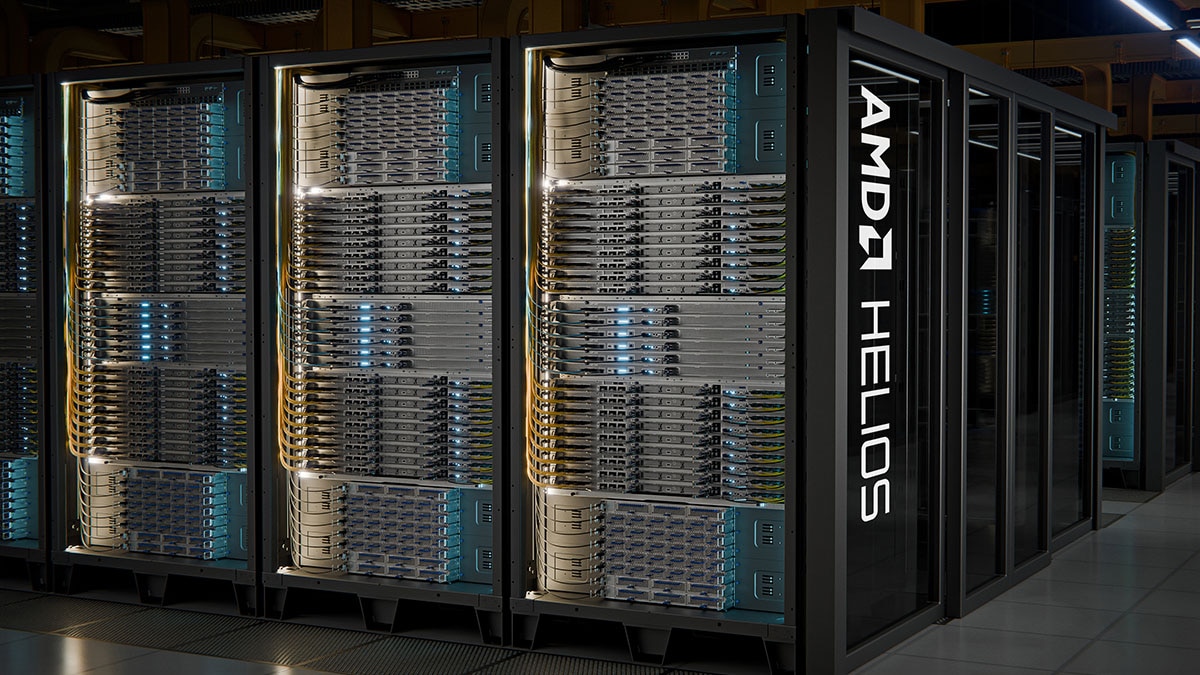
AMD Helios™ rackscale platform unifies compute, networking, software, power and cooling for scalable inference, training and agentic AI infrastructure…
Learn how AMD EPYC™ 9006 Series server CPUs help customers build balanced, high-performance infrastructure for scalable agentic AI workloads.
Help customers modernize data center infrastructure amid memory constraints by auditing workloads, right-sizing memory and using AMD EPYC™ server CPU …
Learn how AMD EPYC™ server CPUs advance financial services workloads today and enable AI and HPC for future growth.